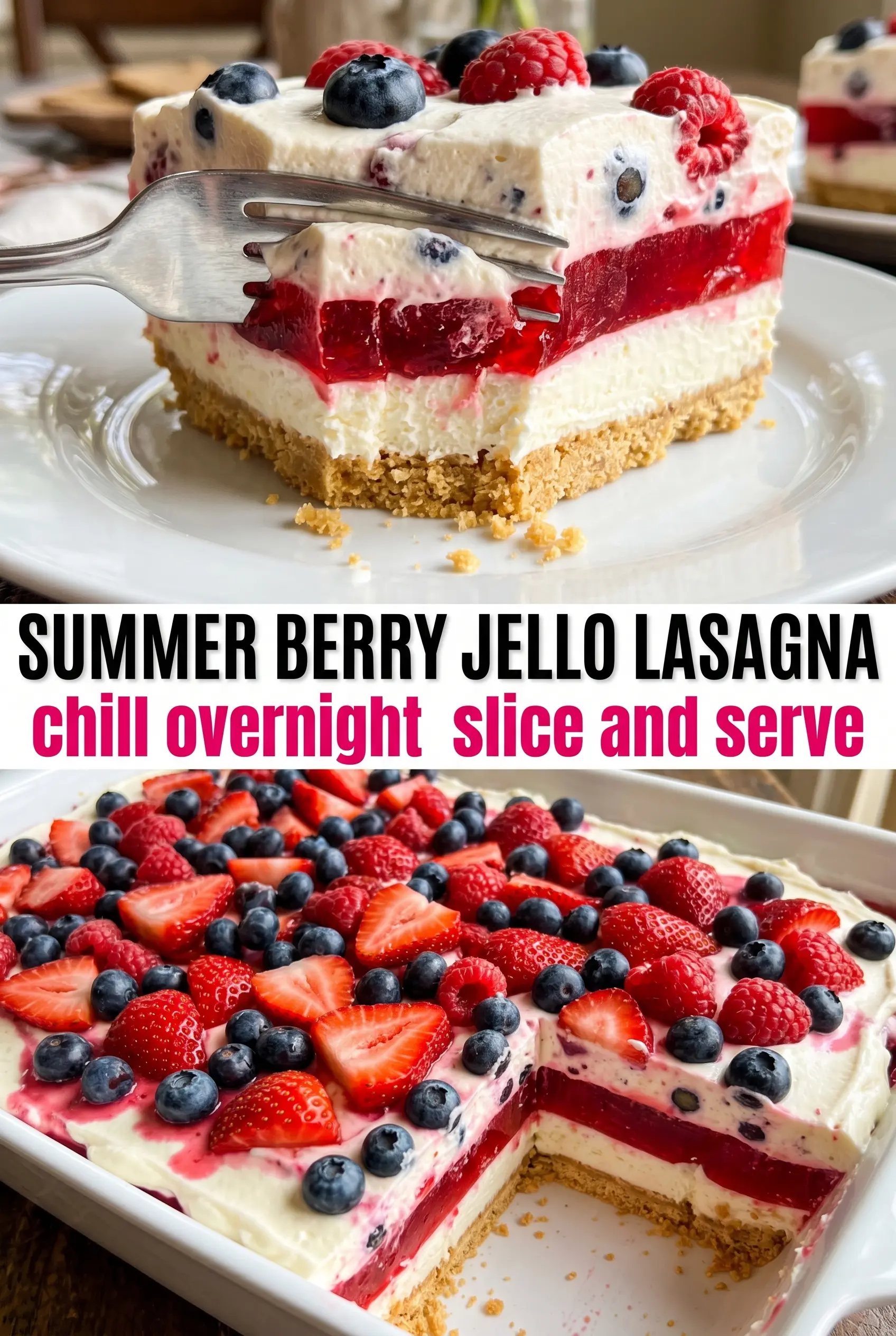
Summer Berry Jello Lasagna is one of those no-bake desserts that gets noticed the second it hits the table. The layers stay clean and distinct, the cream cheese filling cuts the sweetness, and the finished slice holds together with that old-school dessert-shop look people always go back for. You get a buttery Golden Oreo crust, a soft white middle, and bright strawberry and berry blue Jell-O on top for a dessert that feels playful without tasting flimsy.
The part that makes this work is patience with temperature. The Jell-O needs to cool down before it goes on the cream layer, or it can melt through and blur the layers. The cream cheese mixture also needs to be smooth before the whipped topping goes in, because any lumps will show once you spread it over the crust. That little bit of care is what gives you those sharp, tidy layers in the finished pan.
Below, I’ll show you how to keep the Jell-O from sinking, what to change if you want a different fruit flavor, and the one chilling step that matters most when you’re slicing neat squares for a crowd.
The layers stayed perfectly separate and the Jell-O set up cleanly without bleeding into the cream cheese. I brought this to a cookout and everyone asked how I got the red and blue so bright.
Love the clean red, white, and blue layers in this berry Jello lasagna? Save it to Pinterest for the next potluck or summer party dessert table.
The Jell-O Needs to Cool Before It Touches the Cream Layer
The most common mistake with layered Jell-O desserts is pouring the liquid in while it still feels warm. Warm Jell-O will soften the cream cheese layer and can create a streaky, muddy seam instead of a clean line. Let each Jell-O flavor cool to room temperature before pouring it on, and don’t wait until it starts to thicken. If it begins to gel in the bowl, it won’t spread evenly and you’ll get uneven pockets in the pan.
The other thing that matters is the chill between layers. The cream layer needs time to firm up before the strawberry Jell-O goes on, and the strawberry layer needs to be fully set before the blue layer is added. That pause is what gives you those crisp, visible stripes when you cut the dessert.
- Golden Oreos — These give the crust its buttery vanilla flavor and the right light color under the filling. Regular chocolate sandwich cookies would change the whole look and compete with the fruit layers.
- Cream cheese — This is what keeps the middle from tasting like straight whipped topping. It needs to be softened fully so it beats smooth; cold cream cheese leaves little lumps that show in the slice.
- Whipped topping — Fold it in gently after the cream cheese base is smooth. That keeps the layer light and spreadable, which matters when you’re building a dessert that has to hold up under Jell-O.
- Strawberry and berry blue Jell-O — The flavors give the dessert its bright color and classic layered look. Use the full boil-and-cool method as written; cutting the water too much can make the layers rubbery instead of clean and tender.
What Each Ingredient Is Actually Doing in This Recipe
- Primary ingredient (the star) — Quality matters most. Choose the best you can find.
- Cooking medium (oil, butter, or broth) — This carries flavors and prevents dryness.
- Seasonings (salt, pepper, spices, herbs) — Layer flavors so nothing overpowers. Build depth gradually.
- Aromatics (garlic, onion, herbs) — Cook with fat to bloom flavors. Become the foundation.
- Supporting ingredients — Complement the main ingredient without overpowering it.
- Sauce or liquid (if applicable) — Brings flavors together. Balance richness with acid.
- Acid (lemon, vinegar, wine, or other) — Brightens and prevents flat-tasting results.
- Final finish (garnish, glaze, or sauce) — Prevents one-dimensional taste and adds visual appeal.
Building Clean Layers Without Blending the Colors
Pressing the Crust Firm Enough
Combine the crushed Golden Oreos with melted butter until every crumb looks coated, then press the mixture into the pan in an even layer. Use the bottom of a measuring cup or a flat glass to pack it down firmly, especially into the corners, or the crust will crumble when you cut the first slice. A short chill gives the butter time to set so the cream layer sits on top instead of sinking into loose crumbs.
Making the Cream Cheese Layer Smooth
Beat the cream cheese and powdered sugar until there are no visible lumps and the mixture looks glossy. Fold in half the whipped topping with a spatula so you keep some air in the filling, then spread it gently over the chilled crust. If the cream mixture seems too stiff, let the cream cheese soften longer next time; cold cream cheese is the main reason this layer tears the crust instead of spreading cleanly.
Pouring the Jell-O Slowly
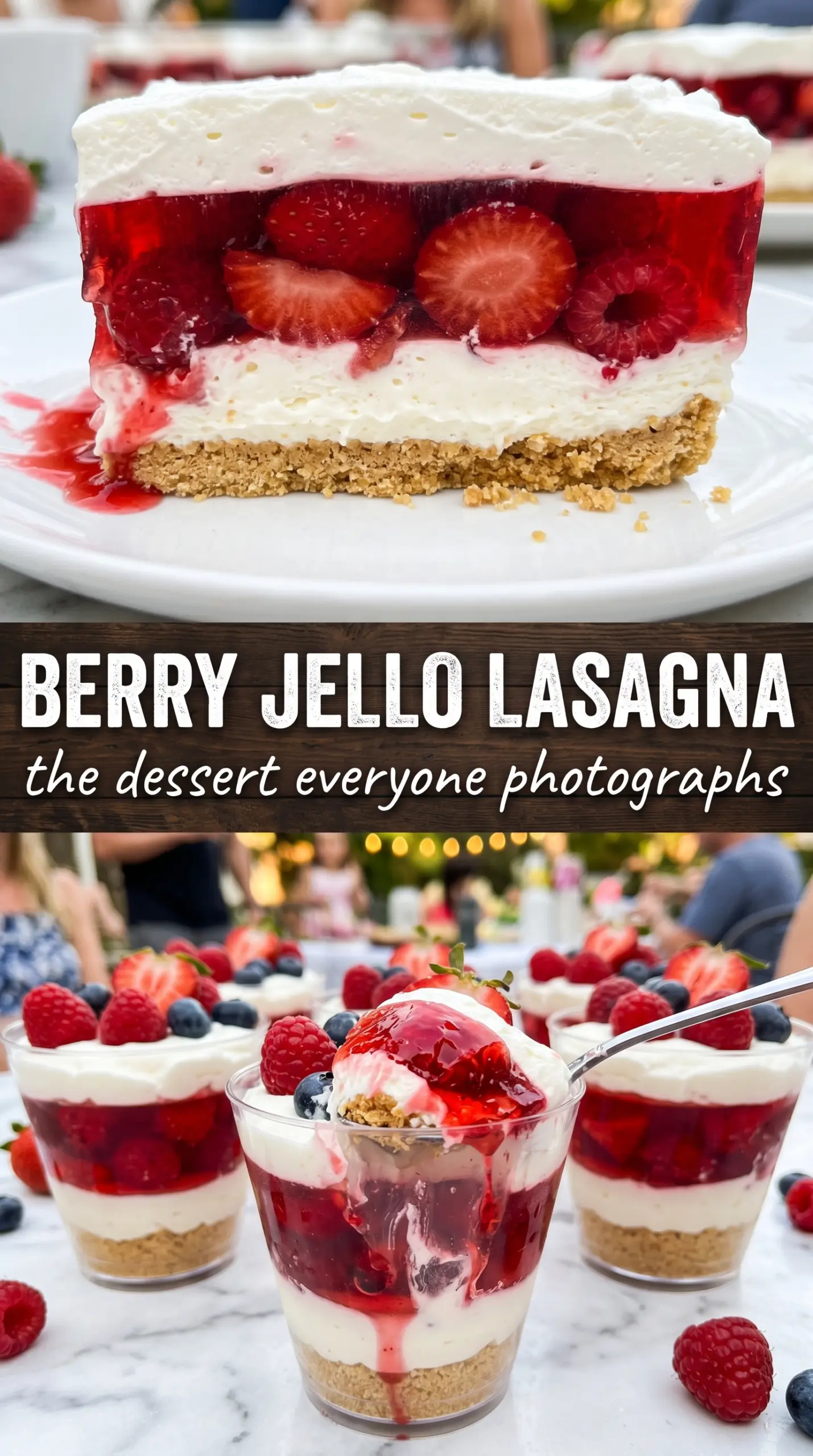
Mix each Jell-O flavor with boiling water, then stir in the cold water and let it cool before pouring. Spoon it over the back of a spoon or pour slowly down one side of the dish so you don’t punch through the cream layer. Chill the strawberry layer until it’s fully set before adding the blue layer, because rushing this stage is what causes the colors to bleed together.
Finishing and Slicing
Spread the remaining whipped topping over the top after the blue layer has chilled and set. Give the whole pan one more short chill so the top feels firm when you touch it. For the cleanest slices, use a sharp knife wiped dry between cuts and lift each rectangle straight out instead of dragging it through the pan.
How to Adapt This Dessert for Different Crowds and Pantry Days
Make it gluten-free with a cookie swap
Use gluten-free vanilla sandwich cookies in place of the Golden Oreos. The crust will still hold together, but the flavor may be a little less buttery, so don’t skip the full butter amount. Crush the cookies fine so the crust compacts evenly.
Swap the berry flavors without changing the method
Cherry, raspberry, or black cherry Jell-O all work if you want a different fruit combination. Keep the same water ratio and the same cooling time, since the structure of the dessert depends on the liquid setting at the right pace, not on the specific flavor.
Use homemade whipped cream for a fresher finish
You can replace the whipped topping with an equal amount of stiffly whipped cream, but the dessert will be a little softer and a bit less stable after a full day in the fridge. If you go this route, whip the cream to firm peaks and use it right away so it doesn’t deflate before the layers set.
Storage and Reheating
- Refrigerator: Keep covered for up to 4 days. The crust softens a little over time, but the layers stay sliceable.
- Freezer: I don’t recommend freezing this dessert. The Jell-O can turn icy and the cream layer loses its smooth texture when thawed.
- Reheating: No reheating needed. Serve it straight from the refrigerator, and wipe your knife between cuts for the cleanest squares.