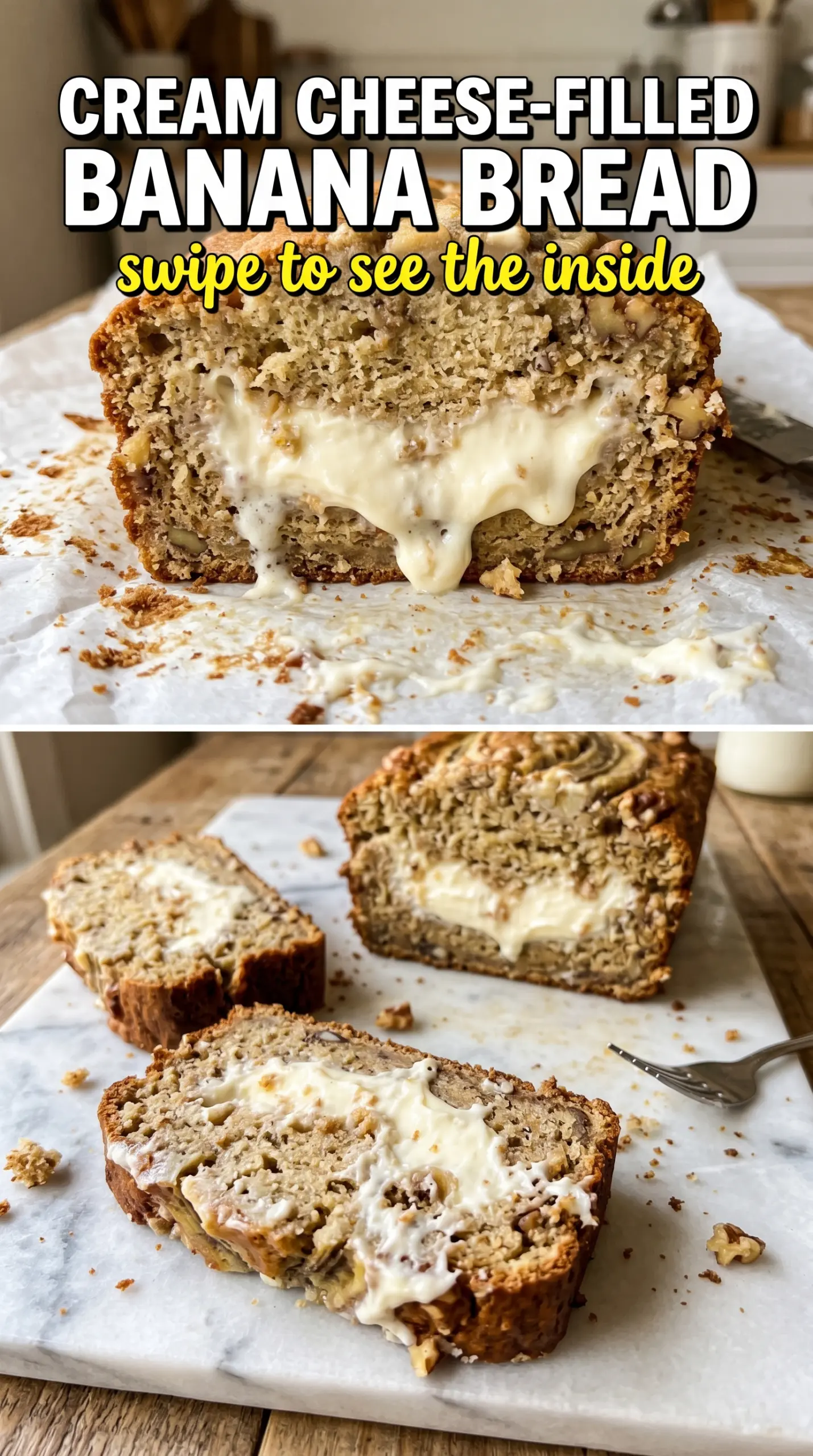
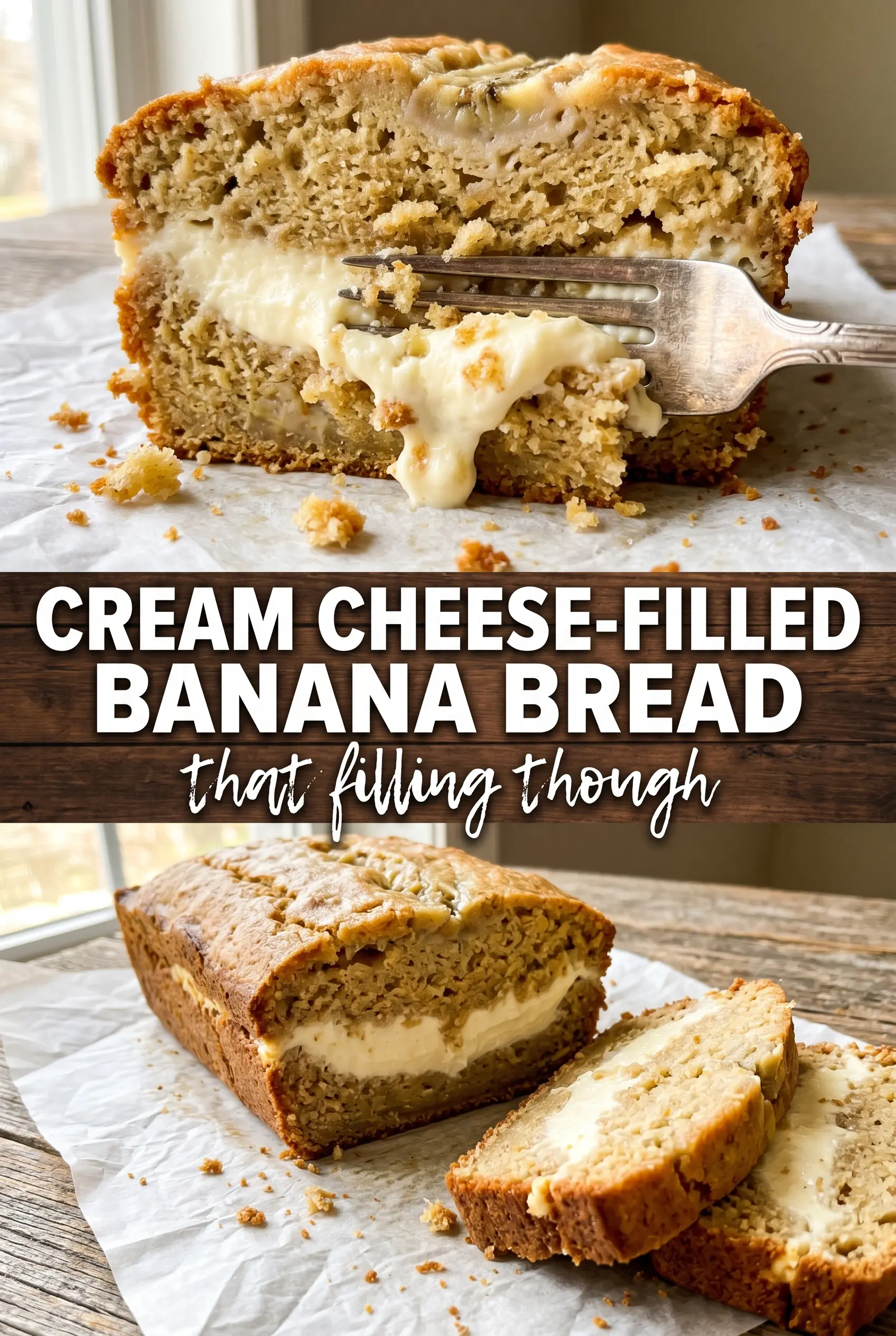
Golden banana bread with a thick cream cheese center is the kind of loaf that disappears fast because every slice gives you two textures at once: tender, deeply banana-scented crumb and a cool, tangy cheesecake layer right through the middle. The contrast makes this feel a little more special than standard banana bread, but it still bakes up like a straightforward loaf, not a fussy dessert.
The trick is keeping the cream cheese filling thick and the banana batter just barely mixed. If you beat too much air into the filling or overwork the batter, the layers blur together and the loaf loses that clean, bakery-style slice. Using very ripe bananas matters here, too, because their sweetness and moisture carry the whole loaf without needing extra liquid.
Below, I’ve included the small details that keep the filling centered, the crumb tender, and the top from overbrowning before the middle is done. There’s also a storage note for keeping slices soft, which matters because this loaf is at its best on day one and still excellent the next morning.
The cream cheese layer stayed right in the middle and didn’t sink, and the loaf baked up moist without tasting dense. I sliced it warm and the filling was set enough to hold, but still creamy.
Cream Cheese-Filled Banana Bread with that thick cheesecake center is perfect for saving when you want a loaf that slices cleanly and stays moist for days.
The Trick to Keeping the Cream Cheese Layer from Melting Into the Loaf
The filling needs to be thick enough to sit in the middle while the banana bread rises around it. If the cream cheese mixture is loose, it sinks, streaks, or disappears into the crumb instead of giving you that clean ivory band. Beat the filling just until smooth, then stop. Overmixing adds air and makes it puff, crack, and shift too much in the oven.
The other big issue is pan size and batter balance. A 9×5 loaf pan gives the filling enough room to stay centered without overflowing, and pouring half the batter first creates a base that supports the cheesecake layer. If you pour the filling straight onto the pan, it has nowhere to go but down.
- Softened cream cheese — This matters more than the brand. Cold cream cheese leaves little lumps, and lumps make the filling bake unevenly. Let it sit out until it presses easily with a finger.
- Very ripe bananas — The darker and spottier, the better. They bring sweetness, moisture, and strong banana flavor, which is what keeps the loaf from tasting like plain bread with a filling.
- Melted butter — Melted butter gives this loaf a denser, richer crumb than oil, which is exactly what you want around the creamy center. Don’t use hot butter; warm is fine, but scorching hot can scramble the eggs.
- All-purpose flour — This loaf depends on regular flour for structure. Bread flour makes it chewier than you want, and cake flour can’t hold the cream cheese layer as well.
What Each Ingredient Is Actually Doing in This Bread
- Flour (the structure) — All-purpose or bread flour provides the base. Protein content affects texture.
- Leavening (baking powder, baking soda, or yeast) — This creates rise. For quick breads, chemical leavening works. Yeast requires time.
- Wet ingredients (milk, eggs, oil, or applesauce) — These hydrate flour and add richness. Balance moisture so bread isn’t gummy.
- Sugar (sweetness and structure) — Sugar tenderizes and adds flavor. Too much makes dense, gummy bread.
- Salt (the flavor enhancer) — Salt brings out natural flavors and prevents flatness.
- Flavorings (vanilla, spices, or zest) — These define the bread personality. Use quality extracts.
- Mix-ins (nuts, chocolate, fruit) — These add texture and prevent one-dimensional taste. Toast nuts first for better flavor.
- Proper baking temperature (350-375°F) — Moderate heat bakes bread evenly. Higher temps create dark crust before inside bakes.
Building the Loaf So the Center Stays Creamy and the Top Still Browns
Mix the Cream Cheese Filling First
Beat the cream cheese, sugar, egg, and vanilla until the mixture looks smooth and glossy, with no visible lumps. It should be thick but spreadable, like a soft cheesecake batter. If the filling looks loose, pop it in the fridge for a few minutes while you mix the bread batter. That small chill helps it sit neatly in the loaf instead of running into the bananas.
Bring the Banana Batter Together Gently
Stir the mashed bananas, melted butter, sugar, eggs, and vanilla until the mixture looks cohesive, then fold in the dry ingredients just until the flour disappears. A few streaks are fine. If you keep stirring, the loaf turns tough and tight, and the cream cheese layer won’t rescue that texture. The batter should look thick and spoonable, not pourable like cake batter.
Layer for a Clean Center Stripe
Spread half the batter into the greased loaf pan first and level it out so it reaches the corners. Add the filling in an even layer, leaving a small border around the edges if you want to reduce the chance of seepage. Top with the remaining batter and smooth it gently; don’t drag the spoon through the filling or you’ll marble it instead of stacking it. The top layer can look a little patchy, and that’s fine because it evens out as it bakes.
Bake Until the Bread Is Done, Not Just the Filling
Bake until the top is deep golden and the center of the banana bread portion tests clean, which usually takes the full time or a few minutes more. The cream cheese layer will still be softer than the bread, so don’t chase a perfectly dry toothpick through the middle. Insert it into the banana portion, not straight into the filling. If the top browns too quickly, lay a loose piece of foil over the loaf for the last 15 to 20 minutes.
How to Adapt This Loaf When You Want a Different Finish
Add chopped walnuts for more texture
Fold 1/2 cup chopped walnuts into the banana batter at the end. They add crunch and a little bitterness that cuts the sweetness of the cream cheese layer. Toast them first if you want a deeper, nuttier flavor.
Make it gluten-free with a 1:1 baking blend
Swap the all-purpose flour for a good 1:1 gluten-free baking flour that includes xanthan gum. The loaf will still slice well, though the crumb will be a touch more tender and less springy than the wheat version. Don’t use almond flour alone; it won’t give the structure this filled loaf needs.
Cut the sweetness slightly for breakfast slices
Reduce the banana bread sugar to 1/2 cup if you want a less dessert-like loaf. The cream cheese layer still brings enough richness, and the bananas keep the bread flavorful. Don’t reduce the filling sugar much below 1/4 cup or the center starts tasting flat instead of cheesecake-like.
Storage and Reheating
- Refrigerator: Store tightly covered for up to 5 days. The cream cheese filling means this loaf keeps best chilled once it cools.
- Freezer: Freeze individual slices wrapped well for up to 2 months. Thaw overnight in the refrigerator for the cleanest texture.
- Reheating: Warm slices in the microwave for 10 to 15 seconds or in a low oven until just heated through. Don’t overheat it or the filling can turn oily and the crumb dries out fast.
Answers to the Questions Worth Asking
Cream Cheese-Filled Banana Bread
Ingredients
Equipment
Method
- Preheat the oven to 350°F and grease a 9x5 loaf pan for easy release.
- Beat cream cheese, sugar, egg, and vanilla until smooth for a thick, spreadable filling, then set it aside.
- Whisk melted butter, sugar, eggs, and vanilla into mashed bananas until smooth and glossy.
- Fold in flour, baking soda, salt, and cinnamon just until combined, leaving no dry streaks.
- Pour half the banana batter into the loaf pan and spread it into an even layer.
- Spread the cream cheese filling evenly over the batter so it reaches near the edges.
- Pour the remaining banana batter on top and gently smooth to cover the filling completely.
- Bake at 350°F for 65–75 minutes until a toothpick inserted in the banana bread (not the cream cheese layer) comes out clean, with a golden crust and set center despite the filling.