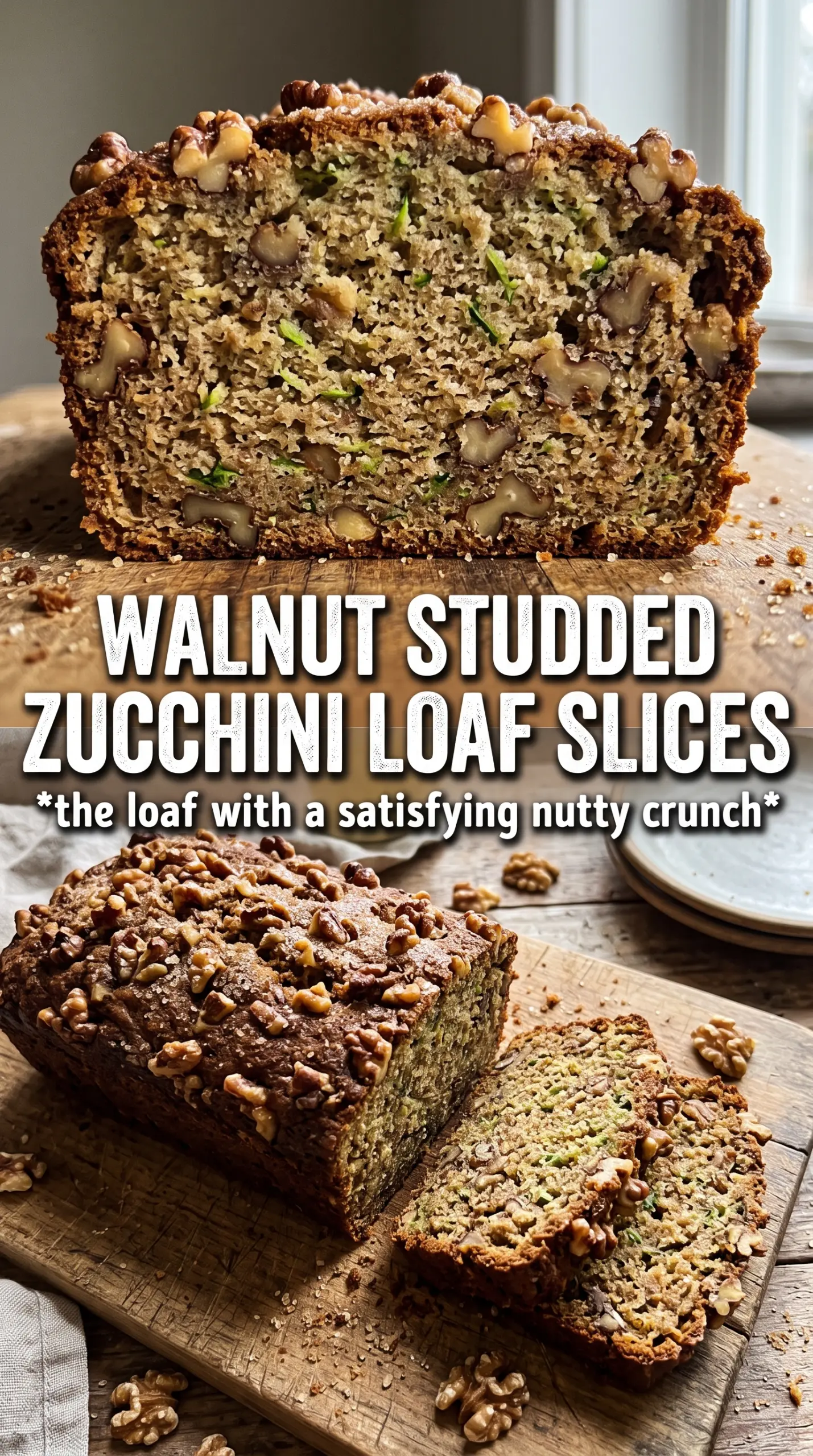
Moist zucchini walnut bread gets its best texture from a batter that stays tender in the center while the walnuts bring little pockets of crunch through every slice. The loaf bakes up with a soft, cinnamon-scented crumb and a golden top that slices cleanly once it has had time to cool. It’s the kind of quick bread that disappears one thick slice at a time, especially when the nuts are toasted first and the zucchini goes in without squeezing out all its moisture.
The trick here is balance. Too much mixing gives you a tight loaf, while too little attention to the walnuts leaves them flat and bland. Toasting them first wakes up their flavor, and sour cream helps keep the crumb rich without making the bread heavy. The zucchini does its job quietly in the background, adding moisture and tenderness without turning the loaf soggy.
Below, I’m walking through the small details that matter here: why the zucchini should stay unsqueezed, how to keep the walnuts from sinking, and what to look for when the loaf is done in the center.
I toasted the walnuts first and the difference was huge — they stayed crunchy in the loaf instead of turning soft, and the bread baked up super moist without being dense.
Like this classic zucchini walnut bread? Save it to Pinterest for a moist breakfast loaf with toasted walnuts in every slice.
The Mistake That Makes Zucchini Bread Heavy Instead of Tender
The most common failure in zucchini bread is overworking the batter once the flour goes in. Quick bread batter should look a little rough when you stop mixing; that’s what keeps the crumb soft instead of turning bready and tight. The other mistake is squeezing the zucchini dry out of habit. Here, the extra moisture is part of the design, and it helps the loaf stay tender for days.
Toasting the walnuts matters for the same reason. Raw walnuts can taste dusty inside a sweet loaf, but a few minutes in a dry skillet deepens their flavor and keeps them from disappearing into the batter. If your loaf has ever baked up bland or slightly gummy, the fix is usually not more flour — it’s better handling and better prep.
- Unsqueezed zucchini — Grate it fine and add it as-is. The moisture it carries is what keeps the bread soft, especially since there isn’t a lot of fat in the batter beyond oil and sour cream.
- Toasted walnuts — Raw walnuts work in a pinch, but toasted walnuts bring more flavor and stay crunchier in the finished loaf. Cool them before folding them in so they don’t warm the batter.
- Sour cream — This adds body and a gentle tang that makes the loaf taste richer. Full-fat plain yogurt can stand in, but the crumb will be a touch less plush.
- Cinnamon and nutmeg — This is a simple spice line, not a heavy spice cake. The goal is warmth in the background, not a loaf that tastes like pumpkin bread without the pumpkin.
What Each Ingredient Is Actually Doing in This Recipe
- Primary ingredient (the star) — Quality matters most. Choose the best you can find.
- Cooking medium (oil, butter, or broth) — This carries flavors and prevents dryness.
- Seasonings (salt, pepper, spices, herbs) — Layer flavors so nothing overpowers. Build depth gradually.
- Aromatics (garlic, onion, herbs) — Cook with fat to bloom flavors. Become the foundation.
- Supporting ingredients — Complement the main ingredient without overpowering it.
- Sauce or liquid (if applicable) — Brings flavors together. Balance richness with acid.
- Acid (lemon, vinegar, wine, or other) — Brightens and prevents flat-tasting results.
- Final finish (garnish, glaze, or sauce) — Prevents one-dimensional taste and adds visual appeal.
Building the Batter So the Loaf Stays Moist, Not Gummy
Wake Up the Walnuts First
Set the walnuts in a dry skillet over medium heat and stir them for 3 to 4 minutes, just until they smell nutty and a shade darker. Pull them off the heat before they look fully browned; they keep cooking from the residual heat in the pan. If you skip this step, the bread still works, but the walnut flavor stays muted.
Mix the Wet Ingredients Until Smooth
Beat the sugar, eggs, oil, sour cream, and vanilla until the mixture looks glossy and even. You’re not whipping in a lot of air here; you’re just dissolving the sugar enough that the batter bakes up evenly. If the eggs are cold and the mixture looks a little curdled at first, keep going and it will come together once the flour is added.
Fold, Don’t Stir Hard
Add the dry ingredients and mix only until the flour disappears. A few streaks are fine at first because they usually vanish with the last folds. Dumping in the walnuts too early or beating the batter after the flour goes in is how you end up with a dense loaf instead of a tender one.
Know When the Center Is Done
Pour the batter into the loaf pan, top with walnut halves if you want that bakery-style finish, and bake until a toothpick comes out clean or with a few moist crumbs. The top should spring back lightly when pressed, and the center shouldn’t wobble. If the top browns too fast before the middle is set, tent it loosely with foil for the last part of the bake.
Three Useful Ways to Adjust This Loaf
Dairy-Free Version
Swap the sour cream for an equal amount of unsweetened dairy-free yogurt or dairy-free sour cream. You’ll still get moisture and a little tang, though the crumb may be slightly less rich than the original.
Gluten-Free Loaf
Use a cup-for-cup gluten-free flour blend that includes xanthan gum. The loaf will be a little more delicate when warm, so give it the full cooling time before slicing or it can crumble.
Make It More Nutty
Swap half the walnuts for chopped pecans, or add a few extra walnut halves on top before baking. Pecans read a little sweeter, while extra walnuts give the loaf a more robust crunch.
Storage and Reheating
- Refrigerator: Store tightly wrapped for up to 5 days. The crumb stays moist, though the walnuts soften a little after day two.
- Freezer: Freezes well for up to 3 months. Wrap the cooled loaf or individual slices in plastic, then foil, and thaw at room temperature.
- Reheating: Warm slices in a toaster oven or skillet over low heat. The biggest mistake is microwaving too long, which makes the loaf rubbery and dulls the walnut crunch.
Questions I Get Asked About This Recipe
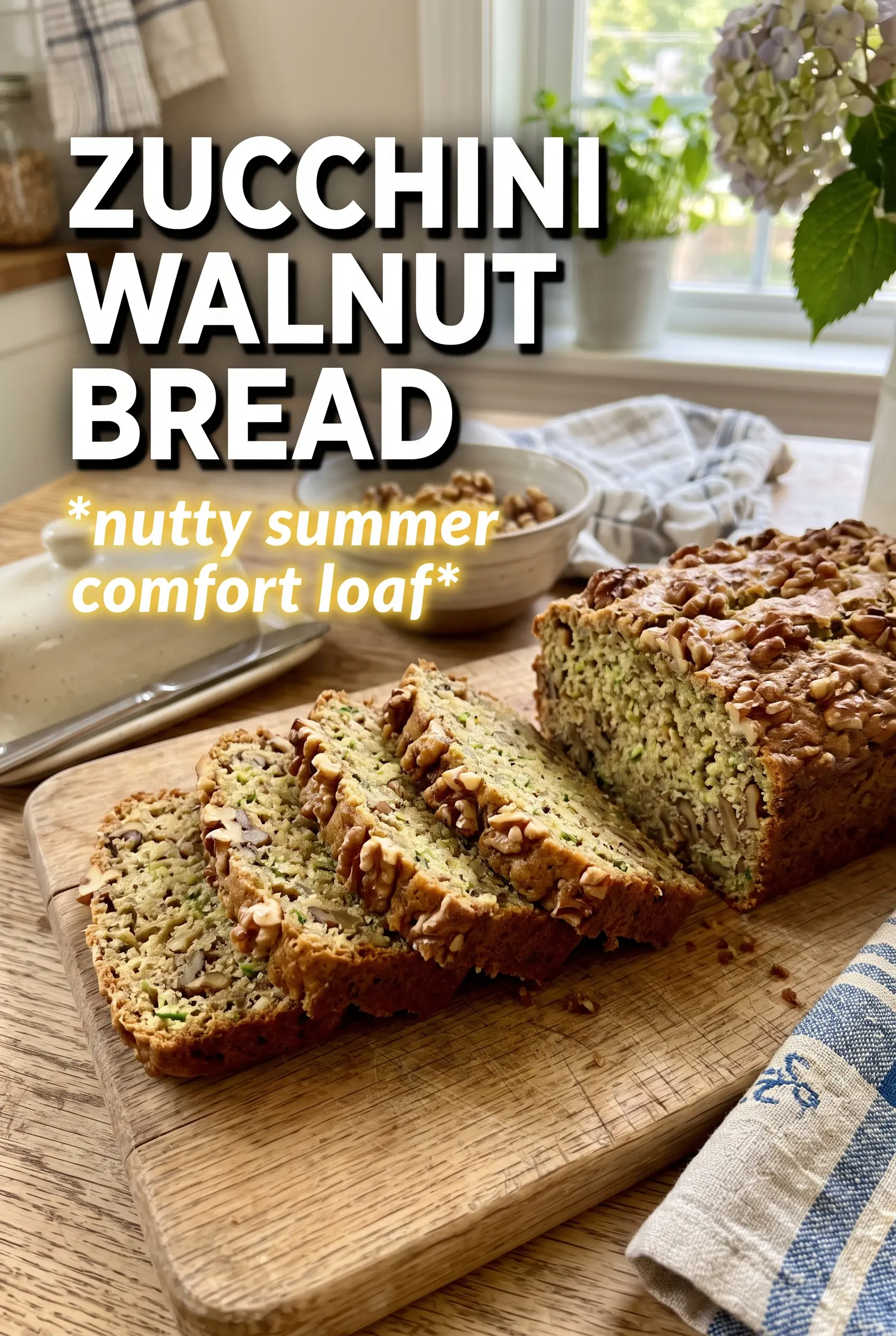
Zucchini Walnut Bread
Ingredients
Equipment
Method
- Preheat the oven to 350°F and grease a 9x5 loaf pan.
- Toast walnuts in a dry skillet over medium heat for 3–4 minutes until fragrant, then let them cool.
- Whisk all-purpose flour, baking soda, baking powder, salt, cinnamon, and nutmeg together until evenly combined.
- Beat granulated sugar, eggs, vegetable oil, sour cream, and vanilla extract until smooth.
- Stir in grated zucchini (unsqueezed) so it’s evenly distributed through the batter.
- Fold the dry ingredients into the wet ingredients until just combined, then fold in the toasted walnuts.
- Pour the batter into the prepared loaf pan, arrange walnut halves on top if desired, and bake for 55–65 minutes until a toothpick comes out clean.
- Cool the loaf for 20 minutes before slicing so the crumb sets.