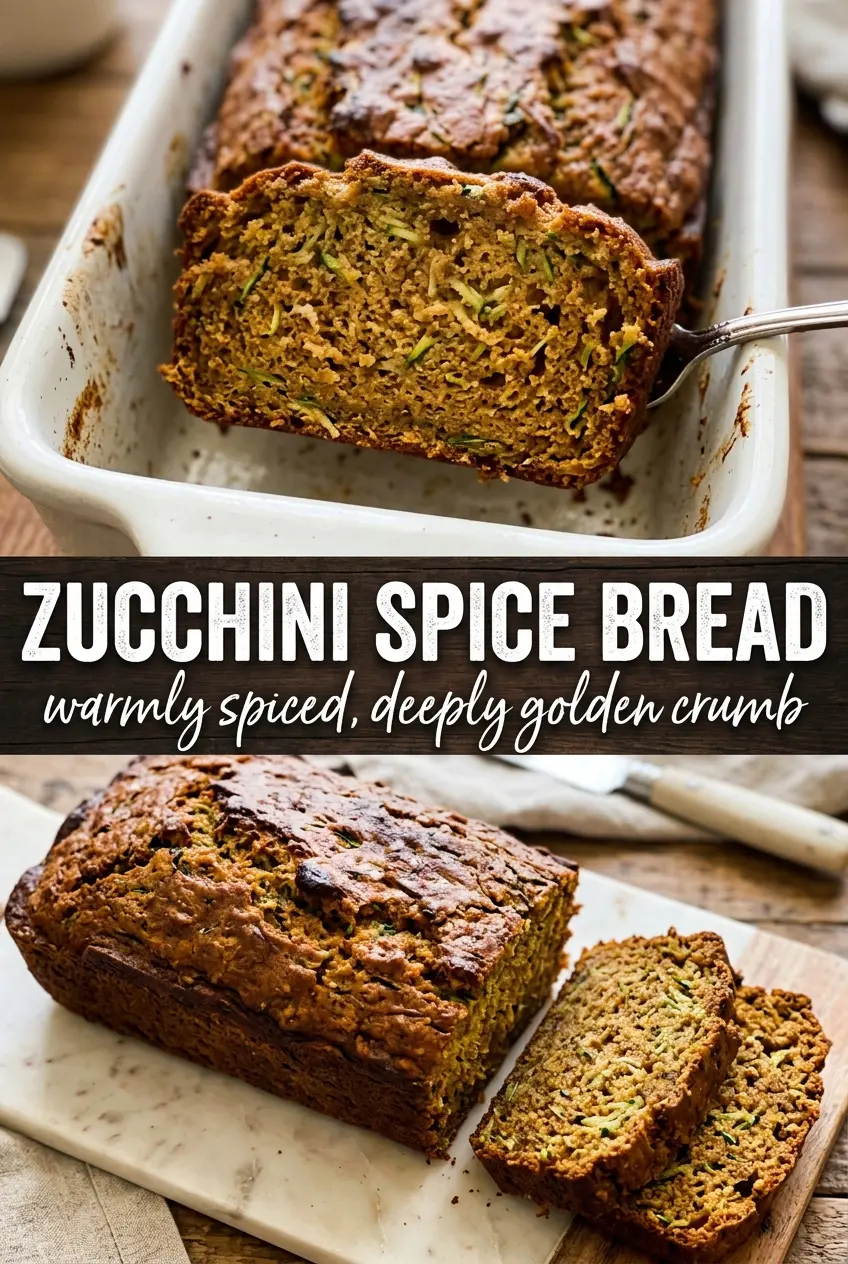
Warmly spiced zucchini bread earns its place on the counter because it bakes up tender, deeply fragrant, and just sweet enough to work for breakfast or an afternoon slice with coffee. The crumb stays moist without turning heavy, and the turbinado sugar on top gives each loaf a thin crackly lid that makes every slice feel a little more special.
What makes this version work is the balance: enough zucchini to keep the bread soft, but squeezed dry so it doesn’t turn gummy; enough molasses to give the loaf depth without making it taste like gingerbread; and a spice blend that leans warm instead of sharp. Cinnamon leads, but ginger, allspice, cloves, and nutmeg build the kind of aroma that fills the kitchen long before the timer goes off.
Below, I’ve included the small details that matter most — how dry the zucchini should be, what to look for when the loaf is done, and a few smart swaps if you want to adjust the spices or make it work with what you have on hand.
The zucchini stayed moist without making the loaf soggy, and the molasses with all the warm spices gave it that bakery-style flavor. Mine was done right at 58 minutes and sliced clean once it cooled.
Like this warmly spiced zucchini loaf? Save it to Pinterest for the days when you want a tender quick bread with cinnamon, ginger, and a crackly sugar top.
The Reason This Loaf Stays Moist Without Turning Heavy
Zucchini bread fails in two common ways: it bakes up dense from too much moisture, or it turns bland because the spices were treated like an afterthought. This loaf avoids both by using zucchini that’s grated fine, then squeezed dry until it looks slightly clumpy and no longer wet enough to drip. That step matters more than any one spice in the bowl.
The other thing that keeps the crumb tender is the balance of oil, eggs, and molasses. Oil gives you softness that lasts past day one, eggs hold the structure, and molasses brings depth without requiring a huge amount of sugar. If you’ve ever had zucchini bread that tasted flat, it usually needed this kind of backbone.
What Each Ingredient Is Doing in the Pan
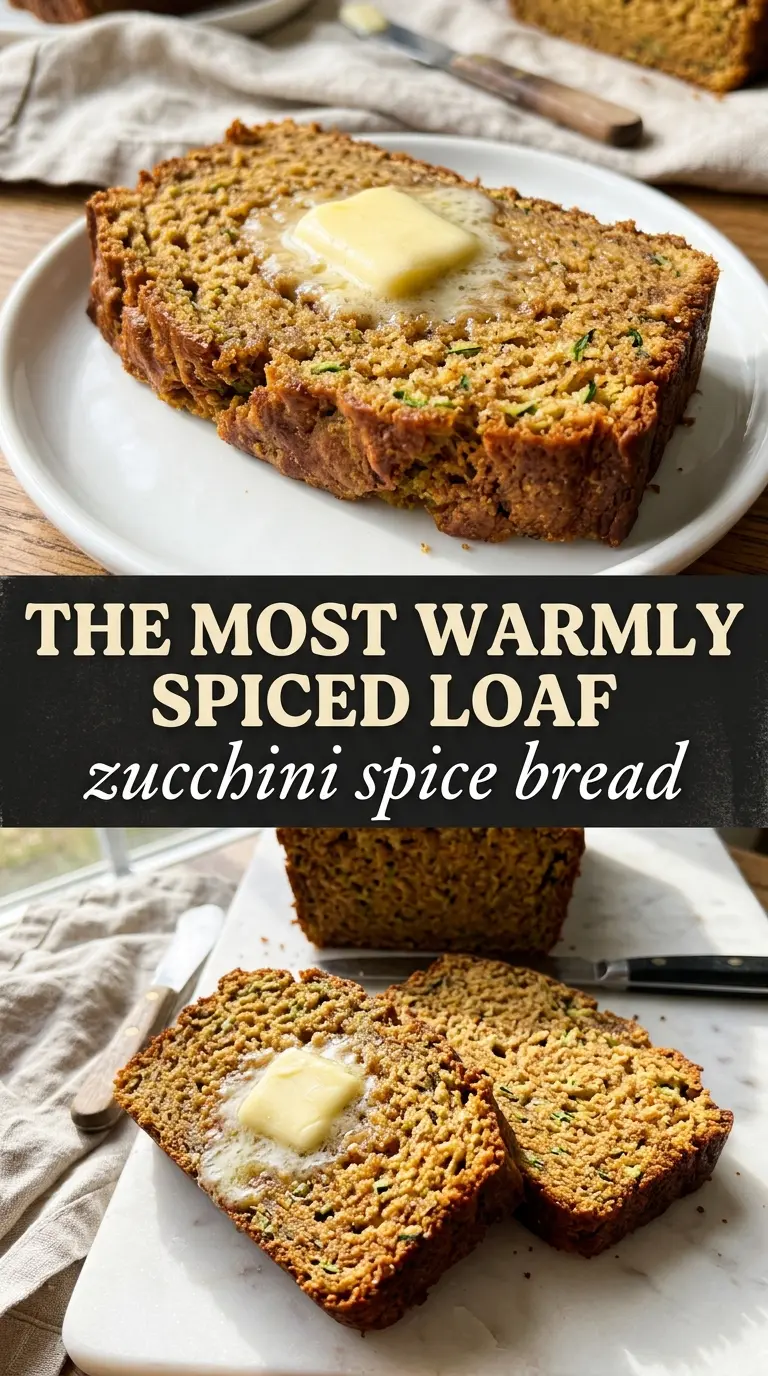
- Zucchini — It brings moisture and a soft crumb, but only after you squeeze it dry. Skip that step and the center stays damp and tight instead of tender.
- Brown sugar and molasses — Brown sugar gives sweetness and a little chew, while molasses adds the deep, almost caramel-spice note that makes this loaf taste more layered than a standard quick bread. There isn’t a clean substitute for molasses if you want the same warmth, but dark honey can work in a pinch with a lighter, less earthy result.
- Oil — Oil keeps the bread soft for days. Butter can be used, but it changes the texture toward a firmer crumb and a more cake-like bite.
- The spice blend — Cinnamon leads, but ginger, allspice, cloves, and nutmeg are what make the loaf smell like it’s been baking all afternoon. Don’t cut them all back at once; the bread needs that mix to stand up to the zucchini and molasses.
- Turbinado sugar — This is the finish that gives the top a little sparkle and crunch. If you only have granulated sugar, it will still work, but you’ll lose that crisp top crust.
Mixing the Batter So the Crumb Stays Tender
Start With the Dry Ingredients
Whisk the flour, leaveners, salt, and spices together before they ever meet the wet ingredients. That keeps the baking soda and powder from clumping in one spot and makes the spice flavor land evenly in every slice. If you skip this and stir the spices in later, the loaf can bake with streaks of intense spice and bland pockets.
Build the Wet Base Until Smooth
Beat the brown sugar, eggs, oil, molasses, and vanilla until the mixture looks glossy and fully combined. The sugar should dissolve into the liquid enough that the batter looks smooth, not grainy. If you see pockets of molasses at the bottom of the bowl, keep mixing; those streaks can bake into dense spots.
Fold, Don’t Beat, Once the Flour Goes In
Stir the zucchini into the wet mixture, then add the dry ingredients and fold just until you no longer see streaks of flour. A few small lumps are fine. Overmixing develops the flour and makes quick bread tough, which is the fastest way to lose the soft crumb this loaf is supposed to have.
Watch the Top, Not Just the Clock
The loaf is done when the top is deeply golden, the kitchen smells warm and spicy, and a toothpick comes out clean or with a few moist crumbs attached. If the center still looks wet but the top is browning fast, lay a loose piece of foil over the pan for the last 10 to 15 minutes. That protects the crust while the middle finishes baking.
Three Ways to Make This Loaf Fit What You Have
Make It Dairy-Free Without Changing the Texture
This loaf is already dairy-free as written, which keeps the crumb soft and the method simple. Just keep the oil in place; swapping in butter would change the texture and add a firmer set to the crumb.
Turn the Spices Up or Down
If you want a stronger ginger bite, add another 1/4 teaspoon of ginger and leave the rest alone. If you prefer a gentler loaf, reduce the cloves slightly instead of cutting cinnamon, since cloves are the first spice to dominate.
Swap the Flour When You Need a Gluten-Free Version
A 1:1 gluten-free baking flour blend can work here if it already includes xanthan gum. The crumb will be a little more delicate and slightly less springy, but the loaf still slices well once it cools completely.
Storage and Reheating
- Refrigerator: Store covered for up to 5 days. The crumb gets a touch denser in the fridge, but the flavor stays strong.
- Freezer: Freeze sliced or whole, wrapped tightly, for up to 3 months. Slices thaw faster and hold their texture better than a whole loaf that’s been frozen and thawed repeatedly.
- Reheating: Warm slices in a toaster oven or low oven for the best texture. The biggest mistake is microwaving until hot, which softens the sugar topping and makes the crumb feel rubbery.