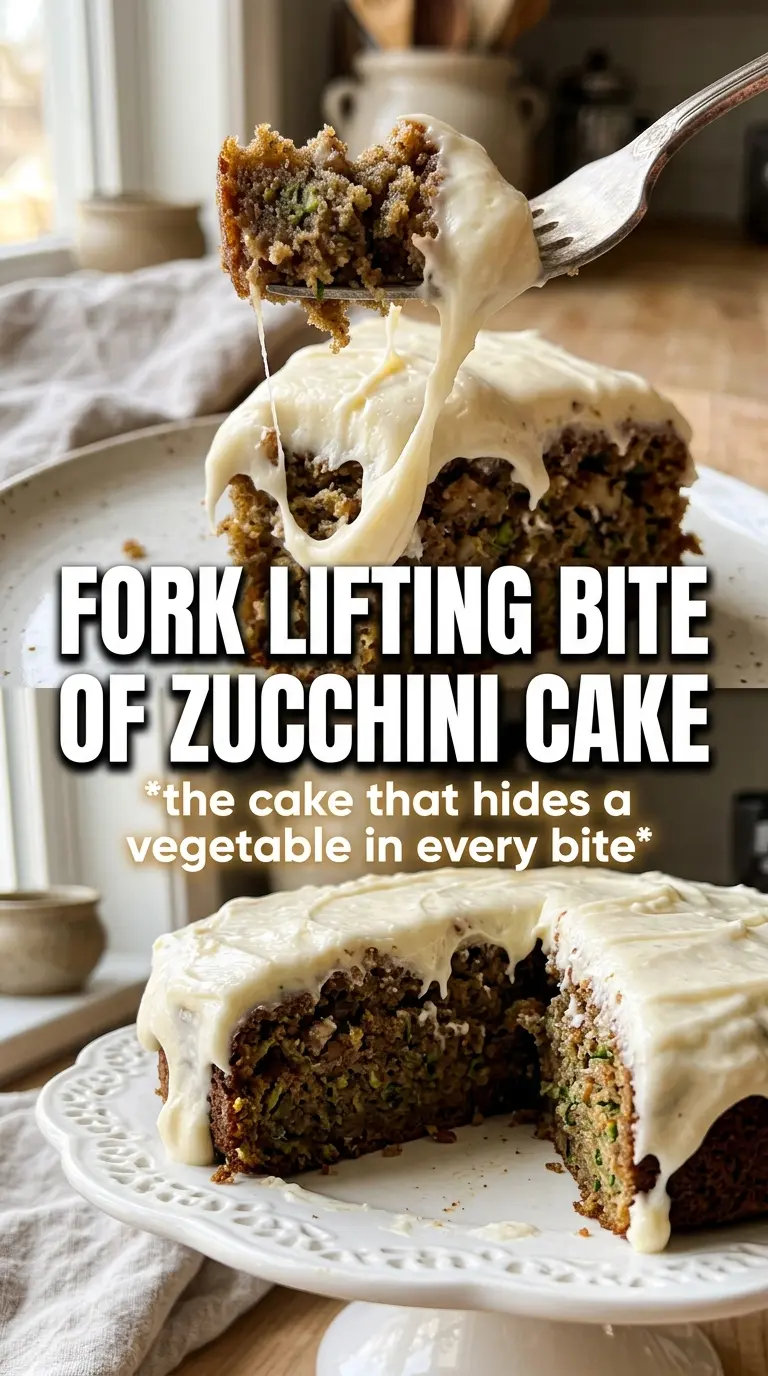
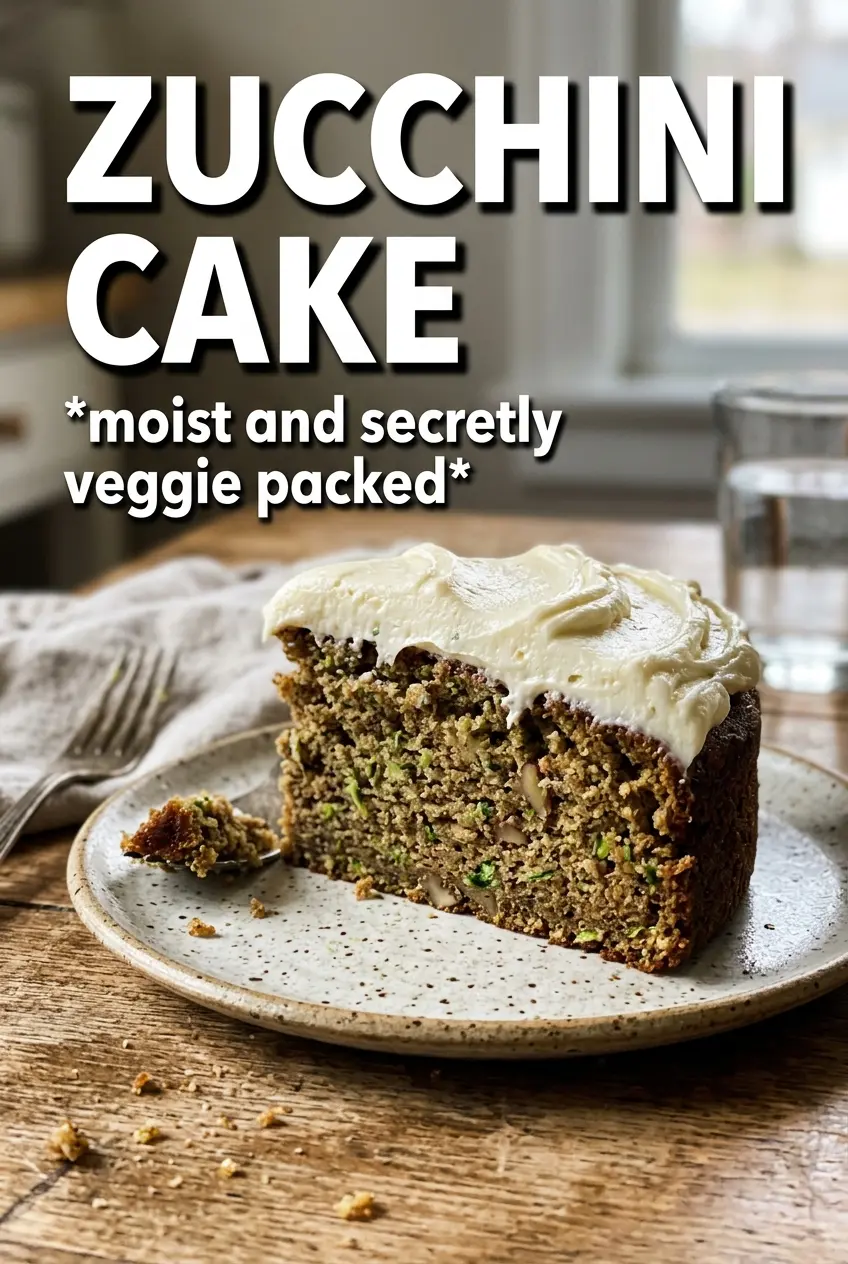
Zucchini cake bakes up with a soft, almost custardy crumb that stays moist for days, and that’s exactly why it earns a place in the dessert rotation. The zucchini itself doesn’t make the cake taste like vegetables; it melts into the batter and leaves behind tenderness while the cinnamon, nutmeg, and cream cheese frosting do the heavy lifting. What you end up with is a sheet cake that slices cleanly, tastes rich without being heavy, and disappears fast.
The trick is in the zucchini. Grate it finely, then squeeze it dry before it goes into the bowl. That keeps the batter from turning loose and gummy, but still gives you the moisture that makes this cake so good. The other piece that matters is the frosting: it needs a completely cooled cake, or it will slide instead of sitting in thick swirls on top.
Below, I’ll walk through the couple of steps that matter most, plus a few swaps and storage notes that make this cake easy to bake ahead. If you’ve ever ended up with a soggy zucchini cake or frosting that melts into the crumb, the notes here will help you avoid both.
The cake stayed incredibly moist without getting dense, and squeezing the zucchini dry made a huge difference. The cream cheese frosting spread like a dream once the cake was fully cooled.
Like this cream cheese frosted zucchini cake? Save it to Pinterest for the days when you want a tender spiced dessert that slices cleanly and stays moist.
The Zucchini Has to Be Dry, Not Just Grated
Most zucchini cakes go wrong because the zucchini is added with too much water still clinging to it. That extra moisture doesn’t just make the batter wetter; it changes the crumb and can leave you with a cake that bakes up gummy in the middle even when the edges look done. Squeeze the grated zucchini in a clean towel or handfuls over the sink until it feels noticeably lighter and the drops stop coming.
The other thing worth noticing is that this is a sheet cake, not a deep layer cake. That gives you a better chance of even baking and helps the center set before the top overbakes. If your cake sinks in the middle, it usually means it went into the oven with too much liquid or came out before the center had time to finish setting.
- The zucchini adds moisture and softness, but only if it’s drained first.
- The oil keeps the crumb tender for days; butter won’t give the same stay-moist texture here.
- The cinnamon and nutmeg do more than season the cake — they carry the “carrot cake” style warmth that makes the zucchini feel intentional, not hidden.
- The cream cheese frosting balances the sweetness and gives the cake its bakery-style finish, so don’t thin it too much with milk.
What Each Ingredient Is Doing in This Cake
- All-purpose flour — This gives the cake enough structure to hold the zucchini and frosting without turning heavy. Cake flour would make it softer, but here you want a little backbone so the squares lift cleanly from the pan.
- Cinnamon and nutmeg — These are the flavors that make the cake taste warm and familiar. Freshly opened spices matter more here than an expensive flour or sugar upgrade, because they carry the whole dessert.
- Vegetable oil — Oil keeps the cake plush after chilling, which is exactly what you want in a frosted sheet cake. Melted butter can work, but the crumb won’t stay as moist on day two.
- Eggs — They bind the batter and help the cake rise with a fine, even crumb. Room-temperature eggs blend more smoothly into the sugar and oil, so the batter won’t look curdled.
- Zucchini — Use medium zucchini if you can. Very large ones can be watery and seedy, which means more squeezing and a coarser texture.
- Cream cheese frosting ingredients — The cream cheese brings tang, the butter adds body, and the powdered sugar gives enough structure for a thick spreadable topping. If the frosting feels loose, add a little more powdered sugar instead of more milk.
Building the Batter Without Overworking It
Whisk the dry ingredients first
Start with the flour, cinnamon, baking soda, baking powder, salt, and nutmeg in one bowl. You want those leaveners and spices evenly dispersed before they meet the wet ingredients, or you’ll get pockets of spice and uneven lift. A quick whisk does the job better than stirring later, when the batter is already delicate.
Beat the wet base until it looks smooth
Mix the sugar, oil, eggs, and vanilla until the mixture looks glossy and unified. It won’t be fluffy the way a butter cake batter is, and that’s fine. If you see streaks of egg, keep mixing before the zucchini goes in, because uneven wet ingredients can leave the crumb a little patchy.
Fold just until the flour disappears
Once the zucchini and dry ingredients go in, switch to a gentle hand. Stir only until no dry flour remains, then stop. Overmixing tightens the cake and can make it rubbery around the edges, especially once the walnuts are added. If you’re using walnuts, fold them in at the very end so they stay distributed instead of sinking.
Frost only after the cake is completely cool
The cake needs its full cooling time before the frosting touches it. If the pan still feels warm, the frosting will soften and slide instead of spreading in thick, tidy swirls. Beat the frosting until it’s light and smooth, then spread it all the way to the edges with a small offset spatula or the back of a spoon.
How to Adapt This Zucchini Cake for Different Needs
Skip the walnuts for a smoother crumb
The walnuts are optional and easy to leave out if you want a cleaner, softer slice. Without them, the cake tastes a little more classic and the crumb feels more uniform, which is nice if you’re serving kids or packing slices for later.
Make it dairy-free with a different topping
The cake itself is already dairy-free, so the only swap needed is the frosting. Use a dairy-free cream cheese and butter alternative that’s meant for frosting; softer spreads can turn loose and won’t hold their shape as well over the cooled cake.
Add raisins if you want a carrot-cake vibe
A small handful of raisins works if you want something closer to carrot cake in flavor and texture. Stir them in with the walnuts so they’re coated in batter, which helps keep them from sinking to the bottom.
Bake it as cupcakes when you need easy portions
This batter works as cupcakes, but the bake time drops a lot, so start checking early. The texture will be a touch lighter than the sheet cake, and you’ll get more frosting on each bite if you pipe or spread it on top once the cupcakes are fully cool.
Storage and Reheating
- Refrigerator: Keep the frosted cake covered for up to 5 days. The crumb stays moist, and the frosting firms up slightly, which makes the slices even cleaner.
- Freezer: Freeze unfrosted cake squares tightly wrapped for up to 2 months. Thaw in the fridge, then frost after it comes back to a cool but not icy temperature.
- Reheating: This cake is best served cold or at cool room temperature. If you want to take the chill off, leave a slice on the counter for 20 to 30 minutes; microwaving will melt the frosting and soften the crumb in a messy way.
Questions I Get Asked About This Recipe
Zucchini Cake
Ingredients
Equipment
Method
- Preheat oven to 350°F and grease a 9x13 baking pan so the cake releases cleanly after baking.
- Whisk all-purpose flour, cinnamon, baking soda, baking powder, salt, and nutmeg in a bowl until evenly combined with no visible streaks.
- Beat granulated sugar, vegetable oil, eggs, and vanilla extract until smooth and glossy.
- Stir in grated squeezed zucchini and mix until the batter looks uniformly speckled.
- Fold the dry ingredients and chopped walnuts (if using) into the wet mixture until just combined, with no dry flour pockets.
- Pour the batter into the prepared pan and spread it into an even layer.
- Bake at 350°F for 30–35 minutes until a toothpick inserted in the center comes out clean, then remove the pan to cool.
- Cool completely before frosting, about 30 minutes, so the frosting doesn’t melt or slide.
- Beat cream cheese, butter, powdered sugar, vanilla, and milk until light and fluffy, then spread thickly over the cooled cake.