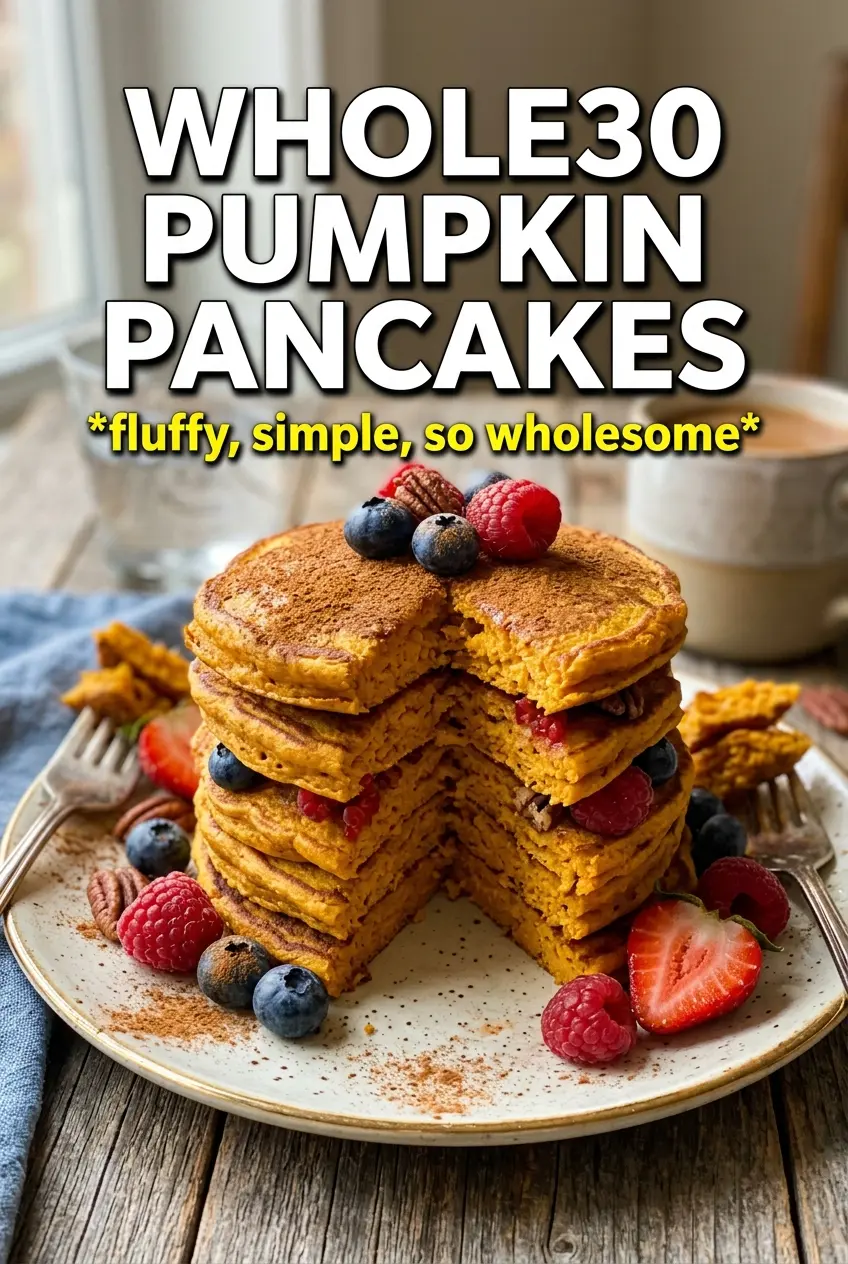
Whole30 pumpkin pancakes land light, tender, and just sweet enough without falling into the heavy, gummy trap that grain-free pancakes can hit. The banana and pumpkin give them a soft, almost custardy center, while the edges pick up a little golden color in the pan. Keep them small and you get pancakes that flip cleanly instead of tearing apart halfway through.
The batter is thinner than standard pancake batter, and that’s exactly why these work. Pumpkin puree brings moisture, banana brings binding and sweetness, and the eggs carry the structure. Almond butter helps hold everything together and adds a little richness, but the real trick is cooking them low and slow so the middle sets before the outside overcooks.
Below you’ll find the small details that matter most: how smooth the banana needs to be, why medium-low heat beats rushing the skillet, and the easiest way to keep these delicate pancakes from breaking when you flip them.
The pancakes held together better than I expected and the banana-pumpkin flavor was perfect. Cooking them on low heat made a huge difference — they flipped cleanly and stayed fluffy instead of falling apart.
Save these Whole30 pumpkin pancakes for the mornings when you want something grain-free, fluffy, and easy to flip without a lot of fuss.
The One Thing That Keeps Grain-Free Pancakes From Turning Gummy
The biggest mistake with pumpkin pancakes is treating them like regular flour pancakes. Without grain or gluten, the batter needs a little restraint. If you keep piling in batter or turn the heat too high, the outside sets before the center has a chance to cook, and you end up with a wet middle and a fragile flip.
Small portions solve most of that problem. These pancakes are meant to be cooked as 2- to 3-tablespoon rounds so the heat can move through them evenly. A low-and-slow skillet gives the eggs time to set the batter without browning the outside too fast, and that’s what keeps them tender instead of rubbery.
- Keep the pancakes small. Bigger pancakes are harder to flip and more likely to tear because the batter is soft.
- Cook over medium-low heat. Medium heat tends to overbrown the coconut oil before the center firms up.
- Wait for the top to look mostly dry. That visual cue matters more than the clock here.
What Each Ingredient Is Actually Doing in These Pancakes
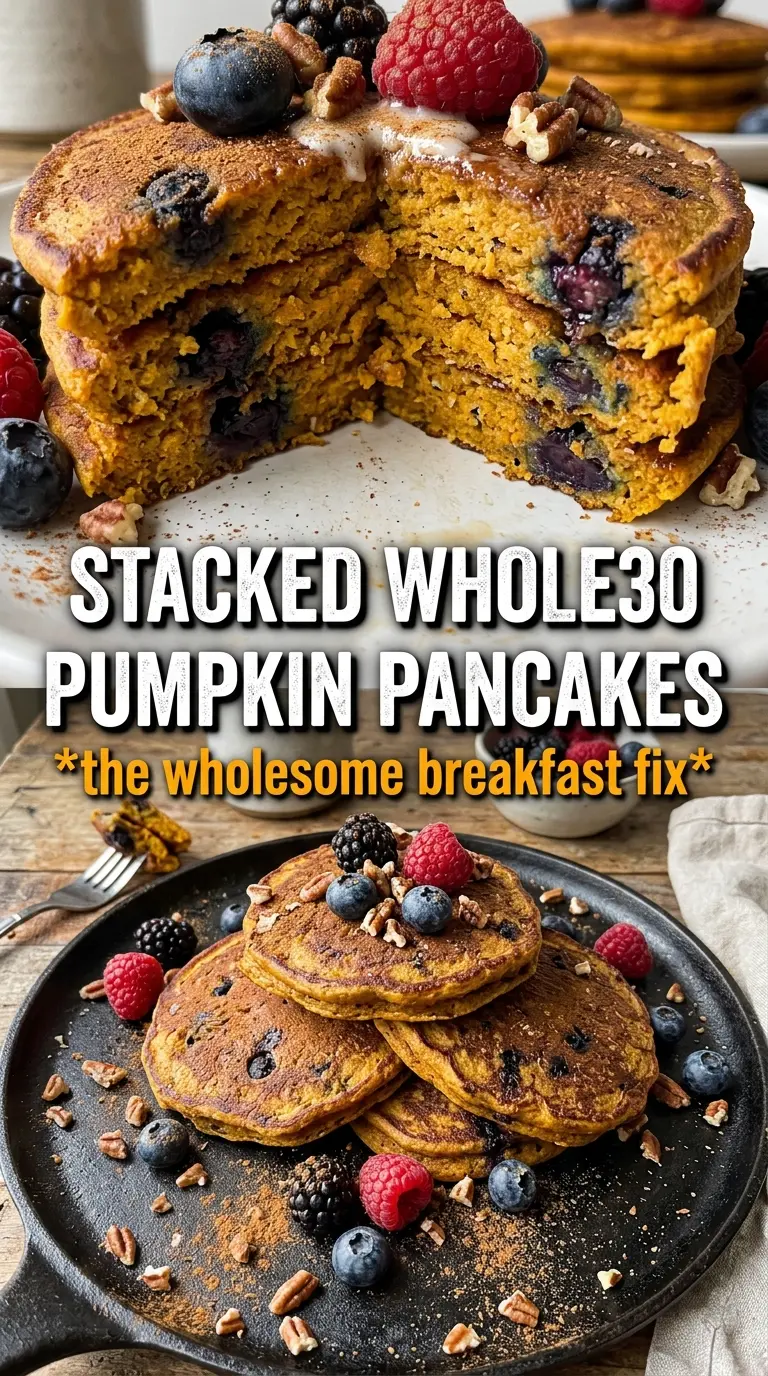
- Pumpkin puree — This gives the pancakes moisture and that gentle pumpkin flavor without making them taste like dessert. Use plain pumpkin puree, not pumpkin pie filling, or the batter will be too sweet and spiced.
- Ripe banana — The banana is doing the real binding work here, and it also replaces the sugar you’d normally expect in pancakes. Mash it until it’s almost completely smooth; lumps make the batter uneven and can leave little pockets that fall apart in the pan.
- Eggs — Four eggs might sound like a lot, but they’re what hold this batter together. There isn’t a good direct swap if you want the same structure, especially in a grain-free pancake.
- Almond butter or cashew butter — This adds body and richness, and it helps the pancakes feel more substantial. Almond butter gives a slightly nuttier flavor; cashew butter tastes milder and softer.
- Pumpkin pie spice and cinnamon — These warm the batter and make the pumpkin taste fuller. If your spice blend is old, the pancakes can taste flat, so use fresh spice if you have it.
- Baking soda — Just a little lift keeps the pancakes from eating dense. Don’t skip it; grain-free batter needs all the help it can get.
How to Keep the Batter Tender and the Flips Clean
Mash Until the Banana Disappears
Start by mashing the banana until it’s as smooth as you can get it. That matters more than people think, because banana chunks don’t melt out in the pan the way they do in baked batter. Whisk it with the pumpkin, eggs, almond butter, spices, vanilla, and baking soda until the mixture looks uniform and loose. The batter will be thinner than a classic pancake batter, and that’s normal for this recipe.
Cook Low Enough for the Center to Set
Heat a skillet over medium-low and add just enough coconut oil to coat the surface. Drop the batter in small rounds, then leave them alone until the edges look set and the top has lost most of its wet shine. If the pan is too hot, the bottoms will darken before the middle firms up, which makes flipping harder and the texture heavier.
Flip Once, Gently
Slide a thin spatula under each pancake and turn it in one confident motion. Don’t press them down after the flip; that squeezes out the air and makes them dense. They only need another minute or two on the second side, just until they feel set in the center and release easily from the pan. Keep the cooked pancakes in a warm oven if you’re making a second batch.
How to Adapt These for Different Kitchens and Different Mornings
Dairy-Free by Default
These pancakes are already dairy-free as written, which is part of what makes them easy to pull together on Whole30. Just keep the topping compliant too — almond butter and fruit work well, while any sweetened yogurt or syrup would push them out of bounds.
Cashew Butter for a Milder Finish
Cashew butter gives the pancakes a softer, less nutty taste and a slightly smoother texture. Almond butter is a little sturdier and more pronounced, so use cashew butter when you want the pumpkin and banana to stay front and center.
Double the Batch for a Faster Morning
These reheat well enough to make a second batch worthwhile. Cook them, cool them completely, then refrigerate them in a single layer before stacking with parchment so they don’t stick together.
Storage and Reheating
- Refrigerator: Store in an airtight container for up to 4 days. They soften a little as they sit, but the flavor stays good.
- Freezer: Freeze in a single layer, then transfer to a bag with parchment between layers. They freeze well for about 2 months.
- Reheating: Warm in a dry skillet over low heat or in the toaster oven until heated through. The mistake to avoid is blasting them in the microwave, which makes the texture rubbery and can dry out the edges before the center warms.