Watermelon sangria lands in the glass with a pale blush color, cold citrus edges, and that first sip of ripe melon that tastes like summer without feeling heavy. The best part is how the watermelon shows up two ways: blended into the base for clean fruit flavor, then folded in again as fresh cubes that keep the pitcher looking bright and generous. It’s the kind of drink that disappears fast at a cookout because it drinks easy, but still feels a little more special than pouring wine and calling it done.
The trick is straining the blended watermelon so the sangria stays smooth instead of pulpy, then giving it time in the fridge so the wine, vodka, citrus, and honey settle into each other. I like using dry rosé for the prettiest color and the softest fruit notes, but a crisp white wine works just as well if that’s what you have. The sparkling water goes in at the end, not before, so the pitcher keeps its lively fizz right through serving.
The watermelon flavor came through clean and fresh, and the sangria wasn’t watered down at all after chilling. I loved that the mint and citrus made it taste bright instead of too sweet.
Love the blush-pink color and fresh melon in this watermelon sangria? Save it to Pinterest for your next pitcher drink night.
The Reason This Sangria Stays Bright Instead of Watery
Watermelon is full of flavor, but it also carries a lot of water, which is why many sangrias end up tasting thin after the fruit sits in the wine. Blending part of the melon and straining it gives you concentrated juice without the fibrous texture, so the drink tastes clean and polished instead of sludgy. The fresh cubes matter too. They look beautiful in the pitcher, but they also give each glass a little burst of fruit as people pour.
Another key move is holding the sparkling water until the very end. If you add it before the chilling time, the fizz fades and the drink tastes flat by the time you serve it. The honey or simple syrup also blends in better when it gets a minute with the wine and citrus, especially if your watermelon isn’t at peak sweetness.
What Each Ingredient Is Actually Doing Here
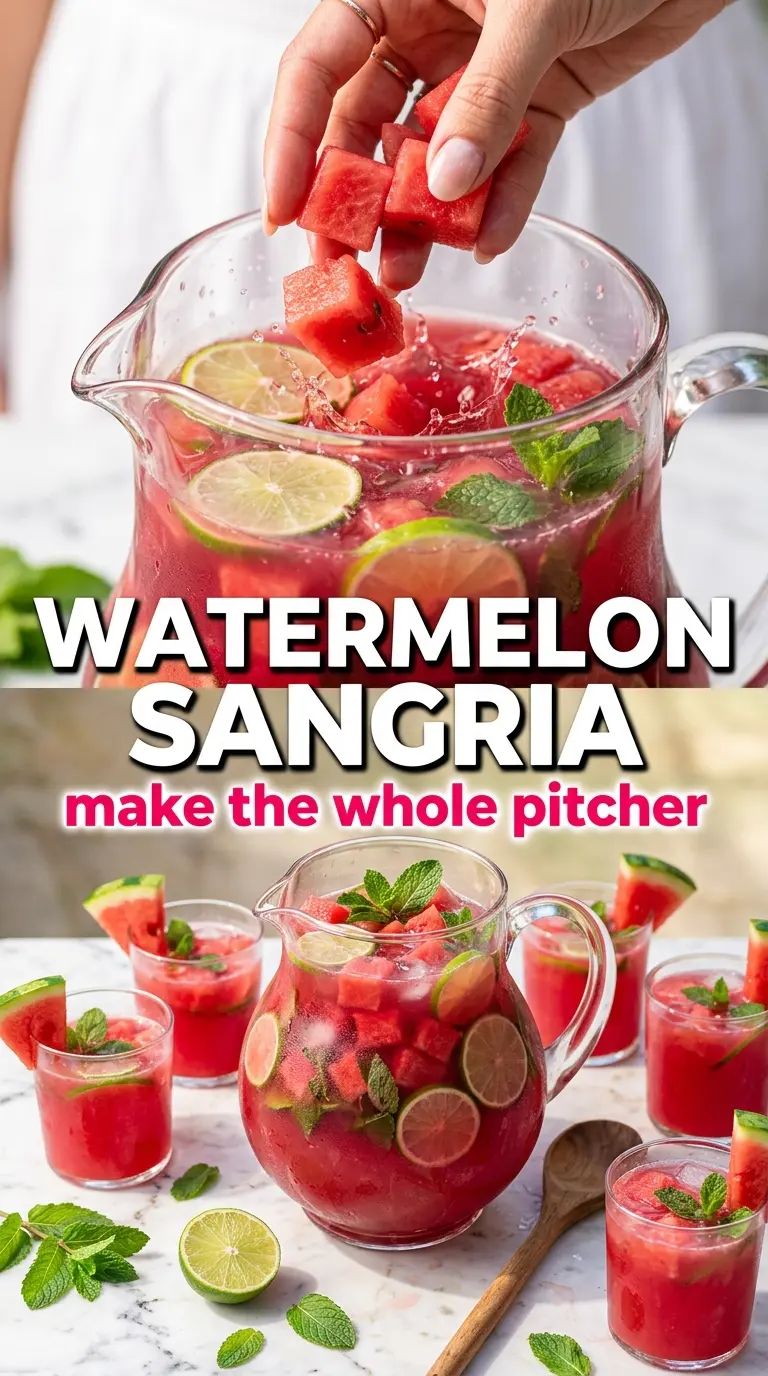
- Fresh watermelon — Use ripe, fragrant melon with deep color. That’s where the flavor comes from, and a bland watermelon will give you a bland sangria no matter how much wine you use. Seeded cubes are easiest to work with because you can blend and strain them cleanly.
- Dry rosé or white wine — Choose a wine you’d happily drink on its own. Sweet wine makes the sangria taste heavy, while dry wine lets the watermelon and citrus stay in front. Rosé gives the prettiest color; white wine keeps the profile a little crisper.
- Vodka and triple sec — The vodka lifts the alcohol without changing the flavor much, and the triple sec adds orange notes that round out the citrus. If you skip the triple sec, the drink still works, but it loses some of that sangria-style depth.
- Honey or simple syrup — This is for balancing the melon and wine, not making the drink candy-sweet. Start with the smaller amount if your watermelon is already very ripe, then taste after chilling and adjust if needed.
- Lime, lemon, and mint — The citrus keeps the fruit from tasting one-note, and the mint gives the pitcher a fresh finish. Slice the citrus thin so it perfumes the drink without taking over.
Building the Pitcher So the Fruit and Wine Meld Properly
Making the Watermelon Base
Blend 2 cups of the watermelon cubes until completely smooth, then press the puree through a fine mesh sieve. You want about 1 cup of juice, not a thick puree, because pulp makes the sangria feel heavy and can settle into the bottom of the pitcher. If the melon is extra juicy, keep straining until the liquid looks clean and silky.
Mixing the Wine, Spirits, and Sweetener
Stir the watermelon juice, wine, vodka, triple sec, and honey together in a large pitcher. Give it a good minute so the honey disappears instead of sinking to the bottom. If the honey resists blending, warm it with a spoonful of the wine first or use simple syrup, which dissolves faster in a cold drink.
Adding the Fruit and Letting Time Do the Work
Drop in the remaining watermelon cubes, lime slices, and lemon slices, then cover the pitcher and chill it for at least 2 hours. That resting time softens the sharp edge of the alcohol and lets the citrus oils perfume the whole drink. If you rush this step, the sangria tastes separated instead of cohesive.
The Last-Minute Fizz
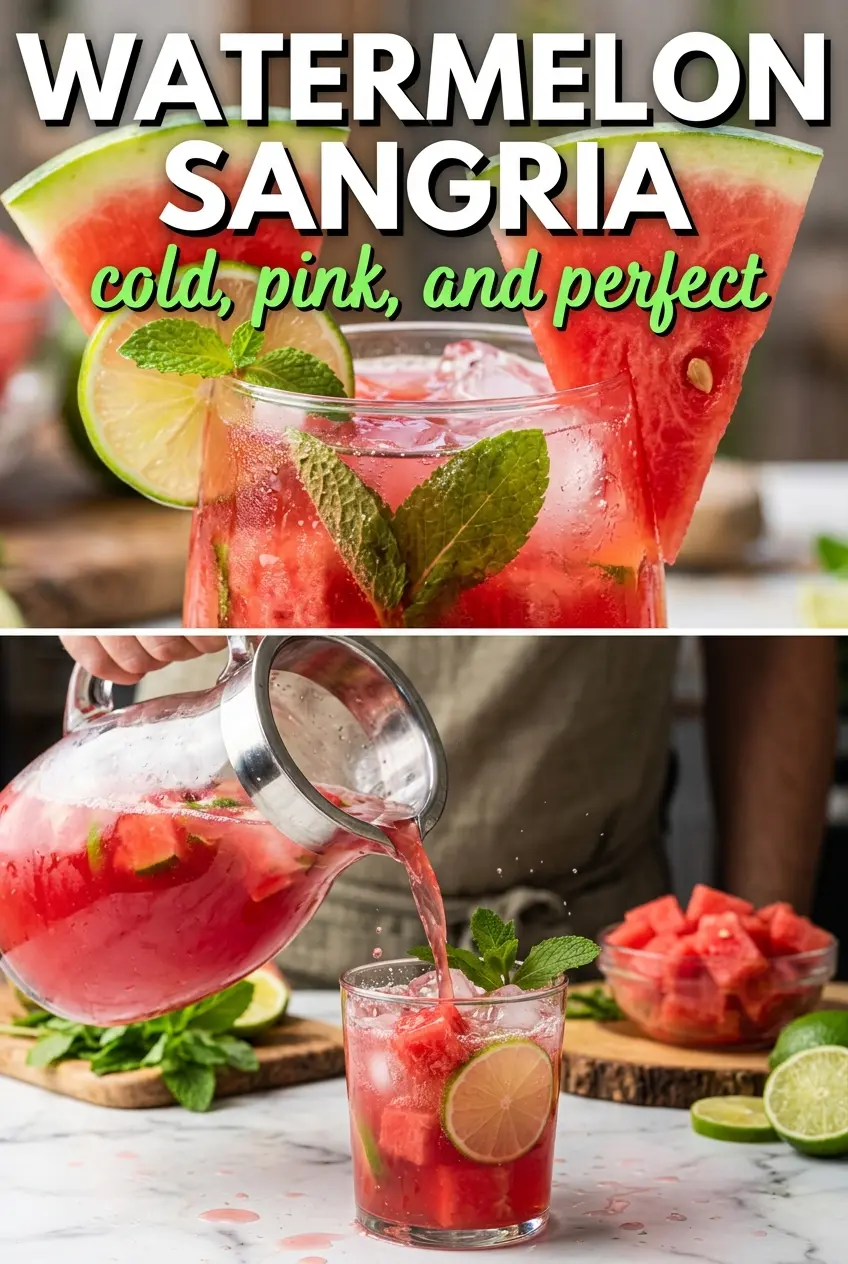
Right before serving, pour in the sparkling water and stir gently. A heavy stir knocks the carbonation out fast, so one or two slow turns is enough. Serve over ice with mint sprigs on top, and pour a little of the fruit into each glass so the drink looks as good as the pitcher.
How to Adapt This Pitcher for Different Crowds and Preferences
Make it lower in alcohol
Cut the vodka in half and add a little more sparkling water at serving time. You’ll keep the watermelon-forward flavor, but the drink will land lighter and easier for a long afternoon. If you remove too much alcohol, though, the sangria starts to taste more like fruit punch than a cocktail.
Use white wine instead of rosé
A dry sauvignon blanc or pinot grigio makes the drink sharper and a little less berry-like. The watermelon color will be paler, but the fruit still comes through clearly. This is the version I’d make when I want the citrus to lead.
Make it sparkling and alcohol-free
Swap the wine, vodka, and triple sec for chilled white grape juice or a nonalcoholic wine alternative, then keep the watermelon juice, citrus, and mint. Top with extra sparkling water right before serving. It won’t have the same boozy finish, but it keeps the same cold, fresh, pitcher-drink feel.
Storage and Reheating
- Refrigerator: Store the sangria base for up to 2 days, but add the sparkling water only when you’re ready to serve. The fruit softens over time, and the drink gets a little more infused after the first day.
- Freezer: This doesn’t freeze well as a finished drink. The wine and fruit separate when thawed, and the texture turns muddy. If needed, you can freeze watermelon cubes ahead of time for a colder pitcher.
- Reheating: No reheating needed. If the sangria sits too long, stir it and top with a fresh splash of sparkling water to wake it back up. Don’t add ice to the pitcher itself or it will water down the flavor.
Answers to the Questions Worth Asking
Watermelon Sangria
Ingredients
Equipment
Method
- Blend 2 cups of fresh watermelon cubes until smooth, then strain through a fine mesh sieve to get 1 cup of fresh watermelon juice.
- Set the watermelon juice aside at room temperature while you prepare the pitcher.
- Combine the watermelon juice, rosé wine, watermelon vodka (or plain vodka), triple sec, and honey (or simple syrup) in a large pitcher and stir to combine.
- Add the remaining watermelon cubes, thinly sliced lime, and thinly sliced lemon to the pitcher.
- Cover the pitcher and refrigerate for at least 2 hours to chill and allow the flavors to meld; look for a slightly denser, more cohesive blush-pink color.
- Right before serving, add sparkling water (or club soda) to the pitcher and stir gently.
- Pour into ice-filled glasses and garnish each with fresh mint sprigs; serve immediately for the best fresh bite.