Vegan banana bread should slice cleanly, stay moist for days, and taste like the classic version people grew up with — just without eggs or dairy getting in the way. The best loaves have a soft, tender crumb with a deep banana flavor and a golden crust that holds together when you cut into it. When it’s done right, nobody misses anything.
The trick is using enough banana for flavor and moisture without turning the batter heavy, then letting the flax eggs sit long enough to thicken before they go in. Melted coconut oil or vegan butter gives the loaf richness, while the combination of baking soda and baking powder keeps it from baking up dense. A light hand with the flour matters here; overmixing is what turns a good banana bread into a brick.
Below, I’ll walk you through the small details that make this loaf work, including the cooling time that matters more than most people expect and the swaps that still give you a strong, bakery-style result.
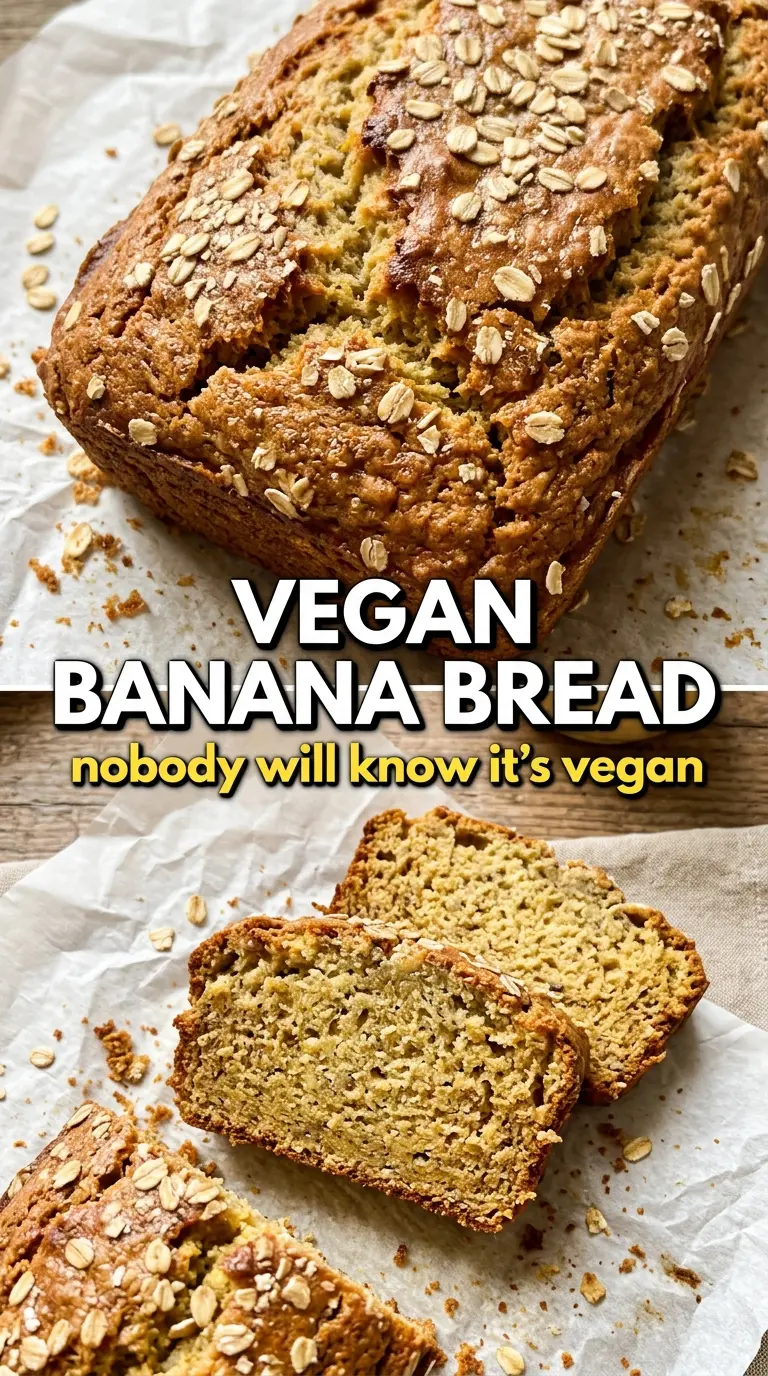
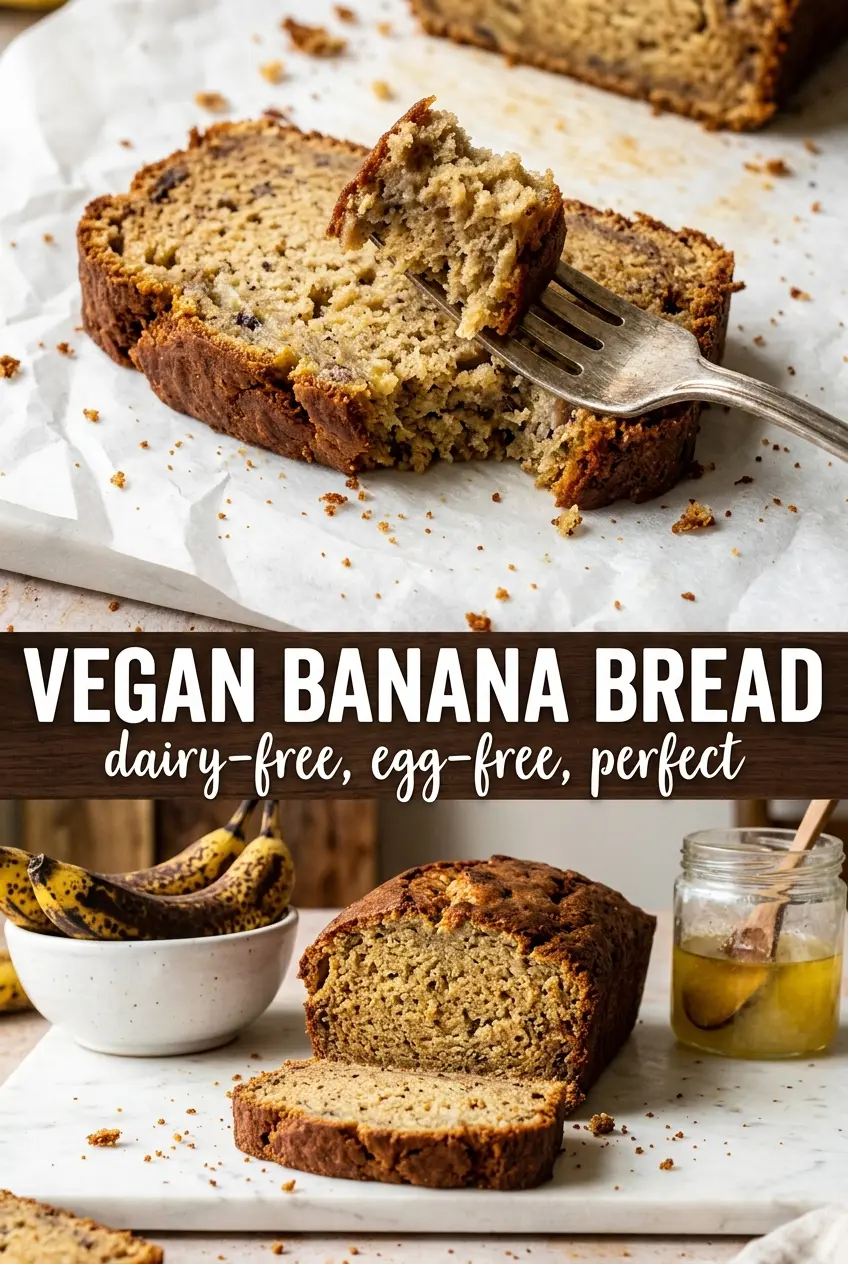
The loaf came out moist with a perfect crumb, and the flax eggs held it together better than I expected. I baked it until the top was deep golden, and it sliced beautifully after cooling.
Like this vegan banana bread? Save it to Pinterest for the days when you want a moist plant-based loaf with a golden crust and a bakery-style crumb.
Why This Loaf Stays Moist Without Eggs Getting in the Way
The biggest risk with vegan banana bread is a loaf that looks done on the outside and turns gummy in the middle, or worse, bakes up dry because the structure never set. Flax eggs solve part of that problem, but they need time to gel before they go into the batter. If you rush that step, the bread still bakes, but it won’t slice with the same clean, even crumb.
Banana bread also falls apart when the batter is overmixed after the flour goes in. Once the dry ingredients hit the bowl, stir only until the flour disappears and stop. A few streaks are better than a tough loaf. The batter should look thick and spoonable, not pourable like cake batter.
What Each Ingredient Is Actually Doing in This Vegan Loaf
- Very ripe bananas — These carry the flavor and moisture. The darker and spottier they are, the better the loaf tastes. Under-ripe bananas give you a flatter, starchier result.
- Flax eggs — This is the binder that replaces eggs and helps the bread hold together once baked. Let the mixture sit until it’s thick and gel-like; if it still looks watery, the loaf will be looser and more fragile.
- Coconut oil or vegan butter — This gives the bread richness and helps the crumb stay tender. Coconut oil adds a light coconut note, while vegan butter tastes closer to classic banana bread. Either works well.
- Plant-based milk — A small amount loosens the batter just enough so the flour can hydrate evenly. Oat or almond milk both work. Use an unsweetened version if you want the banana flavor to stay front and center.
- Baking soda and baking powder — Banana bread needs both lift and browning. The baking soda reacts with the banana and sugar, while the baking powder gives the loaf a little extra rise so it doesn’t bake up heavy.
- All-purpose flour — This gives the loaf structure without making it tough. A 1:1 gluten-free baking blend can work, but the texture will be slightly more delicate and a little less springy.
Mixing the Batter So the Crumb Stays Tender
Start With the Bananas and Wet Ingredients
Mash the bananas until mostly smooth, then whisk in the melted coconut oil or vegan butter, sugar, flax eggs, vanilla, and plant milk. The mixture should look glossy and evenly combined, with no streaks of fat floating on top. If the melted oil is too hot, it can make the flax mixture clump, so let it cool for a minute before you mix. You want the batter to stay fluid enough to fold, not separate.
Fold, Don’t Beat, the Dry Ingredients
Add the flour, baking soda, baking powder, cinnamon, and salt, then stir just until the flour disappears. Overmixing develops the gluten and gives you a tight, rubbery loaf instead of a soft one. If you’re using chocolate chips, fold them in at the very end with only a few turns of the spoon. The finished batter should still look a little rough.
Bake Until the Center Has Set
Pour the batter into a greased 9×5 loaf pan and bake at 350°F until the top is deeply golden and a toothpick comes out clean or with just a few moist crumbs. Banana bread often looks done before the center actually is, so trust the middle more than the edges. If the top browns too quickly before the center sets, tent it loosely with foil for the last 10 to 15 minutes. Pulling it early leaves you with a sunken middle after cooling.
Let It Cool Before You Slice It
This is the part people skip, and it matters. Vegan banana bread finishes setting as it cools, so slicing it while it’s hot can make it seem underbaked even when it isn’t. Let it cool in the pan for a bit, then move it to a rack until completely cool. That resting time is what gives you neat slices instead of a crumbly mess.
How to Adapt This Loaf for Different Kitchens and Diets
Make it gluten-free
Swap the all-purpose flour for a 1:1 gluten-free baking blend that includes xanthan gum. The loaf will still be moist and sliceable, but it may be a little more delicate when warm, so give it extra cooling time before cutting.
Use coconut sugar for a deeper, less sweet loaf
Coconut sugar gives the bread a darker color and a caramel note that plays well with banana. It won’t taste as sweet as white sugar, so the banana flavor comes through more strongly and the crust browns a little more deeply.
Make it richer with vegan butter
Vegan butter gives the loaf a flavor that reads closer to classic bakery banana bread. Coconut oil works fine and makes a slightly firmer crumb when chilled, but vegan butter usually gives the softest, most familiar texture.
Add chocolate chips for a dessert-style loaf
Fold in dairy-free chocolate chips at the end so they stay evenly distributed. The chips add pockets of sweetness and help the loaf feel more like a treat, but too many can weigh the batter down, so keep the mix-in amount modest.
Storage and Reheating
- Refrigerator: Store in an airtight container for up to 5 days. The loaf firms up a bit in the fridge, but it stays moist.
- Freezer: Freeze slices or the whole loaf tightly wrapped for up to 3 months. Wrap well first, then add a freezer bag so the banana flavor doesn’t pick up other odors.
- Reheating: Warm slices in a toaster oven or microwave just until heated through. Don’t overheat it or the crumb turns dry fast, especially if the slice has been chilled.
Answers to the Questions Worth Asking
Vegan Banana Bread
Ingredients
Equipment
Method
- Mix ground flaxseed and water, then let the mixture sit 5 minutes until it turns gel-like.
- Preheat the oven to 350°F and grease a 9x5 loaf pan.
- Whisk melted coconut oil, sugar, flax eggs, vanilla extract, and plant-based milk into the mashed bananas until fully combined.
- Fold in all-purpose flour, baking soda, baking powder, cinnamon, and salt until just combined.
- Fold in dairy-free chocolate chips if using.
- Pour the batter into the prepared loaf pan and bake for 55–65 minutes until deeply golden.
- Check doneness with a toothpick—it should come out clean.
- Cool completely before slicing so the texture sets further as it cools.