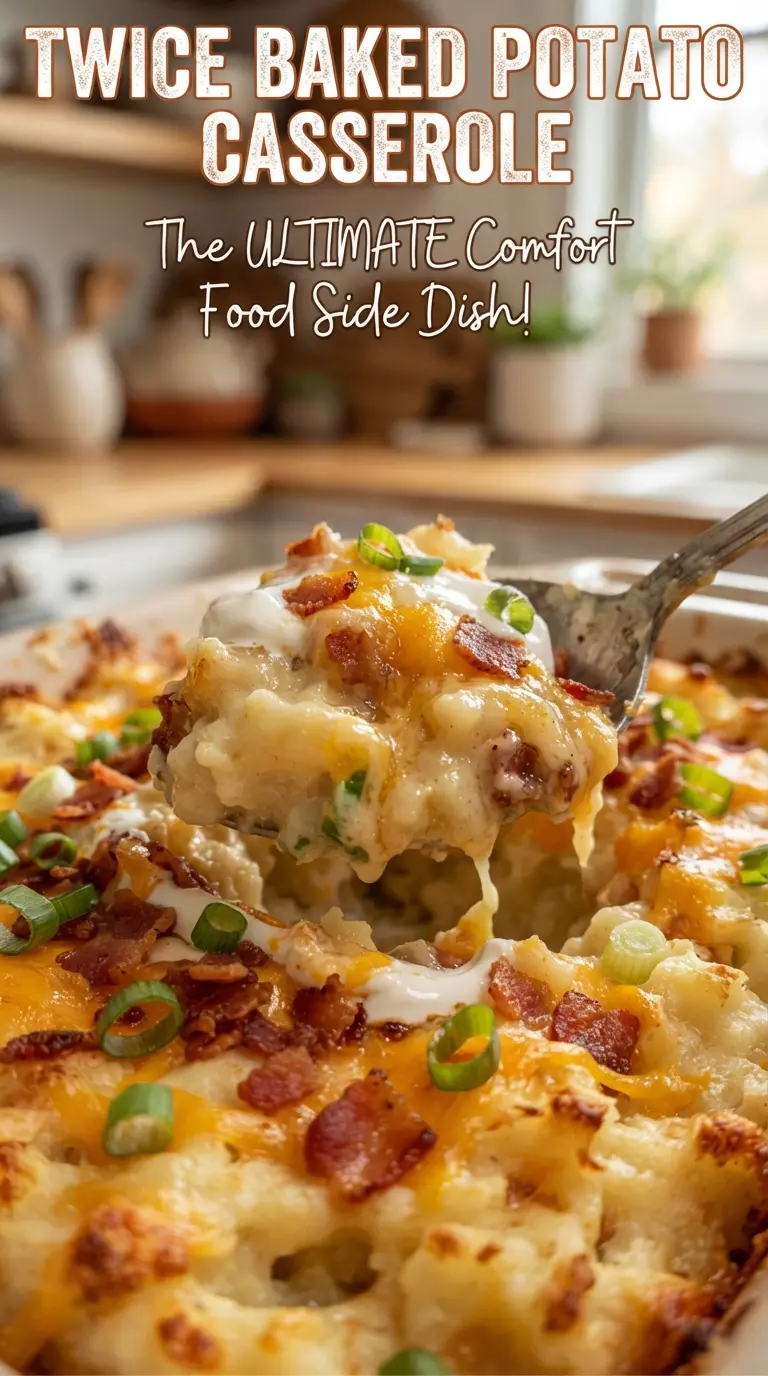
Twice baked potato casserole brings everything people love about loaded baked potatoes into one bubbling pan. The potatoes turn fluffy and rich in the center, the cheddar melts into the mash, and the bacon on top gives you that salty crunch that keeps every bite interesting. It’s the kind of side dish that disappears fast because it tastes like more effort than it actually takes.
The trick is baking the potatoes until they’re fully tender before you scoop them. Undercooked potatoes give you a gluey mash, and this casserole only works when the flesh is soft enough to break apart easily. A mix of butter, sour cream, and milk keeps the filling creamy without turning it thin, and stirring in some of the bacon and green onions before baking layers the flavor all the way through.
Below, you’ll find the details that matter most: how to keep the potato filling light instead of dense, which ingredient swaps still hold up, and how to make this ahead for a holiday table or an easy weeknight side.
The potatoes came out fluffy, not gummy, and the cheddar on top browned just enough while the bacon stayed crisp. I made it ahead and baked it the next day, and it held up perfectly.
Save this twice baked potato casserole for the next holiday spread — it’s creamy, cheesy, and topped with bacon in every forkful.
The Part That Keeps This Casserole Fluffy Instead of Gluey
Twice baked potato casserole goes wrong when the potatoes are overworked. Once the flesh is soft, the job is to mash, not whip. Russets are the right choice because they break down into a dry, fluffy texture that can carry butter, sour cream, and cheese without turning heavy. If you use waxy potatoes, the filling gets denser and more pasty.
Let the baked potatoes cool just enough to handle, then scoop out the flesh while it’s still warm. Warm potatoes absorb the dairy better, which gives you a smoother mash with less stirring. The other place people slip is the final bake: long enough for the cheese to melt and the casserole to heat through, but not so long that the edges dry out. You want hot, creamy spoonfuls with a browned top, not a baked potato brick.
What Each Ingredient Is Actually Doing in the Pan
- Russet potatoes — These are the backbone of the dish. Their starchy texture bakes up fluffy and mashes smoothly, which is why they work here better than red or Yukon gold potatoes.
- Butter, sour cream, and whole milk — This is the creamy base. Sour cream gives the casserole its tang and body, butter adds richness, and milk loosens the mash just enough so it scoops well after baking. If you swap in low-fat dairy, the texture gets less plush.
- Sharp cheddar — Sharp cheddar gives you enough punch to taste through the potatoes. Mild cheddar melts fine, but it disappears faster. Pre-shredded cheese works in a pinch, though freshly shredded melts cleaner and gives a better top.
- Bacon and green onions — The bacon adds salt and crunch, while the green onions keep the casserole from tasting flat. Stir some into the filling and save some for the top so every layer gets a hit of flavor.
Building the Mash and Baking It Without Drying It Out
Baking the Potatoes Until They Collapse Under a Fork
Start the potatoes at 400F and bake until a fork slides in with no resistance. If the centers are even a little firm, you’ll end up with lumps that never quite blend into the casserole. Once they’re done, let them cool just enough to handle, then split and scoop the flesh into a large bowl. Throwing in cold butter or cold dairy at this stage can make the mash lumpy, so let the butter soften and use room-temperature sour cream if you can.
Mashing for Creamy, Not Paste-like, Texture
Break the potato flesh up with a masher or fork first, then stir in the butter, sour cream, and milk. Stop as soon as the mixture looks smooth and fluffy. If you beat it hard or use a mixer, the starch releases and turns the filling dense and gluey. Fold in one cup of cheddar, half the bacon, half the green onions, salt, and pepper, and taste before baking so the seasoning is right in the bowl, not guessed at after the fact.
Finishing in the Oven Until the Top Bubbles
Spread the mixture into a buttered 9×13-inch dish and top it with the remaining cheddar and bacon. Bake at 350F until the center is hot and the cheese is fully melted and bubbling at the edges, about 20 to 25 minutes. If you leave it in until the top starts looking dark, the casserole underneath can dry out. Finish with the remaining green onions right before serving so they stay fresh and sharp.
How to Adjust the Casserole for Different Tables
Make-Ahead for Holidays
Assemble the casserole up to the point of baking, cover it tightly, and refrigerate it for up to a day. Add a few extra minutes in the oven if it goes in cold from the fridge. This is the easiest way to get a holiday side dish on the table without rushing the last-minute finishing work.
Dairy-Free Version
Use plant-based butter, an unsweetened dairy-free sour cream, and an unflavored oat or almond milk. The texture stays creamy, though the flavor won’t have quite the same tang as the original. Choose a meltable dairy-free cheese if you want the top to brown and bubble.
Gluten-Free by Default
This recipe is naturally gluten-free as written, as long as your bacon and shredded cheese are certified gluten-free. That makes it an easy side to serve when you need something everyone can eat without changing the flavor or texture.
Vegetarian Swap
Skip the bacon and add extra cheddar plus a little smoked paprika for depth. You lose the salty crunch, so the casserole tastes richer and more straightforward, but it still lands with plenty of flavor. A sprinkle of chives or extra green onions helps replace some of that savory edge.
Storage and Reheating
- Refrigerator: Store leftovers covered for up to 4 days. The top softens a little, but the flavor stays good.
- Freezer: Freeze in portions or as a whole casserole for up to 2 months. Wrap it tightly and thaw overnight in the fridge before reheating.
- Reheating: Warm covered in a 325F oven until hot in the center. Microwaving works for single portions, but use short bursts so the potatoes don’t turn dry and grainy.
Answers to the Questions Worth Asking

Twice Baked Potato Casserole
Ingredients
Equipment
Method
- Preheat the oven to 400°F and bake the russet potatoes for 50–60 minutes, until fork-tender.
- Cool the baked potatoes slightly, then scoop out the flesh and mash them until smooth.
- Stir the mashed potatoes with softened butter, sour cream, and whole milk until creamy and evenly combined.
- Mix in 1 cup shredded sharp cheddar, half the bacon, half the green onions, salt, and black pepper.
- Spread the potato mixture into a buttered 9x13-inch baking dish, then top with the remaining cheddar and bacon.
- Reduce the oven to 350°F and bake for 20–25 minutes, until hot and the cheese is bubbly.
- Sprinkle with the remaining green onions and serve.