Golden-seared chicken breasts tucked into a bright tomato basil sauce are the kind of skillet dinner that earns repeat status fast. The chicken stays juicy, the tomatoes collapse into their own jammy juices, and the basil lifts everything at the end so the whole pan tastes fresh instead of heavy. It’s a simple combination, but the balance is what makes it work.
The key is giving the chicken a real sear before anything else. That browned crust seasons the sauce later, and the tomatoes need enough heat to burst and soften before the wine or broth goes in. A little balsamic rounds out the acidity, while Parmesan adds a salty finish that makes the sauce cling to the chicken instead of running all over the plate.
Below, I’ve included the small details that keep the chicken tender and the sauce bright, plus a few smart swaps if you need to work with what’s in your kitchen.
The tomatoes broke down into a glossy sauce and the chicken stayed juicy all the way through. I used the balsamic at the end like you said, and it gave the sauce that little sweet tang that pulled everything together.
Save this tomato basil chicken breasts recipe for a quick skillet dinner with juicy chicken, burst tomatoes, and fresh basil.
The Part That Keeps the Chicken Juicy Instead of Stringy
Chicken breasts dry out when they’re left to cook too long after the sear. The trick here is to stop at a deep golden crust, then finish them briefly in the sauce just long enough to bring the center to 165°F. That short simmer keeps the meat tender and lets the tomato juices coat the chicken without turning the whole dish watery.
Another thing that matters is pan temperature. If the pan is too cool, the chicken steams and never develops that savory browned crust. If it’s too hot when the tomatoes go in, the garlic can scorch in seconds, which leaves the sauce bitter before it even starts.
- Searing first builds flavor and keeps the chicken from tasting flat.
- Bursts from the tomatoes create the sauce base without needing extra cream or broth.
- The quick return to the pan warms the chicken through without overcooking it.
What Each Ingredient Is Actually Doing in This Skillet
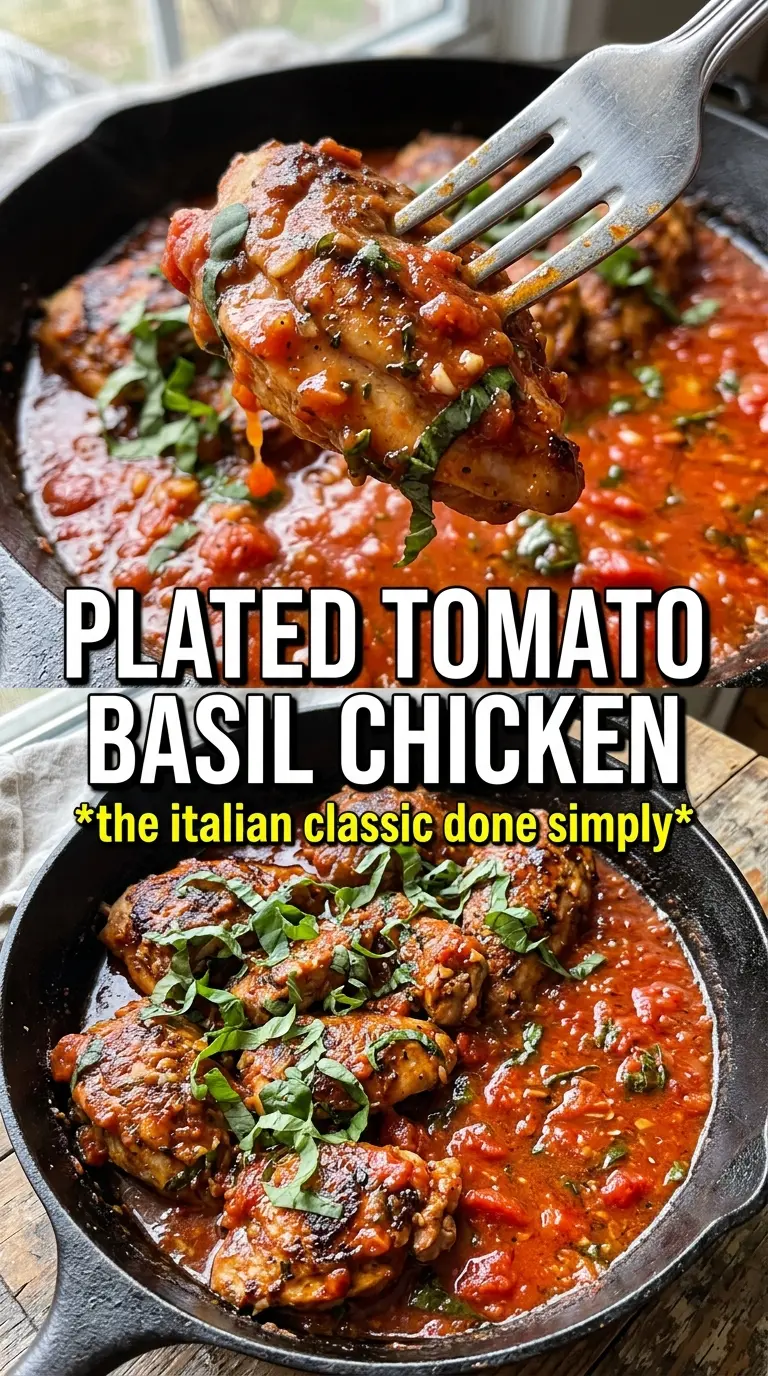
- Chicken breasts give you a lean, quick-cooking base. If yours are very thick, pound them to an even size so the centers finish when the outside is browned.
- Cherry tomatoes matter because they burst into a sweet, concentrated sauce instead of turning mealy. Grape tomatoes work too, though they’re a little less juicy.
- Dry white wine or chicken broth loosens the browned bits from the pan. Wine adds a little more depth, but broth works fine if that’s what you have.
- Balsamic vinegar sharpens the sauce and gives it a rounded finish. Don’t skip it unless you’re replacing it with a tiny splash of lemon juice at the end.
- Fresh basil should go in at the end so it stays fragrant. If you cook it too long, it loses that bright green flavor and turns dull.
- Parmesan adds salt and body. Shaved Parmesan melts lightly over the hot chicken; finely grated Parmesan will disappear into the sauce faster.
Building the Sauce So It Stays Bright and Glossy
Seasoning and Searing the Chicken
Coat the chicken with salt, pepper, garlic powder, and Italian seasoning, then lay it into hot olive oil without crowding the pan. You’re looking for a crust that releases on its own after 5 to 6 minutes, not pale chicken that sticks and tears. If the breasts are large or uneven, they’ll cook at different rates, so pound them first or split them into cutlets for a more even result.
Waking Up the Garlic and Tomatoes
Once the chicken is out, the garlic only needs about 30 seconds in the same pan. Add the tomatoes right after so the garlic doesn’t burn, then let the tomatoes soften and pop before stirring much at all. That little bit of patience is what turns them from raw and firm into the juicy base of the sauce.
Finishing With Wine, Balsamic, and Basil
When the wine hits the pan, let it bubble for a minute so the sharp edge cooks off and the sauce tightens a little. Stir in the balsamic and red pepper flakes, then return the chicken and spoon the sauce over the top as it simmers. Hold the basil for the end; if you add it too early, the flavor fades and the leaves darken instead of staying fresh and fragrant.
How to Adapt This for a Few Different Kitchens
Make it dairy-free
Skip the Parmesan and finish with a small drizzle of olive oil instead. The sauce stays bright and savory, just a little less salty and rich at the end.
Use chicken thighs instead of breasts
Boneless skinless thighs give you more forgiveness and stay juicier if you’re worried about overcooking. They may need a couple extra minutes in the pan, but the sauce method stays the same.
Keep it gluten-free without changing the method
This recipe is naturally gluten-free as written, as long as your broth is certified gluten-free. That makes it a good one to keep in your back pocket when you want a fast skillet dinner with no flour or breading involved.
Swap the wine for broth
Broth gives you a milder sauce and skips the extra acidity from wine. If you go this route, keep the balsamic in place so the sauce still tastes balanced instead of flat.
Storage and Reheating
- Refrigerator: Store leftovers for up to 3 days. The tomatoes soften more as they sit, but the flavor stays good.
- Freezer: Freezes well for up to 2 months, though the tomato sauce will be a little softer after thawing. Cool completely before packing into airtight containers.
- Reheating: Warm gently in a covered skillet over low heat with a splash of broth or water. High heat dries out the chicken and makes the sauce taste tired.
Answers to the Questions Worth Asking
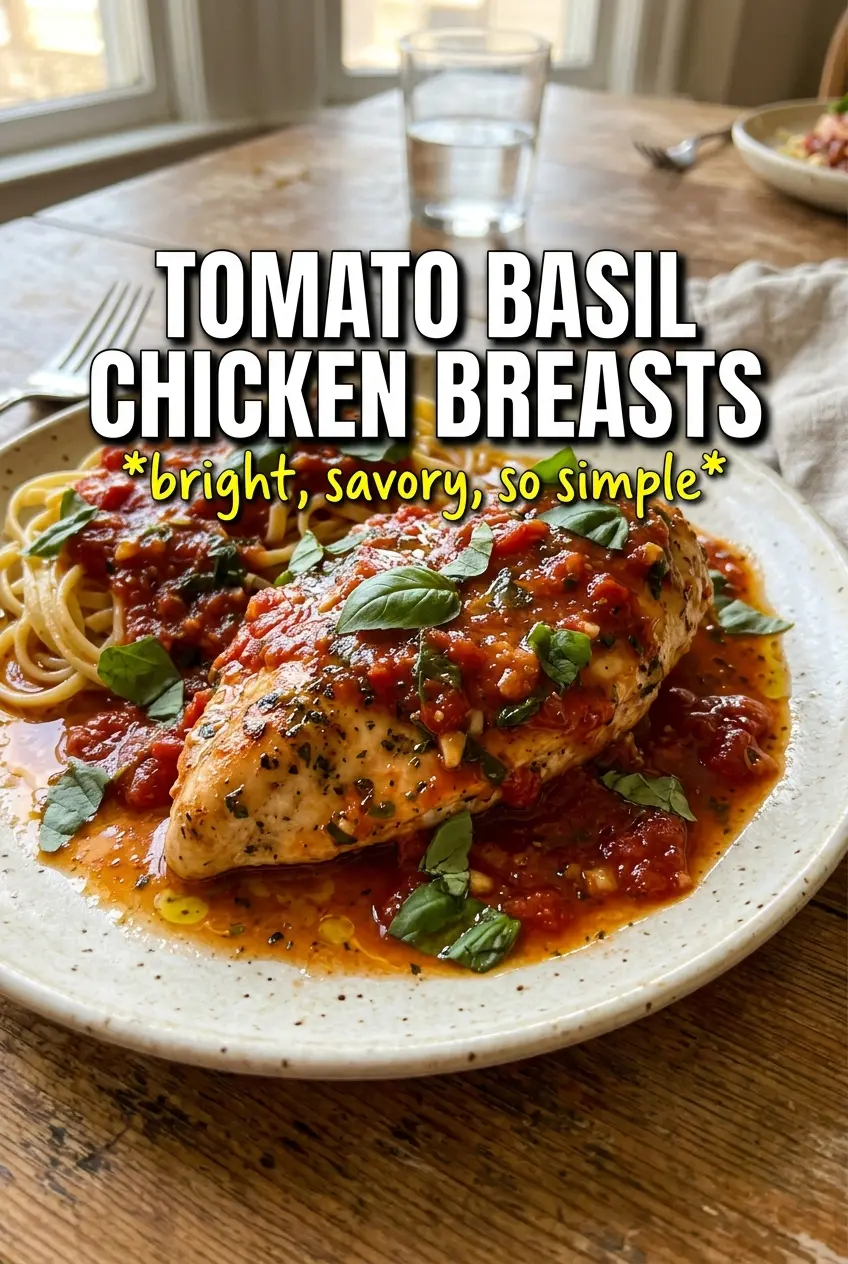
Tomato Basil Chicken Breasts
Ingredients
Equipment
Method
- Season boneless skinless chicken breasts with salt, pepper, garlic powder, and Italian seasoning to taste, then pat lightly so the coating sticks. Heat olive oil in a large cast iron skillet over medium-high heat until shimmering, about 1 minute.
- Place the chicken in the skillet and sear 5-6 minutes per side until deeply golden and releases easily from the pan. Cook until the internal temperature reaches 165°F, then remove chicken to a plate.
- In the same pan, cook minced garlic over medium-high heat for 30 seconds until fragrant, stirring constantly so it doesn’t brown. Add cherry tomatoes and cook for 3-4 minutes until they burst and release their juices.
- Pour in dry white wine and let it bubble for 1 minute, scraping up any browned bits from the bottom of the skillet. Stir in dried Italian seasoning, red pepper flakes, and balsamic vinegar until combined.
- Return the chicken to the pan and spoon the tomato sauce over each breast. Simmer for 2 minutes so the chicken warms through and the sauce clings.
- Scatter fresh basil over the top, then finish with shaved Parmesan and a drizzle of olive oil before serving.