Texas Roadhouse rolls have that soft, feathery crumb that pulls apart in warm layers and practically melts the second you add butter. The tops bake up lightly golden, but the inside stays pillowy and tender, which is exactly what you want from a copycat roll that people remember for days. They’re the kind of dinner roll that disappears before the main dish even makes it to the table.
This version gets its texture from a rich dough with milk, butter, and egg, plus two rises that give the gluten time to relax and the yeast time to build volume. The dough is rolled, folded, and cut into squares instead of shaped into tight balls, which helps create those signature square edges and an especially soft bite. The cinnamon honey butter is whipped until fluffy, so it spreads instead of tearing the roll apart.
Below, I’ll walk you through the small details that matter most, including how to keep the dough soft without making it sticky and how to get that bakery-style finish on top. If you’ve ever had homemade rolls turn out dense, the issue is usually in the rise, not the ingredients.
The rolls came out unbelievably soft, and the cinnamon honey butter whipped up light and fluffy instead of grainy. I baked mine until just golden, and they tasted like the restaurant version right out of the oven.
Save these Texas Roadhouse Rolls for the nights when you want soft, fluffy dinner rolls with cinnamon honey butter on the side.
The Trick to Soft Rolls That Don’t Turn Dense
The biggest mistake with homemade dinner rolls is adding too much flour too early. This dough should feel soft and a little tacky after kneading, not stiff and dry. If it turns firm in the bowl, the baked rolls will bake up tighter and lose that airy pull-apart texture that makes these so good.
Yeast also needs a warm, comfortable start. The milk should be around 110F, not hot enough to scald, or the yeast loses strength before it even gets going. After mixing, give the dough a full hour to rise until doubled, then let the shaped squares puff again before baking. That second rise is what keeps the crumb light instead of bready.
- Whole milk — This gives the dough tenderness and a richer flavor than water alone. Lower-fat milk works, but the rolls won’t be quite as soft.
- Active dry yeast — It gives you a dependable rise as long as the liquid is warm, not hot. If your yeast is old and slow, the dough will take longer to double.
- Butter — Melted butter goes into the dough for richness, and softened butter goes into the cinnamon honey spread for the fluffy finish. Don’t swap in oil if you want the same taste.
- All-purpose flour — This is the right balance for a tender roll. Bread flour will make them chewier and slightly less delicate.
Building the Dough and Keeping It Tender
Waking Up the Yeast
Stir the warm milk, water, yeast, and a spoonful of sugar together, then let it sit until foamy. That foam tells you the yeast is active and ready to lift the dough. If the surface stays flat after five to ten minutes, start over with fresh yeast, because dead yeast gives you heavy rolls.
Kneading to the Right Finish
Once the flour goes in, knead until the dough is smooth, elastic, and just slightly tacky. It should pull away from the bowl without clinging in wet streaks. If you keep dumping in flour until it feels dry to the touch, the rolls will bake up tough instead of soft. A little stickiness is fine; that’s what keeps the crumb tender.
Shaping for That Signature Square Look
After the first rise, roll the dough into a rectangle, fold it in half, and cut it into squares. That fold helps build layers, and the square shape is part of what makes these rolls feel like the restaurant version. Space them close on the pan so they rise upward and touch slightly as they bake, which gives you soft sides instead of crusty edges.
Baking Until Just Golden
Bake until the tops are lightly golden and the rolls spring back when touched. Pull them before they get deeply browned, because that’s when the crumb starts to dry out. Brush them with melted butter the second they come out of the oven so the tops stay soft and glossy.
How to Adapt These Rolls Without Losing the Soft Crumb
Dairy-Free Rolls
Use an unsweetened non-dairy milk and a plant-based butter with a neutral flavor. The rolls will still rise well, but the flavor will be a little less rich and the cinnamon honey butter will need a dairy-free butter that whips smoothly.
Make-Ahead Dough for Dinner Planning
You can mix and knead the dough earlier in the day, let it rise once, shape the squares, and refrigerate them covered for a few hours before baking. Expect the second rise to take a little longer once the dough is cold, but the final texture stays just as soft.
Honey Cinnamon Butter Without the Grainy Texture
Beat the softened butter first until it looks light, then add the powdered sugar, honey, and cinnamon. If the butter is too cold, the honey won’t blend cleanly and you’ll get little streaks instead of a fluffy spread.
Storage and Reheating
- Refrigerator: Store in an airtight container for up to 4 days. The rolls will firm up a bit in the fridge, but they soften again when warmed.
- Freezer: Freeze baked rolls for up to 2 months, tightly wrapped and sealed. Thaw at room temperature before reheating, or freeze the unbaked shaped dough and bake from thawed for the freshest texture.
- Reheating: Warm wrapped in foil at 300F until soft and heated through. Uncovered reheating dries the tops out first, so keep them covered if you want that fresh-baked feel.
Questions I Get Asked About This Recipe
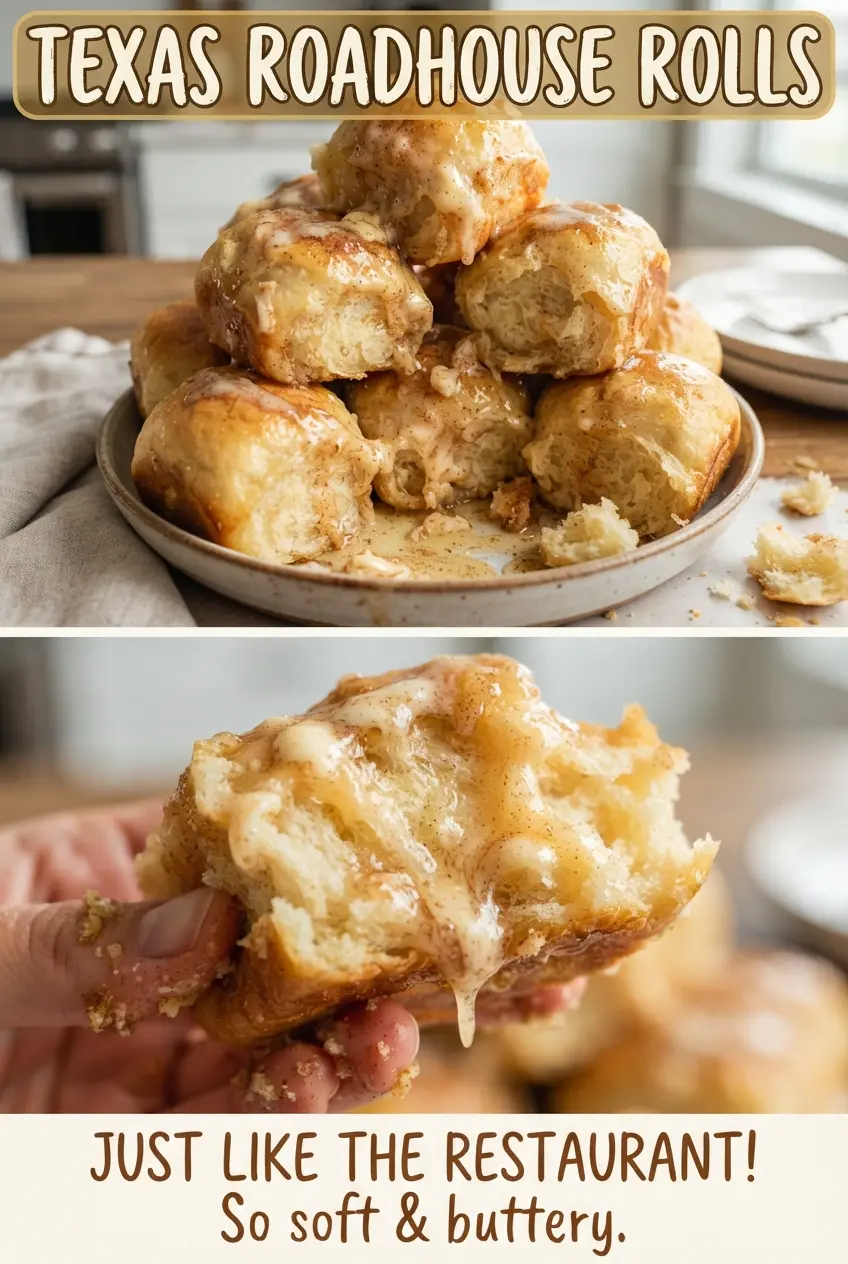
Texas Roadhouse Rolls
Ingredients
Equipment
Method
- Combine whole milk, warm water, active dry yeast, and 1 tablespoon sugar, then let stand 5 minutes until foamy. Look for a bubbly, creamy surface as the visual cue.
- Add the remaining sugar, large egg, melted butter, salt, and all-purpose flour, then knead 8 minutes until soft and smooth. The dough should feel elastic and cohesive without dry patches.
- Cover the dough and let rise 1 hour until doubled. It should noticeably puff up and look airy.
- Roll the dough into a 1/2-inch thick rectangle, then fold in half and cut into 2-inch squares. Keep the squares evenly sized for consistent baking.
- Place the squares on a parchment-lined sheet, cover, and let rise 1 hour until puffy. They should swell and feel light when you gently look at the surface.
- Preheat the oven to 350F, then bake the rolls 12-15 minutes until golden. Use golden edges and a lightly browned top as the cue.
- Brush the hot rolls with melted butter right after baking. Watch for a glossy sheen from the butter coating.
- Whip butter, softened, powdered sugar, honey, and ground cinnamon until fluffy. Stop when the mixture turns pale and airy, with ribbon-like texture.
- Serve the warm rolls with the cinnamon honey butter. Spoon or spread it so it melts slightly into the fluffy center.