Sweet potato breakfast hash with black beans is the kind of skillet breakfast that earns its place on repeat. The sweet potatoes turn crisp at the edges and soft in the middle, the black beans bring enough substance to make the pan feel complete, and the eggs on top tie everything together with creamy yolks that run into the spiced vegetables.
What makes this version work is the order. The sweet potatoes get time on the pan first so they can actually brown instead of steam, then the onion, bell pepper, and spices build a base around them. Black beans go in at the end just long enough to warm through, which keeps them intact instead of mushy. A cast iron skillet helps here because it holds heat steady and gives the potatoes the best chance at caramelizing.
Below you’ll find the timing that keeps the hash from turning soft, plus a few smart swaps if you need to work with what’s in the fridge. The goal is a breakfast that feels hearty without being heavy and looks good enough to put straight on the table.
The sweet potatoes browned up instead of turning soft, and the eggs set perfectly under the lid without overcooking the yolks. I added extra lime at the end and it made the whole skillet pop.
Save this sweet potato breakfast hash with black beans for a colorful skillet breakfast with crispy edges and jammy eggs.
The Trick to Keeping Sweet Potatoes Browned, Not Steamed
The biggest mistake with breakfast hash is crowding the pan and expecting the vegetables to brown anyway. Sweet potatoes carry a lot of moisture, and if they’re piled up or stirred constantly, they release steam faster than they can color. Give them contact with the pan and leave them alone long enough to pick up that deep golden crust on one side before turning.
Cast iron helps, but the real payoff comes from heat management. Medium-high heat is enough to brown the cubes without scorching the outside before the centers soften. If the pan starts smoking hard, the heat is too high; if the potatoes are pale after several minutes, the pan is too cool or too crowded.
- Sweet potatoes — Dice them into even pieces so they cook at the same pace. Smaller cubes brown faster and are the safest choice if your morning is moving fast.
- Black beans — Canned beans work fine here. Drain them well so they don’t water down the skillet, and add them at the end so they stay whole.
- Smoked paprika and cumin — These carry the dish. Fresh spices matter more than expensive vegetables here because they give the hash its backbone.
- Eggs — Crack them into wells after the hash is fully cooked. If you add them too early, the whites set before the potatoes finish and the yolks lose that soft center.
What Each Ingredient Is Actually Doing in the Skillet
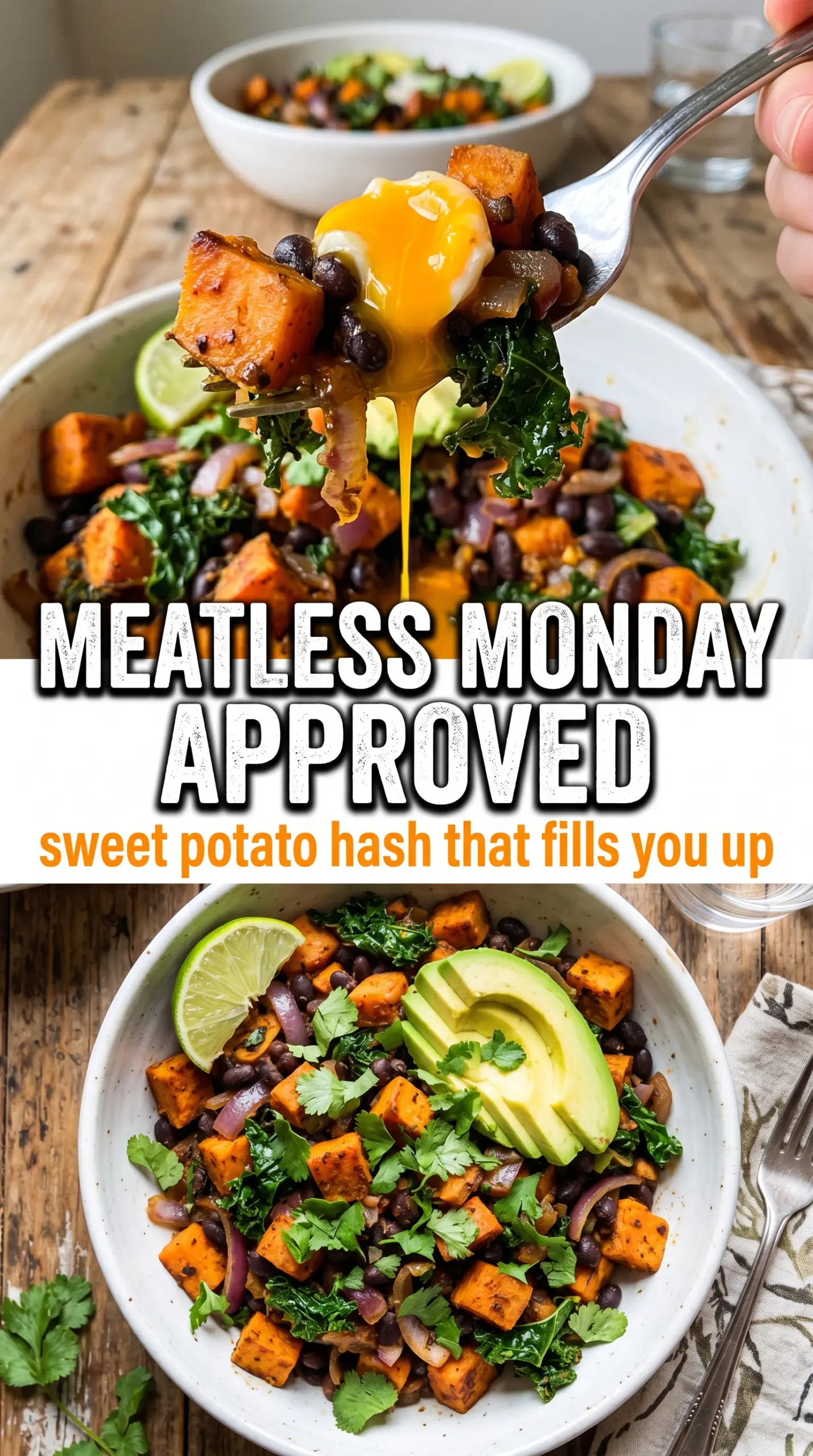
Sweet potatoes give you the sweet, starchy base that makes the hash feel hearty. They’re worth peeling for a cleaner texture, but if the skins are thin and blemish-free, you can leave them on for a more rustic finish.
Black beans add bulk and protein without changing the flavor of the skillet. They’re the ingredient that makes this breakfast hold you past midmorning, and they work best when warmed just long enough to absorb the spices already in the pan.
Red bell pepper and onion soften into the background and bring a little sweetness that balances the smoked paprika. If you swap in another pepper, choose one with enough natural sweetness to keep the dish from tasting flat.
Garlic, cumin, smoked paprika, and chili powder are what make the hash taste cooked, not just mixed. Garlic burns fast, so it goes in after the vegetables have softened and only stays in the hot pan for a minute with the spices.
Building the Hash So the Eggs Set Cleanly
Getting the Sweet Potatoes Cooked First
Start the sweet potatoes in hot oil and let them sit before stirring. You want early browning on the cut sides, not a constant shuffle that keeps them pale. Stir occasionally, but only enough to keep the edges from scorching. If the cubes are still firm after 10 to 12 minutes, cover the pan for a minute or two to trap a little heat and finish the centers.
Softening the Vegetables Without Losing the Bite
Once the potatoes are nearly tender, add the onion and bell pepper. They should soften and take on a glossy look, but they shouldn’t collapse into mush. This is where the skillet starts tasting layered instead of one-note. Add the garlic and spices near the end of this stage so the garlic doesn’t burn and the spices bloom in the oil instead of tasting dusty.
Finishing with Beans and Eggs
Stir in the black beans just until they’re hot. Then push the hash into four wells and crack in the eggs. Cover the pan so the tops of the whites set without forcing the yolks hard; that covered steam is what gives you eggs with set edges and soft centers. If you cook uncovered the whole time, you’ll usually overcook the bottom before the top has a chance to firm up.
Three Ways to Adapt This Skillet Without Losing the Point
Dairy-Free and Naturally Vegetarian
The base recipe already fits both of those needs, which is one reason it works so well as a breakfast staple. Keep the finish bright with cilantro and lime, since you won’t have any dairy richness to lean on at the end.
Make It Vegan
Skip the eggs and serve the hash with avocado, extra beans, or pan-crisped tofu on the side. You lose the runny yolk sauce, so it helps to finish with a little extra olive oil and lime to give the skillet a richer final texture.
Add Heat Without Throwing Off the Balance
A pinch of cayenne or diced jalapeño works well if you want more bite. Add it with the onion so the heat mellows in the oil instead of landing harshly at the end.
Storage and Reheating
- Refrigerator: Store the hash without the eggs for up to 4 days. The potatoes soften a little, but the flavor holds up well.
- Freezer: The vegetable and bean base freezes better than the finished dish. Freeze in a flat airtight container for up to 2 months, then cook fresh eggs when you reheat.
- Reheating: Warm the hash in a skillet over medium heat so the potatoes re-crisp. The mistake is microwaving it until it turns soft and watery; the skillet brings back the texture.
Answers to the Questions Worth Asking
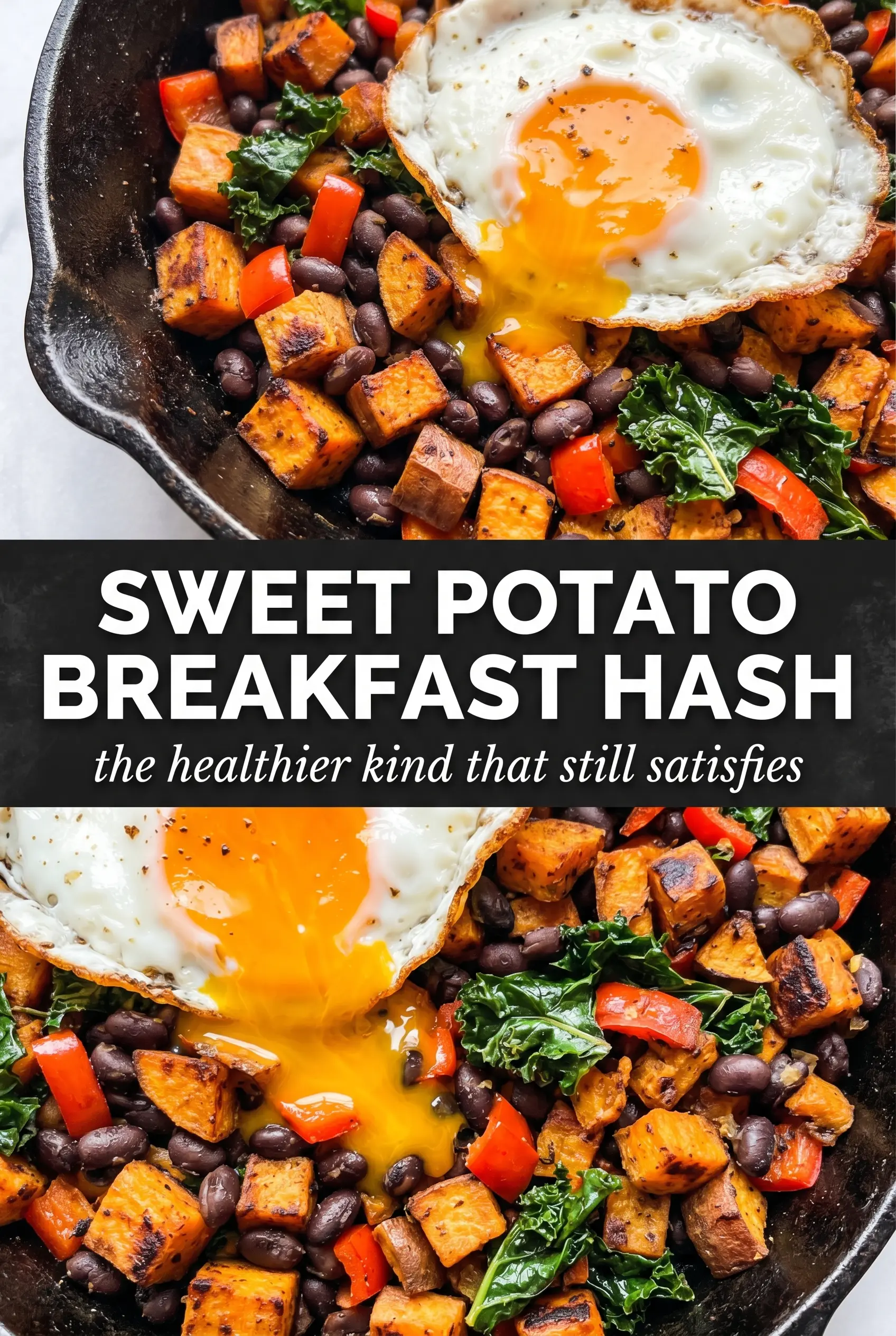
Sweet Potato Breakfast Hash with Black Beans
Ingredients
Equipment
Method
- Heat olive oil in a large cast iron skillet over medium-high heat. Add diced sweet potatoes and cook for 10–12 minutes, stirring occasionally, until golden and tender.
- Add onion and bell pepper to the skillet and cook for 5 more minutes. Add garlic, cumin, paprika, and chili powder and cook for 1 minute, stirring until fragrant.
- Stir in black beans and heat through. Season with salt and black pepper to taste.
- Make 4 wells in the hash and crack an egg into each. Cover and cook for 5 minutes until the whites are set.
- Serve the hash topped with fresh cilantro, avocado slices, and lime wedges.