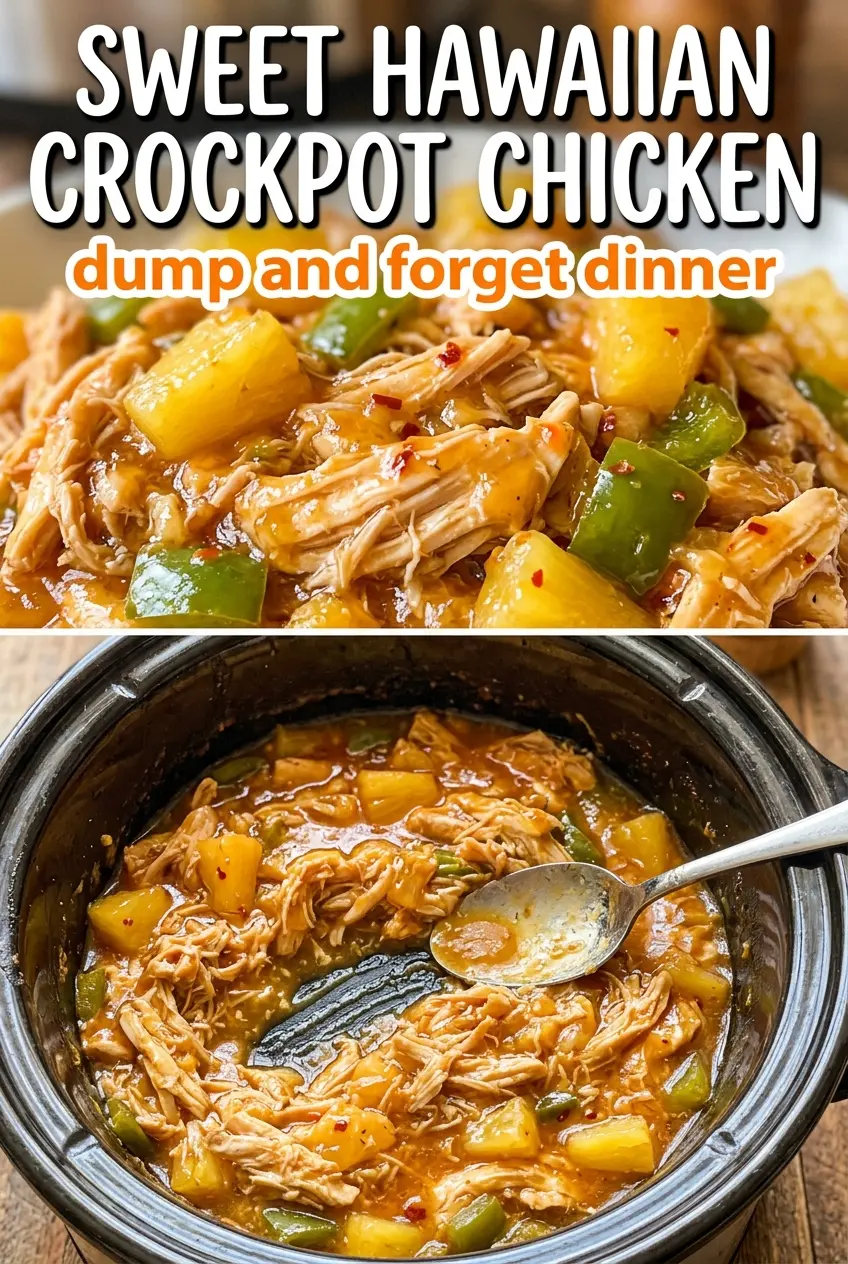
Sticky, tender Sweet Hawaiian Crockpot Chicken earns its place in the dinner rotation because the slow cooker turns a short ingredient list into a saucy, pull-apart main dish with almost no hands-on work. The chicken gets bathed in a sweet-tangy pineapple glaze that clings to every shred, and the pineapple chunks soften just enough to taste jammy without falling apart.
The trick here is balance. Pineapple juice brings sweetness and acidity, soy sauce adds depth, and a little ketchup gives the sauce body and that familiar glossy finish. Brown sugar helps the glaze caramelize at the end, while the cornstarch slurry turns the loose cooking liquid into something that actually coats the chicken instead of pooling at the bottom of the bowl.
Below, you’ll find the small details that matter most: when to shred the chicken, how long to cook the sauce uncovered so it tightens up, and the swaps that still keep the dish bright and savory.
The sauce thickened into a glossy glaze right after shredding, and the pineapple stayed in nice little chunks instead of disappearing. I served it over rice and my husband went back for seconds before I even sat down.
Save this Sweet Hawaiian Crockpot Chicken for a hands-off dinner with sticky pineapple teriyaki sauce and tender shredded chicken.
The Part People Skip That Makes the Sauce Turn Glossy, Not Watery
The slow cooker does the easy part here, but the finish is what separates a good chicken dinner from a bowl of sweet broth with meat in it. If you walk away after the chicken is tender, the sauce will stay loose and thin. The cornstarch slurry needs that final uncovered simmer so the liquid can reduce and the starch can activate into a glaze.
Another common miss is adding too much pineapple juice from the can. You only need half a cup for the sauce base. That keeps the balance tight enough to taste bright and savory instead of flat and sugary.
- Chicken thighs — Thighs stay juicy through a long slow cook and shred cleanly without turning stringy. Breasts can work, but they dry out faster and won’t give you the same rich texture.
- Pineapple chunks — Canned chunks hold their shape better than crushed pineapple, which keeps the final dish from turning mushy. Drain them well so they sit on top of the chicken instead of watering down the sauce.
- Rice vinegar — This keeps the sauce from leaning too sweet. If you don’t have it, apple cider vinegar is the best swap, but use a little less because it reads sharper.
- Sesame oil — A small amount gives the sauce that toasted, savory edge that makes the pineapple taste more like a complete dish. Don’t add extra; too much takes over fast.
What Each Ingredient Is Actually Doing in This Recipe
- Primary ingredient (the star) — Quality matters most. Choose the best you can find.
- Cooking medium (oil, butter, or broth) — This carries flavors and prevents dryness.
- Seasonings (salt, pepper, spices, herbs) — Layer flavors so nothing overpowers. Build depth gradually.
- Aromatics (garlic, onion, herbs) — Cook with fat to bloom flavors. Become the foundation.
- Supporting ingredients — Complement the main ingredient without overpowering it.
- Sauce or liquid (if applicable) — Brings flavors together. Balance richness with acid.
- Acid (lemon, vinegar, wine, or other) — Brightens and prevents flat-tasting results.
- Final finish (garnish, glaze, or sauce) — Prevents one-dimensional taste and adds visual appeal.
Building the Sweet-and-Tangy Sauce in the Right Order
Mix the Sauce Before It Hits the Slow Cooker
Whisk the reserved pineapple juice with soy sauce, brown sugar, ketchup, rice vinegar, garlic, ginger, and sesame oil until the sugar starts dissolving. This keeps the seasoning even from the start instead of leaving salty or sweet pockets in the finished chicken. Pour it over the chicken thighs so they can braise evenly in the liquid.
Let the Slow Cooker Do the Heavy Lifting
Add the pineapple chunks on top and cook until the chicken is tender enough to pull apart with two forks. Low for 6 to 7 hours gives the best texture, but high for 3 to 4 hours works when you need dinner faster. If the chicken is done but the sauce still looks thin, that’s normal at this stage.
Shred, Then Tighten the Sauce
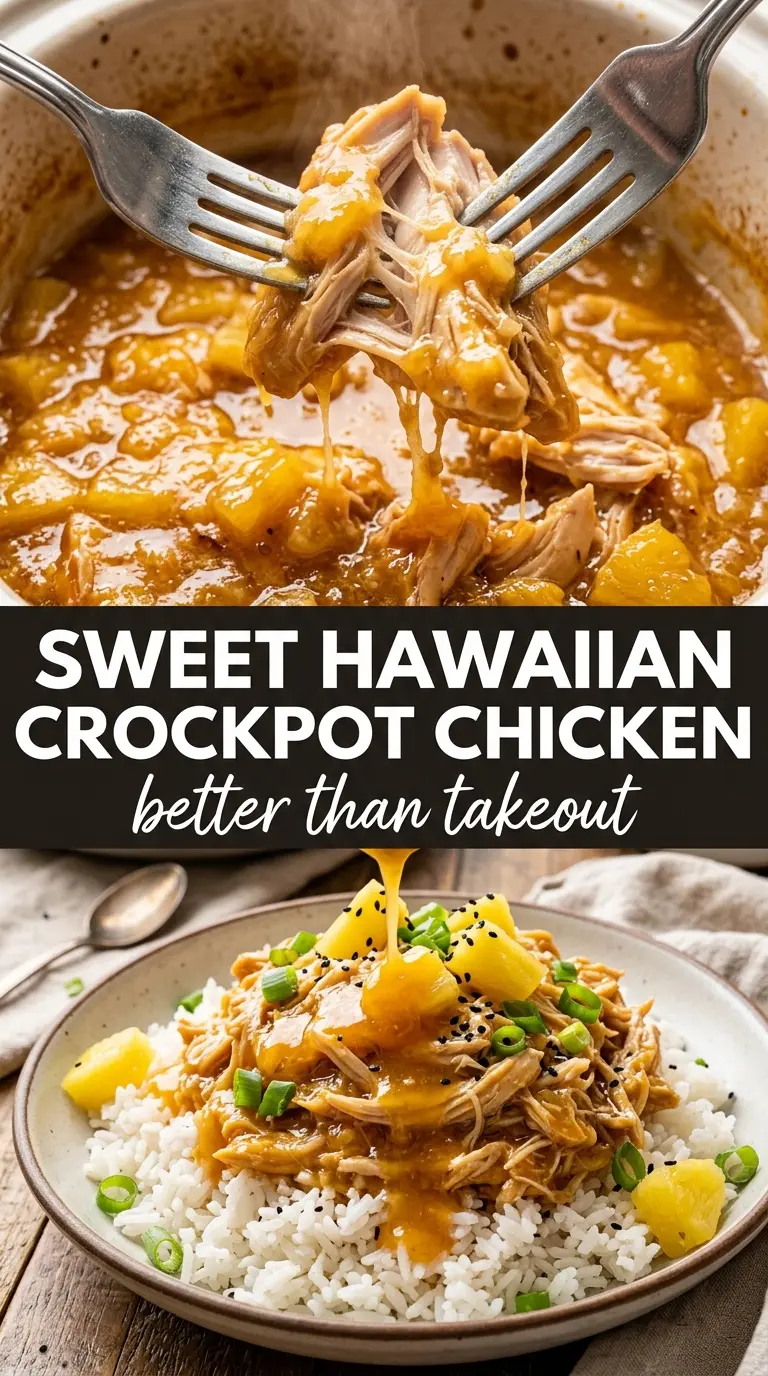
Shred the chicken right in the slow cooker so it drinks up the sauce. Stir in the cornstarch slurry, then cook uncovered on HIGH until the liquid turns shiny and coats the chicken instead of running off the spoon. If you add the slurry and leave the lid on, the extra steam keeps the sauce loose.
Finish With the Fresh Garnishes
Spoon the chicken over steamed rice and top with sesame seeds and sliced green onions. Those last two things matter more than they look like they should: the sesame seeds add a little nutty crunch, and the green onions cut through the sweetness so each bite tastes complete.
How to Adapt This Chicken Without Losing the Sticky Pineapple Finish
Use chicken breasts for a leaner version
Boneless skinless chicken breasts work here, but pull them early because they dry out faster than thighs. Start checking around the 3-hour mark on LOW and shred as soon as they give easily; the sauce will still finish the same way.
Make it gluten-free with tamari
Swap the soy sauce for tamari or a certified gluten-free soy sauce. The flavor stays close, and the rest of the recipe doesn’t need to change because the thickening comes from cornstarch, not flour.
Cut the sugar without losing the glaze
Use 2 tablespoons brown sugar instead of 1/4 cup if you want a less sweet sauce. The dish will taste a little brighter and less caramel-like, but the pineapple juice and ketchup still give enough body for a glossy finish.
Storage and Reheating
- Refrigerator: Store in an airtight container for up to 4 days. The sauce thickens more as it chills, which is a good thing here.
- Freezer: Freezes well for up to 3 months. Cool it completely first, then pack it with some of the sauce so the chicken doesn’t dry out on thawing.
- Reheating: Reheat gently on the stovetop or in the microwave with a splash of water if needed. High heat can make the chicken stringy and push the sauce back toward a thinner, broken texture.