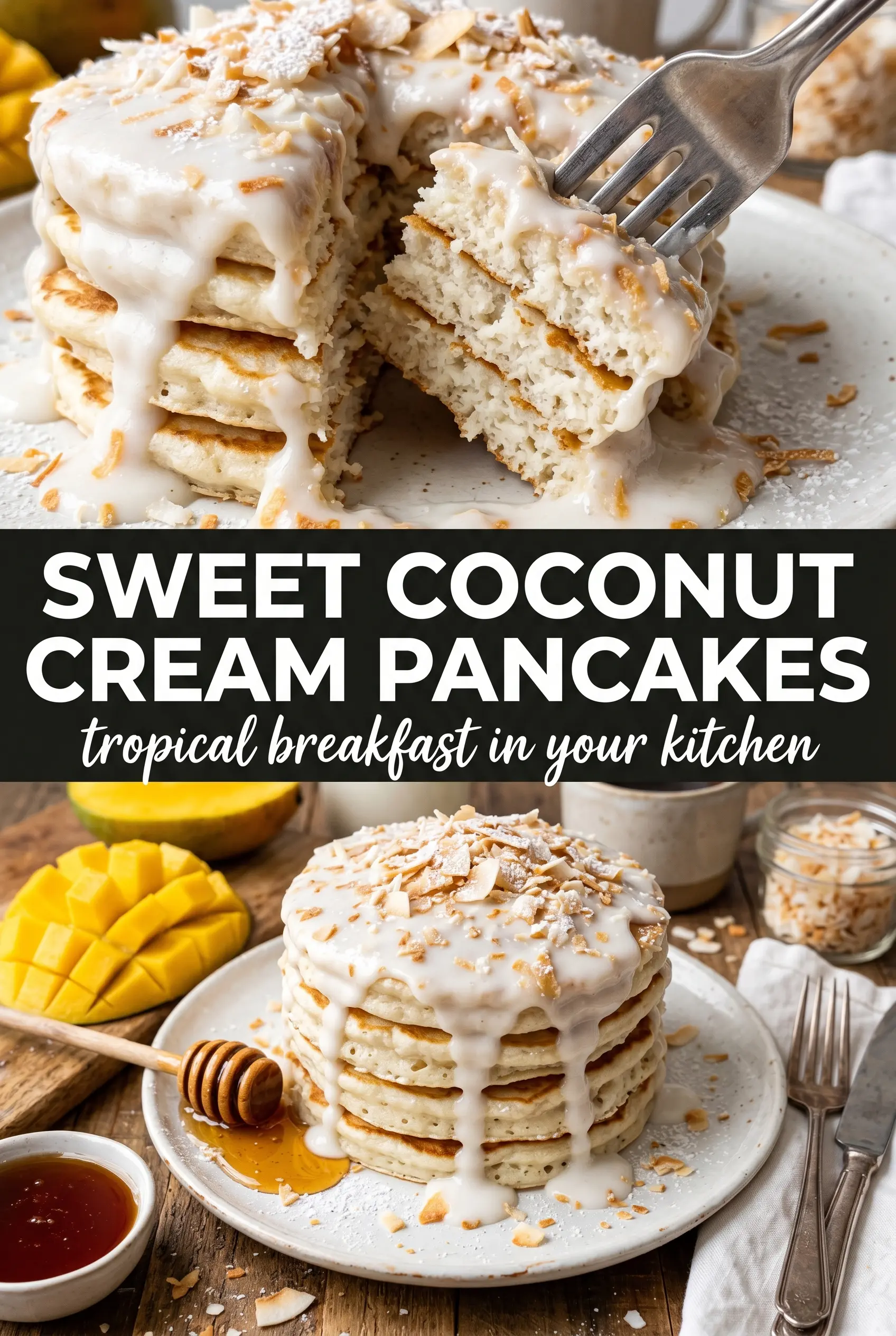
Thick, fluffy coconut pancakes with a golden crust and a spoonable coconut cream syrup on top earn a permanent place in the breakfast rotation. The batter stays tender from canned coconut milk and cream of coconut, while shredded coconut folded in at the end gives each bite a little chew and a stronger coconut finish. Poured syrup, toasted coconut flakes, and a pat of butter turn the whole stack into something that feels special without asking for much more than one bowl and a hot griddle.
The key here is balance. Cream of coconut brings sweetness and body, but it can make pancakes heavy if you overmix the batter or crank the heat too high. Stir just until the flour disappears, then stop. The batter should look a little lumpy, and that’s what keeps the pancakes light. A medium griddle gives the pancakes time to cook through before the coconut sugars on the outside darken too fast.
Below, you’ll find the small details that matter most: how to keep the coconut cream syrup smooth, when to flip for the best lift, and a few smart variations if you want to adjust the sweetness or make them dairy-free.
The coconut flavor came through in the pancakes and the syrup without tasting too sweet, and the edges turned out beautifully golden. Mine were done in right around 3 minutes per side, just like you said.
Like a stack of thick sweet coconut cream pancakes with syrup dripping down the sides? Pin this for the next slow morning breakfast.
The Trick to Keeping Coconut Pancakes Light Instead of Dense
Coconut pancake batter can turn heavy fast because cream of coconut adds sweetness and thickness at the same time. That’s the part most people fight with. The fix is to mix the wet and dry ingredients only until the flour disappears, then fold in the shredded coconut at the end so the batter doesn’t get worked into a paste. If you keep stirring after that, the baking powder loses the little bit of lift it has to give.
The other place these pancakes go wrong is heat. Coconut milk and coconut sugar brown faster than plain milk batter, so a medium griddle is the sweet spot. If the outside is already dark and the center still feels soft and wet when you press it, the pan is too hot. Let the pancakes cook until the edges look set and the tops lose that glossy, raw look before flipping.
- Shaken canned coconut milk — This gives the batter its main coconut flavor and body. Shake the can well before measuring so the thicker cream and the thinner liquid blend back together.
- Cream of coconut — This is sweeter and richer than coconut milk, and it’s what makes the pancakes taste like dessert in the best way. Don’t swap in coconut cream unless you also add more sugar; coconut cream isn’t sweetened and won’t behave the same.
- Shredded sweetened coconut — Folded in at the end, it adds texture and keeps every bite from tasting one-note. Unsweetened shredded coconut works too if you want less sweetness, but the flavor will be a little less round.
- Butter — Melted butter in the batter helps with tenderness, and a little extra in the pan gives the edges that golden coconut crust. Neutral oil works for cooking, but you’ll lose the buttery finish.
What Each Ingredient Is Actually Doing in This Recipe

- Primary ingredient (the star) — Quality matters most. Choose the best you can find.
- Cooking medium (oil, butter, or broth) — This carries flavors and prevents dryness.
- Seasonings (salt, pepper, spices, herbs) — Layer flavors so nothing overpowers. Build depth gradually.
- Aromatics (garlic, onion, herbs) — Cook with fat to bloom flavors. Become the foundation.
- Supporting ingredients — Complement the main ingredient without overpowering it.
- Sauce or liquid (if applicable) — Brings flavors together. Balance richness with acid.
- Acid (lemon, vinegar, wine, or other) — Brightens and prevents flat-tasting results.
- Final finish (garnish, glaze, or sauce) — Prevents one-dimensional taste and adds visual appeal.
Building the Batter and Cooking It at the Right Heat
Mix the Dry Ingredients First
Whisk the flour, sugar, baking powder, and salt together before any liquid goes in. That step looks small, but it keeps the baking powder from clumping and helps the pancakes rise evenly. If the baking powder isn’t distributed well, you’ll get random dense spots and uneven edges.
Bring the Coconut Wet Mix Together
In a second bowl, whisk the coconut milk, cream of coconut, eggs, melted butter, and vanilla until smooth. The mixture should look glossy and uniform, with no streaks of egg white or thick pockets of coconut. If the butter is hot enough to scramble the eggs, let it cool for a minute first.
Fold, Don’t Beat
Pour the wet ingredients into the dry ingredients and stir just until the flour disappears, then fold in the shredded coconut. The batter should still look a little rough. That’s normal and that’s good. Overmixing here is the fastest way to lose the fluffy texture and end up with pancakes that chew more than they stack.
Cook Until the Edges Set
Spoon 1/4-cup portions onto a greased griddle over medium heat. Wait for the surface to lose its wet shine and for bubbles to form and pop around the edges before you flip. If you flip too early, the center collapses and the second side smears instead of setting. Once flipped, the pancakes need only a few minutes more to turn deep golden and release cleanly from the pan.
Warm the Coconut Syrup Just Until Smooth
Stir the cream of coconut, maple syrup, and butter together in a small saucepan over low heat. You’re not cooking it down; you’re just loosening it into a pourable syrup. If it starts to simmer hard, pull it off the heat. High heat can make it split or seize, and you want a silky pour that runs over the stack instead of clinging in thick blobs.
How to Adapt These Pancakes Without Losing the Coconut Character
Make Them Less Sweet
Cut the sugar in the batter to 2 teaspoons and use unsweetened shredded coconut if you have it. The pancakes will still taste like coconut, but the syrup will stand out more and the stack won’t lean quite so much into dessert territory.
Dairy-Free Coconut Pancakes
Use coconut oil or a neutral oil instead of butter in the batter, and cook the pancakes in oil instead of butter. The flavor stays coconut-forward, and you won’t miss the dairy because the cream of coconut carries the richness.
Swap the Coconut Syrup for a Lighter Finish
If you want the pancakes a little less rich, skip the syrup and serve them with warm maple syrup plus toasted coconut on top. You’ll lose the creamy topping, but the pancakes themselves still carry plenty of coconut flavor.
Storage and Reheating
- Refrigerator: Store cooked pancakes in an airtight container for up to 3 days. They soften a little as they sit, but the coconut flavor holds up well.
- Freezer: These freeze well. Lay the pancakes in a single layer to freeze, then stack with parchment between them and seal in a freezer bag for up to 2 months.
- Reheating: Warm them in a toaster oven or skillet over low heat so the edges crisp back up. The biggest mistake is microwaving too long, which makes the texture rubbery and steamy instead of fluffy.
Questions I Get Asked About This Recipe
Sweet Coconut Cream Pancakes
Ingredients
Equipment
Method
- Whisk all-purpose flour, sugar, baking powder, and salt together in a bowl until evenly combined.
- In a separate bowl, mix canned coconut milk, cream of coconut, eggs, melted butter, and vanilla extract, then stir into the dry ingredients just until combined.
- Fold in shredded sweetened coconut until the batter is thick and cohesive with no dry streaks.
- Preheat a greased griddle over medium heat.
- Cook 1/4-cup portions of batter on the griddle for 3–4 minutes per side until golden and set in the center.
- Repeat with remaining batter, greasing the griddle as needed to keep a golden coconut crust.
- Warm cream of coconut, maple syrup, and butter together in a small saucepan until smooth.
- Stack the pancakes and pour coconut cream syrup over the top, letting it run down the sides.
- Scatter toasted coconut flakes on top and add a small pat of butter to melt over the warm pancakes.