Stuffed peppers soup gives you all the comfort of classic stuffed peppers without the fussy assembly. You still get the savory beef, sweet bell peppers, rice, and tomato-rich broth, but everything cooks together in one pot until the flavors melt into each other. The result is hearty enough for dinner and cozy enough to feel like the kind of meal people ask for again next week.
What makes this version work is the order. Browning the beef first builds a deep base, and cooking the tomato paste with the peppers and onions takes away that raw, tinny edge. The rice goes in near the end so it stays tender instead of bloating into a mushy mess, and the broth-to-tomato ratio keeps the soup thick and spoonable without turning it into stew.
Below you’ll find the little timing details that matter, plus a few swaps that help if you want to change the meat, make it dairy-free, or stretch it for leftovers.
The rice stayed tender and the broth had that rich tomato flavor without getting watery. I loved how the peppers softened just enough but still had some bite.
Save this stuffed peppers soup for a one-pot dinner with beef, peppers, rice, and a tomato broth that stays hearty.
The Part Most Stuffed Pepper Soups Get Wrong
The biggest mistake is treating the rice like it can sit in the pot as long as the broth does. It can’t. Rice keeps absorbing liquid as it cooks and as it rests, which means a soup that looks perfect at 20 minutes can turn thick and almost paste-like by the time you serve it if you start too early or let it boil hard.
The other trap is undercooking the tomato paste. Tomato paste needs a minute or two with the onion, peppers, and garlic so it turns darker and sweeter. That step gives the soup depth and keeps the finished bowl from tasting flat or sharply acidic.
- Brown the beef first. That gives you a savory base and prevents the soup from tasting boiled.
- Let the tomato paste cook briefly in the pot. The heat mellows it and concentrates the flavor.
- Add the rice only after the broth comes to a boil. Starting it too early makes it soft and swollen.
- Keep the simmer gentle. A hard boil can break down the rice and make the broth cloudy and gluey.
What Each Ingredient Is Actually Doing in the Pot
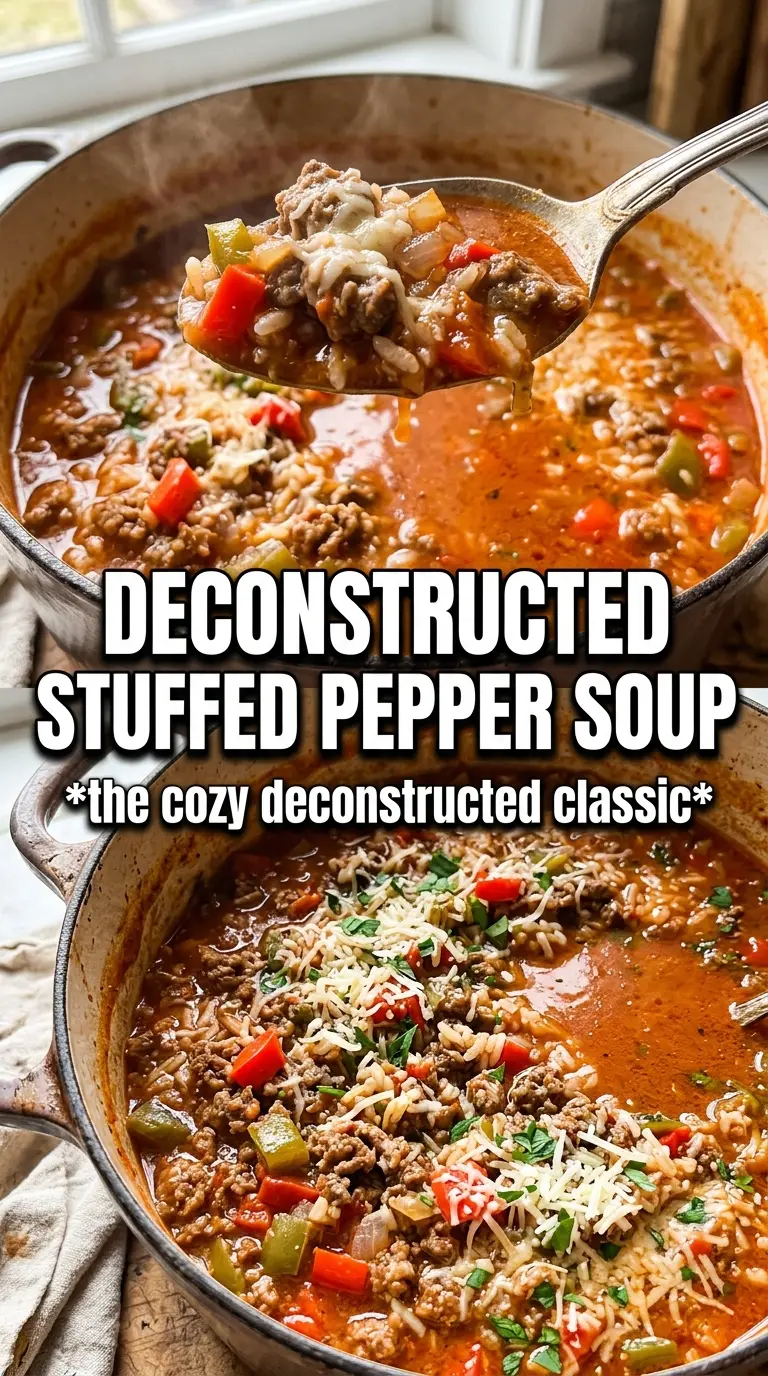
- Ground beef — This is the backbone of the soup. Use a lean enough beef that you’re not swimming in grease, but don’t go so lean that the pot tastes dry. If you use turkey, add a little extra salt and a touch more oil for richness.
- Bell peppers — The green peppers bring that classic stuffed-pepper bite, while the red pepper adds sweetness that keeps the soup from leaning too savory. Dice them small so they soften at the same pace as the onion.
- Tomato paste plus crushed and diced tomatoes — The paste adds intensity, the crushed tomatoes build body, and the diced tomatoes give you texture. If you only have one kind of canned tomato, the soup still works, but you’ll lose either thickness or little bursts of tomato.
- Long grain white rice — This gives you the stuffed-pepper feel without extra prep. Long grain rice holds its shape better than short grain, which is important in a soup that sits for a few minutes before serving.
- Cheddar and parsley — The cheese melts into the hot broth and gives each bowl a little creaminess, while parsley lifts the finish. Skip the cheese if you want a dairy-free bowl, but don’t skip the fresh herb if you have it.
How to Keep the Rice Tender and the Broth Spoonable
Build the Savory Base
Start by browning the beef in a large pot until the pink is gone and some of the bits on the bottom turn dark. Drain off the excess fat, but leave enough behind that the onion and peppers can sauté without sticking. If the pot looks dry, add a small splash of oil before you move on. The goal here is flavor, not a greasy broth.
Cook the Vegetables Until They Give
Add the onion and diced peppers and cook until they soften and smell sweet, about 4 to 5 minutes. You’re looking for the onions to turn translucent at the edges, not fully browned. Stir in the garlic and tomato paste and cook for 2 minutes; that short window is where the raw garlic calms down and the paste darkens. If the paste starts sticking hard, lower the heat slightly and keep it moving.
Let the Broth Come Together Before the Rice Goes In
Pour in the crushed tomatoes, diced tomatoes, beef broth, Italian seasoning, garlic powder, and smoked paprika, then bring the pot to a real boil before adding the rice. The boiling point matters because it helps the rice start cooking evenly as soon as it hits the liquid. Once the rice is in, cover the pot and turn the heat down to a steady simmer. Keep the lid on so the rice cooks through without the top layer drying out.
Finish Before the Rice Crosses the Line
After 18 to 20 minutes, check the rice. It should be tender with a little bite left in the center, and the soup should still have a loose, hearty texture. If it sits much longer, the rice keeps drinking broth, so pull it from the heat as soon as it’s done. Season with salt and pepper at the end, then serve right away with cheddar and parsley while the broth is still hot enough to melt the cheese.
How to Adapt This Soup for Different Pans and Different Diets
Make It with Ground Turkey
Ground turkey works well, but it tastes leaner and a little less rich than beef. Add a small splash of oil when you brown it, and don’t skip the tomato paste step because that extra browning makes up some of the flavor you lose from the beef.
Dairy-Free Bowl
Leave off the cheddar and finish with parsley or a little drizzle of olive oil instead. The soup still has plenty of body from the meat, tomatoes, and rice, so you won’t miss the cheese for structure — just for that salty, creamy finish.
Use Brown Rice Instead
Brown rice needs a longer simmer and more broth, so add an extra cup of liquid and give it more time covered on low heat. The flavor stays the same, but the texture is a little nuttier and the soup will be thicker by the end.
Storage and Reheating
- Refrigerator: Store for up to 4 days. The rice will keep soaking up broth, so expect a thicker soup the next day.
- Freezer: It freezes, but the rice softens after thawing. For the best texture, freeze the soup before adding the rice, then cook fresh rice when you reheat it.
- Reheating: Warm it gently on the stove over medium-low heat with a splash of broth or water. A hard boil can make the rice break down and turn the soup starchy.
Answers to the Questions Worth Asking
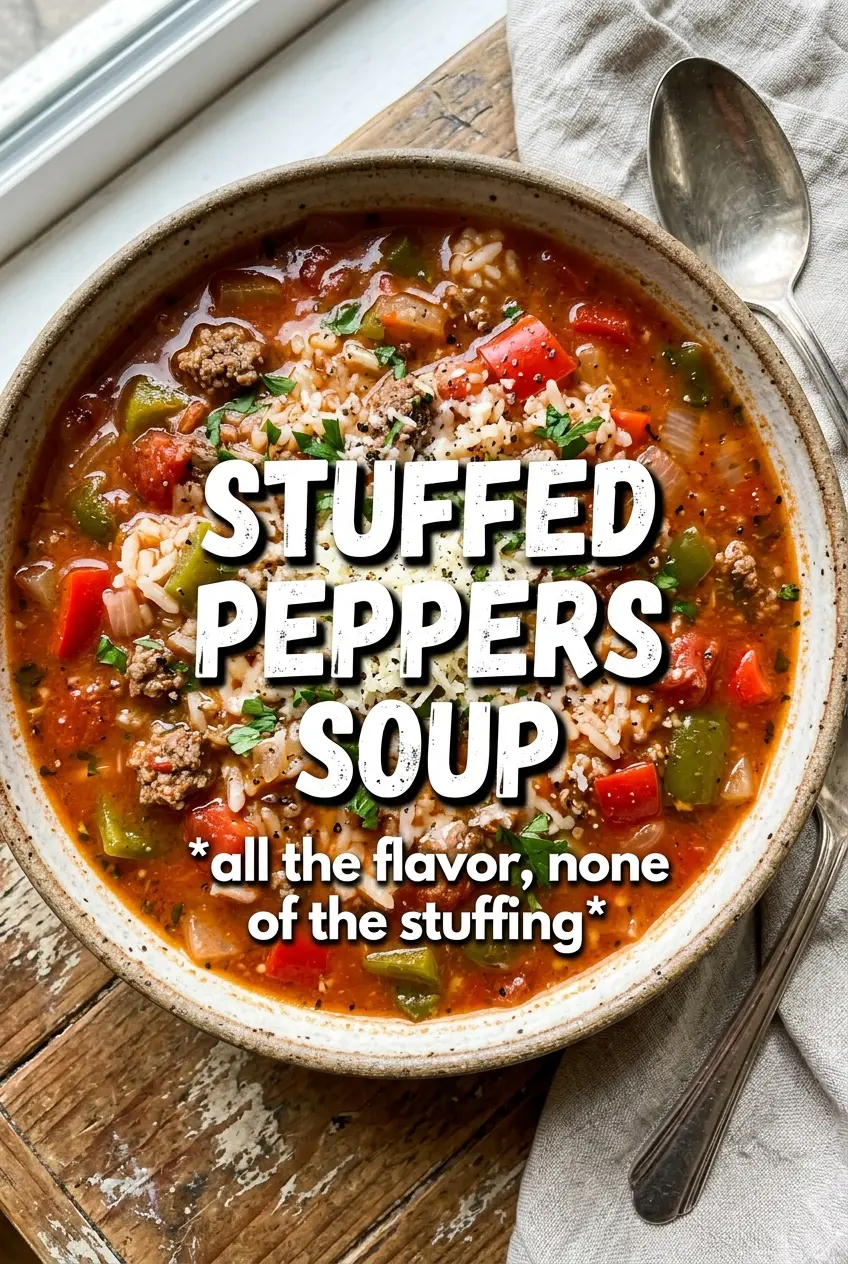
Stuffed Peppers Soup
Ingredients
Equipment
Method
- Brown the ground beef in a large pot over medium-high heat, then drain the fat.
- Sauté the onion and all bell peppers for 4-5 minutes until softened, then add the garlic and tomato paste and cook 2 minutes.
- Add the crushed tomatoes, diced tomatoes, beef broth, Italian seasoning, garlic powder, and smoked paprika, then bring to a boil.
- Add the uncooked long grain white rice, cover, and simmer 18-20 minutes until the rice is cooked and tender.
- Season with salt and pepper to taste, then serve with shredded cheddar and fresh parsley on top.