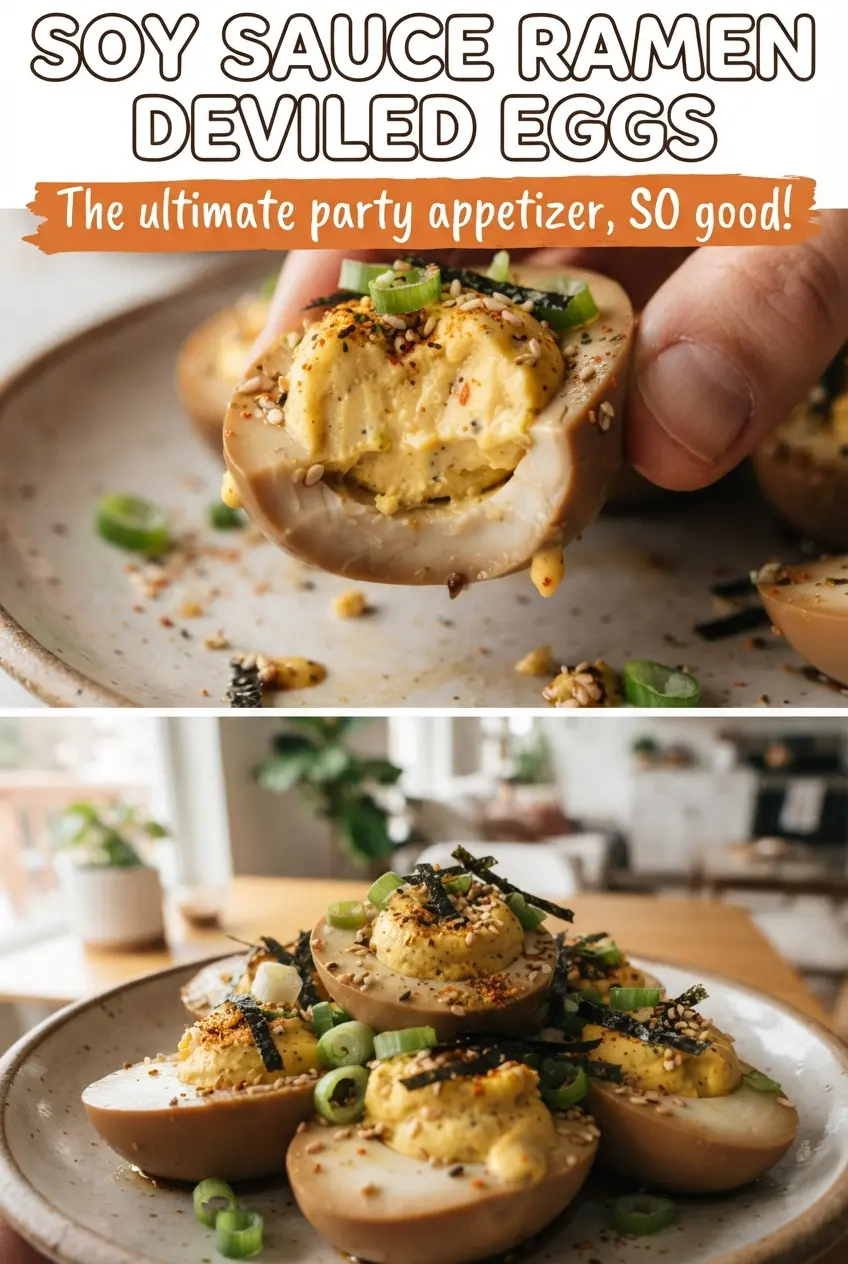
Amber-tinted egg whites, a silky yolk filling, and that first hit of soy, sesame, and rice vinegar make these deviled eggs disappear fast. They taste familiar in the best way, like a snack you know from a great ramen shop, but they still hold onto everything people love about classic deviled eggs: creamy filling, clean edges, and a pop of salt.
The soy-mirin marinade does the heavy lifting here. It seasons the whites all the way through instead of just salting the outside, and the short soak gives them that deep color without turning them rubbery. Japanese mayonnaise keeps the filling plush and glossy, while a little sesame oil and sriracha round it out with nuttiness and heat.
Below you’ll find the exact timing that keeps the eggs easy to peel, plus a few smart swaps if you don’t have mirin or Japanese mayo on hand. The garnish matters too, because those sesame seeds, nori strips, and green onions give every bite the ramen-inspired finish that makes these stand out on a tray.
The soy marinade gave the whites this gorgeous amber color, and the filling stayed smooth and rich without tasting heavy. I brought a tray to game night and there wasn’t one left after ten minutes.
Love the soy-marinated whites and creamy ramen-style filling? Save these Soy Sauce Ramen Deviled Eggs for your next appetizer spread.
The Marinade Is Doing More Than Coloring the Whites
The biggest mistake with flavored deviled eggs is treating the marinade like a garnish step. Here, the soy sauce mixture is the seasoning for the egg whites, and that means the balance matters. Too strong and the whites turn harsh and slick on the tongue. Too short and you only get color on the surface.
The 4-hour soak is the sweet spot for this recipe. It gives the whites enough time to take on that amber color and savory edge without tightening the texture. Mirin softens the soy sauce and sugar rounds off the salt, so the finish lands more like ramen broth than straight soy sauce.
- Eggs — Older eggs usually peel more cleanly than very fresh ones, which matters here because the whites need to stay smooth for a neat presentation.
- Soy sauce — Use a standard Japanese-style soy sauce if you can. A very dark or extra-salty soy sauce can overpower the eggs before the marinade has time to work.
- Mirin — This adds gentle sweetness and a rounder savory note. If you don’t have it, use dry sherry with a pinch of sugar, but the flavor won’t be quite as mellow.
- Japanese mayonnaise — This gives the filling its plush, custardy texture. Regular mayo works in a pinch, but Japanese mayo brings a richer, slightly sweeter result that fits the ramen-inspired flavor better.
Building the Filling So It Stays Smooth and Savory
Boiling and Peeling Without Torn Whites
Boil the eggs for 10 minutes, then move them straight into an ice bath. That quick chill stops the cooking and helps the whites firm up so they peel with fewer dents. If your eggs are hard to peel, it’s usually because they went into the water too gently or sat too long before chilling. Tap each egg all over and peel under a thin stream of cool water if the shell clings in spots.
Marinating for Color and Seasoning
Whisk the soy sauce, water, mirin, and sugar until the sugar dissolves, then submerge the peeled eggs completely. Use a small bowl or container so the eggs stay covered; exposed tops won’t color evenly. Four hours gives you a deep amber tint and a savory edge without a tough exterior. Longer marinating makes the whites firmer and saltier, which starts to work against the creamy filling.
Mashing Into a Creamy, Pipeable Yolk
Separate the yolks and mash them with the Japanese mayo, sesame oil, rice vinegar, and sriracha until the mixture is smooth and thick enough to hold shape. If the filling looks grainy, keep mashing before adding more mayo; chunks usually mean the yolks weren’t broken down enough at the start. The sesame oil should stay in the background, not dominate, so go light and taste before adding more heat.
Filling and Finishing the Tray
Pipe or spoon the filling into the soy-marinated whites, then finish with sesame seeds, nori strips, and green onions. The garnish isn’t just for looks; it gives you crunch, salt, and a clean herbal bite against the rich filling. If the eggs seem slippery from the marinade, blot the cut surfaces lightly with a paper towel before filling so the topping sticks better.
How to Change These Without Losing the Ramen-Inspired Balance
Gluten-Free Version
Use a certified gluten-free soy sauce or tamari. The flavor stays deep and savory, and the eggs still marinate the same way. Check the nori and sriracha labels too if you need the whole tray to stay gluten-free.
No Japanese Mayonnaise
Regular mayonnaise works, but the filling will be a little less rich and a little tangier. Add a tiny pinch of sugar if you want to mimic the softer sweetness that Japanese mayo brings. The texture stays creamy as long as you don’t overmix.
Milder Party Tray
Leave out the sriracha and add a little extra rice vinegar for brightness. You still get the sesame-and-soy profile, but the filling reads gentler and works better for a mixed crowd. The garnish carries more of the flavor when the heat is dialed back.
Make-Ahead Party Prep
Marinate the eggs, make the filling, and store them separately, then assemble close to serving. That keeps the whites from getting too slick and helps the garnish stay crisp. It’s the best move if you want the tray to look fresh after sitting out.
Storage and Reheating
- Refrigerator: Store assembled deviled eggs in a covered container for up to 2 days. The whites will keep their color, but the garnish softens after the first day.
- Freezer: Don’t freeze these. Egg whites turn rubbery and the filling separates when thawed.
- Reheating: These are meant to be served cold. If they sit too long in the fridge, let them stand at room temperature for 10 to 15 minutes before serving so the filling softens slightly and the flavors open up.
Answers to the Questions Worth Asking
Soy Sauce Ramen Deviled Eggs
Ingredients
Equipment
Method
- Bring a Dutch oven of water to a rolling boil and lower in the large eggs. Boil for 10 minutes, keeping the water at a steady boil.
- Transfer the eggs to an ice bath for 10 minutes to fully chill. Chill until cool to the touch, then peel carefully to keep the whites intact.
- Whisk soy sauce, water, mirin, and sugar until the sugar dissolves. Pour the marinade over the peeled eggs in a container so the eggs are fully submerged.
- Cover and refrigerate the marinating eggs for 4 hours. The whites should turn amber as they absorb the soy mixture.
- Halve the marinated eggs lengthwise and remove the yolks. Keep the amber egg whites intact to hold the filling.
- Mash the yolks with Japanese mayonnaise, sesame oil, rice vinegar, and sriracha until smooth. Mix thoroughly until the filling is creamy with no lumps.
- Pipe or spoon the filling into the amber egg whites. Fill each half generously so the top is level.
- Top the deviled eggs with toasted sesame seeds. Add enough to create a visible speckled layer over the filling.
- Finish with thin nori strips and sliced green onions. Serve right away for best crunch and color.