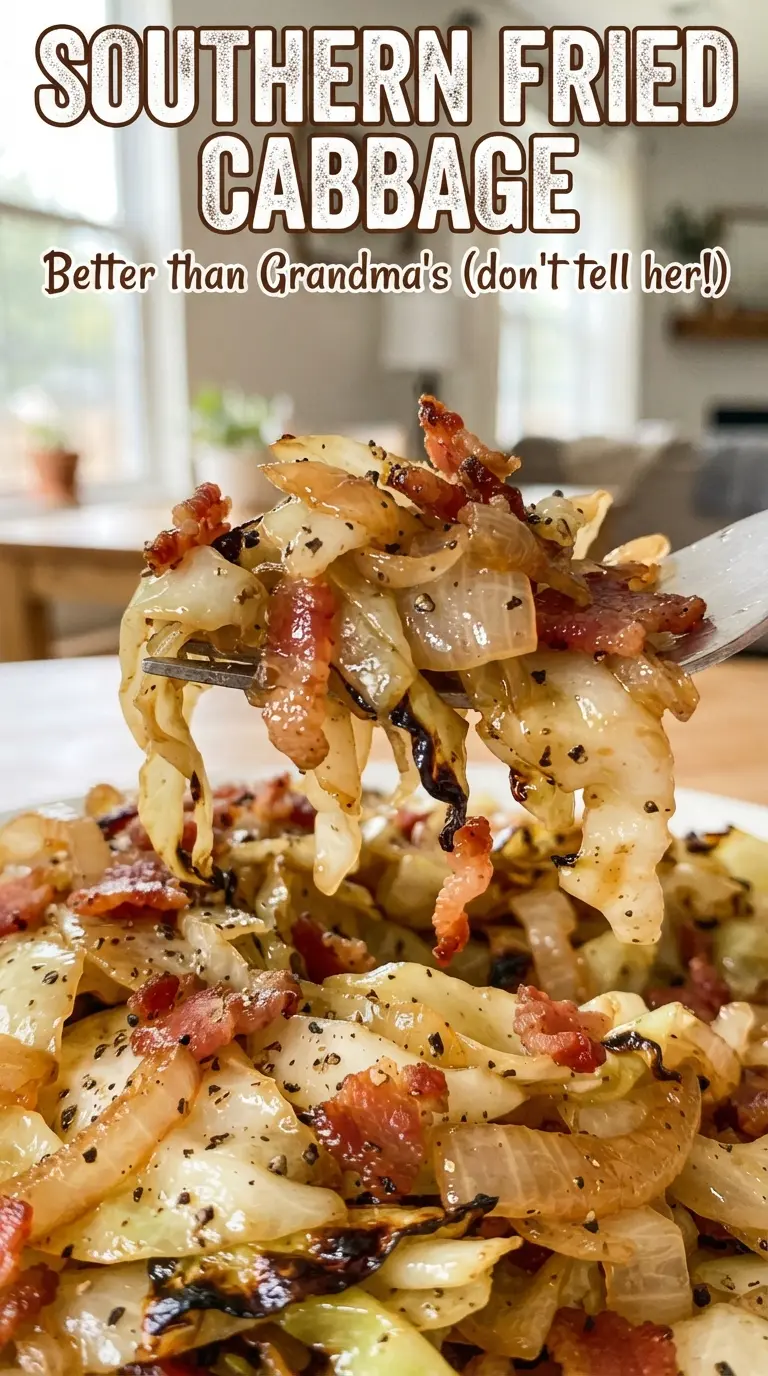
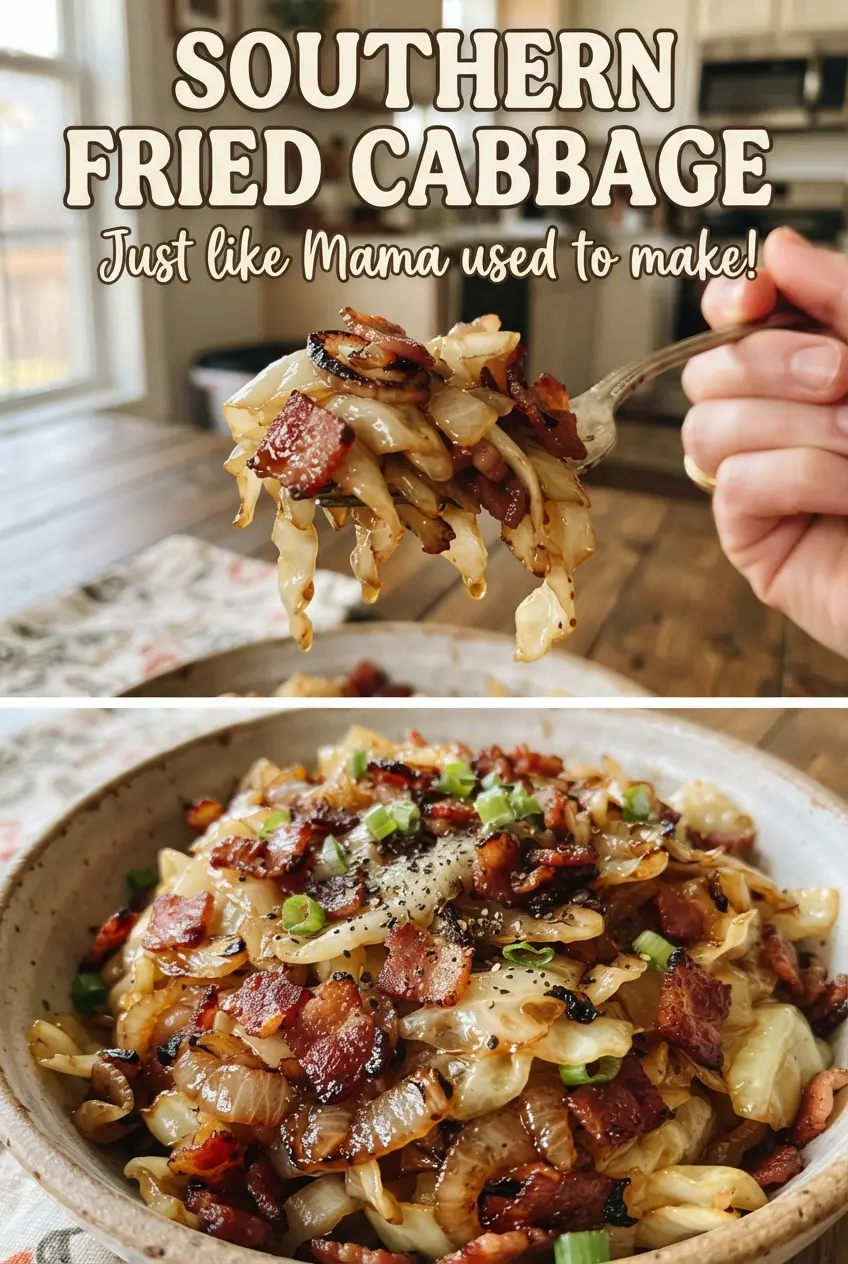
Southern fried cabbage turns soft, sweet, smoky, and deeply savory in one skillet, with the kind of tender edges that make people keep scooping up “just one more bite.” The bacon seasons the whole pan, the onion melts into the cabbage, and a splash of vinegar at the end keeps the dish from tasting heavy. It’s simple food, but the balance matters, and that’s what makes this version worth making again and again.
The key is giving the bacon time to render enough fat before the onion goes in, then cooking the cabbage long enough for the edges to caramelize instead of steaming. A little sugar is doing quiet work here too; it nudges the cabbage toward a deeper browning without making it taste sweet. The vinegar goes in at the end for brightness, not for tangy punch.
Below, I’ll walk you through the small details that keep the cabbage tender instead of soggy, plus a few easy swaps if you want to adjust the smokiness, richness, or heat.
The cabbage got those caramelized edges I never seem to get at home, and the vinegar at the end kept it from tasting greasy. My husband kept going back for more and asked if I’d make it again next week.
Pin this Southern Fried Cabbage for a skillet side with smoky bacon, sweet onion, and caramelized cabbage edges.
The Trick to Keeping Fried Cabbage Tender Instead of Watery
The difference between cabbage that turns silky and cabbage that turns limp usually comes down to heat management. If the pan is too crowded or the burner is too low, the cabbage gives off water faster than it can brown, and you end up with a soft pile instead of those bronzed edges. This recipe uses enough fat to coat the leaves, then enough heat to keep the moisture moving off the skillet.
Bacon drippings do more than add flavor here. They help the onion soften without sticking and give the cabbage a chance to fry rather than simmer. The butter adds a little roundness, but it goes in with the cabbage so it melts into the pan and helps everything gloss over evenly. The vinegar at the end wakes the whole dish up after all that richness.
- Bacon — Use regular sliced bacon, not thick-cut, if you want enough rendered fat to season the whole skillet. If you need to swap it, pancetta works, but you’ll lose some of that smoky Southern flavor.
- Green cabbage — Fresh cabbage with tight leaves cooks up sweeter and holds its texture better than pre-shredded cabbage, which can dry out or go soft too fast. Chop it into bite-size pieces so it cooks evenly without turning mushy on the outside before the center is done.
- Apple cider vinegar — Don’t skip this. It cuts through the richness and keeps the finished dish from tasting flat. If you’re out, a small splash of white vinegar works, but cider vinegar gives a gentler finish.
- Sugar — Just a teaspoon helps the cabbage brown a little faster and deepens the savory-sweet balance. It doesn’t make the dish taste sugary; it just nudges the pan in the right direction.
What Each Ingredient Is Actually Doing in This Recipe
- Primary ingredient (the star) — Quality matters most. Choose the best you can find.
- Cooking medium (oil, butter, or broth) — This carries flavors and prevents dryness.
- Seasonings (salt, pepper, spices, herbs) — Layer flavors so nothing overpowers. Build depth gradually.
- Aromatics (garlic, onion, herbs) — Cook with fat to bloom flavors. Become the foundation.
- Supporting ingredients — Complement the main ingredient without overpowering it.
- Sauce or liquid (if applicable) — Brings flavors together. Balance richness with acid.
- Acid (lemon, vinegar, wine, or other) — Brightens and prevents flat-tasting results.
- Final finish (garnish, glaze, or sauce) — Prevents one-dimensional taste and adds visual appeal.
Building the Skillet in the Right Order
Rendering the Bacon
Start the bacon in a cold skillet and let the fat slowly render over medium heat. You want crisp pieces and a good layer of drippings left in the pan, not burnt bacon that tastes bitter. Pull the bacon as soon as it’s crisp, because it will keep cooking a little off the heat. If there’s a huge amount of grease, spoon off a little, but leave enough to coat the onion and cabbage.
Softening the Onion and Garlic
Add the onion to the hot drippings and cook it until it turns soft and a little translucent at the edges. That usually takes about five minutes. The garlic goes in only at the end of this stage, and for just 30 seconds, because burnt garlic will take over the whole dish. You’re building a sweet, savory base here, not frying the aromatics to death.
Frying the Cabbage Until the Edges Color
Add the cabbage, butter, salt, pepper, red pepper flakes, and sugar, then stir it well so every piece gets coated. At first it will look like too much cabbage for the pan, then it starts to collapse and make room for itself. Keep the heat at medium and stir occasionally, not constantly, so the cabbage has time to brown. If it starts to look dry before it’s tender, the pan is too hot; lower the heat and let the moisture work out slowly.
Finishing with Vinegar and Bacon
When the cabbage is tender and the edges are caramelized, stir in the vinegar and the crispy bacon. The vinegar should hit the hot pan and smell sharp for a second before it disappears into the cabbage. That last step brightens everything and keeps the bacon pieces from tasting one-note. Serve it warm while the edges are still glossy and the cabbage has a little bite left in the center.
How to Adjust This Skillet Cabbage Without Losing the Good Part
Make It Smokier
Add a pinch of smoked paprika with the cabbage, or swap half the bacon for smoked sausage. That pushes the dish toward a deeper campfire-style flavor, but it also makes the finish heavier, so keep the vinegar at the end.
Make It Vegetarian
Skip the bacon and cook the onion in butter or olive oil, then add a little smoked paprika and a pinch of salt to replace some of the depth. You won’t get the same drippings, but you’ll still get a solid, savory cabbage side with browned edges.
Make It Dairy-Free
Leave out the butter and use a little more bacon fat or a neutral oil. The cabbage will still caramelize, but the finished dish will taste a touch leaner and less round on the palate.
How to Store the Leftovers
- Refrigerator: Store in an airtight container for up to 4 days. The cabbage softens a little more as it sits, but the flavor holds up well.
- Freezer: It freezes, but the texture gets much softer after thawing, so I only freeze it if I’m using it later in soup or a hash.
- Reheating: Warm it in a skillet over medium-low heat with a small splash of water or a dab of butter. The mistake people make is blasting it in the microwave until it turns limp and greasy.
Questions I Get Asked About This Recipe
Southern Fried Cabbage
Ingredients
Equipment
Method
- Cook the bacon in a large cast iron skillet over medium heat for 8 minutes until crisp, then remove it and leave the drippings behind. Look for browned, crisp bacon bits and a glossy layer of rendered fat.
- Add the onion and cook for 5 minutes until softened, stirring occasionally. The onions should look translucent and smell sweet.
- Stir in the garlic and cook for 30 seconds. Keep it moving so it turns fragrant without browning.
- Add the cabbage, butter, salt, black pepper, red pepper flakes, and sugar to the skillet. Stir well to coat the cabbage in the bacon-onion drippings and melted butter.
- Cook for 12-15 minutes, stirring occasionally, until the cabbage is tender and caramelized at the edges. You should see golden-brown spots where the cabbage has browned.
- Stir in the apple cider vinegar and cook for 1 minute. The cabbage should smell brighter and look slightly glossy from the released juices.
- Add the crispy bacon back to the skillet and serve warm. Sprinkle black pepper on top if desired for a fresh, peppery finish.