Golden sourdough zucchini bread lands in that sweet spot between quick bread and old-fashioned loaf cake: tender, moist, lightly tangy, and sturdy enough to slice without crumbling apart. The zucchini keeps the crumb soft for days, while the sourdough starter brings a subtle depth that plain zucchini bread usually misses. It bakes up with a crackly top and a soft interior that tastes even better once it has rested overnight.
The trick is balancing moisture and structure. Zucchini holds a lot of water, so squeezing it dry matters if you want the loaf to bake through instead of turning damp in the center. The starter adds flavor, but the baking soda and baking powder do the real lift, which is why this recipe works with either active starter or discard. You get the tang without waiting for the dough to ferment.
Below, I’ll show you how to keep the crumb tender without making the loaf heavy, plus the small adjustment that makes this bread especially good on day two. If you’ve ever had zucchini bread turn gummy or bland, this version fixes both problems.
I squeezed the zucchini dry like you said, and the loaf baked up with a perfect crumb instead of that wet center I usually get. The sourdough flavor was subtle on day one and even better the next morning with coffee.
Save this sourdough zucchini bread for the days when you want a moist loaf with a gentle tang and a crackly golden top.
The Mistake That Makes Zucchini Bread Dense Instead of Tender
Most zucchini breads go heavy when the batter gets overmixed or the zucchini carries too much water into the loaf. Once flour hits the bowl, you want to stir only until the streaks disappear. A few small lumps are fine. What you don’t want is a smooth, glossy batter that has been worked like cake batter, because that develops too much gluten and turns the crumb tough.
The second issue is moisture control. Grated zucchini should look fluffy and pale, not wet enough to drip. If it clumps in your hand or leaves liquid behind, squeeze harder. That step keeps the bread from steaming in the center while the outside is already brown. The other piece that matters here is the sourdough starter: it adds flavor, but it doesn’t replace the chemical leaveners, so the baking soda and baking powder still need to be fresh.
What the Starter, Zucchini, and Fat Each Bring to the Loaf
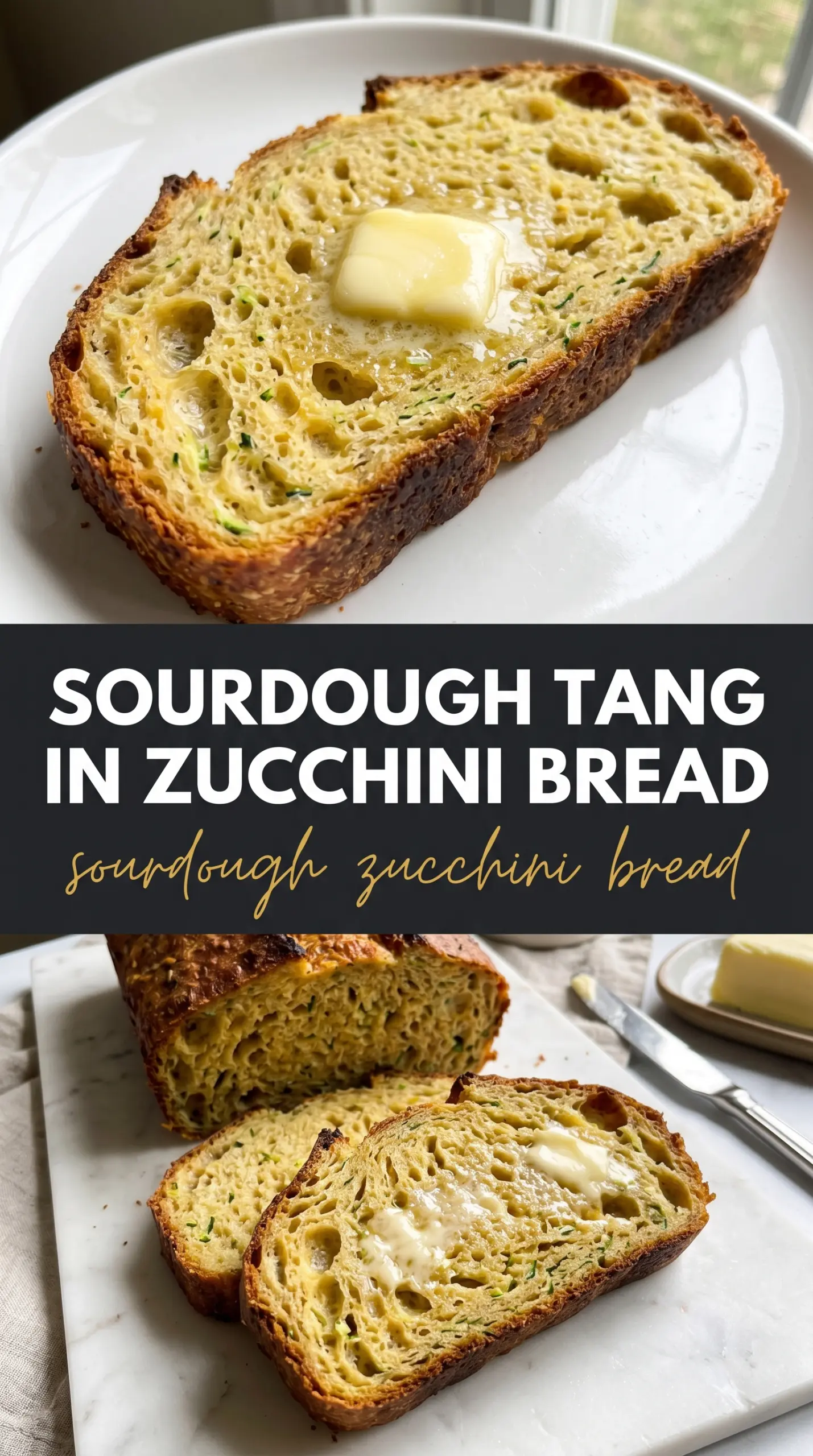
- Sourdough starter — This gives the loaf its subtle tang and deeper flavor. Active starter or discard both work because the rise comes from baking soda and baking powder, not fermentation. If your starter is very acidic, the flavor will be a little sharper, which is nice here.
- Zucchini — Fresh grated zucchini is what keeps the crumb moist without making the bread greasy. Use the fine side of a box grater and squeeze it dry before mixing it in. Too much leftover water is the fastest path to a gummy center.
- Vegetable oil — Oil keeps quick bread softer than butter does, especially after it cools. Melted butter adds a richer taste, but the loaf firms up more quickly. If you want a little more flavor and don’t mind a slightly tighter crumb, melted butter works one-for-one.
- Cinnamon — This doesn’t make the loaf taste like spice cake; it just warms the sourdough tang and the mild zucchini. Fresh cinnamon makes a difference here because the flavor is subtle, not masked by heavy spice.
- Walnuts or chocolate chips — Both are optional, but they change the loaf in useful ways. Walnuts add crunch and a toasted edge; chocolate chips make it more dessert-like. Fold them in at the very end so they don’t sink.
Mix the Batter Lightly, Then Let the Oven Do the Work
Dry Ingredients First
Whisk the flour, baking soda, baking powder, salt, and cinnamon together before anything else touches the bowl. That keeps the leaveners from clumping and helps the spice distribute evenly, which matters in a loaf this simple. If you skip this and dump everything in at once, you can end up with bitter pockets of baking soda or uneven rise.
Building the Wet Base
Beat the sugar, eggs, oil, sourdough starter, and vanilla until the mixture looks smooth and a little thick. You don’t need to whip air into it; you just want the eggs fully blended so the loaf bakes evenly. The batter should look creamy, not separated. If it looks curdled, keep mixing for a few more seconds before adding the zucchini.
Folding in the Zucchini
Stir the grated zucchini into the wet mixture, then add the dry ingredients and fold only until no dry flour remains. This is the point where overmixing hurts you most, because zucchini bread depends on a tender quick-bread crumb, not an elastic one. If you add walnuts or chocolate chips, fold them in at the very end with just a few strokes.
Baking to the Center
Pour the batter into a greased 9×5 loaf pan and bake at 350°F until the top is deeply golden and a toothpick comes out clean or with only a few moist crumbs. The center should spring back lightly when pressed, and the loaf may crack down the middle as it bakes. That’s normal and usually means the middle rose properly. If the top browns too fast before the center is done, lay a loose piece of foil over it for the last 10 to 15 minutes.
Cooling for the Best Slice
Let the loaf rest in the pan for 15 minutes before turning it out. That short cooling time helps the structure set so the bread doesn’t tear when you slice it. The sourdough flavor settles in as it cools, and by the next day the loaf tastes even more rounded and balanced.
Three Ways to Change the Loaf Without Losing the Texture
Make it dairy-free as written
This loaf is already dairy-free if you use oil, which means there is no special adjustment needed. That makes it a good option when you want a tender quick bread without butter. Just keep the oil measured accurately, since extra fat can make the center sink slightly.
Swap the walnuts for chocolate chips
Chocolate chips turn this into a more dessert-like loaf, and they pair well with the sourdough tang. Use the same amount, but fold them in last so they don’t streak the batter. The loaf will taste sweeter overall, so you may want to leave the nuts out entirely rather than use both.
Use melted butter for a richer crumb
Melted butter works in place of the oil if you want a slightly richer, more bakery-style flavor. The texture will be a touch firmer once cooled, but the loaf still stays moist from the zucchini. This swap is best when you plan to serve the bread the same day.
Make it gluten-free with a 1:1 baking blend
A good 1:1 gluten-free flour blend can work here, but the loaf will be a little more delicate and may need the full bake time. Let it cool completely before slicing or it can crumble. The texture is best when the blend already includes xanthan gum.
Storage and Reheating
- Refrigerator: Store tightly wrapped for up to 4 days. The crumb stays moist, though the loaf firms up a little by day three.
- Freezer: Freeze slices or the whole loaf for up to 2 months. Wrap well, then tuck it into a freezer bag so it doesn’t pick up freezer smell.
- Reheating: Warm slices in a toaster oven or low oven until just heated through. The mistake to avoid is microwaving too long, which makes the crumb rubbery and can push the moisture to the outside.
Questions I Get Asked About This Recipe
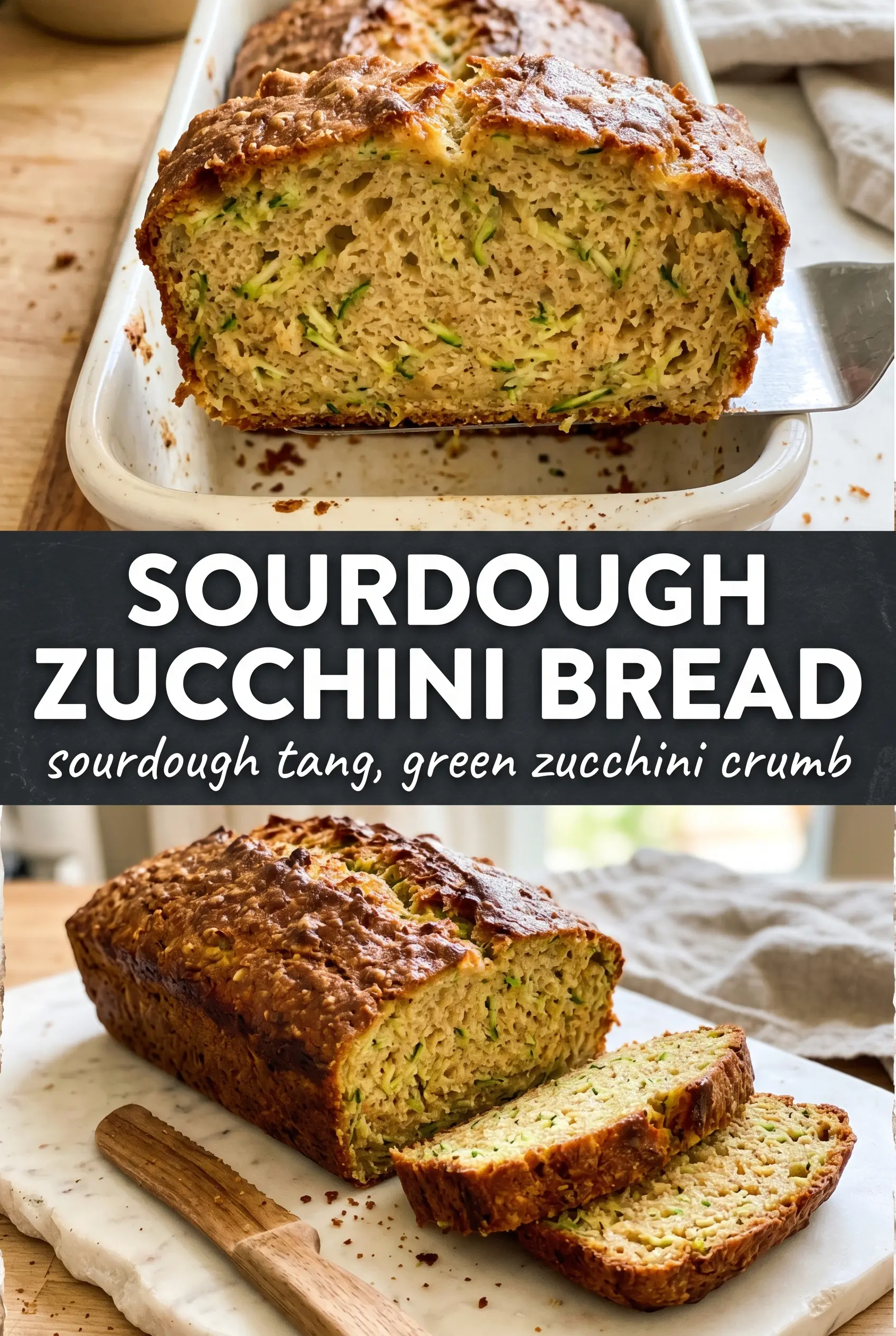
Sourdough Zucchini Bread
Ingredients
Equipment
Method
- Preheat the oven to 350°F and grease a 9x5 loaf pan.
- Set up your workspace for a quick batter by clearing a space for mixing dry and wet ingredients.
- Whisk all-purpose flour, baking soda, baking powder, salt, and cinnamon together until evenly combined.
- Beat granulated sugar, eggs, vegetable oil, sourdough starter, and vanilla extract until smooth.
- Stir in grated squeezed zucchini until the batter looks evenly speckled.
- Fold the dry ingredients into the wet ingredients until just combined, then fold in walnuts or chocolate chips if using.
- Pour the batter into the prepared loaf pan and bake for 55–65 minutes, until a toothpick comes out clean and the top is golden.
- Cool the loaf for 15 minutes in the pan before slicing so it sets and holds its crumb.
- For best tang and flavor depth, slice after resting; the sourdough tang develops more after one day.