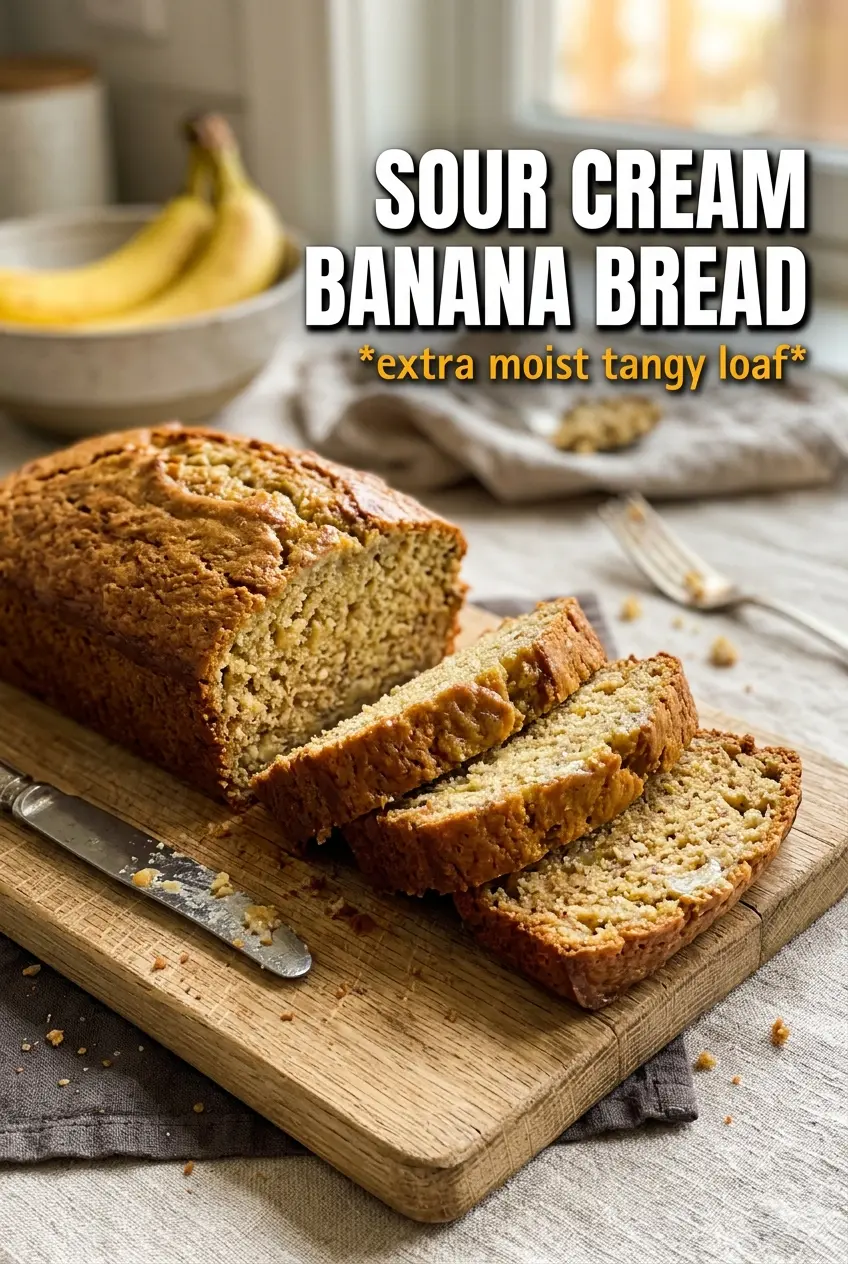
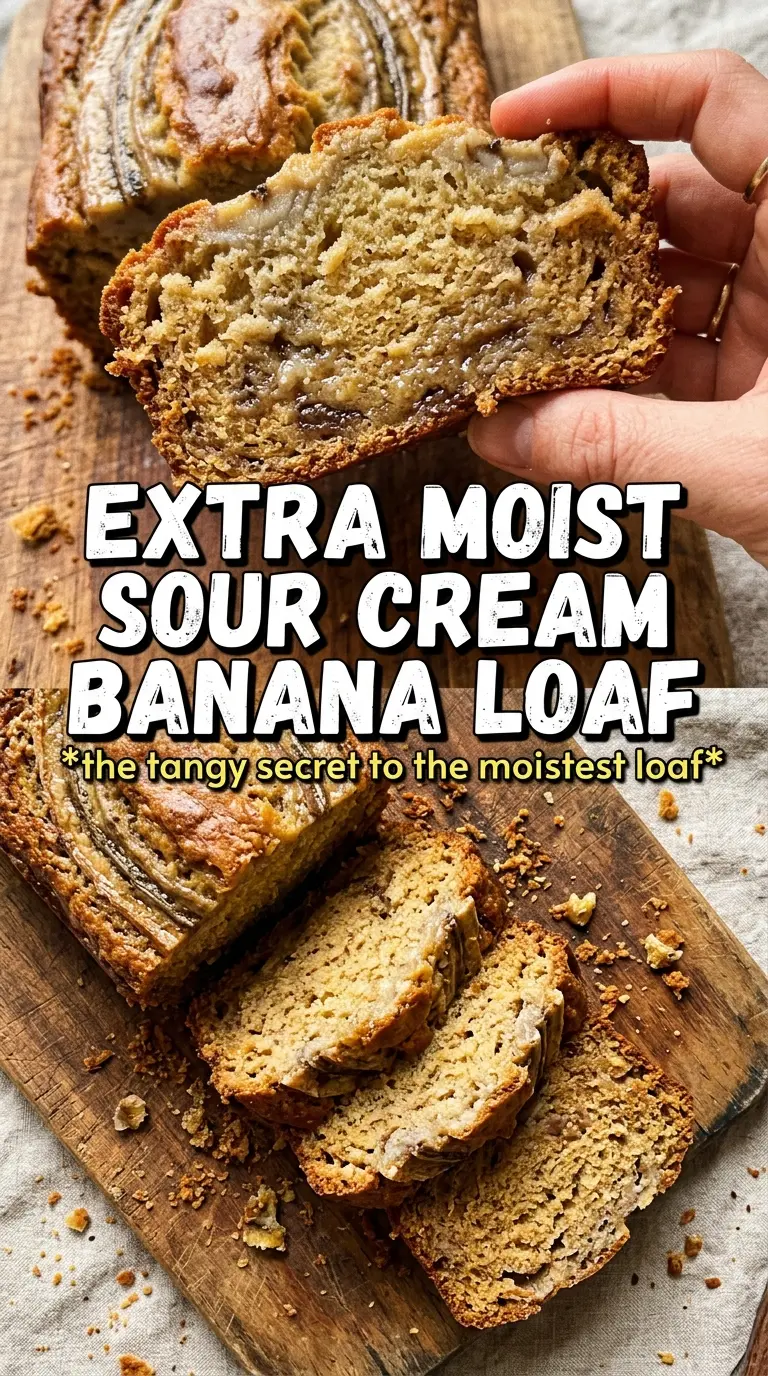
Moist banana bread gets a whole new life when sour cream is in the batter. The crumb turns tender without getting heavy, the loaf slices cleanly, and the top bakes up with that deep golden color that makes you want to cut into it while it’s still warm. This is the kind of banana bread that stays soft for days instead of drying out by afternoon.
The trick is using bananas that are fully ripe and sour cream that brings both richness and a little tang. That combination keeps the loaf plush while balancing the sweetness, so every bite tastes rounded instead of flat. The batter also stays simple on purpose: no mixer gymnastics, no extra add-ins needed to cover up a bland base.
Below, I’ll show you the small details that keep the crumb tender and the loaf from sinking in the middle. If your banana bread has ever baked up gummy, dense, or dry around the edges, this version fixes those problems without making the process any harder.
The sour cream made the loaf incredibly soft, and it still sliced neatly the next day instead of crumbling apart. I baked it for 64 minutes and the center came out perfectly done with that glossy top.
Pin this sour cream banana bread for the days when you want a soft, bakery-style loaf with a tender crumb and a deep golden top.
The Sour Cream Trick That Keeps Banana Bread Tender
Banana bread usually goes wrong in one of two directions: too dry, or so wet in the center that it never quite sets. Sour cream helps fix both. It adds moisture without thinning the batter the way extra banana or milk can, and its slight acidity softens the crumb so the loaf stays tender for days. That matters here because this recipe is built on a simple batter, so every ingredient has a job.
The other part that matters is how the bananas are mixed in. Once the eggs are in, the batter should look smooth and glossy before the flour goes in. If you overwork it after that point, the loaf turns tough and can tunnel through the middle. Fold just until the flour disappears and stop there, even if a few streaks remain for a second.
- Ripe bananas — Use bananas with plenty of brown spotting and a soft feel under the peel. They bring the strongest flavor and the most natural sweetness. Underripe bananas make the loaf taste flat and can leave the crumb a little drier.
- Sour cream — This is the ingredient that gives the bread its plush texture. Plain yogurt works in a pinch, but sour cream gives a richer crumb and a softer slice. Use full-fat if you can; low-fat works, but the loaf won’t stay as moist as long.
- Butter — Softened butter beats with the sugar to create a lighter batter and a better rise. Melted butter makes a denser loaf and changes the texture. If your butter is too cold, the mixture won’t cream properly and the finished bread can bake up heavy.
- Cinnamon — It doesn’t turn this into spice bread. It just rounds out the banana flavor and keeps the loaf from tasting one-note. Leave it in unless you’re after a very plain banana bread.
What Each Ingredient Is Actually Doing in This Recipe
- Primary ingredient (the star) — Quality matters most. Choose the best you can find.
- Cooking medium (oil, butter, or broth) — This carries flavors and prevents dryness.
- Seasonings (salt, pepper, spices, herbs) — Layer flavors so nothing overpowers. Build depth gradually.
- Aromatics (garlic, onion, herbs) — Cook with fat to bloom flavors. Become the foundation.
- Supporting ingredients — Complement the main ingredient without overpowering it.
- Sauce or liquid (if applicable) — Brings flavors together. Balance richness with acid.
- Acid (lemon, vinegar, wine, or other) — Brightens and prevents flat-tasting results.
- Final finish (garnish, glaze, or sauce) — Prevents one-dimensional taste and adds visual appeal.
Building the Batter Without Overmixing It
Creaming the Butter and Sugar
Start with butter that’s soft enough to press with a finger but not greasy or melted. Beat it with the sugar until the mixture looks pale and fluffy, because that’s what traps a little air and gives the loaf a better lift. If it still looks dense and sandy, keep going for another minute. This step matters more than people think; rushed creaming gives you a heavier loaf.
Adding the Bananas and Sour Cream
Stir in the mashed bananas and sour cream until the batter looks evenly speckled and thick. It will smell fruity and a little tangy at this point, which is exactly what you want. Don’t worry if the mixture looks slightly curdled before the flour goes in; that smooths out once the dry ingredients are folded through. The main mistake here is beating too hard and knocking out the air you just built.
Folding in the Dry Ingredients
Add the flour, baking soda, baking powder, cinnamon, and salt all at once, then fold gently with a spatula. Stop the second the flour disappears. If you keep stirring, the loaf can turn rubbery and streaky at the same time, which is a bad combination for banana bread. A few small lumps are fine; overmixing is the bigger problem.
Baking Until the Center Sets
Scrape the batter into a greased 9×5 loaf pan and smooth the top just a little. Bake until the crust is deeply golden and a toothpick comes out clean or with only a few moist crumbs. If the top browns too quickly before the center is done, lay a loose piece of foil over it for the last 15 minutes. Let it cool in the pan for 15 minutes before turning it out, or the loaf may crack and fall apart while still too soft.
How to Adapt This Banana Bread for Different Kitchens
Dairy-Free Banana Bread
Swap the butter for a plant-based stick butter and the sour cream for thick unsweetened dairy-free yogurt. The loaf will still be soft, but the flavor loses a little of the classic tang that sour cream brings. Choose a yogurt with some body; a thin one can make the batter loose and the center gummy.
Make It Sweeter or Less Sweet
Drop the sugar to 2/3 cup if your bananas are extremely ripe and you like a more breakfast-style loaf. If you want a dessert-leaning bread, keep the full amount and serve it warm with butter. Don’t reduce the sugar much further unless you’re also fine with a drier crumb, since sugar helps keep the loaf moist.
Whole Wheat Swap
You can replace up to half the all-purpose flour with white whole wheat flour for a nuttier loaf. The bread will taste a little heartier and bake up slightly less tender, but the banana and sour cream keep it from going dry. I wouldn’t swap all of the flour unless you’re after a much denser slice.
Storage and Reheating
- Refrigerator: Keep the loaf wrapped or in an airtight container for up to 5 days. The crumb stays moist, but the texture firms up a little when chilled.
- Freezer: This bread freezes well. Wrap the cooled loaf or individual slices tightly in plastic, then foil, and freeze for up to 3 months.
- Reheating: Warm slices in a toaster oven or microwave just until heated through. Don’t blast it too long, or the sour cream-rich crumb can turn dry at the edges.