Smothered chicken and rice is the kind of one-pot dinner that disappears fast because every part of it pulls its weight. The chicken comes out fork-tender, the onions melt into a deep savory gravy, and the rice underneath catches all those drippings without turning mushy. It lands somewhere between a weeknight casserole and the kind of Southern comfort food that tastes like it took all afternoon, even when it didn’t.
What makes this version work is the order. The chicken gets a real sear first, which builds flavor before anything else goes into the pot, and the onions cook in those browned bits until they turn sweet and jammy. A little flour thickens the broth just enough to coat the rice without making the whole dish pasty, and the cream goes in at the end of the sauce-building stage so it stays smooth instead of splitting.
Below, I’ve included the small details that matter most here: how dark to let the onions get, why the rice goes in uncooked, and what to do if your gravy looks thinner than you expected before it goes into the oven.
The gravy turned out rich and silky, and the rice soaked up every bit of flavor without going mushy. My onions got nicely caramelized in the same pot, and the chicken stayed juicy all the way through.
Save this smothered chicken and rice for the nights when you want tender chicken, caramelized onions, and creamy gravy in one skillet.
The Part Most People Rush Is the One That Builds the Gravy
If the chicken goes into the pot without a real sear, the whole dish tastes flatter than it should. Those browned bits on the bottom are the backbone of the gravy, and the onions need to spend enough time in that fat to pick up the flavor before the broth goes in. That’s why this recipe tastes layered instead of just creamy.
The other place people lose the dish is heat. Once the broth and cream go in, the sauce needs a gentle simmer, not a hard boil, or the dairy can separate and the rice can cook unevenly. Keep the heat low enough that you see lazy bubbles around the edges, not a rolling boil.
- Chicken thighs — Bone-in, skin-on thighs stay juicy through the simmer and give you enough fat to flavor the onions. Boneless thighs will work, but the sauce won’t be quite as rich and the cook time drops a few minutes.
- Long-grain white rice — This is the right rice for a fluffy finish. Short-grain rice turns sticky here, and brown rice needs more liquid and a much longer cook, which throws off the whole balance.
- Chicken broth — Use a broth you’d actually taste on its own. Since the rice absorbs most of the liquid, a weak broth gives you a weak final dish.
- Heavy cream — This rounds out the gravy and keeps it silky. Half-and-half can work in a pinch, but the sauce will be a little thinner and less lush.
- Worcestershire sauce — It doesn’t make the dish taste like Worcestershire; it deepens the savory flavor and sharpens the gravy. Leave it out only if you have to, but it does more than people expect.
What Each Ingredient Is Actually Doing in This Recipe

- Primary ingredient (the star) — Quality matters most. Choose the best you can find.
- Cooking medium (oil, butter, or broth) — This carries flavors and prevents dryness.
- Seasonings (salt, pepper, spices, herbs) — Layer flavors so nothing overpowers. Build depth gradually.
- Aromatics (garlic, onion, herbs) — Cook with fat to bloom flavors. Become the foundation.
- Supporting ingredients — Complement the main ingredient without overpowering it.
- Sauce or liquid (if applicable) — Brings flavors together. Balance richness with acid.
- Acid (lemon, vinegar, wine, or other) — Brightens and prevents flat-tasting results.
- Final finish (garnish, glaze, or sauce) — Prevents one-dimensional taste and adds visual appeal.
Building the Pot So the Rice Cooks in Flavor, Not Plain Liquid
Getting the Chicken Skin Properly Browned
Season the thighs well, then lay them skin-side down in hot oil and leave them alone until the skin turns deep golden and releases easily from the pot. If it sticks, it isn’t ready yet. Flip and cook the second side just long enough to give it a little color, then move the chicken out so it doesn’t overcook while the onions come together.
Turning Onions Into the Gravy Base
The onions need time in the same pot, with the heat at medium, until they soften, turn sweet, and pick up the color from the chicken fond. If they start to burn at the edges, the heat is too high. Stir in the garlic only for the last minute so it stays fragrant instead of bitter.
Thickening the Broth Without Making It Gluey
When the flour goes in, it should coat the onions and look a little sandy before the broth hits the pot. Add the broth gradually while scraping the bottom, or you’ll end up with flour lumps and missed flavor. The cream and Worcestershire go in after the broth has started to thicken, which keeps the sauce smooth and prevents the dairy from separating.
Letting the Rice Finish Under the Chicken
Stir the uncooked rice into the gravy, then nestle the chicken back in with the skin facing up. That keeps the skin from going soggy while the rice absorbs the seasoned liquid underneath. Cover the pot tightly and cook low and steady until the rice is tender and the chicken reaches 165°F at the thickest part.
Make It Dairy-Free Without Losing the Creamy Finish
Swap the heavy cream for full-fat coconut milk or an unsweetened dairy-free cooking cream. Coconut milk gives the sauce body, though it adds a faint background note that reads richer than traditional but still works well with the onions and paprika. Use an unsweetened option so the gravy stays savory.
Use Boneless Chicken Thighs for Faster Dinner
Boneless thighs shorten the cooking time and make serving easier, but they won’t contribute quite as much flavor to the broth. Keep the simmer closer to the lower end of the range and check the rice early, since the chicken will finish before the bone-in version.
Make It Gluten-Free With One Small Swap
Use a cup-for-cup gluten-free flour blend in place of all-purpose flour, or thicken the onions with a small cornstarch slurry after the broth goes in. The flavor stays the same, but cornstarch gives a slightly shinier gravy and needs a brief simmer to lose its raw taste.
Add Vegetables Without Diluting the Sauce
A handful of sliced mushrooms or chopped celery can go in with the onions, but keep the amount modest so the gravy doesn’t thin out. If you add peas, stir them in at the very end so they stay bright and don’t overcook.
Storage and Reheating
- Refrigerator: Store leftovers in an airtight container for up to 4 days. The rice will keep absorbing sauce, so expect it to thicken a little overnight.
- Freezer: This freezes better than most cream-and-rice dishes, though the rice softens a bit after thawing. Freeze in portions for up to 2 months and thaw overnight in the fridge before reheating.
- Reheating: Reheat gently on the stovetop or in the microwave with a splash of broth to loosen the sauce. High heat dries out the chicken and makes the rice tighten up, so warm it slowly until hot through.
Questions I Get Asked About This Recipe
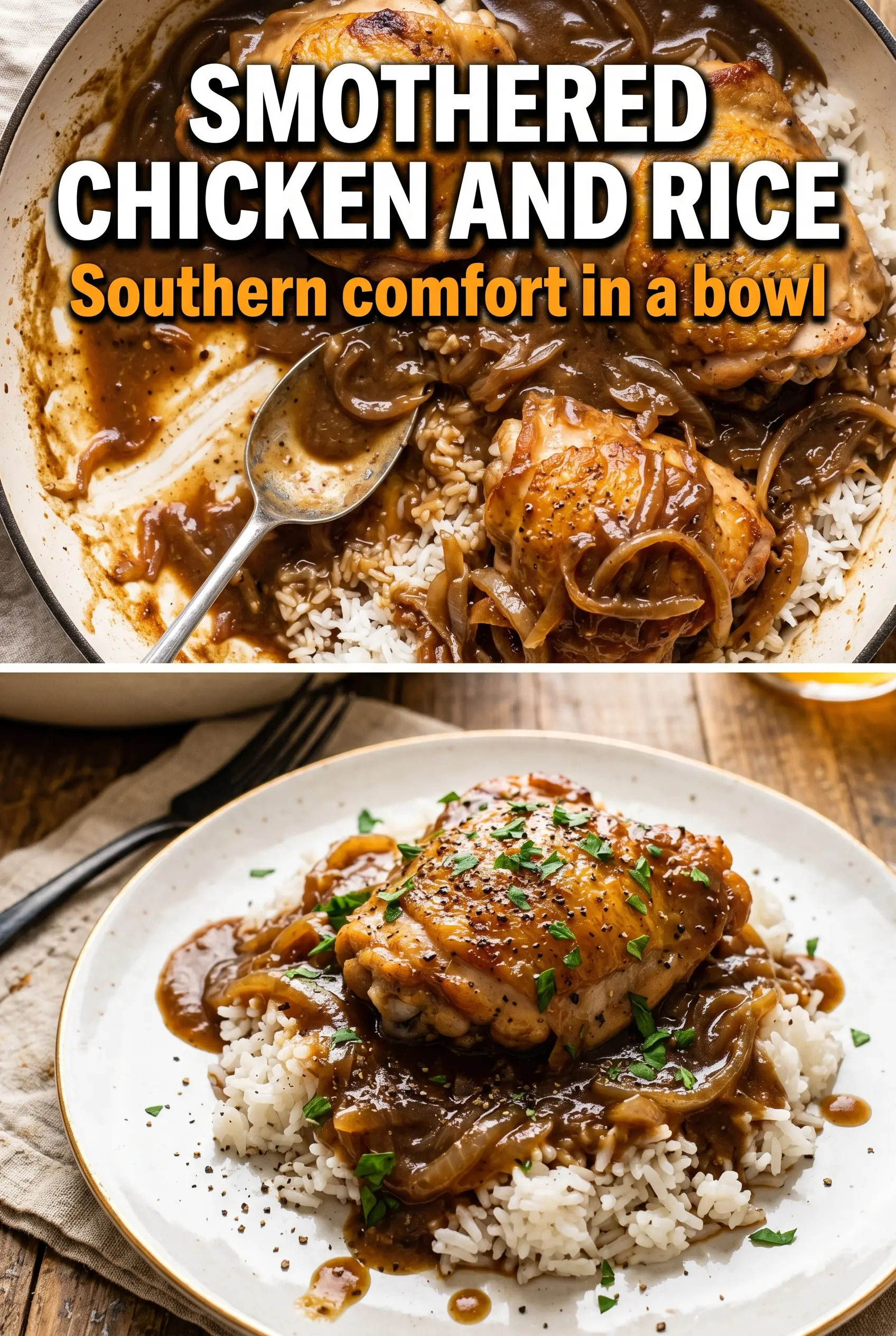
Smothered Chicken and Rice
Ingredients
Equipment
Method
- Pat chicken thighs dry, then season all over with garlic powder, onion powder, smoked paprika, salt, and pepper. Heat vegetable oil in a large Dutch oven over medium-high heat and sear chicken skin-side down for 6-7 minutes until golden.
- Flip chicken and sear the other side for 4 minutes until browned. Remove chicken to a plate.
- In the same Dutch oven, cook thinly sliced onion over medium heat for 8-10 minutes until caramelized. Add minced garlic and cook for 1 minute.
- Sprinkle all-purpose flour over the onions and stir for 1 minute. Gradually pour in chicken broth while scraping up the browned bits from the bottom of the pot, then stir in heavy cream and Worcestershire sauce.
- Stir in uncooked long-grain white rice and spread it into an even layer. Nestle chicken skin-side up into the broth.
- Bring the mixture to a simmer. Cover tightly and cook over low heat for 20-22 minutes until the rice is cooked and the chicken reaches 165°F.
- Remove the lid and let the dish stand briefly so the sauce settles. Garnish with fresh parsley and serve.