Sausage and potatoes turn into something much better when they cook together under a cheesy egg custard in the slow cooker. The potatoes soften without turning watery, the sausage seasons the whole dish, and the eggs set into tender slices you can lift out in generous squares. It’s the kind of breakfast casserole that holds heat well, feeds a crowd without fuss, and still feels hearty enough to pass for dinner.
The trick is treating the hash browns and eggs like separate jobs instead of dumping everything in at once. Thawed potatoes give off less moisture, which keeps the casserole from turning loose at the edges, and stirring most of the cheese into the egg mixture helps the custard set with flavor all the way through instead of sitting only on top. A well-greased crockpot insert matters here too, because the cheese on the perimeter likes to catch if the pot is dry.
Below, you’ll find the small timing details that keep the center set, the best way to swap the sausage if you want a different flavor, and what to do if you’re making this ahead for a slow morning.
The potatoes came out tender, not mushy, and the sausage flavor spread through every bite. I cooked it on low for six hours, and the eggs set up perfectly without drying out.
Keep this cheesy slow cooker sausage and potato casserole handy for mornings when you want a set-and-forget breakfast that feeds a crowd.
The Fix for a Slow Cooker Casserole That Turns Watery
The biggest problem with crockpot breakfast casseroles is excess moisture. Frozen hash browns that haven’t been thawed can steam the whole dish, and too much liquid in the egg mixture leaves you with soft, loose edges that never quite set. Thawed potatoes and a careful ratio of eggs to milk keep this casserole structured enough to slice, but still tender in the center.
The other detail that matters is the cheese. A portion goes into the custard, where it melts into the eggs and helps them set with a richer texture, and the rest goes on top for that browned, savory lid. If you pile all the cheese on top, you lose that built-in stability inside the casserole.
What Each Ingredient Is Actually Doing in This Casserole

- Smoked sausage or kielbasa — This brings the salt, fat, and smoky backbone that seasons the whole dish. Use a good grocery-store sausage if that’s what you have; the slow cooker softens edges and blends flavors, so you don’t need anything fancy. Slice it evenly so every bite gets the same amount.
- Thawed frozen hash browns — These are the base that soaks up the egg custard and gives the casserole its body. Thawing matters because frozen potatoes release water as they cook, which makes the finished dish soggy. If you use refrigerated diced potatoes instead, the texture will be a little firmer and the casserole may need a touch longer.
- Eggs and whole milk — This is the custard that holds everything together. Whole milk gives enough richness for a soft set without making the casserole heavy. Lower-fat milk works in a pinch, but the filling won’t taste as plush.
- Sharp cheddar — Sharp cheddar cuts through the sausage and keeps the casserole from tasting flat. Pre-shredded cheese works, but block cheese melts more smoothly because it doesn’t carry the anti-caking coating. Stir most of it into the eggs so the flavor runs through the whole dish.
- Garlic powder and onion powder — These deepen the savory flavor without adding extra moisture. They’re worth keeping in the mix because the slow cooker mutes seasoning a little as the dish cooks. Fresh onion or garlic would be harsher and can throw off the texture here.
Building the Layers So the Eggs Set Cleanly
Greasing the Crockpot Properly
Coat the insert well, all the way up the sides. The cheese and egg mixture will cling where the heat hits hardest, especially around the edges, and a thin film of grease helps the casserole release instead of tearing when you serve it. Butter or nonstick spray both work; just don’t leave any bare spots.
Layering the Potatoes and Sausage
Spread the thawed hash browns in an even layer on the bottom, then scatter the sausage over the top. That order lets the potatoes absorb some of the sausage drippings as everything cooks, which gives the base more flavor. If the potatoes are mounded unevenly, the middle cooks slower and the casserole can set in patches instead of as one cohesive dish.
Whisking the Custard Until It’s Fully Combined
Beat the eggs with the milk, seasonings, and most of the cheese until the mixture looks uniform and a little foamy. You want the cheese distributed before it goes in the crockpot, not dumped in as a separate layer. If the eggs are streaky before cooking, they’ll set unevenly and you’ll end up with pockets that are more omelet than casserole.
Cooking Until the Center Is Set, Not Dry
Cook on low for about 6 hours, or high for 3 to 4 hours if you’re short on time. The casserole is done when the edges are firm, the top looks set, and the center no longer jiggles when you tap the crock. If it goes too long, the eggs tighten and turn rubbery, so start checking early if your slow cooker runs hot.
How to Adapt This for Different Tables and Different Mornings
Make It Gluten-Free Without Changing the Method
This recipe is naturally gluten-free as long as your sausage is certified gluten-free. The rest of the ingredients are just eggs, potatoes, dairy, and seasonings, so the texture stays exactly the same.
Use Breakfast Sausage for a Sweeter, Less Smoky Flavor
Breakfast sausage gives the casserole a softer, more familiar brunch flavor. It won’t have the same smoky edge as kielbasa, so the dish reads a little milder, which works well if you’re serving kids or pairing it with fruit.
Swap in Pepper Jack for a Little Heat
Replacing part of the cheddar with pepper jack gives the casserole more bite without changing the texture. Keep at least half the cheese as cheddar so the custard still tastes balanced and doesn’t become sharp in a way that overpowers the sausage.
Storage and Reheating
- Refrigerator: Store leftovers in an airtight container for up to 4 days. The potatoes firm up a bit as they chill, but the casserole still reheats well.
- Freezer: It freezes, but the texture gets softer after thawing because of the egg and potato base. Freeze individual portions wrapped tightly, then thaw in the fridge before reheating.
- Reheating: Warm slices in the microwave at medium power or in a 325°F oven until hot in the center. High heat can make the eggs tough before the middle is warm, so reheat gently.
Answers to the Questions Worth Asking
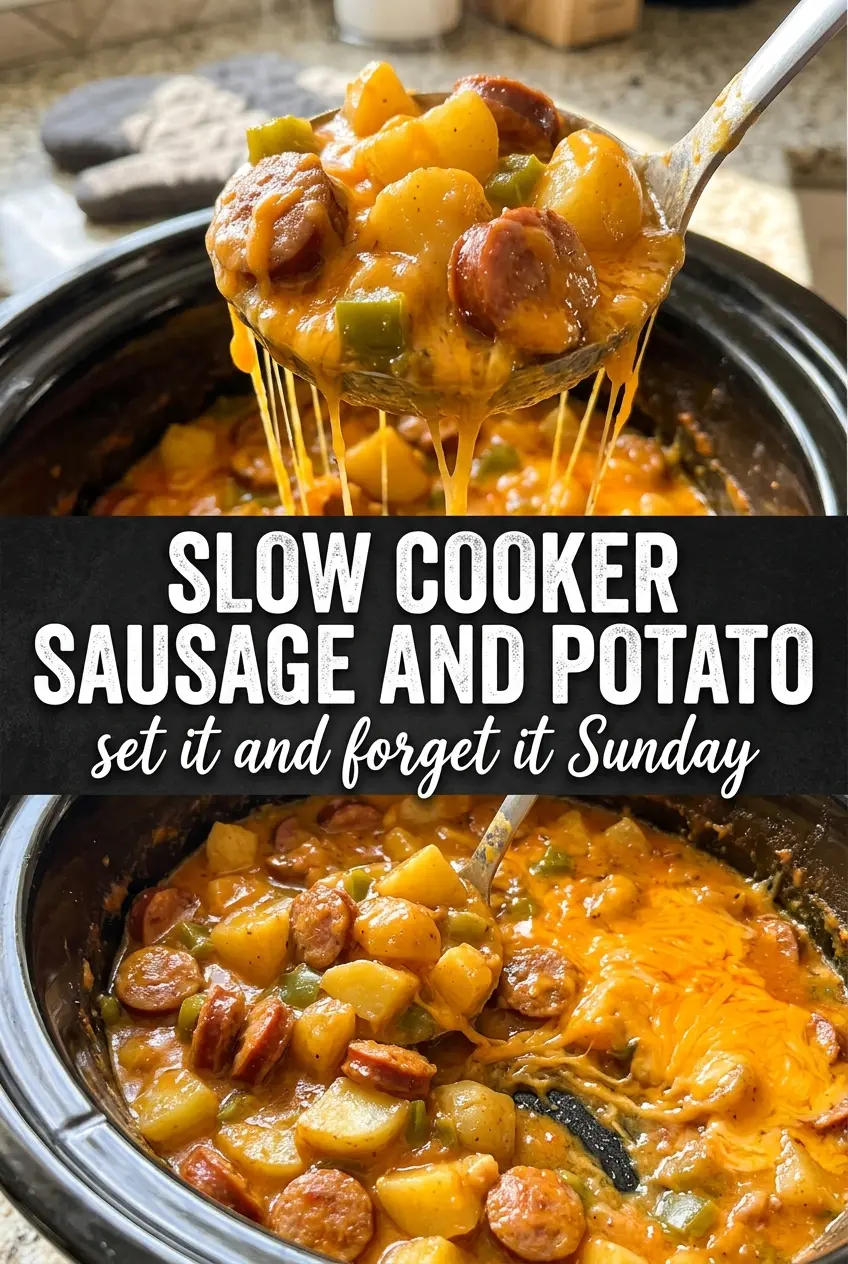
Slow Cooker Sausage and Potato Casserole
Ingredients
Equipment
Method
- Grease the crockpot insert well so the casserole releases cleanly after cooking.
- Layer the thawed hash browns in the bottom of the crockpot, then scatter the sliced sausage rounds on top.
- Whisk the eggs, milk, garlic powder, onion powder, salt, and black pepper until smooth.
- Stir in 1.5 cups of the shredded cheddar to distribute the cheese through the custard.
- Pour the egg mixture over the sausage and potato layers, making sure the top is evenly covered.
- Top with the remaining cheddar.
- Cook on low for 6 hours (or high for 3–4 hours) until the eggs are set and the edges look golden.
- Garnish with fresh chives and serve directly from the crockpot.