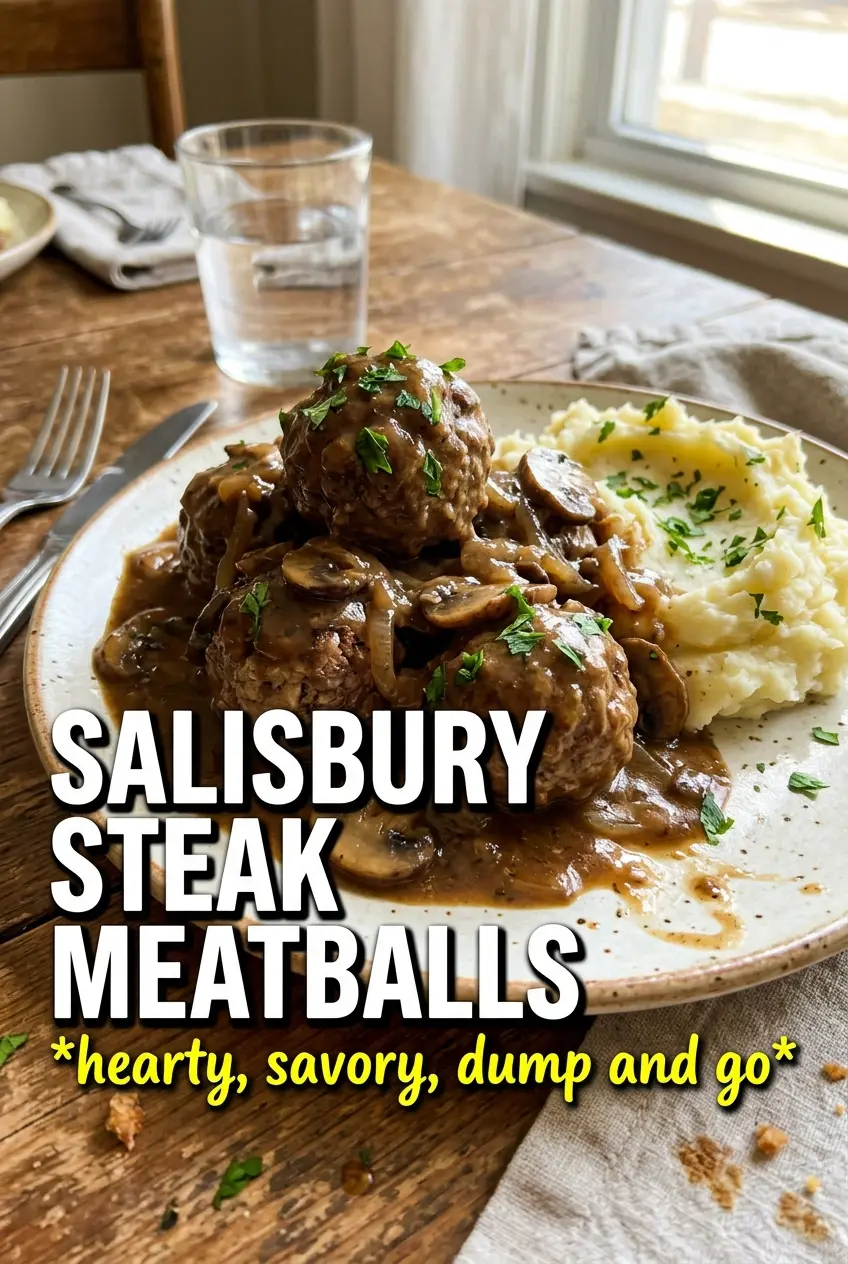
Slow cooker Salisbury steak meatballs turn into the kind of dinner that tastes like it took far more effort than it did. The meatballs stay tender, the mushrooms melt into the gravy, and the onions soften until they taste almost sweet. Spoon them over mashed potatoes and you get that classic meat-and-potatoes comfort with a rich, savory sauce that clings to every bite.
What makes this version work is the skillet browning at the start and the slow, low heat after that. Browning the meatballs gives you deeper flavor and helps them hold their shape, while the slow cooker does the gentle work of finishing them without drying them out. The mushroom soup and broth build a gravy that’s easy to pull together, and the Dijon plus Worcestershire keep it from tasting flat.
Below, I’ll walk you through the part that matters most: how to keep the gravy from turning thin or dull, how to swap ingredients without losing the cozy Salisbury steak feel, and what to do if you want to make it ahead for an even easier weeknight.
The gravy came out thick and glossy, and the meatballs stayed tender all day on low. I served it over mashed potatoes and my husband said it tasted like diner Salisbury steak, just better.
Save these slow cooker Salisbury steak meatballs for the nights when you want tender beef, mushroom gravy, and almost no hands-on time.
The Browning Step That Keeps the Meatballs From Tasting Flat
The biggest mistake with slow cooker meatballs is skipping the skillet. Raw meatballs dumped straight into the crockpot can end up pale, soft, and one-note, even if the gravy is good. A quick browning step adds a deeper beef flavor and gives the outside enough structure to stay intact during the long cook.
You don’t need to cook them through in the pan. You’re looking for color on the outside and a little fond left behind in the skillet. That browned residue matters because it adds the savory backbone to the gravy once the liquids go in. If the meatballs seem too delicate to move, chill them for 10 minutes before browning so they hold together better.
What Each Ingredient Is Actually Doing in This Gravy

- Ground beef — An 80/20 mix gives you the best balance of flavor and tenderness. Leaner beef works, but the meatballs can turn a little dry after hours in the slow cooker.
- Breadcrumbs and egg — These hold the meatballs together and keep the texture soft instead of dense. If you use crushed crackers instead of breadcrumbs, the result will be a little richer and saltier.
- Worcestershire — This is the fast way to build that classic Salisbury steak flavor. There isn’t a true stand-in for it, but soy sauce plus a tiny splash of vinegar gets close if that’s what you have.
- Cremini mushrooms and onion — The mushrooms add body and a meaty feel to the gravy, while the onion softens into the sauce. Slice both thinly so they break down enough during the long cook.
- Cream of mushroom soup — This gives the gravy its creamy base without extra fuss. If you want to use a different condensed soup, stick with something similarly thick or the sauce can get too loose.
- Cornstarch slurry — This is what turns the gravy from thin and brothy to spoon-coating. Mix it with cold water first so it disperses cleanly and doesn’t clump in the hot liquid.
How to Build the Gravy So It Stays Rich, Not Watery
Mix and shape the meatballs with a light hand
Combine the beef, breadcrumbs, egg, Worcestershire, garlic powder, onion powder, salt, and pepper just until everything is evenly mixed. Overworking the meat makes the meatballs dense, and dense meatballs stay tougher after a long simmer. Roll them into 1.5-inch balls so they cook evenly and fit comfortably in the slow cooker.
Brown for flavor, not for full doneness
Heat a skillet and brown the meatballs in batches until they have a deep golden crust on the outside. The centers will still be raw, and that’s fine. If the pan gets crowded, the meatballs steam instead of sear, and you lose the flavor payoff you were after.
Layer the sauce ingredients around the meatballs
Add the mushrooms, onion, broth, cream of mushroom soup, Worcestershire, and Dijon to the crockpot, then stir gently around the meatballs. That lets the gravy base move through the pot without knocking the meatballs apart. The Dijon doesn’t make this taste tangy; it sharpens the beef flavor and keeps the sauce from tasting heavy.
Finish with the slurry at the end
After the meatballs are fully cooked, stir in the cornstarch slurry and switch the slow cooker to High for about 20 minutes. The gravy should look glossy and lightly thickened, not paste-like. If you add the slurry too early, it can thin back out during the long cook, so save it for the last stretch.
How to Adapt These Meatballs for a Different Table
Gluten-Free Version
Use gluten-free breadcrumbs in the meatballs and swap in a certified gluten-free condensed mushroom soup. The texture stays close to the original, and the gravy still gets the same creamy body.
Dairy-Free Friendly
This recipe is already close to dairy-free if your cream of mushroom soup is dairy-free, so check that label first. The finished gravy will still be rich because the beef, mushrooms, and Worcestershire do most of the heavy lifting.
Make It a Little Lighter
You can use leaner ground beef, but add a little extra care when shaping so the meatballs don’t dry out. The gravy helps a lot here, but the meatballs won’t have quite the same rich bite as a fattier blend.
Storage and Reheating
- Refrigerator: Store leftovers in an airtight container for up to 4 days. The gravy thickens as it chills, so it may look a little tighter the next day.
- Freezer: This freezes well. Cool completely, then freeze the meatballs and gravy together for up to 3 months; thaw overnight in the fridge before reheating.
- Reheating: Warm gently on the stovetop or in the microwave with a splash of broth to loosen the gravy. High heat can make the meatballs tough and can cause the sauce to separate.