Slow cooker potato soup earns its place in the dinner rotation because it gives you that old-school, creamy, loaded-potato comfort without standing over the stove. The potatoes turn tender enough to break down into the broth, while a little mashing at the end leaves the bowl thick, spoonable, and full of soft chunks instead of turning the whole pot into glue. It tastes rich and cozy, but it still feels like actual soup, not mashed potatoes in a bowl.
The trick is in the order and the finish. Russet potatoes break down beautifully, and chicken broth gives the soup enough seasoning to taste finished before the dairy goes in. Cream cheese melts in best when the potatoes are already soft and the slow cooker is on low heat, which keeps the texture smooth instead of grainy. Cheddar goes in last so it melts into the base instead of clumping.
Below, I’ll show you exactly how much to mash, how to keep the dairy silky, and what to change if you want it a little lighter, a little thicker, or fully meat-free.
The potatoes got perfectly tender and the soup thickened up just right after I mashed about half of it. My husband kept going back for seconds because the cheddar and bacon on top made it taste like a baked potato in soup form.
Like this loaded slow cooker potato soup? Save it to Pinterest for a creamy, chunky bowl of comfort with cheddar, bacon, and green onion on top.
The Part That Keeps Potato Soup Thick Instead of Watery
Most slow cooker potato soups get thin because the potatoes stay in neat little cubes until the very end, which sounds tidy but leaves you with broth that tastes more like seasoned soup water. This version works because you partially mash the potatoes after they’re fully tender. That gives you starch, body, and a creamier base without needing flour or a separate roux.
Russets matter here. They break down in the best way and naturally thicken the pot as they cook. If you use waxy potatoes instead, the soup will stay more brothy and the texture won’t get that comforting, velvety finish. The other key move is adding the dairy only after the potatoes are soft enough to mash. If you rush that part, the cream cheese can sit in little soft lumps instead of melting cleanly.
What Each Ingredient Is Actually Doing in This Soup
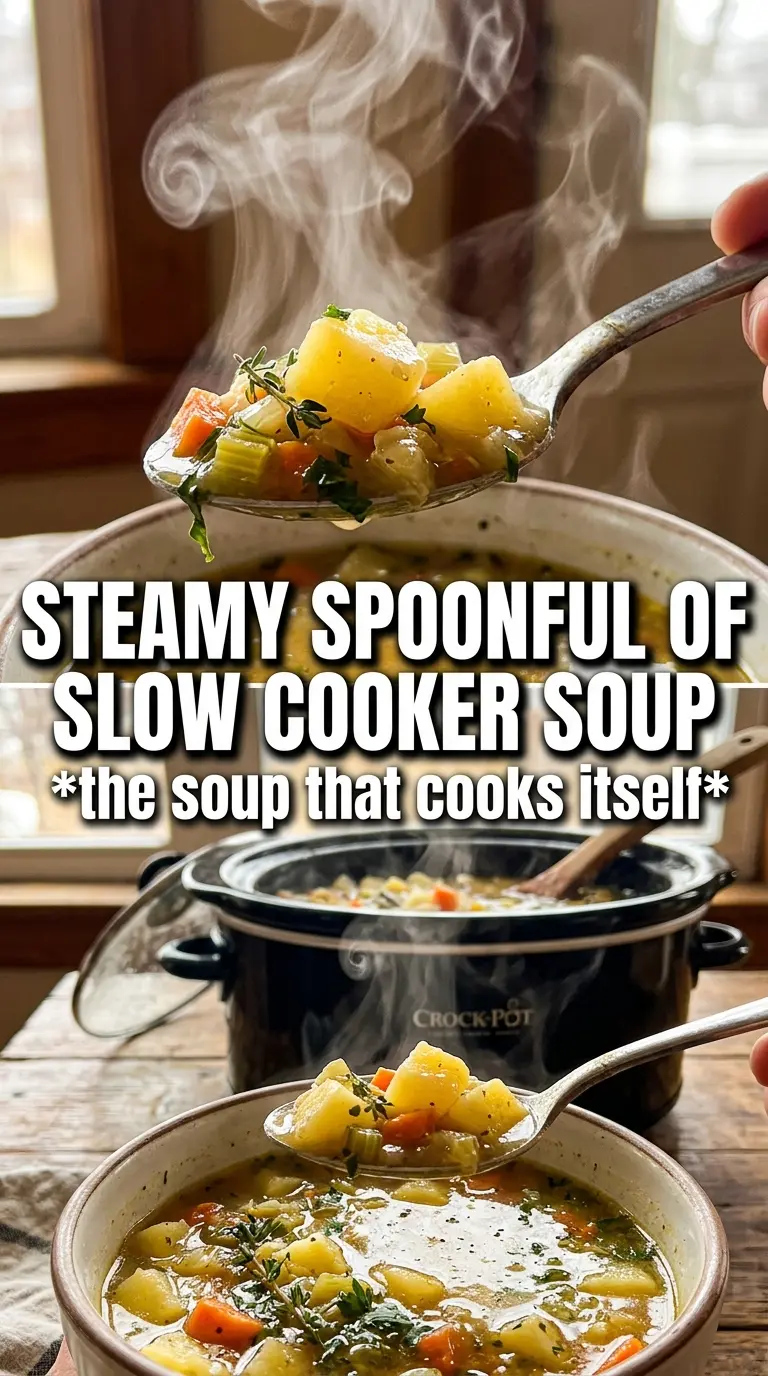
- Russet potatoes — These are the backbone of the soup. They soften enough to mash and naturally thicken the broth, which is why they work better than waxy potatoes here.
- Chicken broth — This gives the soup its base flavor, not just liquid. A good broth makes the whole pot taste seasoned before the cheese goes in. Vegetable broth works if you want a meat-free version, but the soup will taste a little lighter.
- Cream cheese — This is what gives the soup its smooth, plush texture. Cube it first so it melts faster and more evenly. If you drop in a cold block whole, it takes longer to disappear and can leave streaks.
- Heavy cream — It rounds out the soup and keeps it from tasting too sharp once the cheddar goes in. Half-and-half will work, but the finish will be thinner.
- Cheddar — Add it at the end, after the heat is lowered a bit. High heat can make it stringy or grainy instead of silky.
Getting the Dairy in Smoothly at the End
Cook the Potatoes Until They Collapse Under the Spoon
Start by loading the slow cooker with the potatoes, onion, garlic, broth, and seasonings, then let it go until the potatoes are fully tender. On Low, that usually means 6 to 8 hours, and they should break apart when you press them with a spoon. If the centers still feel firm, stop and give them more time. Undercooked potatoes are the fastest way to end up with a lumpy soup that never turns creamy no matter how much you mash.
Mash for Body, Not Purée
Use a potato masher and break up about half of the potatoes right in the slow cooker. Leave plenty of chunks behind. That mix of smooth and chunky is what makes the soup feel hearty instead of baby-food soft. If you mash everything, the starch can make it dense and pasty, and you lose the texture that makes each spoonful interesting.
Stir in the Cream Cheese First
Add the cubed cream cheese while the soup is still hot and stir until it disappears completely. This is the step that gives you that rich, cohesive base. If the soup has cooled too much, the cream cheese can stay stubborn and soft instead of melting in. In that case, put the lid back on for a few minutes, then stir again before adding the cheddar.
Finish with Cheddar and Taste Again
Once the cream cheese is smooth, stir in the shredded cheddar and let it melt off the heat for a minute or two. That keeps the cheese from seizing up or turning grainy. Taste the soup before serving and adjust with a little more salt or pepper if needed. Toppings bring a lot of salt on their own, but the base still needs enough seasoning to stand up to them.
Ways to Adjust This Soup Without Losing the Texture
Make it vegetarian
Swap the chicken broth for vegetable broth and leave off the bacon topping. The soup will still be creamy and satisfying, but the flavor will be a little softer and less savory, so taste it carefully at the end and add another pinch of salt if needed.
Make it lighter
Use half-and-half instead of heavy cream and reduce the cheddar a bit. You’ll get a soup that still feels creamy, but it won’t be as rich or thick. Don’t cut the cream cheese all the way out unless you want a noticeably thinner bowl.
Make it extra thick
Mash more of the potatoes, or let the soup sit on Warm with the lid cracked for 10 to 15 minutes after adding the dairy. That gives the starch time to settle in and the soup to tighten up. Don’t add flour at the end unless you want a floury taste that covers up the potato flavor.
Add the bacon in the pot
Stir cooked, crumbled bacon into the soup right before serving if you want smoky flavor throughout instead of just on top. The texture softens a little as it sits, so the topping still gives the best crunch. If you do this, keep some bacon back for garnish so the finished bowls still look loaded.
Storage and Reheating
- Refrigerator: Keep in an airtight container for up to 4 days. It will thicken as it chills because the potatoes keep absorbing liquid.
- Freezer: It freezes, but the dairy can separate a little after thawing. If you want the best texture, freeze the soup before adding the cream cheese, heavy cream, and cheddar, then finish it fresh when you reheat.
- Reheating: Warm it gently on the stove or in the slow cooker on Low, stirring often. Don’t boil it hard or the dairy can break and the soup can turn grainy.
Questions I Get Asked About This Recipe

Slow Cooker Potato Soup
Ingredients
Equipment
Method
- Add cubed potatoes, diced onion, minced garlic, broth, salt, black pepper, garlic powder, and onion powder to the slow cooker. Stir to evenly distribute the seasonings.
- Cover and cook on Low for 6-8 hours, until the potatoes are very tender. The mixture should look thick and potato-soft with no hard centers.
- Use a potato masher to partially mash the soup to your desired consistency, leaving some chunks. You should see a mix of smooth and potato pieces.
- Stir in cream cheese and heavy cream, mixing until the cream cheese melts completely. Stop when the soup looks uniformly creamy with no visible cream cheese chunks.
- Add shredded cheddar and stir until melted, then taste and adjust seasoning. The soup should turn glossy and thick enough to coat a spoon.
- Ladle the soup into bowls and top each serving with sour cream, extra cheddar, bacon bits, and sliced green onions. The toppings should sit on top for a fresh, visible contrast.