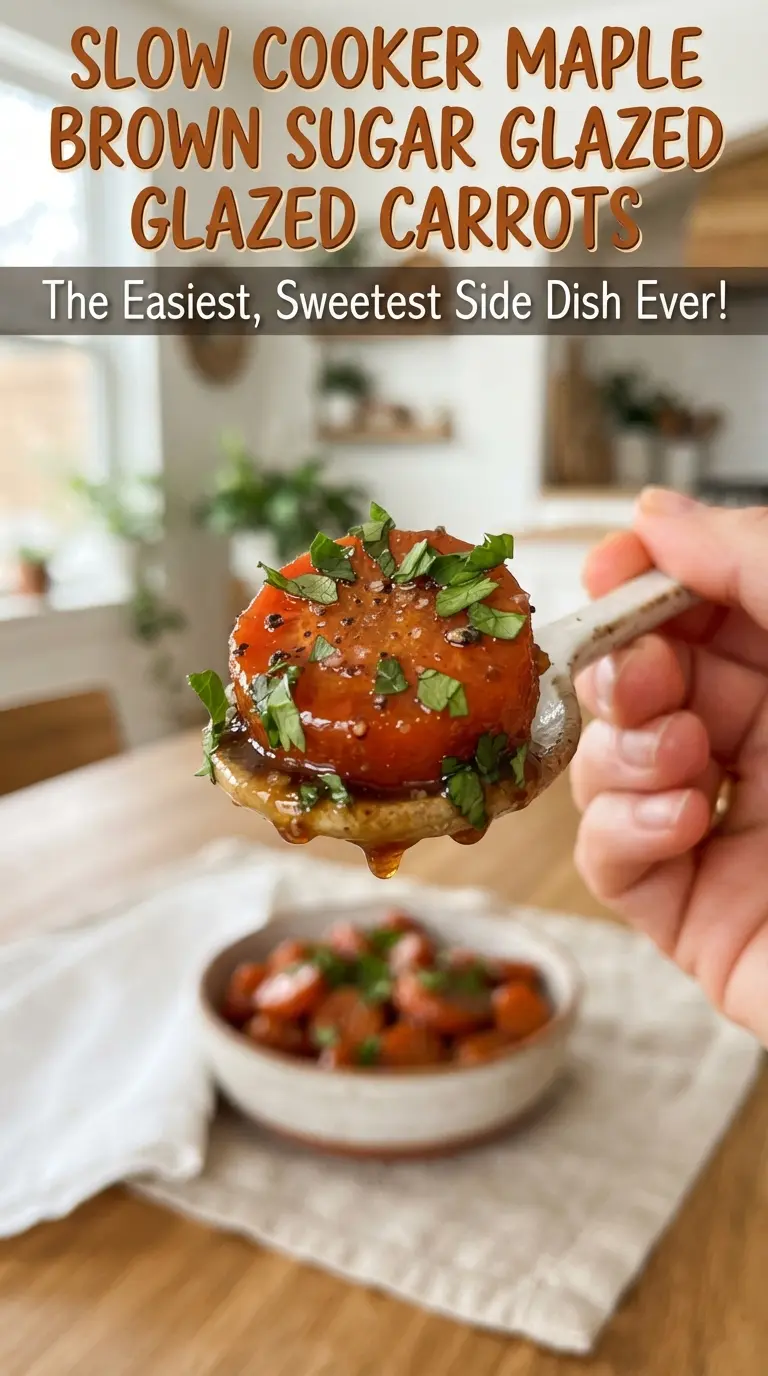
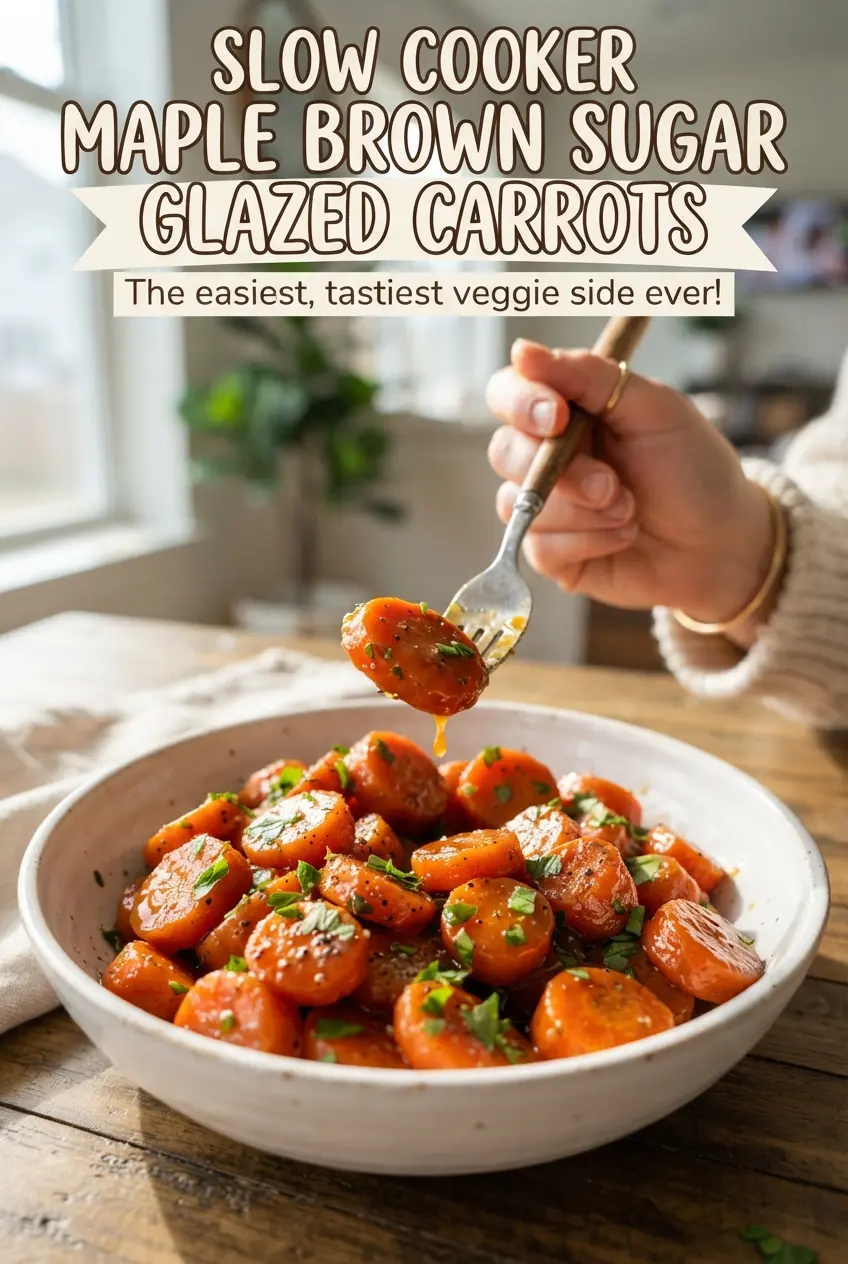
Slow cooker maple brown sugar glazed carrots come out tender, glossy, and coated in a syrupy glaze that tastes like it took a lot more attention than it did. The slow cooker does the steady work here, softening the carrots without turning them mushy, while the brown sugar and maple syrup reduce into a sticky coating that clings to every bite.
The trick is starting with baby carrots, which cook evenly and stay pleasantly firm instead of collapsing before the glaze has a chance to thicken. A little butter gives the sauce body, cinnamon warms everything up, and just enough salt keeps the sweetness from tasting flat. I also like a small pinch of black pepper because it quietly sharpens the glaze without making the carrots taste spicy.
Below, you’ll find the timing that keeps the carrots tender instead of waterlogged, plus a few easy swaps if you want to adjust the sweetness or make them fit a different menu.
The glaze turned sticky and shiny right in the crockpot, and the carrots stayed tender without falling apart. I served them alongside roast chicken and the bowl was scraped clean.
Slow Cooker Maple Brown Sugar Glazed Carrots are the sweet, glossy side dish that practically makes itself.
The Part That Keeps the Glaze Glossy, Not Watery
The main mistake with glazed carrots in a slow cooker is too much liquid from the start. Carrots release moisture as they cook, and if the sauce is already thin, you end up with sweet broth instead of a coating that sticks. This version uses just enough butter and syrup to melt together into a glaze that thickens as it heats, then tightens a little more when you stir the carrots at the end.
- Baby carrots — These hold their shape and cook evenly. Whole carrots cut into thick coins work too, but they need to be cut the same size or some pieces will turn soft before others are tender.
- Maple syrup — Use real maple syrup for the cleanest flavor. Pancake syrup tastes flatter and can leave the glaze one-note.
- Brown sugar — This brings depth and helps the glaze cling. Packed light brown sugar is fine here; dark brown sugar will make the glaze taste a little more molasses-heavy.
- Butter — Melted butter gives the glaze body and a smooth finish. If you skip it, the sauce tastes thinner and more like syrup than glaze.
What Each Ingredient Is Actually Doing in This Recipe
- Primary ingredient (the star) — Quality matters most. Choose the best you can find.
- Cooking medium (oil, butter, or broth) — This carries flavors and prevents dryness.
- Seasonings (salt, pepper, spices, herbs) — Layer flavors so nothing overpowers. Build depth gradually.
- Aromatics (garlic, onion, herbs) — Cook with fat to bloom flavors. Become the foundation.
- Supporting ingredients — Complement the main ingredient without overpowering it.
- Sauce or liquid (if applicable) — Brings flavors together. Balance richness with acid.
- Acid (lemon, vinegar, wine, or other) — Brightens and prevents flat-tasting results.
- Final finish (garnish, glaze, or sauce) — Prevents one-dimensional taste and adds visual appeal.
Getting the Carrots Tender Before the Glaze Overcooks
Coating the Carrots First
Put the carrots in the slow cooker first, then whisk the glaze separately before pouring it over. That keeps the brown sugar from clumping on the bottom and gives every carrot an even coating from the start. Toss once in the crock so the carrots are lightly slicked with sauce before cooking begins.
Cooking Until Fork-Tender
Cover and cook on LOW for 4 to 5 hours or HIGH for 2 to 3 hours. The carrots are ready when a fork slides in easily but the center still has a little bite; if they’re left until they’re completely limp, they’ll break apart when you stir. Slow cookers vary, so start checking a little early the first time you make them.
Finishing the Glaze
Stir the carrots well at the end so the melted butter, sugar, and carrot juices come together into a glossy coating. If the sauce looks thin at first, give it a few minutes with the lid off after stirring; that small bit of steam loss helps it cling. Add the parsley right before serving so the color stays bright.
How to Adapt These Glazed Carrots for Different Tables
Dairy-Free Version
Swap the butter for an equal amount of vegan butter or refined coconut oil. Vegan butter keeps the glaze closest to the original, while coconut oil adds a faint coconut note that works better if you already like that flavor.
Less Sweet, More Savory
Cut the brown sugar down to 1/3 cup and keep the maple syrup the same. The carrots will still glaze nicely, but the finish tastes a little more balanced and works well next to ham, turkey, or roast chicken.
Using Whole Carrots Instead of Baby Carrots
Peel and slice them into even 1/2-inch pieces so they cook at the same pace. Whole carrots bring a deeper carrot flavor, but uneven cuts will give you a mix of mushy and underdone pieces.
Storage and Reheating
- Refrigerator: Store in an airtight container for up to 4 days. The glaze thickens as it chills, which is normal.
- Freezer: These freeze well for about 2 months, though the carrots soften a bit after thawing. Cool completely first and freeze in a flat container or freezer bag.
- Reheating: Warm gently on the stove or in the microwave with a splash of water to loosen the glaze. High heat can make the sugar seize and the carrots turn too soft.
Questions I Get Asked About This Recipe
Slow Cooker Maple Brown Sugar Glazed Carrots
Ingredients
Equipment
Method
- Add baby carrots to the slow cooker.
- Whisk brown sugar, maple syrup, melted butter, ground cinnamon, salt, and black pepper, then pour over the carrots and toss to coat.
- Cover and cook on LOW for 4-5 hours, or HIGH for 2-3 hours, until the carrots are fork-tender, with visible bubbling/heat in the glaze.
- Stir well to re-coat the carrots in the thickened glaze so each piece looks glossy.
- Garnish with fresh parsley and serve warm.