Slow cooker chicken breasts can be dry and stringy if they go too long, but when they’re cooked with enough seasoning and just the right amount of broth, they turn soft, juicy, and easy to slice. The meat stays tender all the way through, and the cooking liquid picks up enough flavor to become a simple pan sauce that tastes like you put in far more effort than you did.
The trick here is restraint. Chicken breasts don’t need to be buried in liquid, and they don’t need a long, aggressive cook to get tender. A light seasoning mix, a little broth, butter, and garlic are enough to build flavor without washing the chicken out. Cooking on low gives you the most forgiving texture, especially if your slow cooker runs hot.
Below I’ll walk through the small details that keep the chicken juicy, plus the best way to slice and serve it so the sauce actually stays on the meat instead of running off the plate.
The chicken stayed incredibly juicy, and the broth at the bottom turned into the best quick sauce. I cooked it on low for just over 3 hours and it sliced beautifully without falling apart.
Love juicy slow cooker chicken breasts with a built-in garlic butter sauce? Save this one for easy lunches and no-fuss dinners.
The Difference Between Juicy Chicken and a Slow Cooker Full of Strings
Chicken breasts fail in the slow cooker for one main reason: they’re left in there too long. Unlike thighs, breasts don’t have much fat to protect them, so once they cross the tenderness window, the texture turns dry and fibrous fast. The low setting buys you a little more room for error, but the real win is checking early and treating the chicken like it’s done as soon as it reaches tender, sliceable doneness.
Another common mistake is adding too much liquid. You don’t need the chicken fully submerged; the slow cooker traps steam and keeps the meat moist on its own. The broth here is there to season the chicken and create sauce, not to poach the meat into submission.
- Cook on low for the best texture — low heat gives the breast meat time to relax without squeezing out its juices. High heat works in a pinch, but it narrows your timing window.
- Use the broth sparingly — 3/4 cup is enough to build steam and make sauce without turning the chicken bland.
- Rest before slicing — even a short 5-minute rest keeps the juices from flooding out the moment the knife hits the meat.
What the Seasoning, Broth, and Butter Are Actually Doing Here

- Chicken breasts — look for pieces that are similar in size so they finish cooking at the same time. If one breast is much thicker, gently pound it to an even thickness before seasoning.
- Garlic powder, onion powder, smoked paprika, and Italian seasoning — this blend gives the chicken a seasoned surface without needing a complicated marinade. Fresh herbs won’t replace the dry spices here because you need that concentrated coating to survive the long cook.
- Chicken broth — use a broth you’d happily sip, because the cooking liquid becomes the sauce. Water will work in a technical sense, but it leaves you with a thin, flatter finish.
- Butter and minced garlic — butter carries the garlic flavor and gives the sauce a little body. If you skip it, the juices taste leaner and less round.
- Lemon and parsley — these finish the dish with brightness, which matters after a slow cook. The chicken is rich and savory; the lemon keeps it from tasting dull.
How to Keep the Chicken Tender from Start to Finish
Season the Surface Generously
Pat the chicken dry first so the seasoning sticks instead of sliding around in wet spots. Coat both sides evenly, pressing the spices into the meat with your hands. This isn’t just about flavor on the outside; a well-seasoned surface keeps the finished slices tasting balanced all the way through. If the seasoning looks heavy at this stage, that’s a good sign — some of it will mellow into the broth.
Set Up the Slow Cooker for Gentle Heat
Lay the chicken in the cooker and pour the broth around it rather than over the top. You want the chicken to cook in steam and shallow liquid, not drown. Add the butter and garlic on top so they melt into the juices as the chicken cooks. If your slow cooker runs hot, start checking at the 3-hour mark on low; the difference between juicy and dry can be less than half an hour.
Stop Cooking at Tender, Not Fallen Apart
When the chicken is done, it should slice easily and look opaque all the way through, but it shouldn’t be shredding into dry fibers when you lift it. Pull it out as soon as it reaches that point. Let it rest for 5 minutes before slicing so the juices settle back into the meat. Then spoon the cooking liquid over the top; it acts like a quick pan sauce and keeps every bite moist.
How to Adjust It When You Need a Different Outcome
Make It Dairy-Free
Use a good olive oil or dairy-free butter in place of the butter. You’ll lose a little of the round, rich finish, but the garlic and broth still make a solid sauce. The texture of the chicken stays the same.
Use Thighs Instead of Breasts
Boneless skinless thighs are more forgiving and stay juicy even if they cook a little longer. Keep the same seasoning and broth, but expect a richer, darker meat with a slightly looser texture. They’re a good choice if your slow cooker tends to run hot.
Make It Gluten-Free
This recipe is naturally gluten-free as long as your broth is certified gluten-free. That’s the only place hidden gluten usually sneaks in. The rest of the ingredients are straightforward and safe.
Turn It Into Meal Prep
Slice the chicken after resting and store it with some of the cooking juices so it stays moist in the fridge. It’s better than storing it dry, which makes the texture seem tougher when reheated. This works especially well for bowls, wraps, and salads.
Storage and Reheating
- Refrigerator: Store in an airtight container for up to 4 days, with a little of the juices spooned over the top so the slices don’t dry out.
- Freezer: It freezes well for up to 2 months. Freeze the chicken in portions with some sauce or broth; thaw overnight in the fridge before reheating.
- Reheating: Reheat gently in a covered skillet over low heat with a splash of broth, or microwave in short bursts. High heat is the mistake that turns leftover chicken leathery.
Answers to the Questions Worth Asking
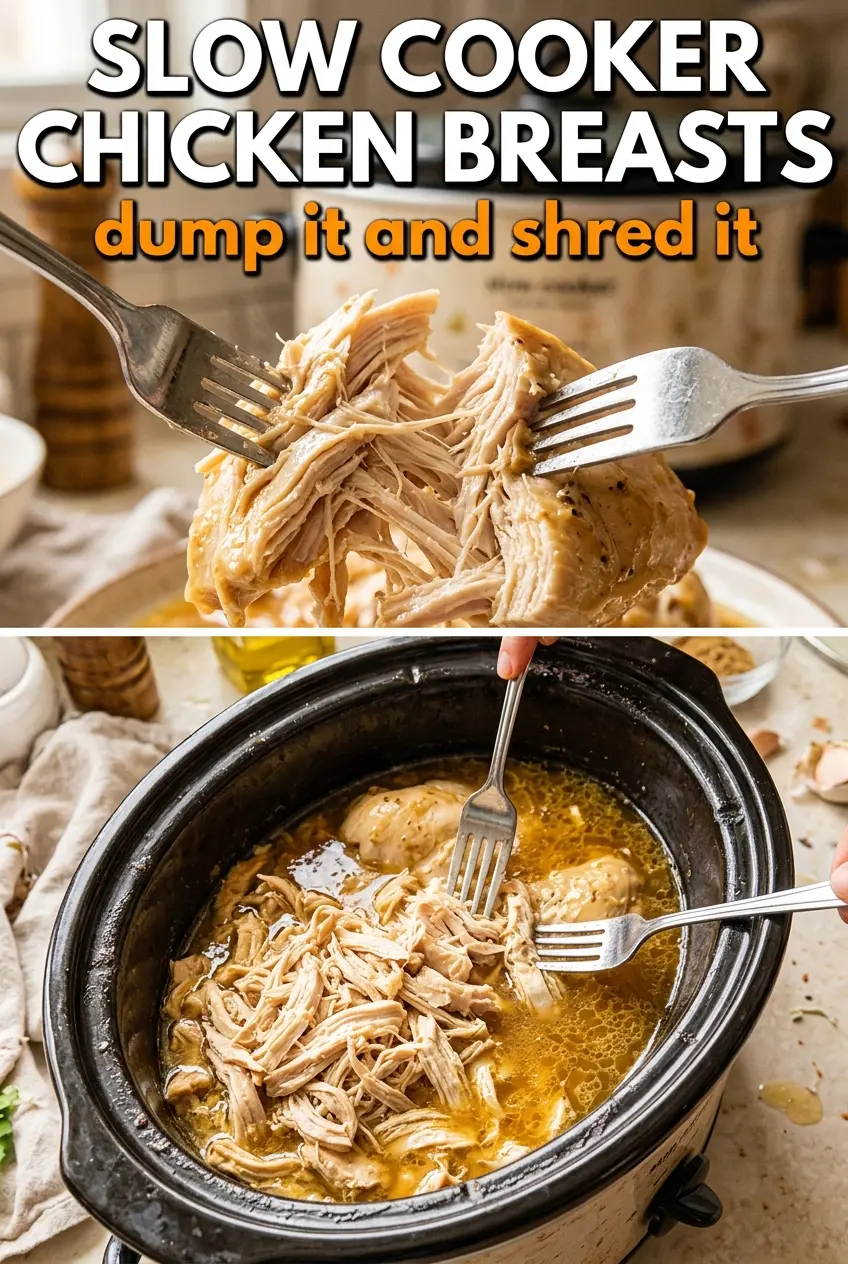
Slow Cooker Chicken Breasts
Ingredients
Equipment
Method
- Pat the boneless skinless chicken breasts dry, then season both sides generously with garlic powder, onion powder, smoked paprika, Italian seasoning, salt, and cracked black pepper.
- Place the seasoned chicken breasts into the slow cooker so they sit in a single layer as much as possible.
- Pour the chicken broth around the chicken (not directly on top) and add the butter and minced garlic to the slow cooker.
- Cover and cook on LOW for 3-4 hours, or HIGH for 2-2.5 hours; do not overcook so the chicken stays tender and pulls apart easily.
- Remove the chicken and let it rest for 5 minutes before slicing.
- Pour the cooking juices over the sliced chicken to make a quick pan sauce.
- Garnish with fresh parsley and lemon wedges, then serve.