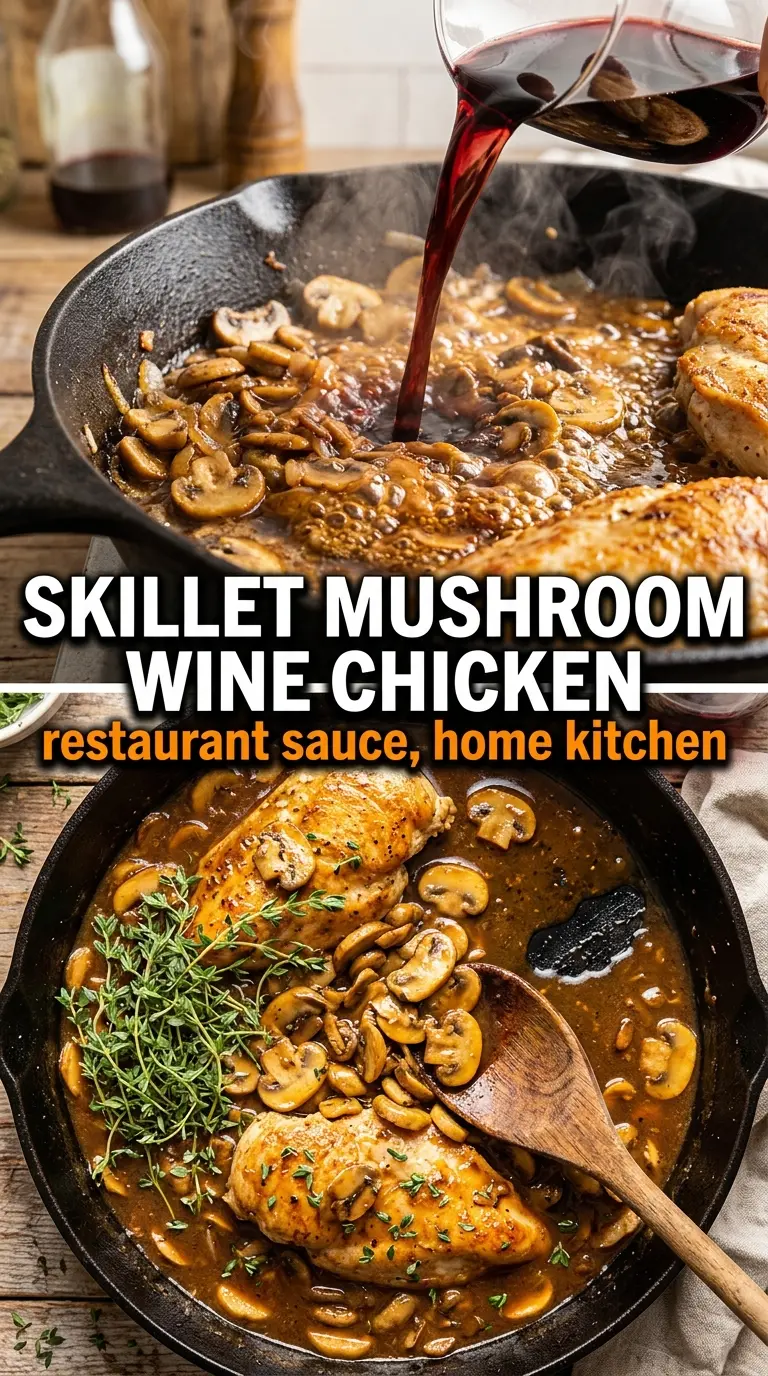
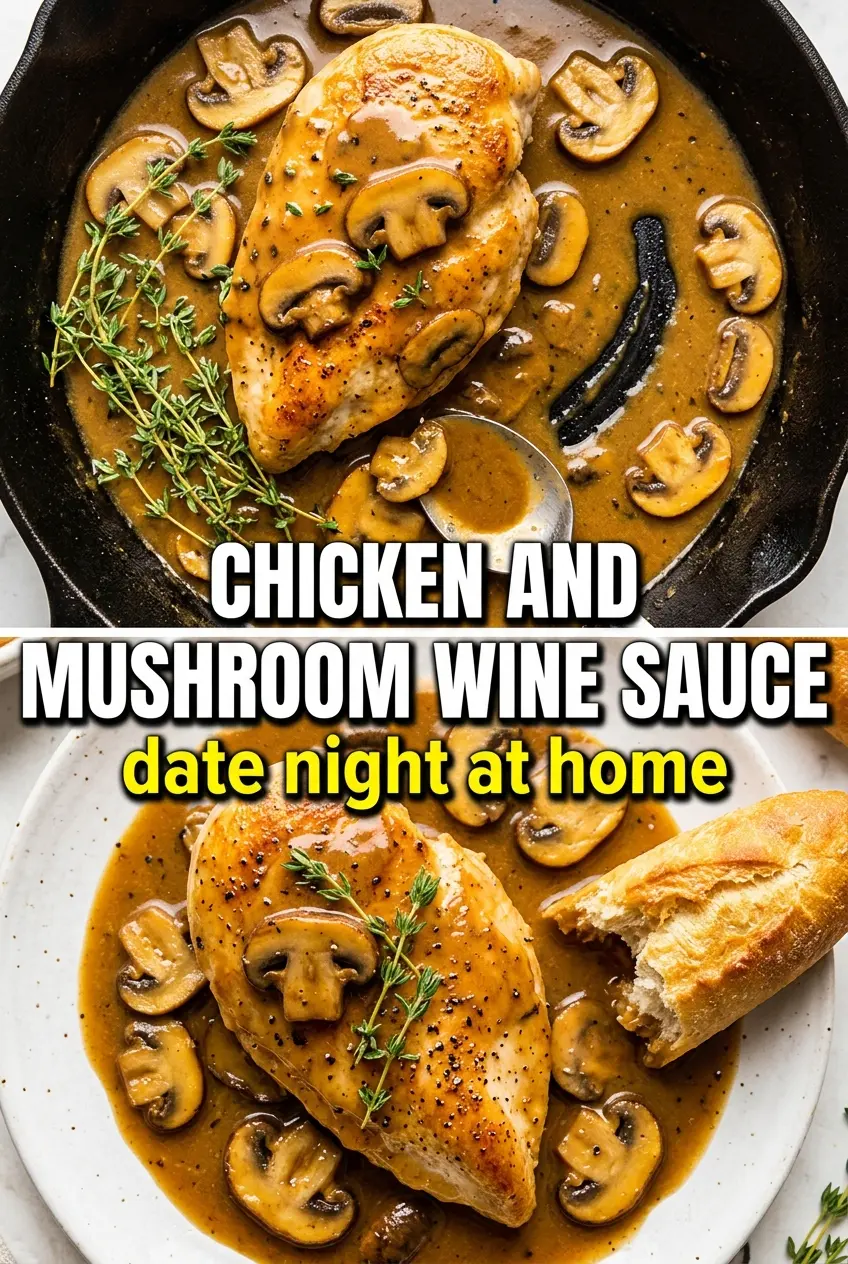
Golden seared chicken breasts tucked into a dark mushroom wine sauce earn their place on the table fast. The chicken stays juicy, the mushrooms turn deeply savory, and the sauce finishes glossy enough to coat a spoon without feeling heavy. It tastes like the kind of dinner that took much longer than it did.
The trick is building flavor in layers. First, the chicken gets a hard sear so the pan picks up browned bits. Then the mushrooms cook long enough to lose their moisture and take on real color before the wine goes in. That order matters. If you rush the mushrooms or add the cream before the wine has reduced a little, the sauce turns thin and muddy instead of silky and concentrated.
Below, I’ve included the timing cues that keep the sauce from breaking, plus a few smart swaps if you only have white wine on hand or want a dairy-free version that still tastes rich.
The sauce thickened right on schedule and the chicken stayed so juicy. I loved that the mushrooms got that deep golden color before anything else went in — it made the whole dish taste restaurant-level.
Love the glossy mushroom wine sauce and golden chicken? Save this skillet dinner for the night you want something elegant without extra pans.
The Difference Between a Glossy Sauce and a Watery One
The biggest mistake with a skillet wine sauce is crowding the pan with chicken that hasn’t browned properly yet. You want real color on the chicken first, because that browning becomes the base of the sauce. If the chicken steams instead of sears, the sauce loses depth before you even start.
The second place people lose the dish is the mushrooms. They need time to give up their moisture and then brown in that same buttered pan. If they go in and out too fast, they taste flat. Let them sit until the edges darken and the pan looks almost dry before adding the garlic and wine.
- Chicken breasts — Boneless skinless breasts cook quickly and slice cleanly for serving. If yours are thick on one end, pound them lightly so they finish at the same time instead of drying out at the edges.
- Cremini mushrooms — These carry the sauce. White button mushrooms work in a pinch, but cremini give you a deeper, earthier flavor and better browning.
- Dry red wine — Use something you’d drink, not cooking wine. The wine reduces into the sauce, so harsh or salty wine stays harsh or salty. If you want a lighter finish, dry white wine works too.
- Heavy cream — This is what turns the pan juices into a silkier sauce. Half-and-half can split more easily and won’t thicken as well, so if you swap it in, keep the heat lower and simmer a little longer.
- Dijon mustard — A teaspoon is enough to sharpen the sauce without making it taste mustardy. It helps pull the cream and wine together and keeps the sauce from tasting one-note.
What Each Ingredient Is Actually Doing in This Recipe
- Primary ingredient (the star) — Quality matters most. Choose the best you can find.
- Cooking medium (oil, butter, or broth) — This carries flavors and prevents dryness.
- Seasonings (salt, pepper, spices, herbs) — Layer flavors so nothing overpowers. Build depth gradually.
- Aromatics (garlic, onion, herbs) — Cook with fat to bloom flavors. Become the foundation.
- Supporting ingredients — Complement the main ingredient without overpowering it.
- Sauce or liquid (if applicable) — Brings flavors together. Balance richness with acid.
- Acid (lemon, vinegar, wine, or other) — Brightens and prevents flat-tasting results.
- Final finish (garnish, glaze, or sauce) — Prevents one-dimensional taste and adds visual appeal.
Building the Sauce in the Same Pan
Searing the Chicken First
Season the chicken generously on both sides, then lay it into hot olive oil and leave it alone until it releases easily and the underside is deep golden. That first side should take about 5 to 6 minutes, and the second side should look equally colored before the chicken comes out. If the pan isn’t hot enough, the chicken turns pale and the sauce starts from a weak foundation.
Cooking the Mushrooms Until They Go Deep Brown
Once the butter melts, add the mushrooms and give them space to cook. At first they’ll look dry, then they’ll release liquid, and finally that liquid will cook off and the mushrooms will start to brown in the fat. Don’t rush to the garlic before that stage, or it will burn before the mushrooms finish.
Reducing the Wine and Finishing the Cream Sauce
Pour in the wine and scrape the bottom of the skillet hard with a wooden spoon. That’s where the flavor lives. Let it simmer until the sharp alcohol smell fades and the liquid drops by a noticeable amount, then add the broth, cream, Dijon, and thyme. Keep the heat at a gentle simmer, not a boil. If the sauce starts bubbling hard after the cream goes in, pull it back; high heat is how a smooth sauce turns grainy.
Bringing the Chicken Back Without Overcooking It
Return the chicken to the skillet only after the sauce has thickened slightly. Spoon the sauce over the top and let the chicken warm through for a minute or two. You’re not cooking it from scratch at this point, just bringing everything together. By then the chicken should read 165°F and the sauce should cling to the back of a spoon.
How to Adapt It When You Need a Different Finish
Use white wine for a lighter sauce
Dry white wine gives the sauce a brighter, slightly sharper finish. It won’t have the same depth as red wine, but it pairs nicely with the cream and thyme if you want something less bold.
Make it dairy-free without losing body
Use full-fat coconut milk or an unsweetened oat-based cooking cream in place of heavy cream. Coconut milk will soften the wine flavor a little and add its own subtle richness, while oat cream keeps the sauce closer to the original texture.
Swap in chicken thighs for extra forgiveness
Boneless skinless thighs stay juicy longer and handle a slightly longer simmer better than breasts. They bring a richer, darker flavor to the pan and are the better choice if you tend to overcook chicken breasts.
Storage and Reheating
- Refrigerator: Store leftovers in an airtight container for up to 3 days. The sauce thickens as it chills, so it may look looser when reheated and then settle back into place.
- Freezer: The chicken freezes fine, but the cream sauce can separate a little after thawing. If you freeze it, expect a less silky texture and rewarm it gently, not aggressively.
- Reheating: Warm it slowly in a covered skillet over low heat with a splash of broth or water. The biggest mistake is blasting it in the microwave or over high heat, which makes the chicken tough and can split the sauce.
Questions I Get Asked About This Recipe
Skillet Chicken and Mushroom Wine Sauce
Ingredients
Equipment
Method
- Season the chicken generously with salt, pepper, garlic powder, and dried thyme. Heat 2 tbsp olive oil in a large skillet over medium-high heat and sear the chicken for 5-6 minutes per side until golden and cooked through to 165°F, then remove.
- Melt 2 tbsp butter in the same pan, then add the sliced cremini mushrooms. Cook over medium-high heat for 5-6 minutes until deeply golden, then add the minced garlic and cook 1 minute.
- Pour in the dry red wine and deglaze, scraping up all browned bits from the pan. Simmer for 3 minutes.
- Add chicken broth, heavy cream, Dijon mustard, and fresh thyme leaves. Simmer for 5-6 minutes, stirring occasionally, until the sauce thickens and turns dark and glossy with visible herb flecks.
- Return the chicken to the pan and spoon the sauce over each breast. Garnish with fresh thyme sprigs and serve.