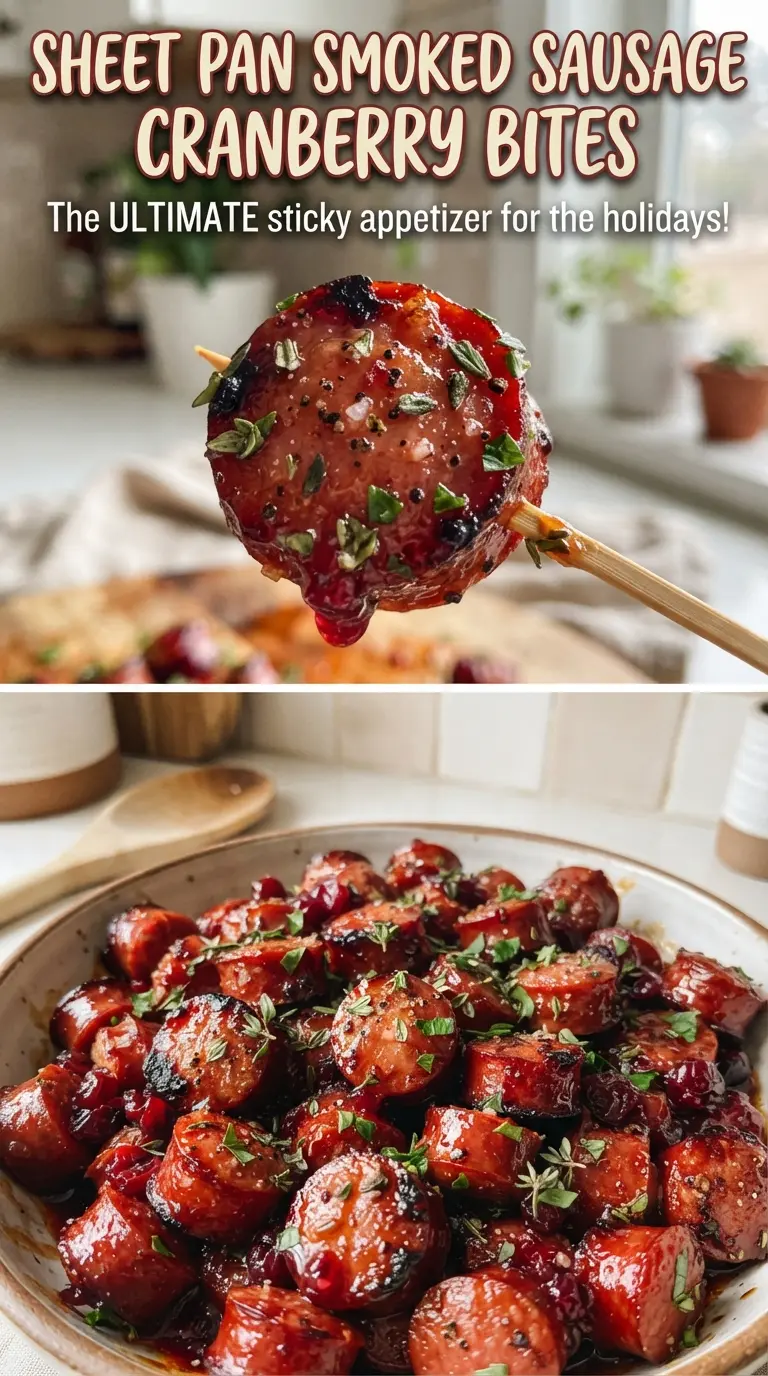
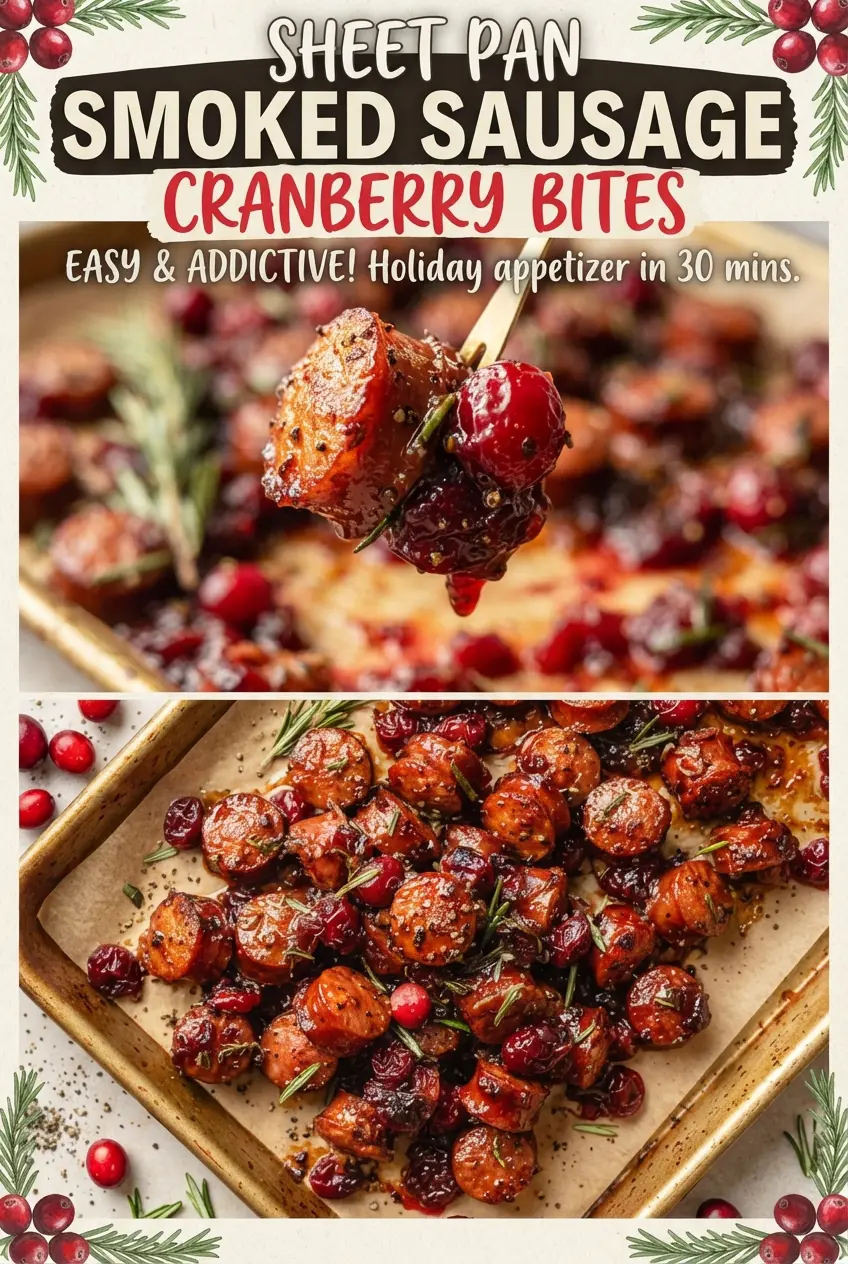
Sticky, caramelized, and just a little tangy, these sheet pan smoked sausage cranberry bites disappear fast once they hit the table. The sausage browns first, so the edges pick up a little bite before the cranberry glaze goes on, and that keeps the final dish from tasting flat or overly sweet. You get glossy little bites with enough sharpness from Dijon and vinegar to cut through the richness.
The trick is letting the sausage roast on its own before adding the glaze. That first 12-minute head start builds real color, and color is where the best flavor lives here. The cranberry sauce brings body, the brown sugar helps it cling, and the orange zest at the end lifts the whole pan so it tastes bright instead of heavy.
Below, you’ll find the exact timing that keeps the glaze sticky instead of burnt, plus a few smart swaps if you need to work with what’s in the pantry. It’s the kind of appetizer that looks like you fussed, even though the oven did most of the work.
The glaze tightened up perfectly in the oven, and the sausage edges got those caramelized spots I was hoping for. I served them with toothpicks and the pan was empty before dinner even started.
Save these sticky sheet pan smoked sausage cranberry bites for an easy appetizer that turns pantry staples into a glossy, crowd-pleasing pan.
The Glaze Needs a Head Start, Not a Longer Roast
The biggest mistake with a cranberry glaze like this is adding it too early. Whole berry cranberry sauce has enough sugar to scorch before the sausage finishes browning, and once that happens the flavor goes from sticky and savory-sweet to blunt and burnt. Roasting the sausage first gives you browned edges, then the glaze thickens in the last stretch instead of drying out.
That order also matters for texture. The sausage releases a little fat as it roasts, which helps the glaze coat every coin in a thin, shiny layer instead of pooling on the pan. If the bites look glossy but still slide around in a loose sauce, they need a few more minutes. You want bubbling edges and a syrupy finish that clings when you toss the pan.
- Smoked sausage — Use a fully cooked kielbasa-style sausage or another smoked sausage that browns well. Fresh sausage won’t work the same way here because it needs different cooking time and will throw off the timing of the glaze.
- Whole berry cranberry sauce — This gives the glaze body and little bursts of fruit. Jellied cranberry sauce can work in a pinch, but the texture will be smoother and a bit less interesting.
- Dijon mustard — Dijon keeps the sauce from reading as candy-sweet. Yellow mustard is harsher and thinner, so if you swap it in, use a little less and taste before adding more.
- Orange zest — Add it at the end, not before baking. Heat dulls the bright top note, and the fresh zest is what keeps the dish tasting lively.
What Each Ingredient Is Actually Doing in This Recipe
- Primary ingredient (the star) — Quality matters most. Choose the best you can find.
- Cooking medium (oil, butter, or broth) — This carries flavors and prevents dryness.
- Seasonings (salt, pepper, spices, herbs) — Layer flavors so nothing overpowers. Build depth gradually.
- Aromatics (garlic, onion, herbs) — Cook with fat to bloom flavors. Become the foundation.
- Supporting ingredients — Complement the main ingredient without overpowering it.
- Sauce or liquid (if applicable) — Brings flavors together. Balance richness with acid.
- Acid (lemon, vinegar, wine, or other) — Brightens and prevents flat-tasting results.
- Final finish (garnish, glaze, or sauce) — Prevents one-dimensional taste and adds visual appeal.
Building Sticky Cranberry Coating Without Burning the Pan
Brown the Sausage First
Spread the sliced sausage in a single layer on the foil-lined pan and let the oven do its work for the first 12 minutes. You’re looking for edges that darken and blister slightly, not full-on char. If the coins are crowded, they’ll steam and the glaze won’t have a good base to cling to, so use two pans if the sausage looks packed in.
Whisk the Glaze Until It Looks Smooth and Loose
Stir the cranberry sauce, brown sugar, Dijon, vinegar, garlic powder, and red pepper flakes until the mixture loosens and no streaks of mustard remain. It will look thick, and that’s fine. The vinegar should be enough to sharpen the sweetness without making it taste tangy or thin.
Finish Until the Pan Looks Glossy
Pour the glaze over the hot sausage and toss it right in the pan so every piece gets coated. Return it to the oven for 10 to 13 minutes, watching for bubbling around the edges and a lacquered look on the sausage. If the glaze seems loose at the end, give it a few more minutes; if it starts to darken too fast, pull it out and toss once so the sauce doesn’t catch on the hot pan.
Brighten Right Before Serving
Orange zest and fresh thyme go on at the very end. That keeps the herb flavor fresh and the citrus sharp, which matters because the glaze is already rich. Serve warm with toothpicks while the coating is still sticky enough to cling without turning syrupy on the plate.
Three Small Changes That Actually Work Here
Make It Spicier
Add another pinch of red pepper flakes or a spoonful of hot honey to the glaze. That pushes the sweet-tart cranberry flavor in a sharper direction and gives the bites a little heat at the back of each bite.
Use Turkey or Chicken Sausage
Turkey or chicken sausage works well if you want something lighter, but it won’t render as much fat or brown as deeply. Roast it on the longer end of the first stage and expect the glaze to cling a little more cleanly and a little less richly.
Gluten-Free Version
Most smoked sausages are gluten-free, but check the label on the sausage and the mustard. The method stays exactly the same, and the cranberry glaze doesn’t need any flour or starch to set up.
Make It for a Bigger Crowd
Double everything, but use two sheet pans and rotate them halfway through the second roast. If you pile the sausage too thickly, the glaze won’t reduce evenly and you’ll lose the caramelized edges that make these bites work.
Storage and Reheating
- Refrigerator: Store leftovers in an airtight container for up to 4 days. The glaze will thicken and set as it chills.
- Freezer: These freeze okay for up to 2 months, but the cranberry glaze can loosen a little after thawing. Freeze in a single layer first, then move to a bag or container.
- Reheating: Warm on a sheet pan at 350°F until hot and sticky again. The mistake to avoid is microwaving too long, which turns the glaze watery and makes the sausage rubbery.
Answers to the Questions Worth Asking
Sheet Pan Smoked Sausage Cranberry Bites
Ingredients
Equipment
Method
- Preheat oven to 400F and line a rimmed sheet pan with foil. Make sure it’s ready before the sausage goes in for even browning.
- Spread the sliced smoked sausage coins in a single layer on the sheet pan. Roast for 12 minutes until browned at the edges, then keep the pan on the rack.
- Whisk whole berry cranberry sauce, brown sugar, Dijon mustard, apple cider vinegar, garlic powder, and red pepper flakes in a bowl until smooth. The mixture should look glossy and evenly colored.
- Pour the glaze over the roasted sausage and toss to coat. Spread the pieces back into a single layer so the glaze can bubble.
- Roast for 10-13 minutes more at 400F until the glaze is sticky and bubbling. Look for caramelized spots and a tacky sheen on the sausage coins.
- Toss with orange zest and fresh thyme leaves, then serve warm with toothpicks. Finish with a visible sprinkle of thyme and zest on top of the glazed bites.