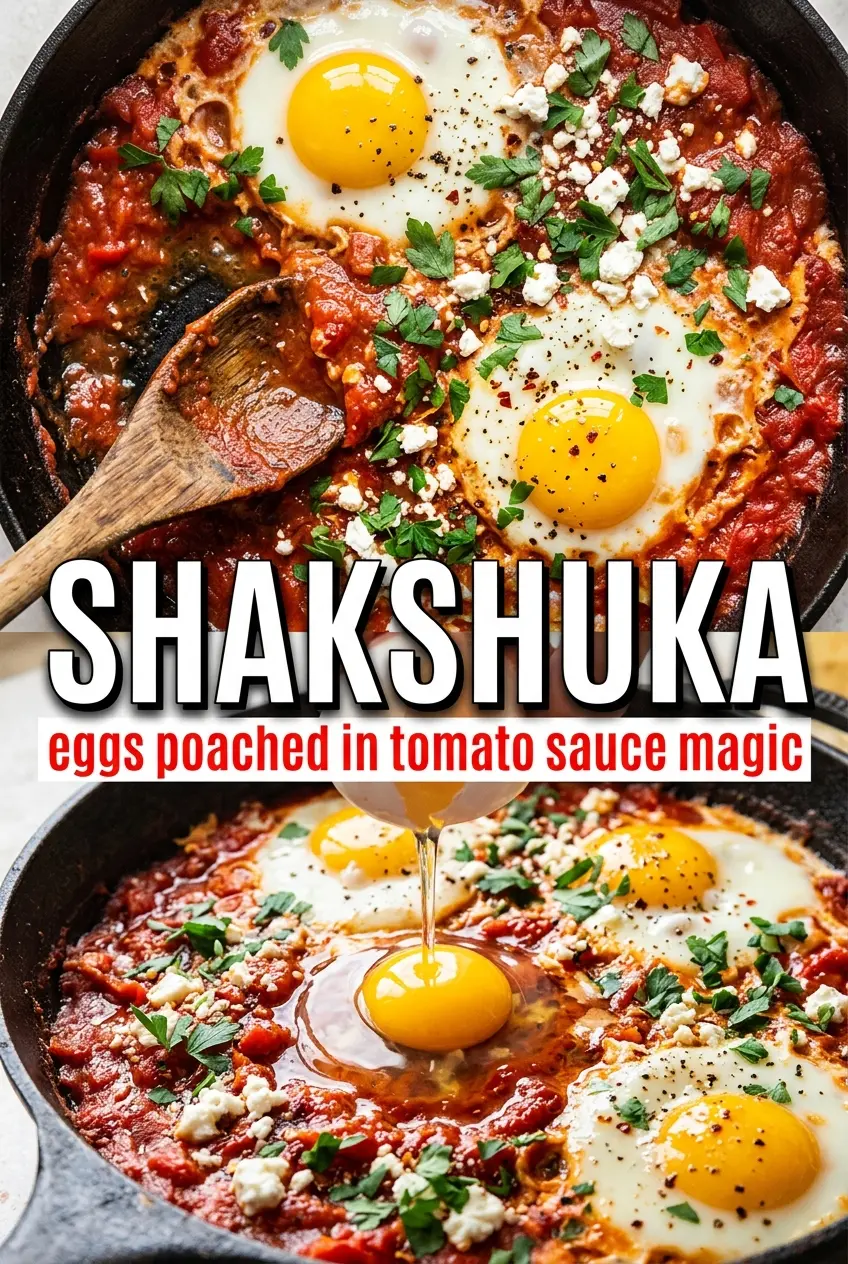
Shakshuka earns its place on the table because it gives you a rich, spoonable tomato-and-pepper sauce with eggs cooked right into the pan, not alongside it. The whites turn silky and set, the yolks stay soft for dipping bread into, and the whole skillet lands with that kind of deep, savory warmth that makes people linger a little longer at breakfast.
The part that matters most is the sauce. Onions and peppers need time to soften before the tomatoes go in, and the tomato mixture needs to simmer long enough to lose its raw edge and thicken enough to cradle the eggs. If the base is too loose, the eggs slide around and cook unevenly. If it’s reduced properly, each egg stays tucked into its own little pocket and finishes with tender whites instead of rubbery edges.
Below, I’m walking through the small details that keep the sauce bold and the eggs tender, plus the swaps that still make sense if you’re out of feta or need to stretch the pan for a bigger brunch.
The sauce thickened up beautifully, and the eggs stayed perfectly runny in the centers. I served it with pita, and my husband went back for a second helping before I’d even sat down.
Love the glossy tomato sauce and runny yolks in this shakshuka? Save it to Pinterest for the mornings when you want a one-pan brunch that feels special without extra work.
Why the Tomatoes Need to Cook Down Before the Eggs Go In
Shakshuka falls apart when the sauce is rushed. If the tomatoes still taste sharp or watery, the eggs never settle into the pan the way they should, and you end up with a loose stew instead of a thick base that gently poaches the whites. The goal is a sauce that looks glossy and spoonable, with enough body that a well holds its shape for a few seconds after you make it.
The peppers and onions are doing more than adding flavor. They build sweetness and structure, and that keeps the paprika and cumin from tasting flat. Once the tomatoes go in, give the pan the full simmer time the recipe asks for. You’re looking for the sauce to reduce by a noticeable amount and leave a trail for a spoon across the bottom before it slowly fills back in.
- Crushed tomatoes give you the thick, cohesive base that holds the eggs better than fresh tomatoes or thin sauce. If you only have diced tomatoes on hand, use them, but simmer a few extra minutes so the liquid cooks off.
- Diced tomatoes add texture and little pockets of brightness. They’re not essential, but they keep the sauce from turning completely smooth.
- Smoked paprika and cumin are the backbone of the dish. Those spices need a quick toast in oil to wake them up; if you add them straight into liquid, they taste muted.
- Feta adds salty contrast at the end. A milder cheese won’t give the same pop, so if you skip it, finish with an extra pinch of salt and a little more parsley.
What Each Ingredient Is Actually Doing in This Recipe

- Primary ingredient (the star) — Quality matters most. Choose the best you can find.
- Cooking medium (oil, butter, or broth) — This carries flavors and prevents dryness.
- Seasonings (salt, pepper, spices, herbs) — Layer flavors so nothing overpowers. Build depth gradually.
- Aromatics (garlic, onion, herbs) — Cook with fat to bloom flavors. Become the foundation.
- Supporting ingredients — Complement the main ingredient without overpowering it.
- Sauce or liquid (if applicable) — Brings flavors together. Balance richness with acid.
- Acid (lemon, vinegar, wine, or other) — Brightens and prevents flat-tasting results.
- Final finish (garnish, glaze, or sauce) — Prevents one-dimensional taste and adds visual appeal.
How to Keep the Eggs Set and the Yolks Soft
Heat management matters more here than almost anywhere else in the dish. Once the eggs are in, the sauce should be at a gentle simmer, not a hard bubble. Too much heat cooks the bottoms fast and leaves the tops underdone, so the lids-on finish needs that medium-low range to trap just enough steam.
Use the back of a spoon to make deep wells before cracking in the eggs. That keeps the whites from spilling across the whole skillet and helps each egg cook in its own little pocket. If you want cleaner yolks, crack each egg into a small bowl first, then slide it into the sauce. That gives you more control and saves you from broken shells or torn yolks.
Softening the Onion and Pepper
Cook the onion and red bell pepper until they’re fully softened and the onion edges look translucent, not browned. You want sweet, mellow vegetables here, because raw onion sharpness will stay in the final sauce if you move too quickly. If the pan looks dry before the vegetables soften, add just a small splash more olive oil.
Blooming the Spices
Stir the cumin, paprika, chili powder, and cayenne into the hot oil and vegetables for about 30 seconds. The spices should smell fragrant and warm, not burnt. If the heat is too high, the paprika can turn bitter fast, so pull the pan back for a moment if the garlic starts to color too quickly.
Reducing the Tomato Base
Simmer the tomatoes until the sauce thickens and the surface looks a little glossy. You’re aiming for a texture thick enough that a spoon dragged through leaves a clear path for a second or two. If you add the eggs too early, the whites spread and the sauce turns soupy underneath.
Finishing Under a Lid
Once the eggs are in, cover the pan and keep the heat low enough that the sauce barely trembles. Check at 8 minutes for set whites with soft centers, then give it another minute or two if the tops still look translucent. The mistake most people make is lifting the lid too often, which drops the heat and stretches the cooking time enough to overcook the edges.
How to Adapt Shakshuka for Different Moods and Diets
Make it dairy-free
Skip the feta and finish with extra herbs, a drizzle of olive oil, and a pinch more salt. You lose the creamy-salty contrast, but the tomato sauce still carries the dish on its own, especially if the spices are bloomed properly.
Add chickpeas for a heartier pan
Stir in a drained can of chickpeas with the tomatoes and simmer them in the sauce. They soak up the seasoning and turn the skillet into more of a full meal, but the sauce needs a few extra minutes to thicken around them.
Turn it gluten-free without changing a thing
The shakshuka itself is naturally gluten-free. Serve it with gluten-free bread, warm potatoes, or plain rice if you want something sturdy for scooping up the sauce.
Adjust the heat level
Cut the cayenne in half for a milder pan, or add a pinch more if you want a sharper finish. The smoked paprika gives depth either way, so you can tune the heat without losing the signature flavor.
Storage and Reheating
- Refrigerator: Store leftovers for up to 3 days. The eggs will firm up, and the sauce may thicken slightly overnight.
- Freezer: Freeze the sauce only, not the eggs. The tomato base freezes well for up to 2 months in a sealed container, and you can add fresh eggs when reheating.
- Reheating: Warm the sauce gently in a skillet over medium-low heat until it simmers, then crack in fresh eggs and cover again. Microwaving the whole dish usually overcooks the eggs and turns the yolks chalky.
Questions I Get Asked About This Recipe
Shakshuka
Ingredients
Equipment
Method
- Heat 2 tbsp olive oil in a large oven-safe skillet over medium heat, then add the diced onion and diced bell pepper. Cook for 6 minutes until soft, stirring so they soften evenly.
- Add the minced garlic and cook for 1 minute, then stir in cumin, smoked paprika, chili powder, and cayenne. Toast the spices for 30 seconds until fragrant.
- Add the crushed tomatoes and diced tomatoes to the skillet, then season with salt and black pepper. Simmer for 10 minutes until the sauce thickens.
- Use a spoon to make 6 wells in the sauce, then crack 1 egg into each well. Keep the yolks intact by placing eggs gently into the center of each well.
- Cover and cook over medium-low heat for 8–10 minutes until the whites are set but the yolks are still runny. Look for a set outer white ring while yolks jiggle slightly when the pan is nudged.
- Top the shakshuka with crumbled feta and fresh parsley, then serve directly from the pan with crusty bread or pita. Finish with a few spoonfuls of sauce to help the bread catch the red tomato-egg juices.