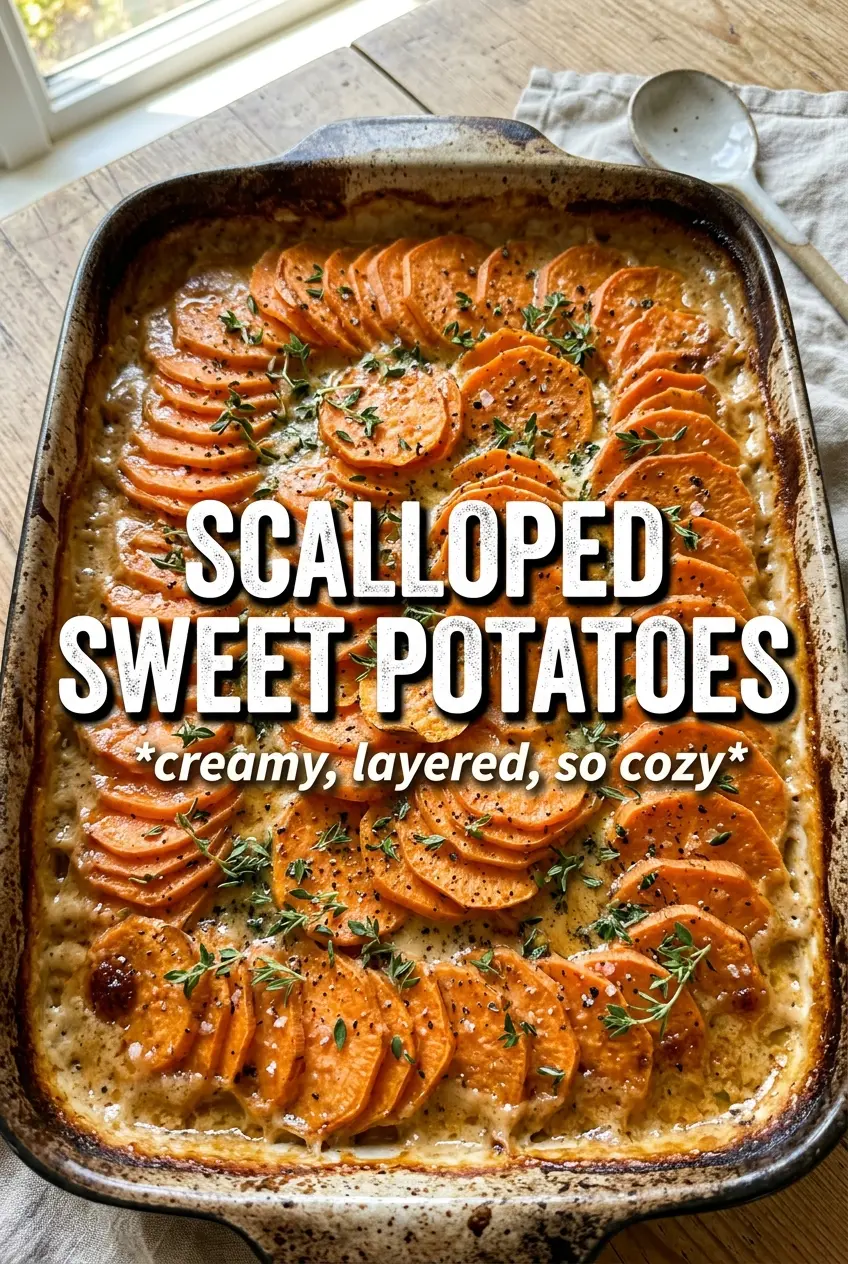
Scalloped sweet potatoes turn soft, silky, and deeply savory under a browned cheese crust, with just enough maple and spice to keep every bite from leaning flat or heavy. The slices settle into the cream and bake into tender layers that hold their shape, while the Gruyere and parmesan on top form a salty, golden cap that cracks a little when you spoon through it.
What makes this version worth making is the balance. Sweet potatoes bring their own natural sugar, so the maple syrup stays in the background, not the foreground. Garlic, thyme, cinnamon, and nutmeg round out the cream without turning it into dessert, and covering the dish first gives the potatoes time to soften before the cheese ever goes on. That order matters. If the top browns too soon, the potatoes underneath stay stubbornly firm.
Below you’ll find the small details that make the texture work, plus the swap I use when I want to lighten the dish a little without losing the creamy finish.
The potatoes turned tender all the way through, and the top baked into this salty, golden crust that held up even after sitting on the table for a bit.
Save these scalloped sweet potatoes for the night you want a creamy, maple-kissed side with a crisp Gruyere and parmesan top.
The Secret to Tender Layers Without Burning the Cheese
The biggest mistake with scalloped sweet potatoes is letting the top dictate the timing. Sweet potatoes need a covered bake first so the cream can heat evenly and the slices can soften all the way through before the cheese goes on. If you uncover too early, the Gruyere and parmesan brown fast while the potatoes stay a little firm in the center.
Thin, even slices matter more here than almost anywhere else in the recipe. If some pieces are thick and others are paper-thin, the dish bakes unevenly and the creamy sauce can’t keep pace. Aim for slices that are about the same width, and overlap them in rows so the cream has a chance to move through the whole dish instead of pooling at the bottom.
- Covered baking first lets the potatoes steam gently in the cream, which is what gives you tenderness without scorching the top.
- Even slicing keeps the layers cooking at the same rate. A mandoline helps, but a sharp knife works if you’re careful and patient.
- Resting after baking lets the cream settle back into the layers instead of running everywhere when you serve it.
What Each Ingredient Is Actually Doing in This Dish
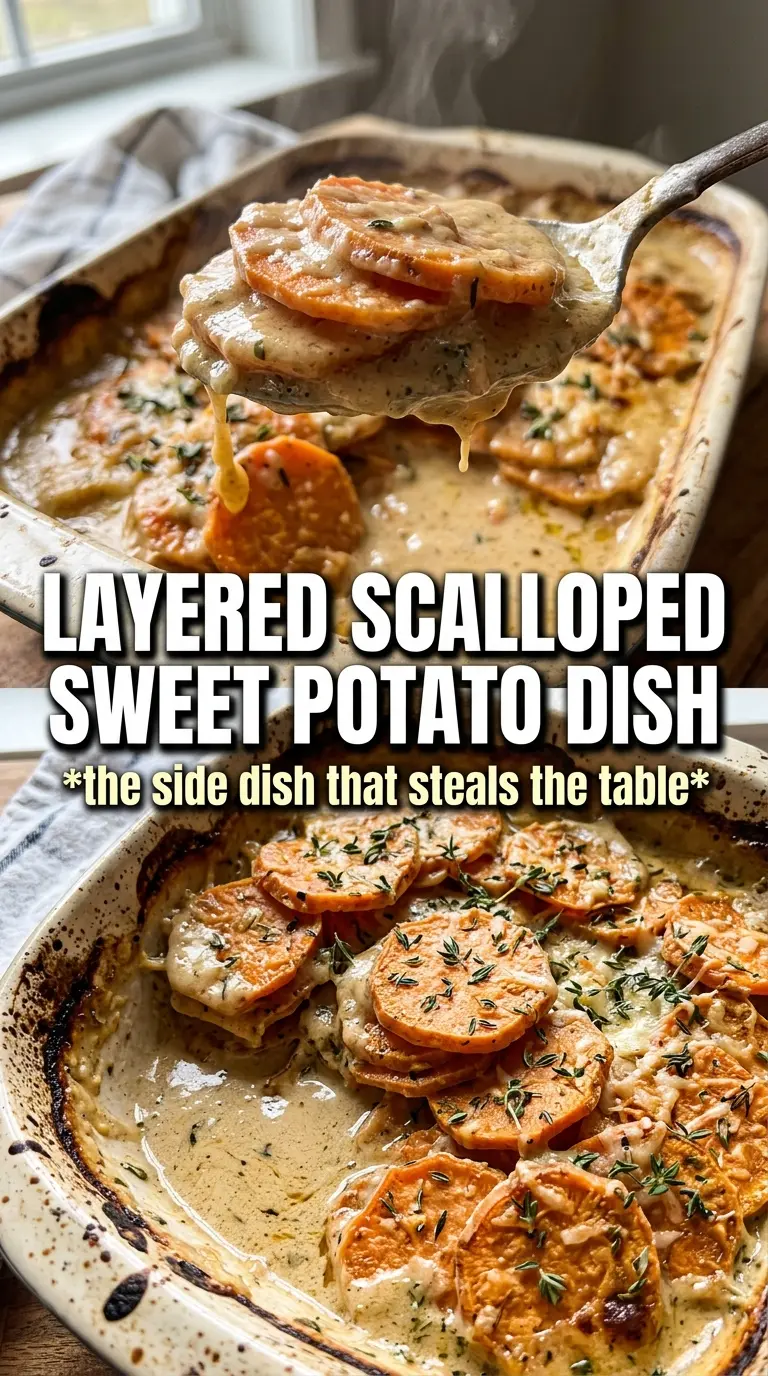
- Sweet potatoes are the backbone of the dish. Their natural sweetness and starch give the casserole body, but they need to be sliced thin so the cream can soften them all the way through.
- Heavy cream and whole milk create the sauce. The cream gives richness and body, while the milk keeps it from feeling too dense. You can swap in half-and-half in a pinch, but the sauce will be a little less lush.
- Gruyere melts into the best kind of stretchy, nutty topping. It brings depth that plain cheddar won’t quite match, though a mild Swiss is the closest substitute if that’s what you have.
- Parmesan adds salt and helps the top brown into a crisp crust. Freshly grated works best because pre-grated cheese often melts into a drier, less even layer.
- Maple syrup, cinnamon, nutmeg, and thyme keep the flavor layered instead of one-note. The maple should taste subtle, not like breakfast, and the thyme keeps the sweetness grounded.
- Garlic is what keeps this from reading as a dessert casserole. Mince it fine so it disappears into the cream instead of landing in sharp little bites.
Building the Creamy Base Before the Cheese Goes On
Whisk the sauce first
Mix the cream, milk, garlic, maple syrup, thyme, cinnamon, nutmeg, salt, and pepper before you touch the potatoes. That gives the seasonings a chance to spread evenly through the dish instead of clumping in one spot. Taste the mixture if you want, but remember the cheese will add more salt later, so keep the base a little restrained.
Layer the potatoes with some overlap
Arrange the slices in overlapping rows in a buttered 9×13 dish. You want a little structure, not a pile, because the layers settle and soften as they bake. If the slices are jammed in too tightly, the cream can’t move through the dish and you end up with dry pockets near the edges.
Cover, then uncover at the right time
Wrap the dish tightly with foil and bake until the potatoes are nearly tender. That first covered stretch is what protects the top from overbrowning before the center cooks. Then uncover, scatter on the cheese, and bake until the top is bubbling and deeply golden at the edges. If the cheese is browning too fast before the potatoes are soft, loosely tent the foil back over the dish for the last few minutes.
Let it sit before serving
Give the casserole 10 minutes on the counter before you spoon it out. The sauce thickens slightly as it cools, which helps the slices hold together instead of sliding around in the dish. Cut too early and it will look looser than it really is.
How to Adapt These Scalloped Sweet Potatoes Without Losing the Creamy Finish
Dairy-Free Version
Use full-fat coconut milk in place of the cream and milk, then swap the Gruyere and parmesan for your favorite dairy-free melting cheese and a little nutritional yeast for depth. The casserole will still be creamy, but the flavor shifts slightly sweeter and less savory. Keep the thyme and garlic in place so it doesn’t drift into dessert territory.
Lighter, Less Rich Version
Replace up to half of the heavy cream with more whole milk. The sauce will be a little looser and less velvety, but the potatoes still bake up tender and the cheese topping does most of the finishing work. I wouldn’t go lower than that or the dish starts to lose its creamy backbone.
Make It More Savory
Cut the maple syrup down to 1 tablespoon and add an extra pinch of black pepper. That pulls the sweetness back and lets the cheese, garlic, and thyme lead the dish. This is the version I make when I want it to sit next to roasted meat without competing for attention.
Storage and Reheating
- Refrigerator: Store leftovers covered for up to 4 days. The sauce thickens as it chills, but the layers stay together well.
- Freezer: This freezes better before baking than after. If you freeze leftovers, expect the cream to separate a little when thawed.
- Reheating: Warm covered in a 325F oven until hot in the center. The microwave works for a single serving, but it softens the edges and can make the cheese topping rubbery if you overdo it.
Questions I Get Asked About This Recipe
Scalloped Sweet Potatoes
Ingredients
Equipment
Method
- Preheat the oven to 375F, then butter a 9x13 baking dish.
- Whisk heavy cream, whole milk, minced garlic, maple syrup, fresh thyme, cinnamon, nutmeg, salt, and pepper until smooth.
- Layer thinly sliced sweet potatoes in overlapping rows inside the buttered dish.
- Pour the cream mixture over the sweet potatoes so it distributes evenly through the layers.
- Cover tightly with foil, then bake for 40 minutes at 375F.
- Uncover the dish, then scatter Gruyere cheese and parmesan over the top.
- Bake 20 to 25 more minutes at 375F until the sweet potatoes are completely tender and the topping is golden and bubbly.
- Rest the scalloped sweet potatoes for 10 minutes before serving so the sauce thickens slightly and the slices hold their shape.