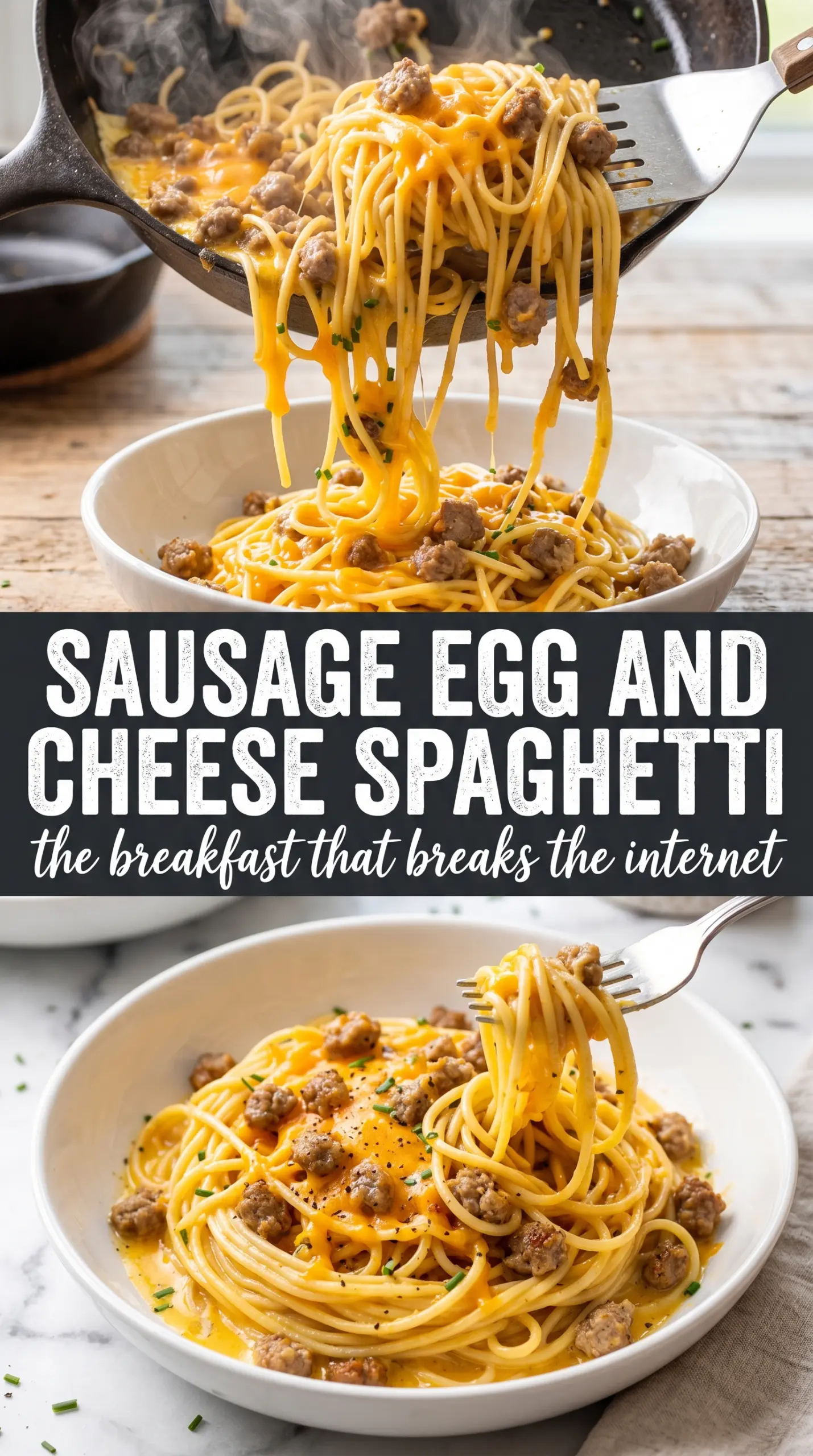
Spaghetti for breakfast sounds like the kind of idea that should stay on paper, until you taste it with buttery scrambled eggs, browned sausage, and cheddar melting into every strand. The noodles carry the sauce instead of sitting under it, which means every bite gets coated with savory egg, a little pepper, and just enough richness to feel complete without turning heavy.
What makes this version work is timing. The eggs are scrambled gently in butter first, then the hot pasta and cheese finish the job in the pan so the sauce stays silky instead of dry or grainy. A splash of reserved pasta water helps everything cling together, and sharp cheddar gives the dish enough bite to stand up to the sausage.
Below you’ll find the small choices that matter here: how soft to leave the eggs, when to add the cheese, and what to do if the pan starts looking tight before the noodles are coated.
The eggs stayed soft and the cheddar melted right into the pasta water, so nothing felt dry. I added a little hot sauce at the end and my kids ate every last bite.
Love the creamy, savory finish of this sausage egg and cheese breakfast spaghetti? Save it to Pinterest for mornings when you want a fast, hearty skillet breakfast.
The Trick to Keeping the Eggs Soft While the Pasta Finishes the Job
Breakfast spaghetti goes wrong when the eggs cook twice: once in the skillet and again after the pasta goes in. The fix is simple, but it matters. Pull the eggs when they’re still glossy and a little loose, because the residual heat from the spaghetti, sausage, and cheese finishes them without turning them rubbery.
The pasta water is the other insurance policy. A small splash gives the cheese something to emulsify with, so the sauce coats the noodles instead of clumping at the bottom of the pan. If the mixture looks dry, it usually means the heat is too high or the pasta water was skipped.
- Spaghetti — Long noodles work better than short pasta here because they grab the soft egg and cheese mixture instead of letting it fall away. Cook it to al dente so it can finish in the pan without turning mushy.
- Breakfast sausage — This brings the salty, seasoned backbone of the dish. Use a good-quality sausage with enough fat to add flavor; if it’s very lean, a little extra butter in the pan helps.
- Sharp cheddar — Sharp cheddar melts well and still gives the dish a real cheesy edge. Pre-shredded works in a pinch, but freshly shredded melts smoother because it doesn’t carry the same anti-caking coating.
- Whole milk and eggs — The milk loosens the eggs just enough so they scramble tender instead of tight. Don’t swap in a heavy splash of cream unless you want a richer, denser finish; milk keeps the sauce lighter.
- Reserved pasta water — This is what helps everything come together. It’s starchy, salty, and better than plain water for loosening the pan without washing away flavor.
What Each Ingredient Is Actually Doing in This Recipe
- Primary ingredient (the star) — Quality matters most. Choose the best you can find.
- Cooking medium (oil, butter, or broth) — This carries flavors and prevents dryness.
- Seasonings (salt, pepper, spices, herbs) — Layer flavors so nothing overpowers. Build depth gradually.
- Aromatics (garlic, onion, herbs) — Cook with fat to bloom flavors. Become the foundation.
- Supporting ingredients — Complement the main ingredient without overpowering it.
- Sauce or liquid (if applicable) — Brings flavors together. Balance richness with acid.
- Acid (lemon, vinegar, wine, or other) — Brightens and prevents flat-tasting results.
- Final finish (garnish, glaze, or sauce) — Prevents one-dimensional taste and adds visual appeal.
How to Build the Pan So Nothing Turns Dry or Grainy
Whisking the Egg Base
Whisk the eggs, milk, garlic powder, salt, and black pepper until the mixture looks uniform and a little frothy. That extra mixing helps the eggs cook evenly instead of setting in streaks. If you add the seasoning after the eggs hit the pan, it won’t distribute as well, and the garlic powder can clump.
Soft Scrambling in Butter
Melt the butter over medium heat and pour in the egg mixture. Stir gently and stop when the eggs are just barely set and still look moist, because they’ll keep cooking once the pasta joins the pan. If the curds start getting tight or dry, the heat’s too high. Pull the skillet off the burner for a few seconds and keep stirring.
Bringing in the Pasta, Sausage, and Cheese
Add the cooked spaghetti, sausage, and cheddar right after the eggs are set. Toss constantly so the cheese melts into the eggs instead of sticking in one clump. If the mixture seems too thick, splash in a little reserved pasta water and keep tossing until the noodles are glossy and coated. The goal is creamy and cohesive, not soupy.
Finishing for the Table
Serve the spaghetti right away with chopped chives and hot sauce. The chives cut through the richness, and the hot sauce wakes up the sausage without overpowering the eggs. If the pan sits too long, the cheese firms up and the noodles lose that silky finish, so this one’s best eaten hot.
How to Adapt This for Different Mornings and Different Pan Sizes
Make It Without Meat
Skip the sausage and sauté a handful of mushrooms or spinach in the butter before the eggs go in. You lose the smoky, salty punch from the sausage, so add a little extra black pepper and a pinch of smoked paprika if you want more depth.
Use a Different Cheese Blend
Cheddar can be swapped for Monterey Jack, Colby Jack, or a cheddar-jack blend if that’s what you have. Milder cheeses melt beautifully but soften the sharp edge, so add a little more pepper or a touch of hot sauce to keep the dish from tasting flat.
Make It Gluten-Free
Use your favorite gluten-free spaghetti and cook it just to the point where it still has a little bite. Gluten-free pasta can soften fast once it hits the skillet, so keep the tossing brief and add the pasta water a little at a time.
Turn It Into a Bigger Batch
Double everything and use the largest skillet you’ve got so the noodles can move around. If the pan is crowded, the cheese melts unevenly and the eggs clump instead of coating the spaghetti, so work in two batches if needed.
Storage and Reheating
- Refrigerator: Store leftovers in an airtight container for up to 3 days. The pasta will tighten as it chills, and the eggs will be a little firmer the next day.
- Freezer: I don’t recommend freezing this one. The eggs and cheese change texture after thawing, and the pasta turns soft in a way that’s hard to fix.
- Reheating: Warm it gently in a skillet over low heat with a splash of water or milk, stirring often until it loosens. The mistake people make is blasting it in the microwave, which makes the eggs tough and the cheese oily.
Questions I Get Asked About This Recipe
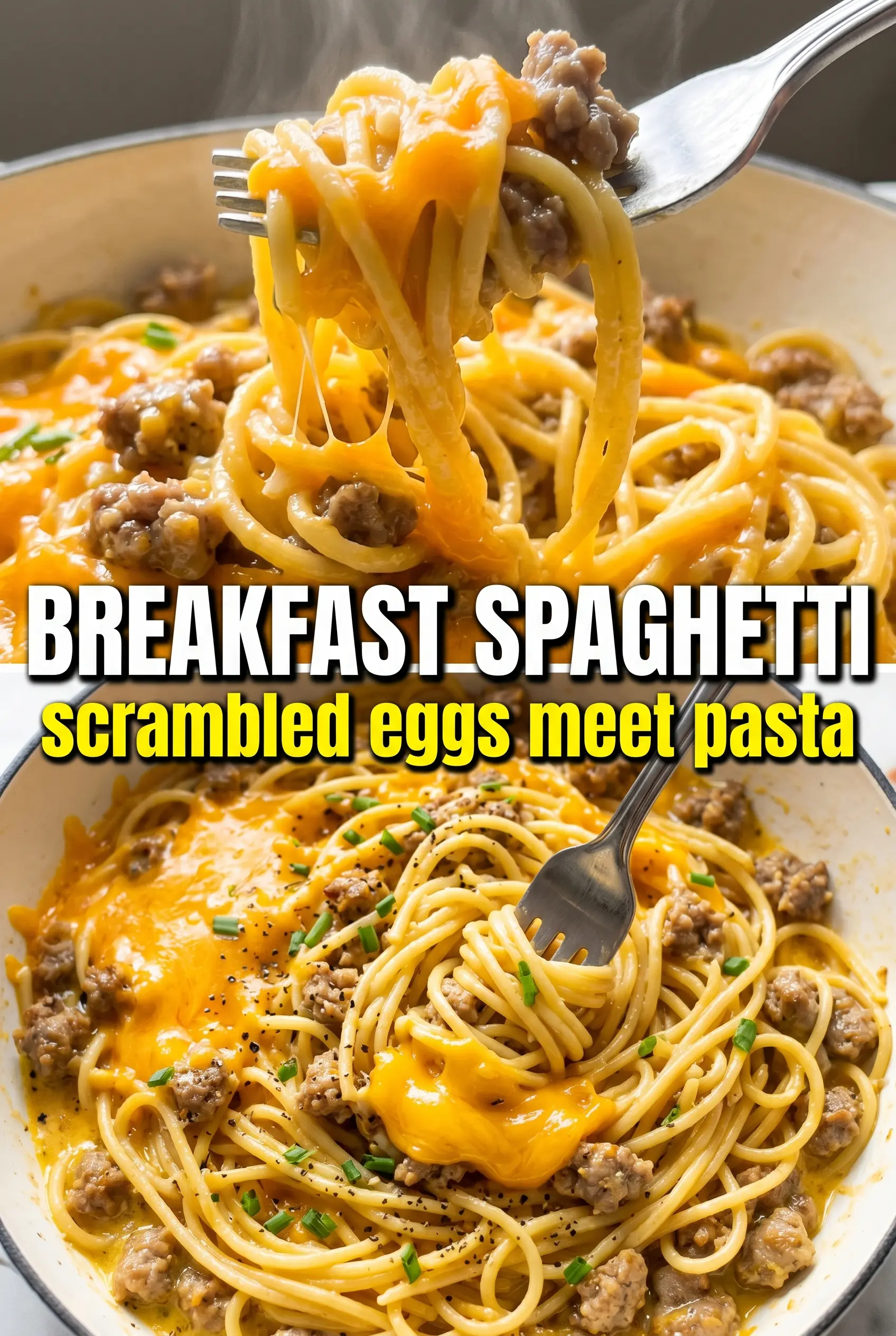
Sausage Egg and Cheese Breakfast Spaghetti
Ingredients
Equipment
Method
- Bring a pot of water to a boil and cook the spaghetti until al dente, then reserve 1/2 cup pasta water before draining. Keep a little pasta water on hand so the sauce turns glossy instead of dry.
- Whisk the eggs and whole milk with garlic powder, salt, and black pepper until smooth. The mixture should look uniform with no egg streaks.
- Melt the butter in a large skillet over medium heat, then pour in the egg mixture. Stir and scramble gently until just barely set, with soft curds still moist in appearance.
- Add the cooked spaghetti, breakfast sausage, and shredded sharp cheddar to the pan and toss to combine. If it looks tight or not saucy, add reserved pasta water a splash at a time.
- Continue tossing over medium heat just until the cheese is fully melted and everything is well combined. Serve immediately with fresh chives on top and hot sauce to taste.