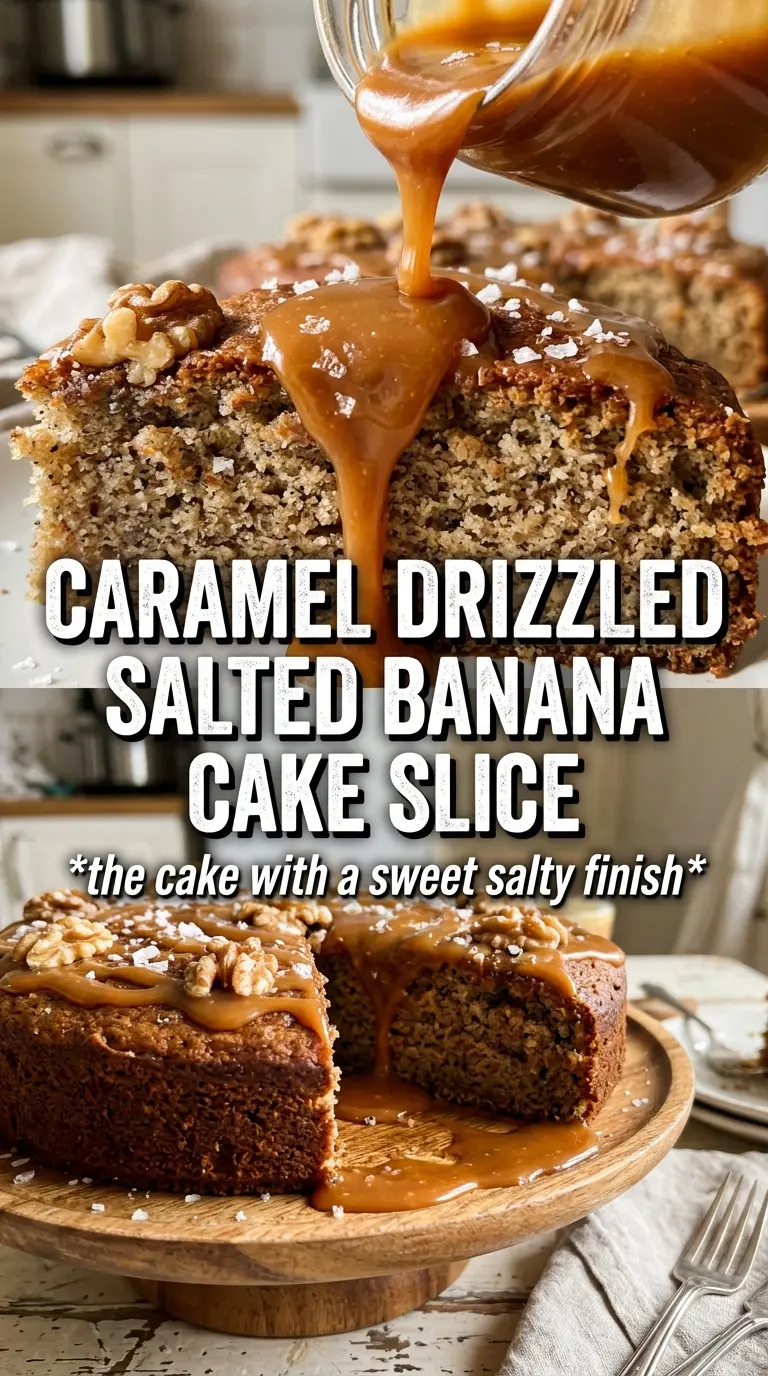
Salted caramel banana cake hits that sweet spot between homey and showy: soft, fragrant banana layers, a tangy cream cheese frosting, and caramel dripping down the sides in thick ribbons. It tastes like the kind of cake people go back for after they’ve already said they’re full.
What makes this version work is the balance. The bananas bring moisture and flavor, but the sour cream keeps the crumb tender without making it heavy. The frosting leans on cream cheese for structure, then gets just enough salted caramel to taste like caramel instead of straight sugar. A little flaky sea salt on top keeps every bite from running too sweet.
Below, I’ll walk through the parts that matter most: how to keep the cake layers light instead of dense, how to get the frosting smooth, and how to finish the cake so the caramel drizzle looks dramatic instead of sliding right off.
The banana layers stayed super moist for days, and the salted caramel frosting had the perfect tang. I used the flaky sea salt on top and it made the caramel taste even richer.
Like the look of this salted caramel banana cake? Save it for the days when ripe bananas deserve a two-layer frosting-covered upgrade.
Why the Crumb Stays Tender Instead of Heavy
The biggest risk with banana cake is ending up with something dense and gummy from too much banana or too much stirring. Mashed bananas add moisture, but they also weigh the batter down, so the flour and sour cream need to stay in balance. This recipe keeps the crumb soft by using enough lift from both baking soda and baking powder, then stopping the mixing as soon as the flour disappears.
Room-temperature butter and eggs matter here. Cold ingredients don’t blend into a smooth batter, and when the butter isn’t properly aerated with the sugar, the cake loses that lightness before it even gets to the oven. If your batter looks a little thick, that’s fine; banana cake batter should fall from the spoon in a heavy ribbon, not pour like pancake batter.
- Bananas — Use very ripe bananas with plenty of brown spots. They mash smoothly and bring the strongest banana flavor. Under-ripe bananas will taste flat and can leave little chunks in the crumb.
- Sour cream — This is what keeps the cake plush. Yogurt can stand in if needed, but it adds a slightly sharper tang and a looser batter. Full-fat sour cream gives the best texture.
- Butter and sugar — Cream them until the mixture looks pale and fluffy. That step traps air, which helps the cake rise instead of baking into a brick.
- Flour — Regular all-purpose flour is exactly right. Cake flour makes the crumb softer, but it can turn this cake a little fragile when layered and frosted.
What Each Ingredient Is Actually Doing in This Recipe
- Primary ingredient (the star) — Quality matters most. Choose the best you can find.
- Cooking medium (oil, butter, or broth) — This carries flavors and prevents dryness.
- Seasonings (salt, pepper, spices, herbs) — Layer flavors so nothing overpowers. Build depth gradually.
- Aromatics (garlic, onion, herbs) — Cook with fat to bloom flavors. Become the foundation.
- Supporting ingredients — Complement the main ingredient without overpowering it.
- Sauce or liquid (if applicable) — Brings flavors together. Balance richness with acid.
- Acid (lemon, vinegar, wine, or other) — Brightens and prevents flat-tasting results.
- Final finish (garnish, glaze, or sauce) — Prevents one-dimensional taste and adds visual appeal.
Building the Layers Without Overmixing the Batter
Creaming the Base
Beat the softened butter and sugar until the mixture looks lighter in color and almost fluffy enough to smear cleanly against the bowl. That usually takes a few minutes, not a quick pass. This stage is where the cake gets structure, so if the butter is still firm or the sugar stays gritty, the layers will bake up tighter than they should.
Adding the Bananas and Eggs
Mix in the eggs one at a time, then add the vanilla and mashed bananas. The batter may look slightly broken after the bananas go in; that’s normal and it comes back together once the dry ingredients are added. Use bananas that are mashed well, but don’t puree them into liquid or the batter can get too loose.
Finishing the Batter
Alternate the flour mixture and sour cream in three additions, beginning and ending with the dry ingredients. Stir just until the last streak of flour disappears. If you keep mixing past that point, the gluten tightens and the cake bakes up tough around the edges and dense in the middle.
Baking and Cooling
Divide the batter evenly between two greased 8-inch pans and bake until the tops spring back when touched and a toothpick comes out clean. Let the layers cool completely before frosting them. If you try to frost even a warm cake, the caramel frosting softens and slides, and the whole cake starts to lean.
What Each Ingredient Is Doing in the Frosting
- Cream cheese — This gives the frosting tang and enough body to stand up between layers. Use block cream cheese, not the spreadable kind in a tub, or the frosting can turn loose.
- Butter — Butter smooths out the cream cheese and helps the frosting pipe or spread cleanly. It should be soft, not melted, or the frosting will lose structure.
- Powdered sugar — This thickens the frosting without graininess. Add it gradually so you can stop at a spreadable texture instead of ending up with something stiff.
- Salted caramel sauce — This is the flavor anchor. Store-bought works well here if it’s thick and pourable; homemade gives deeper caramel notes. Thin caramel sauce can make the frosting runny, so use one that clings to a spoon.
- Flaky sea salt — The salt on top isn’t decoration. It sharpens the caramel and keeps the frosting from reading one-note sweet.
How to Frost It So the Caramel Drips красиво
Start with fully cooled cake layers and a frosting that’s fluffy but still thick enough to hold ridges. Spread the first layer of frosting all the way to the edge, then add the second layer and a thin coat on top. If the cake is sliding while you work, chill it for 10 to 15 minutes before adding the final layer of frosting.
For the caramel drizzle, use a spoon or small squeeze bottle and let the caramel fall close to the edge so it drips naturally down the sides. If the caramel is too warm, it runs straight off the cake. If it’s too thick, warm it just enough to loosen it, then stop before it turns thin and watery.
Make It a One-Layer Snack Cake
Bake the batter in a 9×13-inch pan for a simpler version that still gives you soft banana cake and caramel frosting on top. The texture comes out a little more casual and less tall, but it travels better and serves clean squares without needing a cake stand.
Dairy-Free Version
Use plant-based butter, dairy-free yogurt in place of sour cream, and a dairy-free cream cheese for the frosting. The cake still bakes up tender, but the frosting won’t have quite the same tang or stability, so chill the cake before slicing.
Gluten-Free Swap
Use a cup-for-cup gluten-free flour blend with xanthan gum already included. The crumb will be slightly more delicate, so let the cake cool fully before moving or frosting it. The flavor stays the same, but the structure is a little softer.
Storage and Reheating
- Refrigerator: Store covered for up to 4 days. The frosting firms up in the fridge, but the cake stays moist.
- Freezer: Freeze unfrosted layers tightly wrapped for up to 2 months. Thaw in the fridge, then frost after they’re fully defrosted for the cleanest finish.
- Reheating: Serve this cake at cool room temperature, not warm. If it’s been refrigerated, let slices sit out for 20 to 30 minutes so the frosting softens and the caramel flavor opens back up.
Answers to the Questions Worth Asking
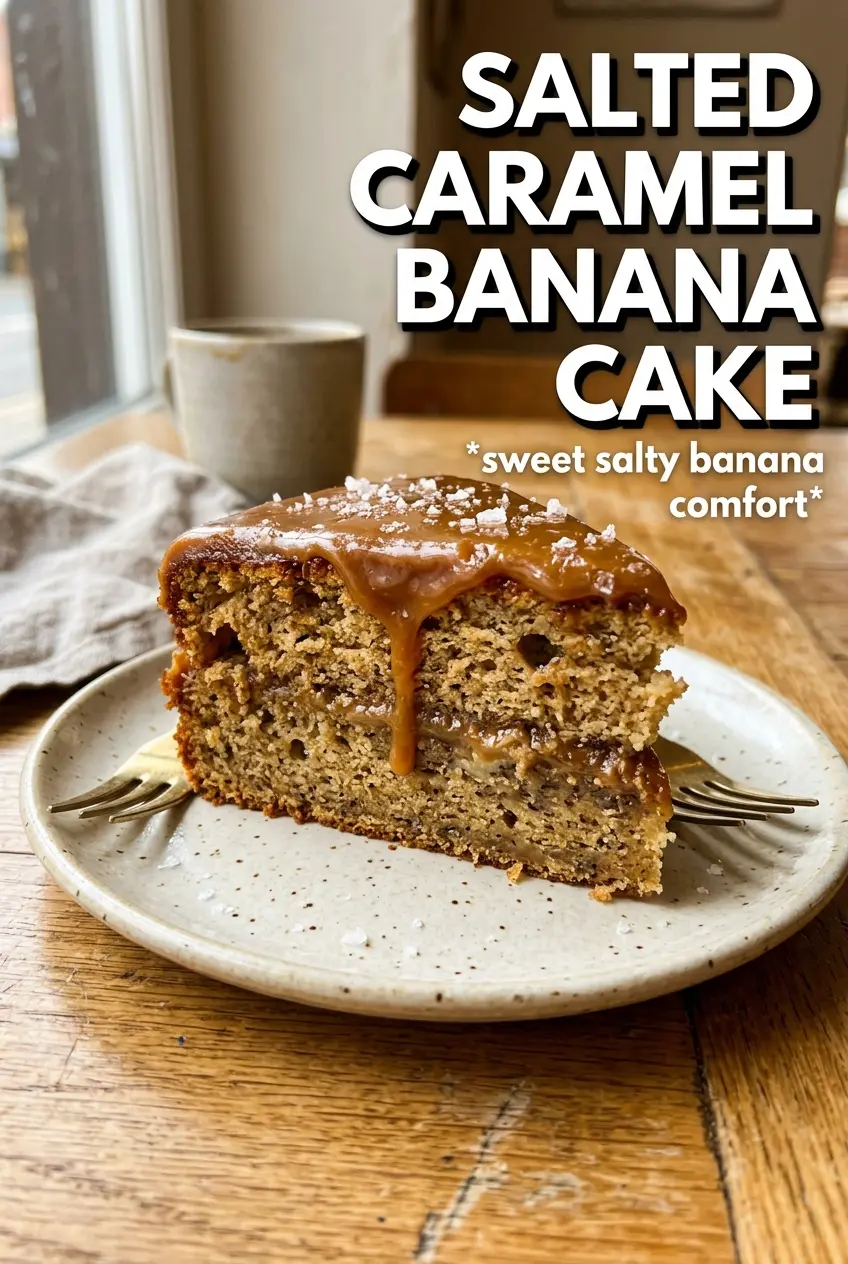
Salted Caramel Banana Cake
Ingredients
Equipment
Method
- Preheat the oven to 350°F and grease two 8-inch round pans.
- Beat the softened butter and sugar until fluffy, then add the eggs, vanilla, and mashed bananas.
- In a separate bowl, whisk together the all-purpose flour, baking soda, baking powder, salt, and cinnamon.
- Alternate mixing in the flour mixture and sour cream in three additions, folding just until combined.
- Divide the batter between the two pans.
- Bake 30–35 minutes at 350°F until a toothpick comes out clean, then cool completely before frosting.
- Beat the softened cream cheese and butter until smooth.
- Add the powdered sugar and salted caramel sauce, then beat until the frosting looks fluffy and spreadable.
- Place one cake layer on a serving plate and spread frosting over it, then top with the second layer.
- Frost the outside of the cake, then drizzle additional salted caramel over the top and down the sides so it drips.
- Finish with flaky sea salt on top for a visible sweet-salty crunch.