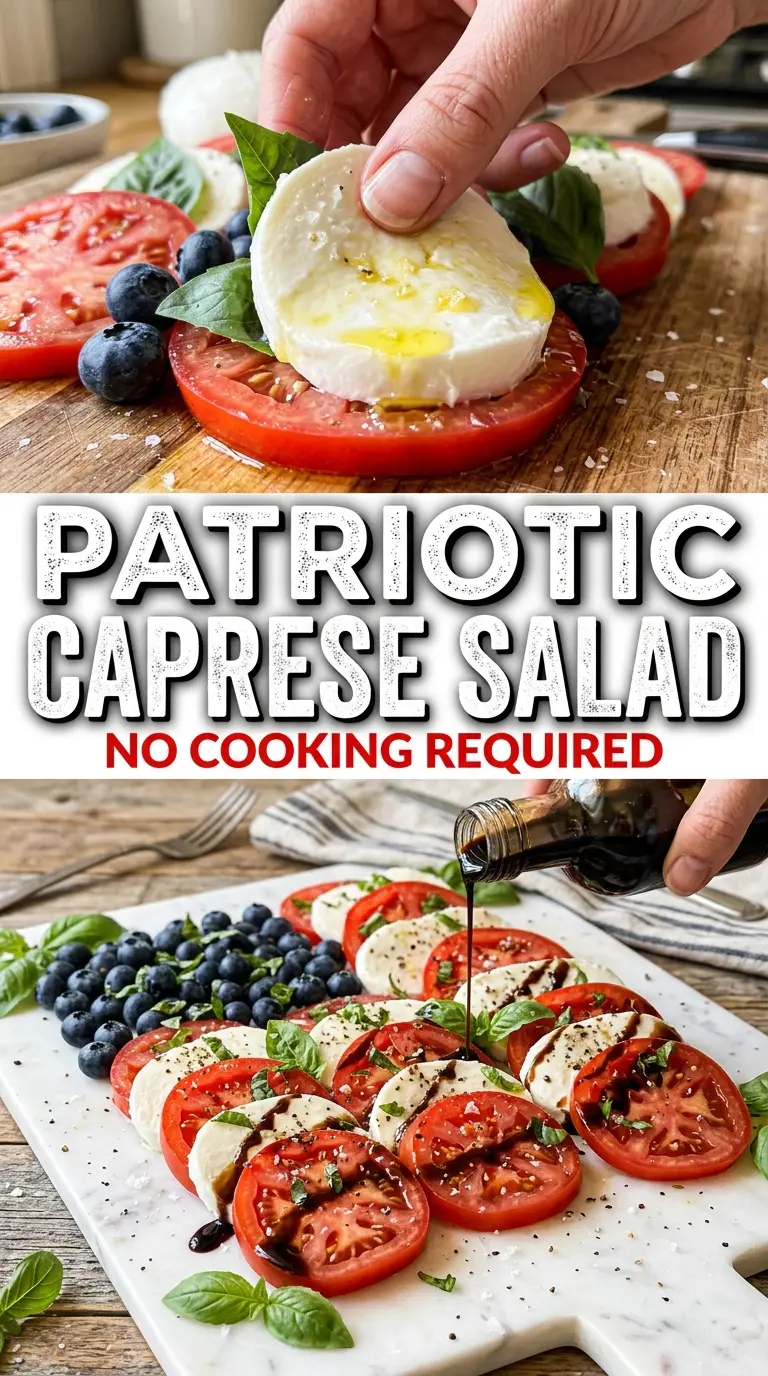
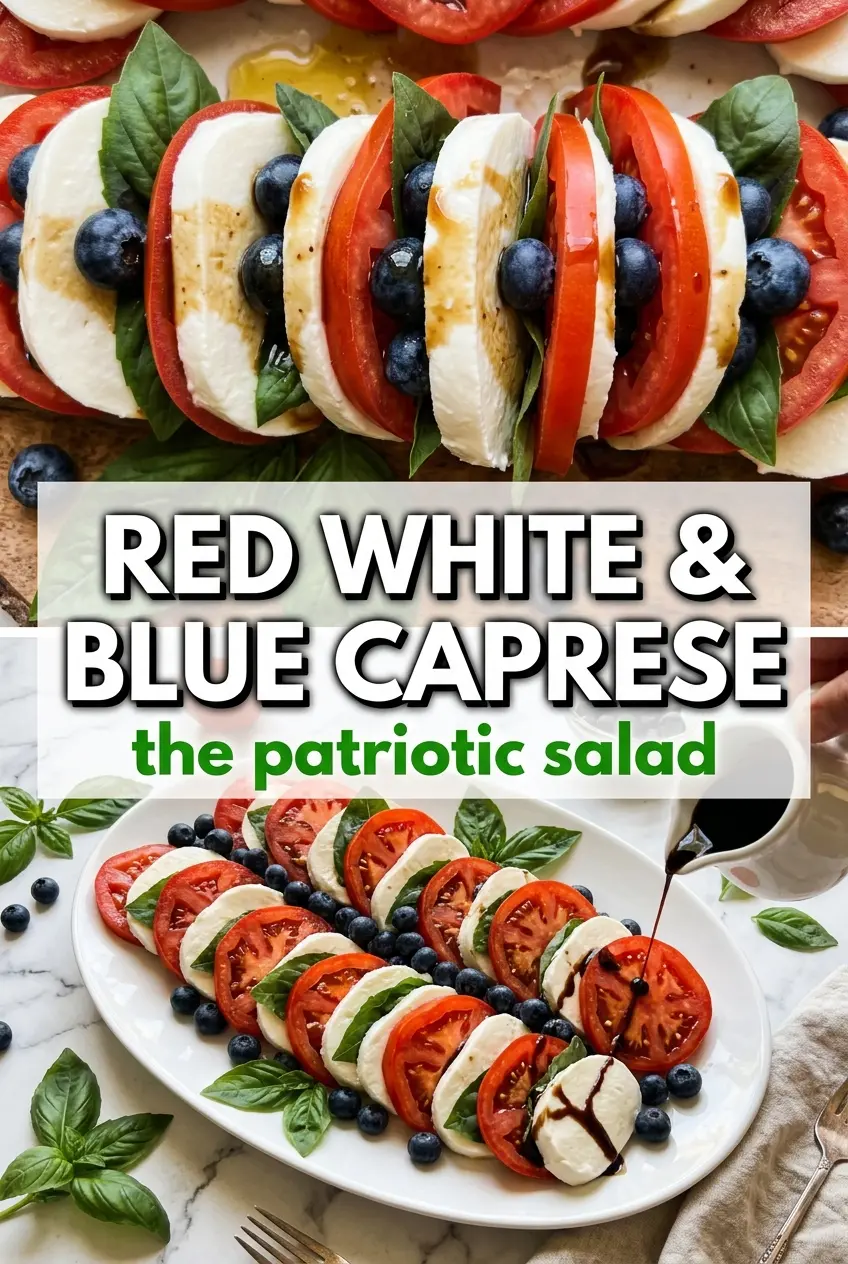
Juicy tomato, creamy mozzarella, and sweet blueberries make this caprese salad striking enough for a celebration, but it earns its place because the flavors actually work together. The tomatoes bring acidity, the mozzarella keeps each bite soft and milky, and the blueberries add little pops of sweetness that make the balsamic glaze taste deeper instead of sharper. Served in a wreath pattern, it looks festive without turning into a fussy centerpiece nobody wants to disturb.
The key is using tomatoes that are ripe all the way through and slicing everything evenly so the platter holds its shape. Heirloom or beefsteak tomatoes give you wide, sturdy rounds that overlap neatly, and fresh mozzarella has the clean, gentle flavor that lets the basil and balsamic stay front and center. If the tomatoes are pale or the mozzarella is too wet, the salad gets bland and slippery fast. Pat the cheese dry, season at the very end, and the whole platter stays bright and balanced.
Below, I’ve included the small details that keep this from sliding into a watery mess, plus a few easy ways to adapt it if you want to change the fruit or make it fit another crowd.
The wreath pattern held up beautifully, and the blueberries added just enough sweetness to balance the balsamic glaze. I made it 20 minutes ahead and it still looked gorgeous on the table.
Save this red, white & blue caprese salad for the days when you want a wreath-style appetizer that looks festive and comes together in 15 minutes.
Why the Tomatoes Have to Carry Their Weight Here
A caprese salad looks simple, but the whole platter depends on the tomatoes doing more than just filling space. Thick slices give structure, while watery or underripe tomatoes collapse into the mozzarella and turn the board slippery. Use tomatoes with real heft and flavor; that’s what keeps the salad tasting like an appetizer instead of a tray of ingredients that were placed near each other.
The wreath pattern also matters more than it seems. Overlapping the slices gives you enough surface area to anchor the blueberries and basil, and it keeps the balsamic glaze from pooling in one spot. If the tomato rounds are cut too thin, the arrangement shifts as soon as you start drizzling.
What Each Ingredient Is Actually Doing in This Recipe
- Primary ingredient (the star) — Quality matters most. Choose the best you can find.
- Cooking medium (oil, butter, or broth) — This carries flavors and prevents dryness.
- Seasonings (salt, pepper, spices, herbs) — Layer flavors so nothing overpowers. Build depth gradually.
- Aromatics (garlic, onion, herbs) — Cook with fat to bloom flavors. Become the foundation.
- Supporting ingredients — Complement the main ingredient without overpowering it.
- Sauce or liquid (if applicable) — Brings flavors together. Balance richness with acid.
- Acid (lemon, vinegar, wine, or other) — Brightens and prevents flat-tasting results.
- Final finish (garnish, glaze, or sauce) — Prevents one-dimensional taste and adds visual appeal.
What Each Ingredient Is Actually Doing in the Wreath
- Heirloom or beefsteak tomatoes — These bring the juiciness and the broad slices that hold the whole pattern together. Heirlooms add more color and a softer texture; beefsteak tomatoes are usually a little sturdier and easier to slice evenly. Pick the best-looking ripe tomatoes you can find, because this is where the salad gets most of its flavor.
- Fresh mozzarella — This gives the cool, creamy contrast that makes caprese feel like caprese. Pre-sliced mozzarella works in a pinch, but a fresh ball or log sliced yourself usually has a better texture and fewer tears along the edges. Pat it dry after slicing so it doesn’t water down the platter.
- Blueberries — These are the twist that makes the patriotic version work. They add sweetness and color, and their firm bite keeps the salad from feeling too soft. Use fresh berries only; frozen blueberries leak juice and muddy the presentation.
- Fresh basil — Basil ties everything together with a sharp, peppery note that keeps the fruit and cheese from reading too sweet. Tear the larger leaves if needed, but leave smaller ones whole so the platter looks fresh and loose rather than chopped.
- Balsamic glaze — The glaze clings to the tomatoes and mozzarella instead of running off the plate like thin vinegar would. If you only have balsamic vinegar, reduce it on the stove until syrupy before using it. Thin vinegar turns the salad brown and drippy.
Building the Platter So It Stays Sharp Until the Last Slice
Lay Out the Base With Overlap
Start with the tomato and mozzarella slices arranged in an overlapping circle on a large platter. The overlap is what gives the wreath its shape and keeps the pieces from sliding apart once you add the oil and glaze. Work slowly and keep the slices similar in thickness so the circle looks intentional instead of lopsided. If a tomato round is much larger than the mozzarella, trim it slightly rather than forcing the pattern.
Fill the Gaps With Blueberries and Basil
Tuck the blueberries between the slices and around the outside edge so they feel built into the wreath rather than dumped on top. Add the basil after the fruit is placed, because the leaves help soften any empty spots and make the whole platter look fuller. If you scatter the basil first, it tends to get buried or pushed aside when you adjust the berries.
Finish With the Dressing, Not Before
Drizzle the olive oil and balsamic glaze evenly over the assembled salad right before serving. Salt draws liquid out of tomatoes, so finishing late keeps the platter cleaner and the tomatoes from weeping too soon. If the glaze is too thick to drizzle in neat lines, warm the bottle briefly in your hands or let it sit in a bowl of warm water for a minute.
Make It a Burrata Version
Swap part of the mozzarella for torn burrata if you want a richer, creamier center. It changes the texture from clean and sliceable to lush and spoonable, so serve it when the platter is going straight to the table. Burrata softens fast, which makes it gorgeous but less steady for a long buffet.
How to Make It Dairy-Free
Use a firm vegan mozzarella-style cheese that slices cleanly and holds its shape. The result will still look festive, but the flavor will be milder, so the basil and balsamic matter even more. Choose a brand that doesn’t get gummy at room temperature; soft spreads won’t hold the wreath pattern.
Swap the Fruit for a Different Color Mix
If blueberries aren’t available, use blackberries or halved grapes for a similar visual effect, though the flavor will shift. Blackberries look dramatic but can bleed if they’re overly ripe, while grapes stay firm and sweet without staining the cheese. Keep the fruit fresh and dry so the platter doesn’t become wet underneath.
Storage and Reheating
- Refrigerator: Best eaten right away, but leftovers keep for 1 day in an airtight container. The tomatoes release juice, so the texture softens quickly.
- Freezer: Don’t freeze this salad. The tomatoes and mozzarella both break down after thawing, and the basil turns dark.
- Reheating: No reheating needed. If the salad has been chilled, let it sit at room temperature for 10 to 15 minutes before serving so the mozzarella loses its fridge chill and the olive oil tastes fuller.
Questions I Get Asked About This Recipe
Red, White & Blue Caprese Salad
Ingredients
Method
- Arrange alternating slices of heirloom or beefsteak tomatoes and fresh mozzarella in an overlapping circle or wreath pattern on a large serving platter.
- Tuck fresh blueberries in between and around the slices to fill gaps and add the blue element.
- Scatter fresh basil leaves throughout the wreath to create green accents.
- Drizzle extra virgin olive oil and balsamic glaze evenly across the whole platter.
- Finish with flaky sea salt and cracked black pepper to taste, then serve immediately.