Ranch roasted carrots come out with browned edges, tender centers, and enough savory seasoning to make a plain side dish disappear fast. The oven does the heavy lifting here, turning the carrots sweet and caramelized while the ranch seasoning and Parmesan bring a salty, herby finish that tastes a lot bigger than the ingredient list looks.
The trick is cutting the carrots into even sticks and giving them enough space on the pan to roast instead of steam. A little olive oil helps the seasoning cling, and the Parmesan goes on after roasting so it stays nutty instead of turning gritty or scorched. That final shower of herbs keeps the whole dish tasting fresh.
Below, I’ve included the small details that make these carrots turn out with real roasted flavor instead of soft, underseasoned vegetables. There’s also a few smart swaps and storage tips if you want to change the shape of the recipe or plan ahead.
The carrots got those caramelized edges I always want, and the ranch seasoning plus Parmesan made them taste like something I’d order at a restaurant. I tossed them once halfway through and they roasted up perfectly in 25 minutes.
Save these ranch roasted carrots for the nights when you want a fast side with crispy edges and herby Parmesan flavor.
Why the Carrots Need Space More Than Extra Time
Roasted carrots go wrong when the pan is crowded. If they’re piled on top of each other, they steam in their own moisture and turn soft before the edges ever brown. Spreading them in a single layer gives the hot oven air a chance to dry the surface, which is what creates that roasted, slightly sticky finish.
The other mistake is baking them until they collapse. Carrots should be tender enough to pierce easily with a fork, but still hold their shape. Once they go from firm-tender to mushy, there’s no seasoning trick that brings back the texture.
- Even cutting matters — Stick size controls everything here. Keep the pieces close to the same thickness so they finish roasting at the same time.
- High heat builds color — The 425F oven is what gives you browned edges in under 30 minutes. Lower heat softens the carrots but won’t give the same caramelized finish.
- Tossing halfway helps — It exposes new surfaces to the hot pan, so more of the carrot edges can brown instead of just the ones touching the sheet pan first.
What the Ranch Seasoning and Parmesan Are Doing Here
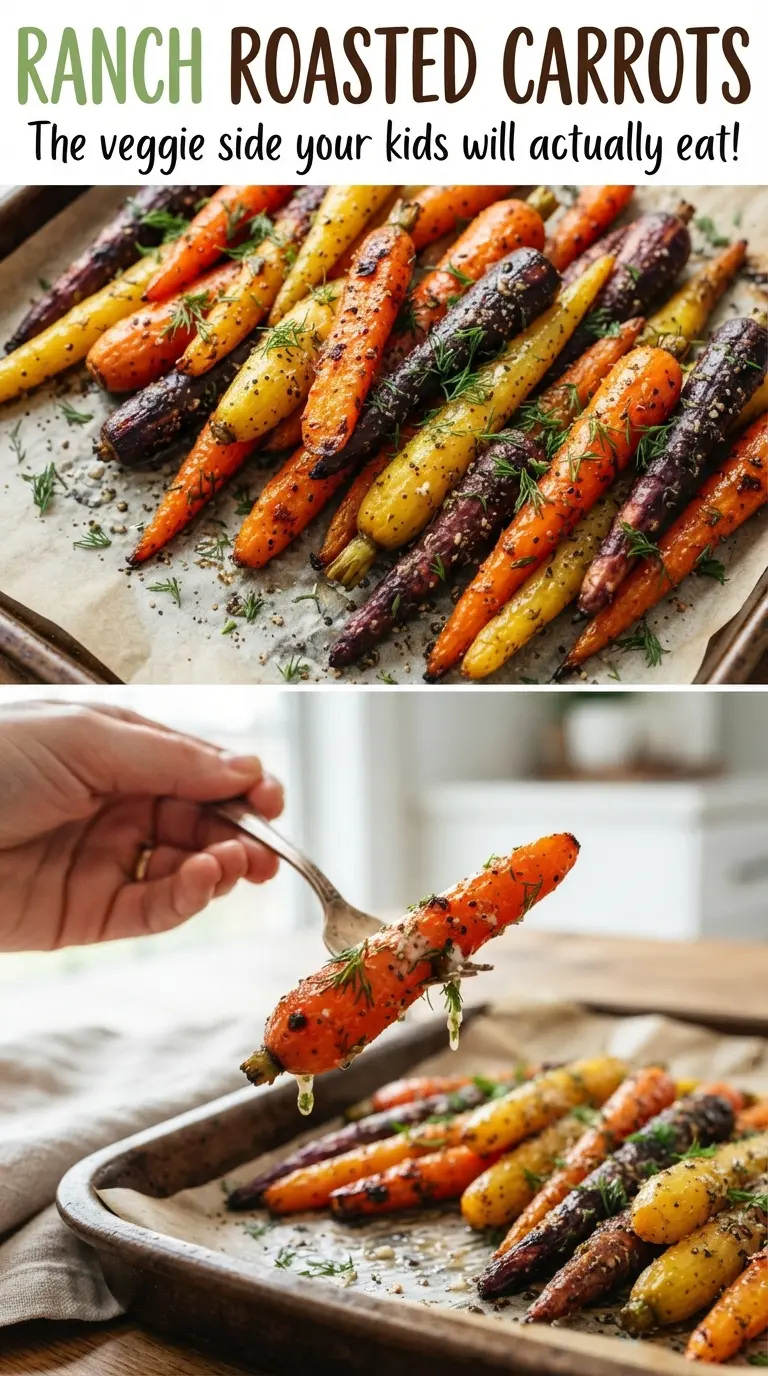
The ranch packet is the backbone of the flavor. It brings dried herbs, garlic, onion, and salt in one step, which is why this recipe tastes built instead of just seasoned. A homemade blend can work in a pinch, but the packet gives you a consistent, punchy finish without extra measuring.
Parmesan adds a salty, nutty layer that sticks to the hot carrots right before serving. Add it too early and it can darken or melt into a dusty layer instead of clinging in little savory bits. Fresh dill or parsley at the end keeps the whole dish bright and keeps the ranch flavor from tasting flat.
- Carrots — Look for firm carrots with a deep orange color. Older carrots can be woody, and that shows up after roasting. Peel them if the skin looks dry, then cut into sticks for the most even cook.
- Olive oil — This is what helps the seasoning adhere and promotes browning. You can use avocado oil if that’s what you keep around; it behaves the same in the oven.
- Ranch seasoning — This is the main flavoring, so use a full packet. If yours is especially salty, use a light hand with added salt elsewhere, though this recipe usually doesn’t need any extra.
- Parmesan — Grated Parmesan works best because it melts lightly over the warm carrots. Use the shelf-stable grated kind in a pinch, but freshly grated gives a cleaner, less sandy finish.
- Fresh dill or parsley — This is the final lift. Dill leans more ranch-like; parsley keeps it cleaner and greener.
Roasting Them So They Brown Instead of Softening
Coating the Carrots Evenly
Start by tossing the carrots with olive oil and ranch seasoning until every piece looks lightly coated. You want a thin, even film, not a paste clinging in clumps. If the seasoning falls to the bottom of the bowl, keep tossing until the carrots look dry on the outside but seasoned all over. That even coating is what gives you flavor on every bite instead of a salty patch here and there.
Getting Color on the Pan
Spread the carrots out on the parchment-lined sheet pan with space around each piece. If they’re touching, they’ll steam where they meet, and those spots stay pale. Roast until the edges pick up dark golden spots and the centers give easily when pierced with a fork, usually 20 to 25 minutes. If your carrots are very thick, they’ll need a few extra minutes.
Finishing Without Blunting the Flavor
Take the pan out and sprinkle the Parmesan and herbs over the hot carrots right away. The heat softens the cheese just enough to cling without turning it oily, and the herbs stay fresh and fragrant. Serve them warm, not after they sit too long, because that’s when the edges lose their crispness.
Three Ways to Make These Ranch Roasted Carrots Work for Your Table
Dairy-Free Version
Skip the Parmesan and finish with extra herbs plus a tiny squeeze of lemon if you want a little brightness. The carrots still roast beautifully, and the ranch seasoning carries most of the flavor on its own. You’ll lose the salty cheese finish, but the dish still lands as savory and balanced.
Gluten-Free Check
This works well as long as your ranch seasoning packet is certified gluten-free. The rest of the ingredients are naturally gluten-free, so this is one of those side dishes that doesn’t need much adjusting. The texture and roasting time stay exactly the same.
Make It a Little Crispier
For more browning, roast the carrots on the upper middle rack and give them an extra toss at the 15-minute mark. If you like edges with a deeper char, let them go the full 25 minutes and keep an eye on the thinnest pieces so they don’t overcook. This version tastes a little more intense and a little less tender.
Use Baby Carrots Instead
Baby carrots work, but they roast a bit softer and less evenly because they’re thicker at one end and usually hold more surface moisture. Pat them dry before seasoning, then roast until you see browned spots instead of waiting for them to look deeply caramelized. The flavor stays the same, but the texture is softer and less crisp at the edges.
Storage and Reheating
- Refrigerator: Store leftovers in an airtight container for up to 4 days. The carrots soften a little as they sit, but the flavor holds up well.
- Freezer: I don’t recommend freezing these. Roasted carrots turn watery and lose their pleasant bite after thawing.
- Reheating: Warm them on a sheet pan in a 400F oven for 8 to 10 minutes. The oven brings back the edges much better than the microwave, which tends to make them limp.
Questions I Get Asked About This Recipe
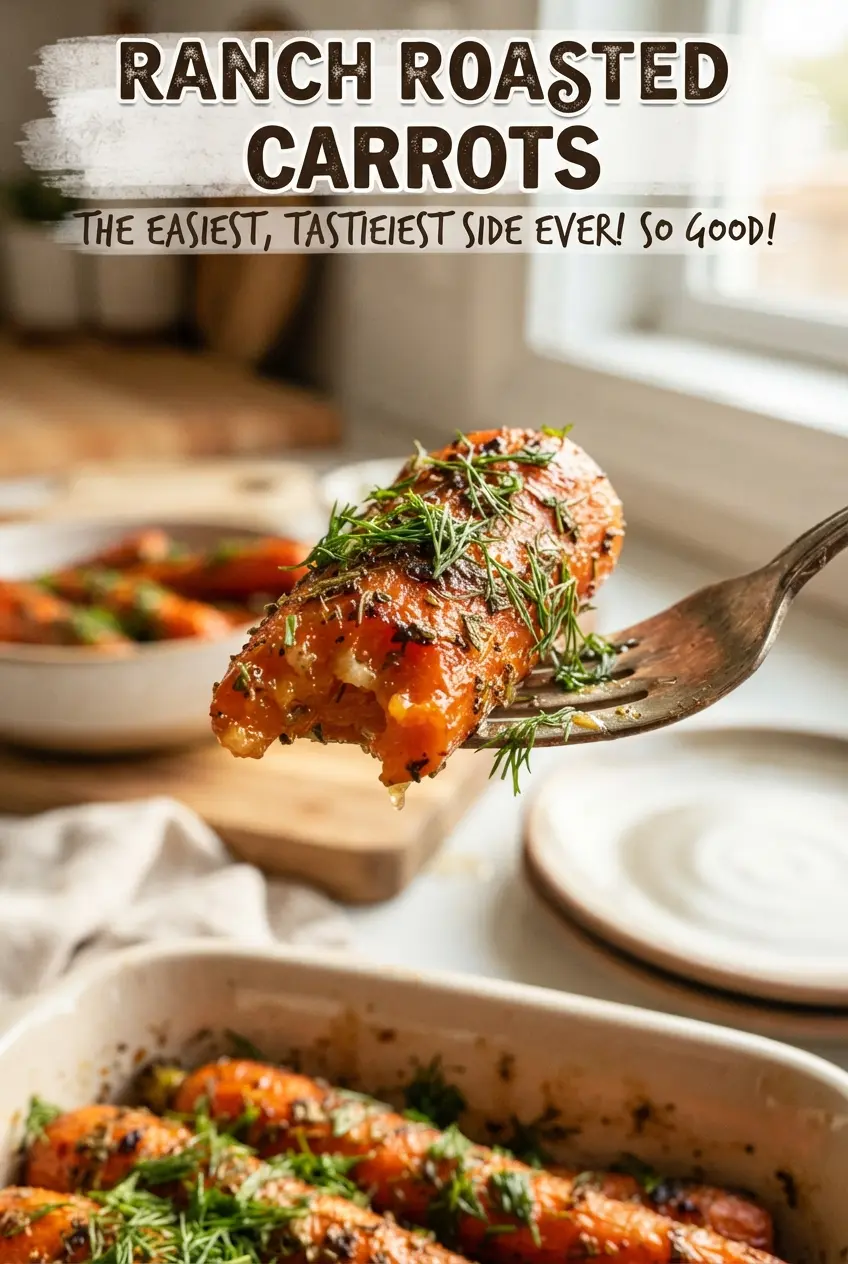
Ranch Roasted Carrots
Ingredients
Equipment
Method
- Preheat oven to 425F and line a sheet pan with parchment (set up for easy cleanup).
- Toss carrots with olive oil and ranch seasoning until evenly coated so every stick looks lightly speckled with seasoning.
- Spread carrots in a single layer on the sheet pan to help them roast rather than steam.
- Roast 20-25 minutes, tossing halfway, until tender and browned at the edges, with the carrots turning golden on the pan.
- Sprinkle with Parmesan and fresh herbs, then serve warm while the cheese lightly melts.