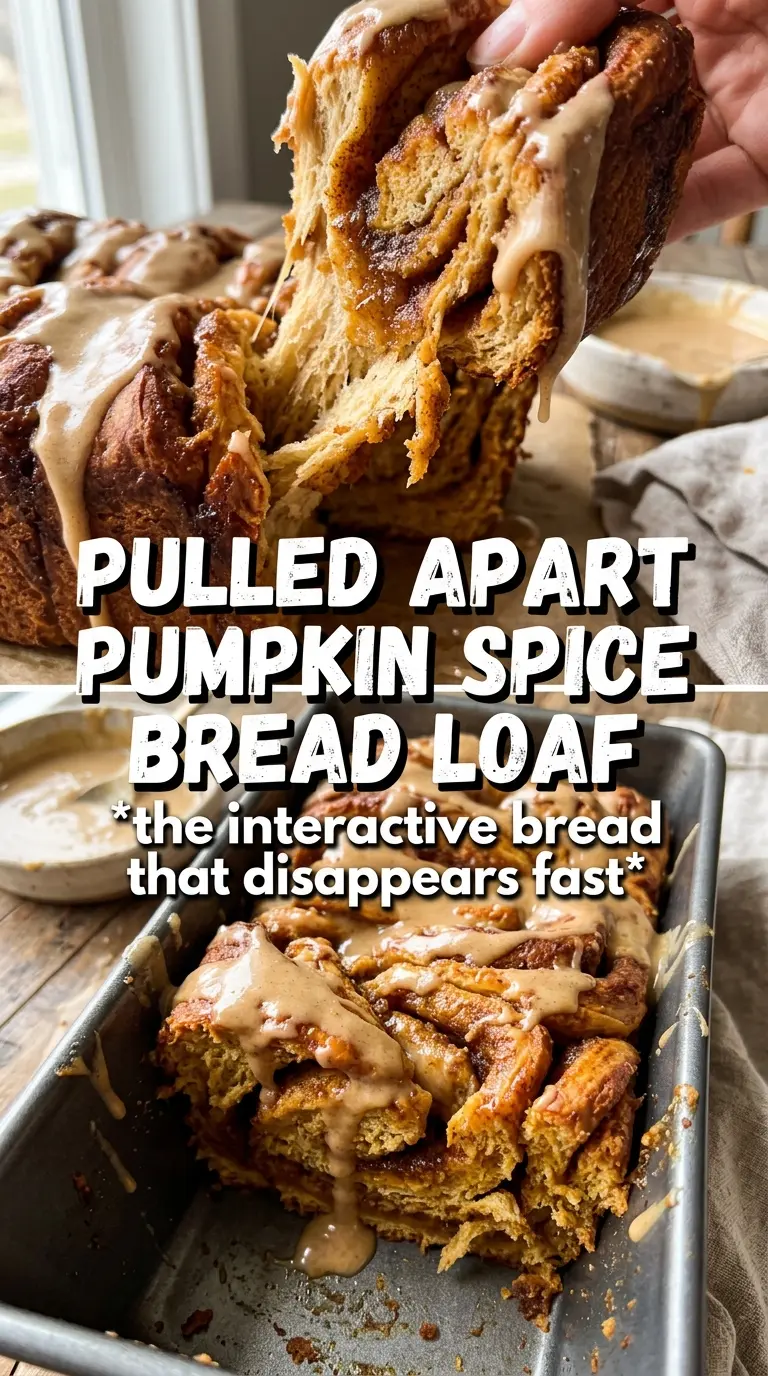
Golden layers of pumpkin bread pulled apart with sticky cinnamon sugar and finished with a tangy cream cheese glaze make this the kind of loaf people hover over at the counter. The edges bake up bronzed and lightly crisp while the center stays soft and tender, so each piece tears away in buttery, spiced sheets. It eats like a bakery treat, but the steps are straightforward enough to pull off on a regular morning.
The dough stays plush because the pumpkin puree adds moisture without making it heavy, and the yeast still gets a proper rise thanks to warm milk and a little sugar. The filling is built with melted butter, brown sugar, cinnamon, pumpkin pie spice, and nutmeg, which means it melts into the layers instead of sitting dry on top. That stack-and-slice shaping step is what gives the bread its pull-apart texture, so don’t rush it.
Below, I’ve added the small details that matter most here: how warm the milk should feel, why the loaf needs a foil tent partway through baking, and the easiest way to keep the glaze thick enough to drip instead of disappear.
The layers baked up soft and fluffy, and the cream cheese glaze soaked just enough into the top without making it soggy. I loved how the filling stayed in place between the strips instead of melting out into the pan.
Save this Pumpkin Spice Pull Apart Bread for the mornings when you want soft layers, warm spice, and a cream cheese glaze that drips over every pull-apart piece.
The Dough Needs Warmth, Not Heat
Pumpkin bread dough can turn dense fast if the milk is too hot or the flour goes in before the yeast wakes up. The milk should feel warm, not sharp or steaming, and the dough should come together into a soft, slightly tacky ball that pulls cleanly from the bowl after kneading. Pumpkin puree adds moisture and richness, but it also slows the structure a little, which is why the full knead matters here.
If the dough seems sticky after a few minutes, keep kneading instead of dumping in more flour right away. It often tightens as the gluten develops. The goal is a smooth dough that still feels supple, not stiff.
- Pumpkin puree — Use plain pumpkin puree, not pumpkin pie filling. The puree gives color, flavor, and tenderness without extra sugar or spices that can throw off the balance.
- Warm milk — This helps activate the yeast and keeps the dough soft. If it’s too hot, the yeast can stall or die; aim for warm to the touch, like a bottle for a baby.
- Butter — Melted butter enriches the dough and keeps the crumb tender. It also helps the filling cling once the dough is rolled out.
- Flour — Add it gradually and stop as soon as the dough is workable. Too much flour makes the loaf dry and tight instead of fluffy and layered.
What Each Layer Is Doing Inside the Loaf
- Brown sugar — This melts into the butter and creates the sticky pockets between layers. Pack it firmly so the filling stays rich instead of sandy.
- Cinnamon and pumpkin pie spice — Cinnamon carries the main warmth, while pumpkin pie spice deepens it with cloves and ginger. That combination gives the loaf its bakery-style aroma.
- Nutmeg — Just a small amount sharpens the filling and keeps it from tasting flat. Freshly grated nutmeg is even better if you have it.
- Cream cheese — The glaze needs the tang of cream cheese to balance all that sweetness. Full-fat cream cheese gives the smoothest finish and the best drape over a warm loaf.
Stacking the Dough So the Layers Open Up
Roll It Evenly Before You Add the Filling
Roll the dough into a 12×16 rectangle so the layers bake at the same rate. If one side is much thicker, that section will bake up doughy while the thinner edge dries out. Brush the melted butter all the way to the corners, then scatter the sugar mixture evenly so every bite gets the same spice hit.
Cut, Stack, and Turn for the Pull-Apart Shape
Cut the rectangle into four long strips, stack those strips, and then cut the stack into six squares. Place the squares on their sides in the loaf pan so the layers face upward and outward. That part is what creates the pull-apart effect, and if the pieces are packed too tightly or left uneven, the loaf can bake into a solid block instead of distinct sections.
Watch the Center, Not Just the Color
Bake until the top is deeply golden, then tent with foil halfway through if the top is getting too dark. The loaf is done when the middle feels set and a skewer comes out without wet dough, though a little sticky sugar is fine. If the top browns too quickly, the center usually needs more time, not more heat, so the foil is doing real work here.
Glaze While It’s Warm
Stir the glaze until it’s smooth and pourable, then drizzle it over the loaf while it’s still warm. Warm bread helps the glaze settle into the cracks without running off completely. If the glaze is too thick, add milk a teaspoon at a time; if it’s too thin, sift in a little more powdered sugar.
How to Adjust This Loaf for Different Kitchens and Cravings
Dairy-Free Version
Use plant-based milk, vegan butter, and a dairy-free cream cheese for the glaze. The loaf will still rise and layer well, though the glaze may be a little softer and less tangy depending on the brand you choose.
Make It More Dessert-Like
Add a handful of finely chopped toasted pecans to the filling for crunch and a deeper, nutty finish. The nuts stay tucked between the layers and give the loaf a little more texture without making it harder to slice.
Maple Glaze Swap
Replace half the milk in the glaze with pure maple syrup for a warmer, deeper sweetness. It leans a little more breakfast-brunch than bakery-cake and pairs nicely with the pumpkin spice filling.
Storage and Reheating
- Refrigerator: Store covered for up to 4 days. The bread softens a little as it sits, but the flavor stays good.
- Freezer: Freeze the baked loaf without glaze, wrapped tightly, for up to 2 months. Thaw overnight in the fridge and glaze after reheating for the best texture.
- Reheating: Warm slices in the microwave for 15 to 20 seconds or the whole loaf, covered loosely with foil, in a low oven. Don’t overheat it or the filling can turn dry and the bread will lose its soft pull-apart texture.
Questions I Get Asked About This Recipe
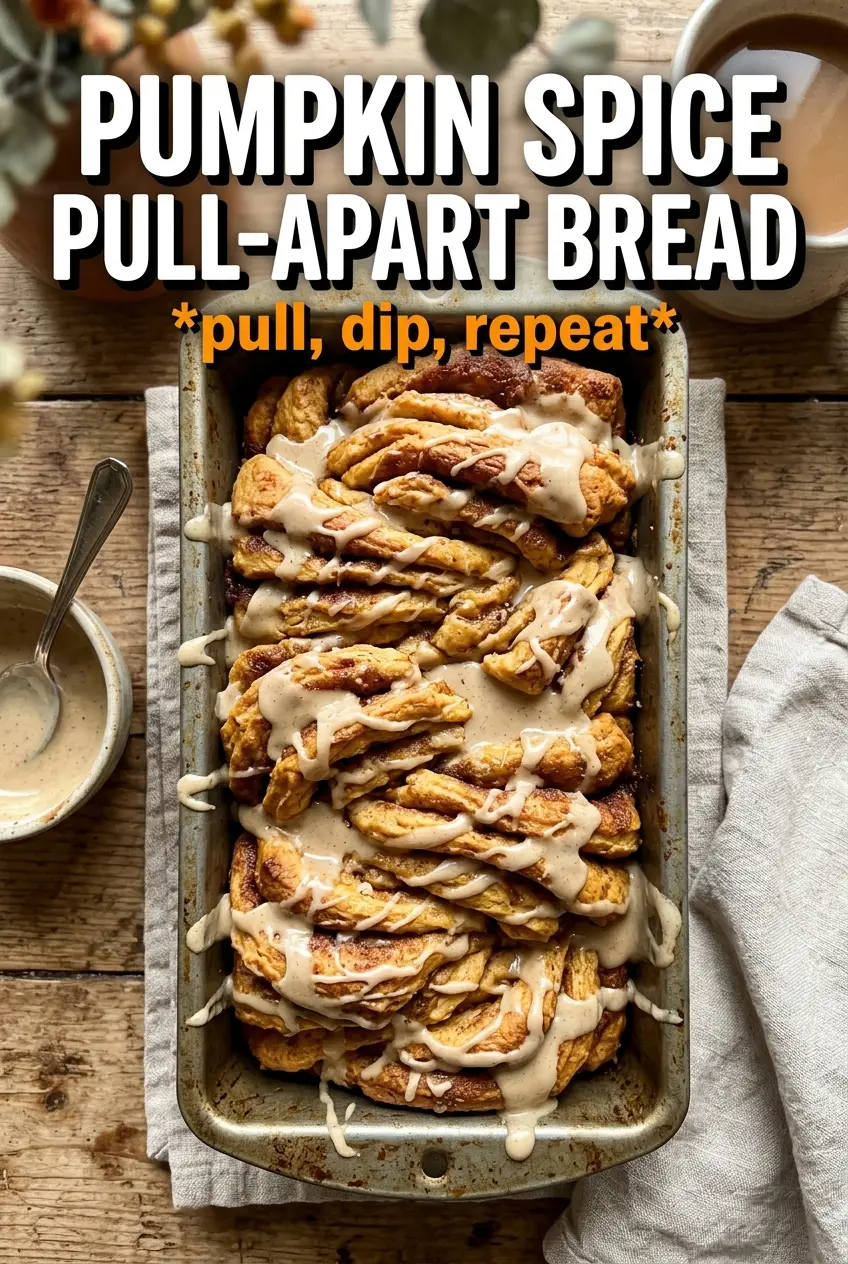
Pumpkin Spice Pull Apart Bread
Ingredients
Equipment
Method
- Stir the warm milk and yeast together, then add the sugar, melted butter, egg, and pumpkin puree until smooth and combined.
- With a stand mixer, knead in the flour, pumpkin pie spice, and salt for 7-8 minutes until the dough is smooth and elastic.
- Cover the dough and let it rise for 1 hour until doubled in size.
- Roll the dough into a 12x16 rectangle, then brush with melted butter.
- Sprinkle the pumpkin spice filling mixture evenly over the dough so the surface is fully covered.
- Cut the rectangle into 4 lengthwise strips, then stack the strips and cut into 6 square stacks.
- Place the stacks on their sides in a greased 9x5 loaf pan and let them rise for 30 minutes.
- Bake at 350F for 35-40 minutes until deep golden, tenting with foil halfway through to prevent over-browning.
- Drizzle with cream cheese glaze while the bread is warm, covering the entire surface.