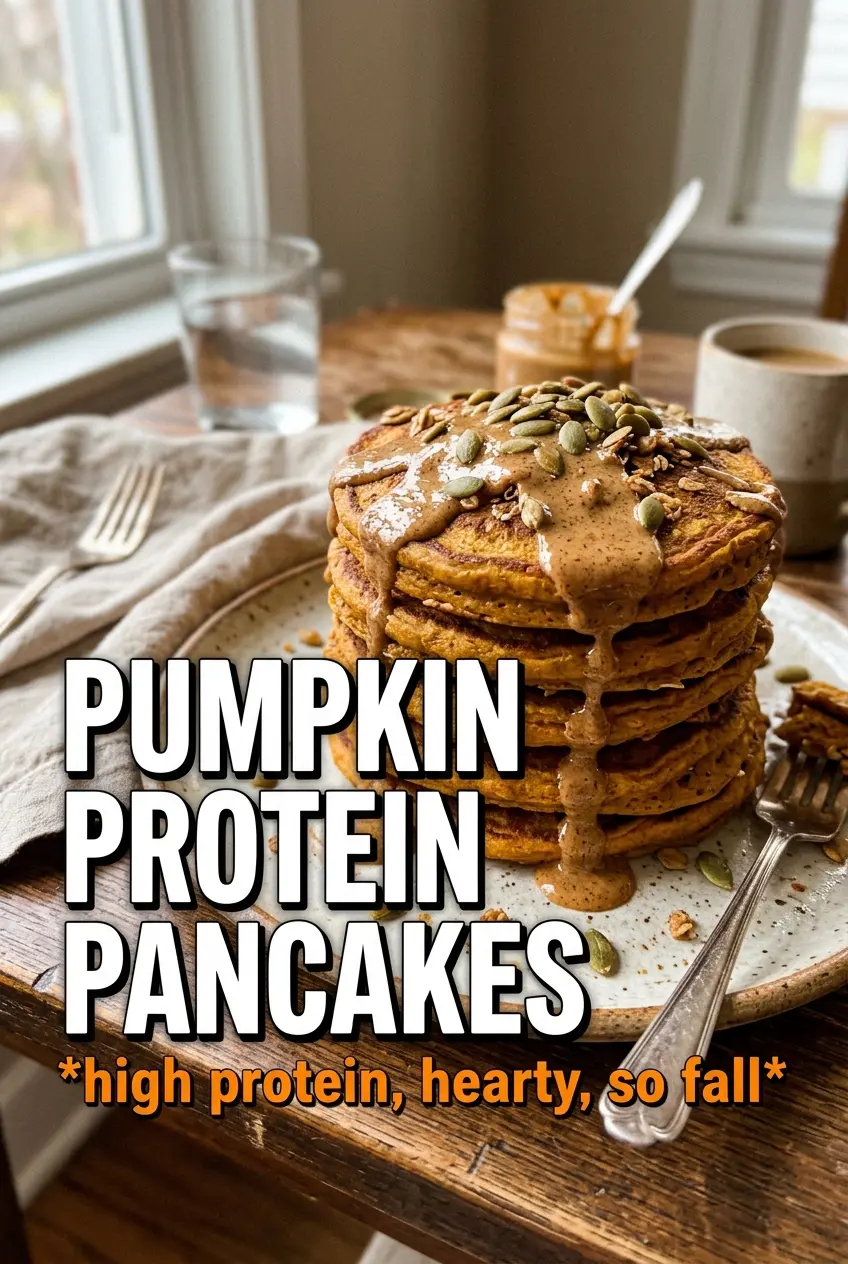
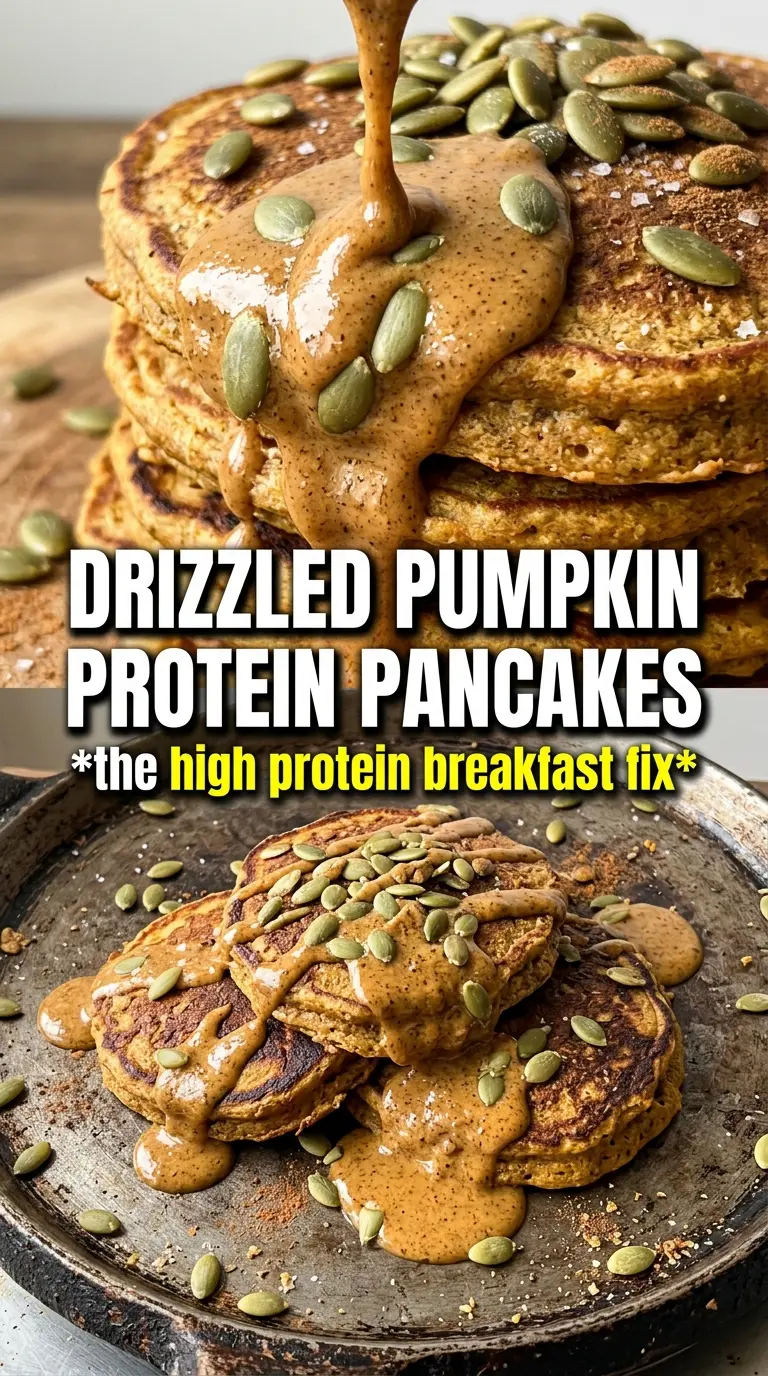
Pumpkin protein pancakes turn out thick, tender, and just hearty enough to hold their own under a drizzle of almond butter and honey. The pumpkin brings moisture and a soft, almost custardy crumb, while the protein powder gives the pancakes a little more staying power than your usual stack. They cook up with crisp edges, a warm spiced aroma, and a center that stays fluffy instead of gummy.
The key is keeping the batter thicker than standard pancake batter and giving the skillet a little patience. Protein powder soaks up liquid as it sits, so the batter needs a few minutes before cooking, and the pan needs to stay at medium-low heat so the outside doesn’t set before the middle cooks through. That’s what keeps these from turning dry or rubbery, which is the most common failure with protein pancakes.
Below, I’ll walk through the exact texture to look for, the ingredient swap that matters most if you only have oats, and the small heat adjustment that makes these cook evenly. Once you’ve made them once, the rhythm is easy.
The pancakes stayed fluffy even with the protein powder, and the pumpkin made them taste rich without being heavy. I loved that the batter thickened as it rested, and the banana on top was the perfect finish.
Like these pumpkin protein pancakes? Save them to Pinterest for thick, fluffy breakfasts with almond butter, honey, and banana.
The Batter Needs More Time Than Regular Pancakes
Protein pancakes fail when the batter is treated like a standard pancake batter. Protein powder and oat flour keep drinking up liquid after you mix, so the mixture should look thicker and a little more stubborn than you expect. That extra thickness helps the pancakes hold height in the pan instead of spreading into thin, dry rounds.
The other thing that matters is heat. A hot skillet browns the outside before the eggs and protein have time to set, which leaves you with a cooked shell and a soft center that never quite firms up. Medium-low heat gives the pancakes time to rise gently and cook through without drying out.
- Thicker batter is the goal — it should mound slightly when dropped, not pour like crepe batter.
- Let it rest briefly — a 3 to 5 minute rest gives the oat flour and protein powder time to hydrate.
- Cook low and steady — the first side needs patience so the middle can catch up.
- Flip once — repeated flipping knocks out the lift and makes them dense.
What Each Ingredient Is Actually Doing in These Pancakes
- Vanilla protein powder — this is the structure-builder and the reason these pancakes feel more filling. Different brands absorb liquid differently, so if yours is especially chalky or thick, add a splash more milk instead of forcing the batter to behave like a flour-only mix.
- Oat flour or blended oats — oat flour softens the texture and keeps the pancakes tender. Rolled oats blitzed into a powder work fine, though they make a slightly heartier pancake and can leave a little more texture.
- All-purpose flour — this balances the protein powder so the pancakes stay pancake-like instead of turning rubbery. You can swap in a 1:1 gluten-free flour blend if needed, but plain oat flour alone won’t give quite the same lift.
- Pumpkin puree — canned puree is the best choice here because it’s smooth and consistent. Pumpkin pie filling won’t work; it’s already sweetened and spiced, and it throws off both texture and seasoning.
- Greek yogurt — this adds tang and moisture, and it helps keep the pancakes tender. Plain yogurt works too, but Greek yogurt gives a thicker batter and a better finish.
- Eggs — they bind everything and help the pancakes set without becoming dry. There isn’t a clean one-to-one vegan swap that performs the same way in this specific batter.
Getting the Center Cooked Without Burning the Outside
Mix the dry ingredients first
Whisk the protein powder, oat flour, all-purpose flour, baking powder, spices, and salt together before you add any wet ingredients. That keeps the baking powder and spices evenly distributed, which matters more here than in a looser batter because thick batters can hide pockets of unmixed dry flour. If you skip this, you’ll get an uneven rise and little floury bites in the stack.
Build the pumpkin base
Whisk the pumpkin puree, eggs, Greek yogurt, milk, honey, and vanilla until the mixture looks smooth and fully combined. The batter will look almost like a thick custard before the dry ingredients go in, and that’s exactly what you want. Don’t worry if it seems a little dense at this stage; the flour will loosen it just enough after folding.
Fold, then let the batter thicken
Add the dry ingredients to the wet ingredients and fold gently until you no longer see streaks of flour. Overmixing tightens the batter and makes the pancakes tougher, especially with protein powder in the mix. Let the bowl sit for a few minutes so the oats and protein hydrate, because the batter should be thick enough to scoop and hold its shape.
Cook on medium-low heat
Grease a skillet lightly and warm it over medium-low heat. Drop 1/4 cup portions and let them cook until the edges look set and bubbles start to break across the surface, about 3 minutes. If the bottom is browning too fast before the top loses its wet sheen, lower the heat; that’s the sign the pan is too hot for a protein pancake.
Flip once and finish gently
Slide a thin spatula under each pancake and flip with confidence, not hesitation. The second side usually needs about 2 minutes, just until springy and set in the center. Serve them right away with almond butter, honey, and sliced banana so the stack stays warm and the toppings melt into the top pancake instead of sitting on it.
How to Adapt These for Different Mornings
Make Them Gluten-Free
Swap the all-purpose flour for a 1:1 gluten-free baking blend and check that your protein powder is gluten-free too. The pancakes will still hold together, though they may be a touch more delicate, so wait for the edges to set fully before flipping.
Use Oats Instead of Oat Flour
Blend rolled oats until they look like a fine meal, then measure after blending. This gives you the same nutty base with a slightly heartier texture, which works especially well if you like a more substantial pancake.
Make Them Dairy-Free
Use a thick dairy-free yogurt and unsweetened almond milk or oat milk. The pancakes won’t have quite the same tang as Greek yogurt, but they’ll still stay soft if you keep the batter thick and don’t crank up the heat.
Storage and Reheating
- Refrigerator: Store leftovers in an airtight container for up to 3 days. They stay soft, though the edges lose a little crispness.
- Freezer: These freeze well. Lay them in a single layer to freeze, then stack with parchment between each pancake and seal in a freezer bag for up to 2 months.
- Reheating: Warm them in a toaster oven, skillet, or microwave in short bursts. The mistake to avoid is blasting them too long, which dries out the protein powder and makes the pancakes tough.