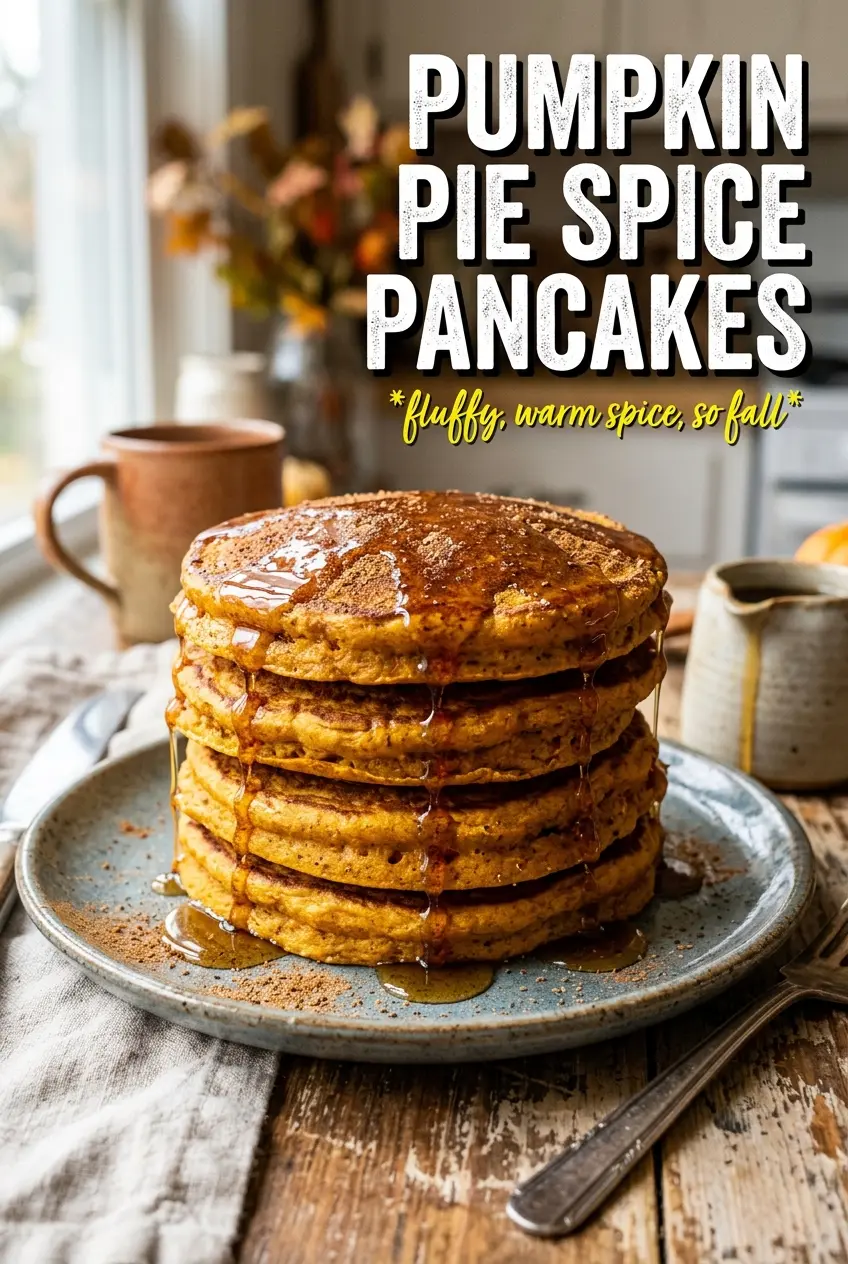
These pumpkin pie spice pancakes come off the griddle soft, tall, and lightly crisp at the edges, with warm spice running through every bite. The pumpkin keeps them moist without turning them heavy, and the buttermilk gives the batter just enough tang to balance the sweetness. Stack them high, add a little whipped cream, and you get the kind of breakfast that feels special without asking for much more than a bowl and a skillet.
The trick is keeping the spice blend bold enough to taste like pumpkin pie, but not so heavy that it muddies the batter. Pumpkin puree adds body, so this batter needs a short rest before cooking; that gives the flour time to hydrate and helps the pancakes cook up tender instead of gummy. Medium heat matters here too. Too hot, and the outside browns before the center sets. Too low, and you lose the lift.
Below, I’ve included the one timing detail that keeps these pancakes fluffy, plus a few smart swaps if you need to work with what’s in the fridge.
The pancakes cooked up fluffy and the pumpkin spice flavor came through without tasting muddy. I rested the batter for 5 minutes like you said and they flipped cleanly with those little golden edges.
Save these pumpkin pie spice pancakes for a fluffy, warmly spiced breakfast with a perfect 5-minute batter rest.
The Spice Blend That Needs the Batter, Not the Burner
With pancakes like these, the biggest mistake is trying to force pumpkin flavor with extra heat or extra sugar. The spice lives in the batter itself, where cinnamon, ginger, nutmeg, cloves, and allspice have time to soften and spread through the flour. That gives you a deeper, more even flavor in every bite instead of little pockets of spice on the surface.
The other thing that matters is the balance between pumpkin puree and leavening. Pumpkin adds moisture and density, so the baking powder and baking soda have to do a little more work than they would in a plain pancake batter. If you overmix, though, you knock that lift right out. Stir only until the dry streaks disappear. A few small lumps are better than a smooth, overworked batter.
What Each Ingredient Is Actually Doing in These Pancakes
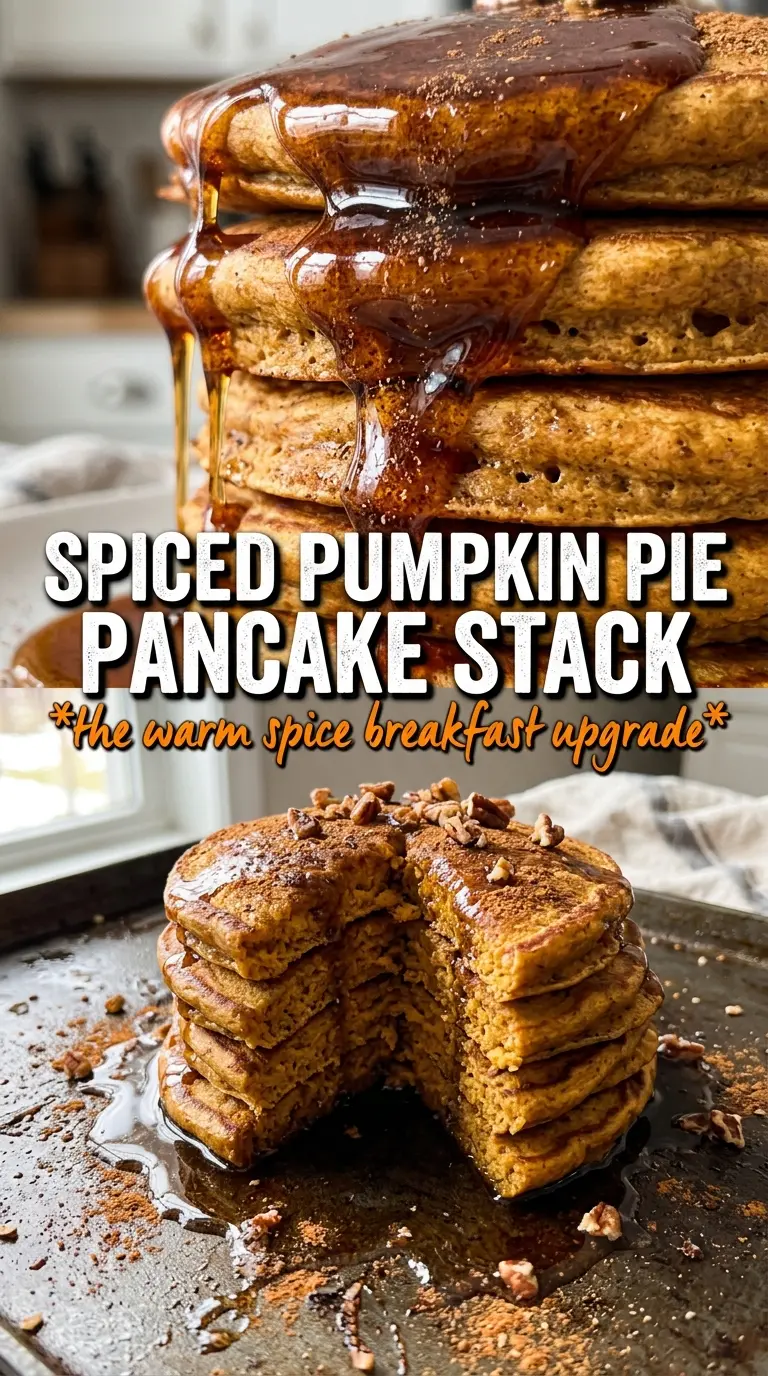
- All-purpose flour — This gives the pancakes enough structure to hold the pumpkin puree without turning dense. A lower-protein flour can make them a little softer, but all-purpose is the safest choice for pancakes that still need a strong flip.
- Pumpkin puree — Use pure pumpkin, not pie filling. Pie filling is already sweetened and spiced, which throws off the balance and makes the batter taste flat instead of fresh.
- Buttermilk — This is what keeps the crumb tender and works with the baking soda for lift. If you don’t have it, add 1 tablespoon lemon juice or vinegar to a measuring cup, then fill to 1-1/4 cups with milk and let it sit 5 minutes.
- Warm spices — Cinnamon, ginger, nutmeg, cloves, and allspice give these pancakes their pie-like flavor. Freshly opened spices matter here; old spices taste dusty and the whole batter loses its edge.
- Melted butter — This adds richness and keeps the pancakes from tasting dry. Don’t use it piping hot, or it can start cooking the eggs when you whisk the wet ingredients together.
How to Keep the Pancakes Fluffy Instead of Dense
Mix the dry ingredients first
Whisk the flour, sugar, baking powder, baking soda, salt, and spices until the color looks even all the way through. That matters more than it sounds like, because the spices need to be distributed before the wet ingredients go in. If you skip this, you can end up with a few pancakes that taste strongly of cloves while the rest taste plain.
Stir the wet ingredients just until smooth
Whisk the pumpkin puree, buttermilk, eggs, melted butter, and vanilla until the mixture looks uniform and glossy. The pumpkin may stay slightly thick, and that’s fine. The goal is not a perfectly thin liquid; it’s a wet base that can be folded into the dry ingredients without being beaten to death.
Fold, rest, and cook over steady medium heat
Pour the wet ingredients into the dry and fold gently until the flour just disappears. Let the batter rest for 5 minutes so the flour hydrates and the baking powder can start working, which helps the pancakes cook up taller. Grease the skillet lightly and cook each 1/4-cup portion over medium heat until bubbles form on top and the edges look set. If the first pancake browns too fast, drop the heat a little before the next batch goes in.
Flip once and finish cleanly
Turn the pancakes when the first side is deep golden and the center surface no longer looks wet. The second side usually needs less time than the first, and pressing them with a spatula just squeezes out the air you worked to build. Pull them from the pan when they spring back lightly to the touch.
How to Adapt These Pancakes When the Pantry Runs Short
Dairy-Free Version with the Same Tender Crumb
Swap the buttermilk for an unsweetened non-dairy milk mixed with 1 tablespoon lemon juice or vinegar. Use melted coconut oil or a neutral plant butter in place of the butter. The pancakes will still rise well, though the flavor lands a little less rich and a little more straightforward.
Gluten-Free Pancakes That Still Flip Cleanly
Use a 1:1 gluten-free baking flour blend that already includes xanthan gum. The batter may need an extra minute of rest to thicken slightly, and the first flip should wait until the edges look fully set. Without the right blend, these can turn fragile and cake-like instead of soft and fluffy.
Less Sweet, More Breakfast-Table Friendly
Cut the sugar back to 1 tablespoon if you plan to serve them with maple syrup or sweetened whipped cream. The pancakes will still brown nicely, but they’ll taste a little more like spiced pumpkin bread and a little less like dessert.
Storage and Reheating
- Refrigerator: Store cooked pancakes in an airtight container for up to 4 days. They soften a bit as they sit, but the flavor stays good.
- Freezer: These freeze well. Cool completely, layer with parchment, and freeze in a sealed bag for up to 2 months.
- Reheating: Warm them in a toaster or a 300°F oven until hot. The common mistake is microwaving too long, which makes the crumb rubbery instead of soft.