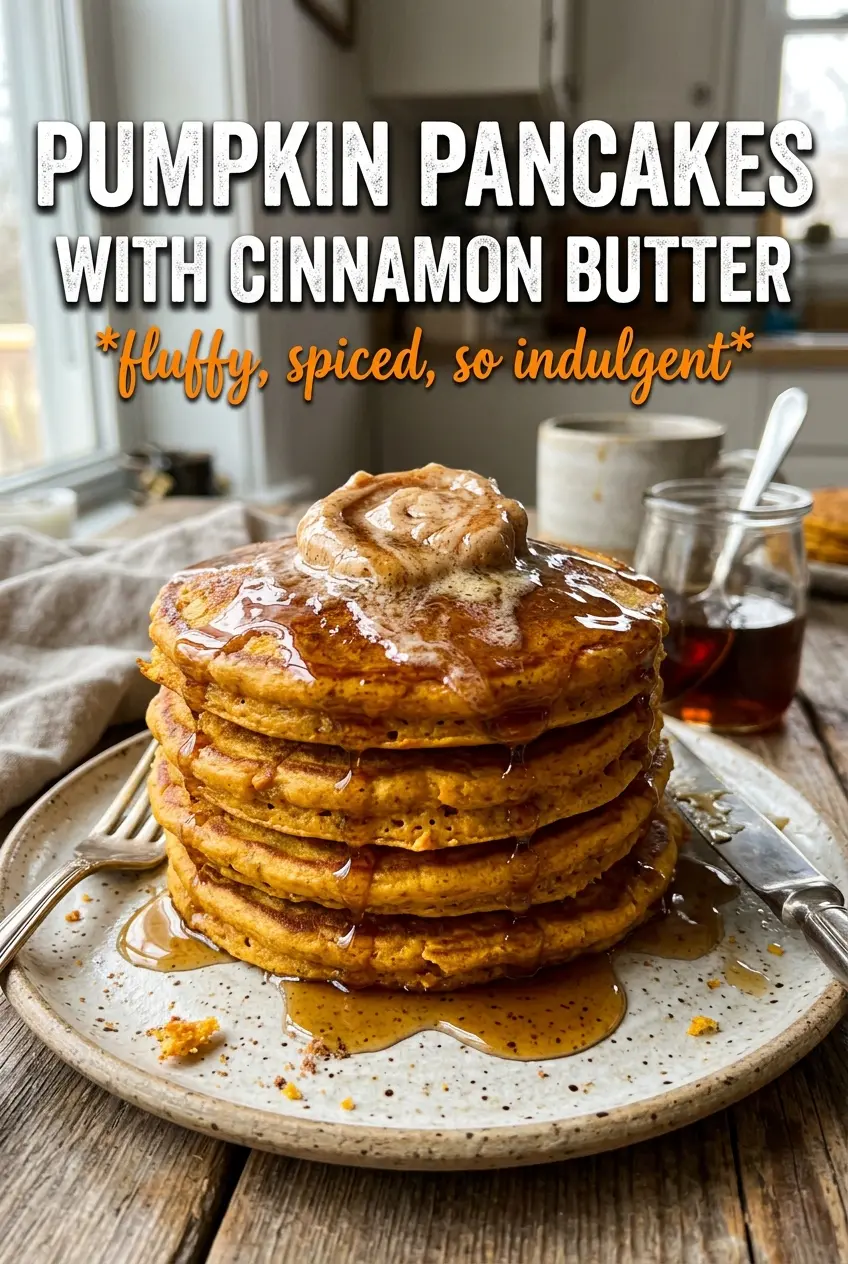
These pumpkin pancakes come off the griddle tall, tender, and lightly spiced, with edges that turn golden before the centers finish setting. The cinnamon honey butter melts into the warm stack and gives every bite a glossy, sweet finish that keeps these pancakes from tasting flat or one-note. They’re the kind of breakfast that feels special without asking for much more than a bowl and a whisk.
The trick is keeping the batter just barely mixed. Pumpkin puree adds moisture and body, but if you beat it too long with the flour, the pancakes turn dense instead of fluffy. Buttermilk works with the baking soda to lift the batter, while the butter in the cinnamon topping softens the spice and makes it spread like a dream. I also like making the butter first so it has time to firm up a little in the fridge while the batter rests.
Below, I’ll walk through the little details that matter most, including how to keep the pancakes from browning too fast before the center cooks through and how to get that cinnamon butter smooth instead of grainy.
The pancakes were fluffy and cooked through without getting gummy in the middle, and the cinnamon honey butter melted into every bite. I used the full 5-minute rest and the texture was spot on.
Love the fluffy pumpkin stack and melty cinnamon honey butter? Save this recipe for a weekend breakfast that feels cozy and extra special.
The Secret to Fluffy Pumpkin Pancakes Without a Heavy Center
Pumpkin puree makes pancakes richer, but it also adds weight. That’s where a lot of recipes go wrong: the batter looks right in the bowl and then cooks up thick and pasty because it was overmixed or the heat was too high. The goal here is a batter that still looks a little rough after you fold it together, with small streaks of flour disappearing as it rests.
The rest matters more than it sounds like it should. Five minutes gives the flour time to hydrate and the leavening a head start, which helps the pancakes rise instead of spreading thin. If your first pancake browns too fast before the center sets, lower the heat a notch. Pumpkin batter needs a steady medium griddle, not a hot one that scorches the outside.
What the Pumpkin, Buttermilk, and Cinnamon Butter Each Bring to the Pan
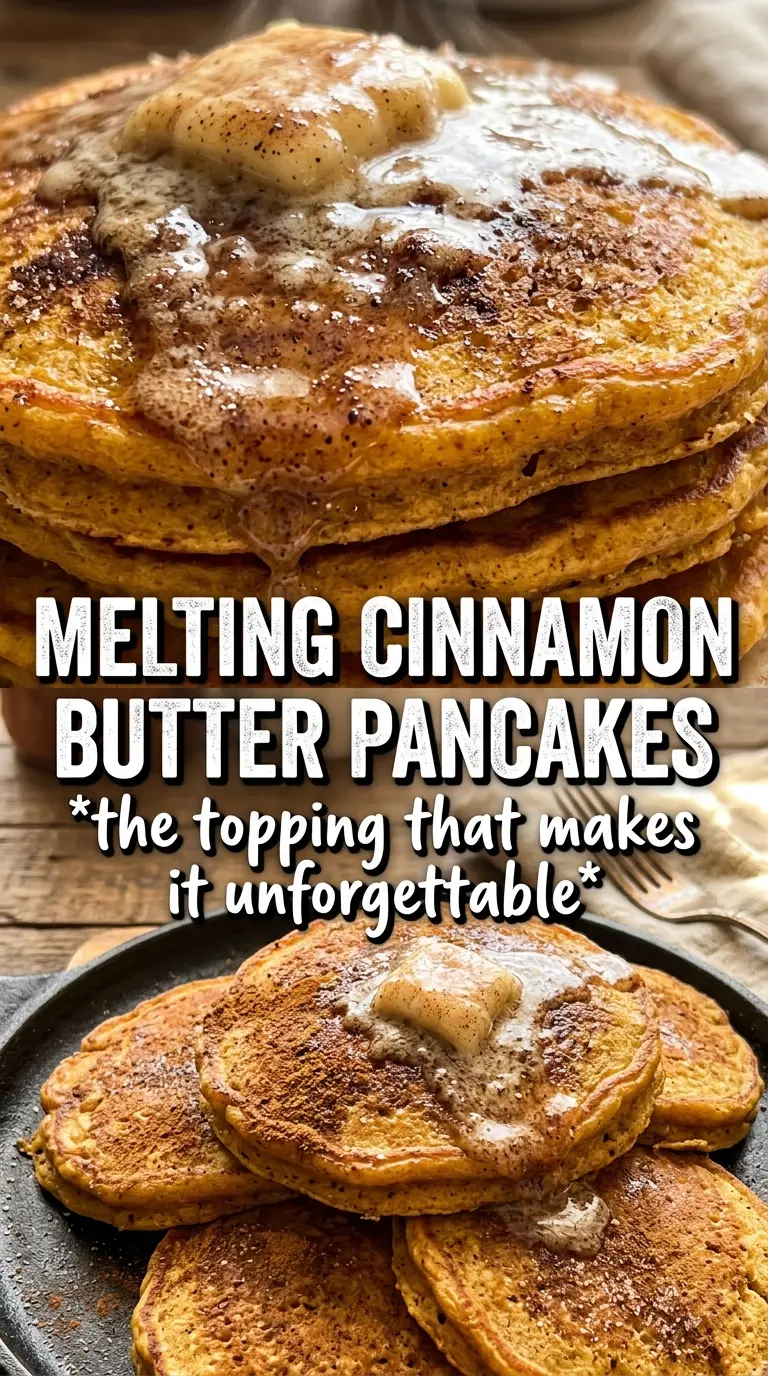
- Pumpkin puree — Use plain pumpkin puree, not pumpkin pie filling. The puree gives the pancakes their color and tender texture without adding extra sugar or spices that can throw off the balance.
- Buttermilk — This is what keeps the pancakes light. Its acidity reacts with the baking soda and gives you lift, so whole milk won’t behave the same way unless you add a little lemon juice or vinegar to mimic that tang.
- Baking powder and baking soda — Both matter here. Baking powder gives steady lift while baking soda reacts with the buttermilk for a quicker rise, which is how you get pancakes that puff without tasting cakey.
- Cinnamon honey butter — Don’t skip the softening step. If the butter is too cold, the honey won’t blend smoothly and you’ll end up with little gritty streaks instead of a spreadable topping. A quick chill after mixing helps it hold its shape on the hot pancakes.
How to Keep the Pancakes Tender and the Butter Smooth
Mix the butter before anything else
Beat the softened butter with honey, cinnamon, vanilla, and salt until it looks airy and pale. If the butter starts out too cold, the honey will cling in streaks and the mixture won’t whip into that smooth, spoonable texture. A short chill after mixing helps it set up enough to sit on the pancakes without disappearing instantly.
Whisk wet and dry in separate bowls
The dry ingredients need to be evenly distributed before the wet ingredients go in, especially the baking powder, baking soda, and spices. Whisking the wet ingredients separately keeps the pumpkin puree from clumping and helps the buttermilk and eggs blend cleanly. Once the two bowls meet, switch to folding right away so you don’t overwork the flour.
Stop mixing the moment the flour disappears
The batter should look a little lumpy, not glossy and smooth. That rough texture is a good sign here. Overmixed batter tightens up as it sits and makes pancakes that bounce instead of fluff. Let it rest for about 5 minutes, then cook it without stirring again.
Cook slowly enough for the center to set
Scoop about 1/4 cup per pancake onto a greased griddle over medium heat. You’re looking for bubbles across the top and edges that look dry and slightly set before you flip. If the bottoms are dark before the tops lose their shine, the heat is too high. Lower it and keep going; pumpkin batter needs a little patience.
How to Change These Pancakes Without Losing What Makes Them Good
Dairy-Free Version
Use a rich unsweetened non-dairy milk with 1 tablespoon lemon juice or vinegar stirred in, then let it sit for 5 minutes before mixing. Swap the butter in the pancakes and topping for plant-based butter. The pancakes will still rise well, but the cinnamon topping will be a little softer and less creamy than the dairy version.
Gluten-Free Pancakes That Still Hold Together
Use a good 1:1 gluten-free flour blend with xanthan gum already included. The batter may thicken a bit more as it sits, so add a splash more buttermilk if needed before cooking. The pancakes will be a touch more delicate, but they should still flip cleanly if you wait for the edges to set.
Make-Ahead Morning Shortcut
The cinnamon honey butter can be made 3 days ahead and kept covered in the fridge. For the pancakes, mix the dry ingredients the night before and whisk the wet ingredients separately in the morning. Combine them right before cooking so the batter still has enough lift to stay fluffy.
Storage and Reheating
- Refrigerator: Store cooked pancakes for up to 3 days and keep the cinnamon butter covered for up to 1 week. The pancakes soften a bit in the fridge, but they hold up well.
- Freezer: Pancakes freeze well. Layer them with parchment and freeze in a zip-top bag for up to 2 months. Freeze the butter separately if you want, but the texture is best made fresh.
- Reheating: Warm pancakes in a toaster or a low oven until hot through. The biggest mistake is microwaving them too long, which makes them rubbery and damp instead of tender.
Questions I Get Asked About This Recipe
Pumpkin Pancakes With Cinnamon Butter
Ingredients
Equipment
Method
- Beat softened unsalted butter with honey, cinnamon, vanilla, and a pinch of salt until smooth and fluffy, scraping the bowl as needed for even mixing. Refrigerate to firm slightly.
- Whisk all-purpose flour, sugar, baking powder, baking soda, pumpkin pie spice, cinnamon, and salt in a large bowl until evenly combined. Break up any clumps of spices so the batter stays uniform.
- Whisk pumpkin puree, buttermilk, eggs, melted butter, and vanilla in a separate bowl until smooth and glossy. Make sure the eggs are fully incorporated before combining.
- Fold wet ingredients into dry ingredients until just combined, leaving the batter slightly lumpy. Do not overmix or the pancakes will turn tough.
- Rest the batter for 5 minutes to thicken slightly. The surface should look a bit matte before cooking.
- Heat a greased griddle over medium heat until it sizzles lightly when batter touches down. Keep the temperature steady to prevent burning before the centers set.
- Scoop about 1/4 cup batter per pancake onto the griddle and spread gently if needed. Cook for 2-3 minutes until bubbles form on top and the edges look set.
- Flip the pancakes and cook for 2-3 minutes more, until golden and cooked through. The second side should spring back when lightly pressed.
- Serve the pancakes with a generous knob of cinnamon honey butter placed on top to melt. Garnish with maple syrup on the side for pooling at the base.