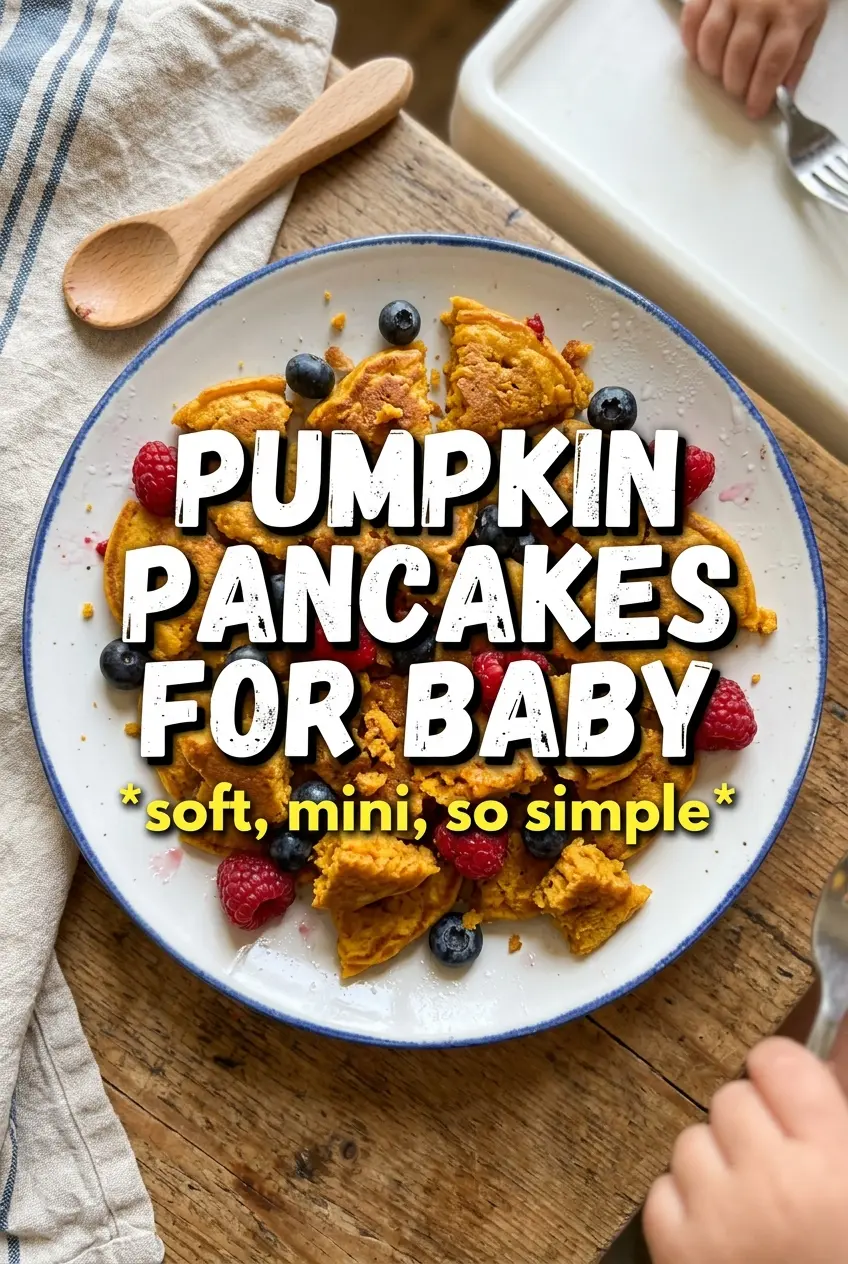
Soft pumpkin pancakes are one of those breakfasts that disappear fast because they’re gentle, tender, and easy for little hands to manage. The pumpkin keeps the crumb moist without turning heavy, and the mild spice gives them that warm pancake smell without overwhelming a baby’s palate. For toddlers, they’re just sweet enough to feel special with a little banana on the side or a tiny drizzle of maple syrup.
What makes this version work is the balance: enough flour to hold the pancakes together, enough pumpkin to keep them soft, and just enough baking powder and baking soda to lift them without making them airy or dry. I also keep the heat lower than you might expect. Small pancakes brown fast, and with pumpkin in the batter, the line between golden and burnt can be thin if the pan runs too hot.
Below, I’ve added the little details that matter most here, including how to keep the pancakes tender, how to make them baby-friendly, and what to change if you want a dairy-free version.
These came out so soft and fluffy, and the little 1-tablespoon pancakes cooked evenly without burning. My toddler ate three with banana slices, and I loved that the batter wasn't sweetened too much for the baby.
Save these soft pumpkin pancakes for baby and toddler breakfasts when you want a tender, lightly spiced batch that cooks up golden and freezer-friendly.
Why Small Pancakes Stay Tender Instead of Drying Out
The biggest mistake with baby pancakes is treating them like standard flapjacks. Big pancakes need longer cooking time, which means the edges dry out before the center is done. Small rounds cook fast and stay soft all the way through, especially when the batter has pumpkin puree in it.
Low to medium-low heat matters more than fancy ingredients here. Pumpkin browns quickly, and if the skillet is too hot, the outside sets before the middle has a chance to cook. You want a gentle sizzle when the batter hits the pan, not an aggressive one.
- Pumpkin puree — Canned puree gives the most consistent texture. Use plain pumpkin puree, not pumpkin pie filling, or the batter turns too sweet and seasoned for babies.
- Whole wheat or all-purpose flour — Whole wheat adds a little extra nuttiness and heft, while all-purpose keeps the pancakes lighter. Both work; whole wheat just needs a touch more care so you don't overmix it.
- Baking powder and baking soda — This combination gives lift without making the pancakes cakey. Baking soda also helps balance the pumpkin's moisture, but it only works well if you keep the batter moving from bowl to pan without delay.
What Each Ingredient Is Doing in These Baby Pumpkin Pancakes
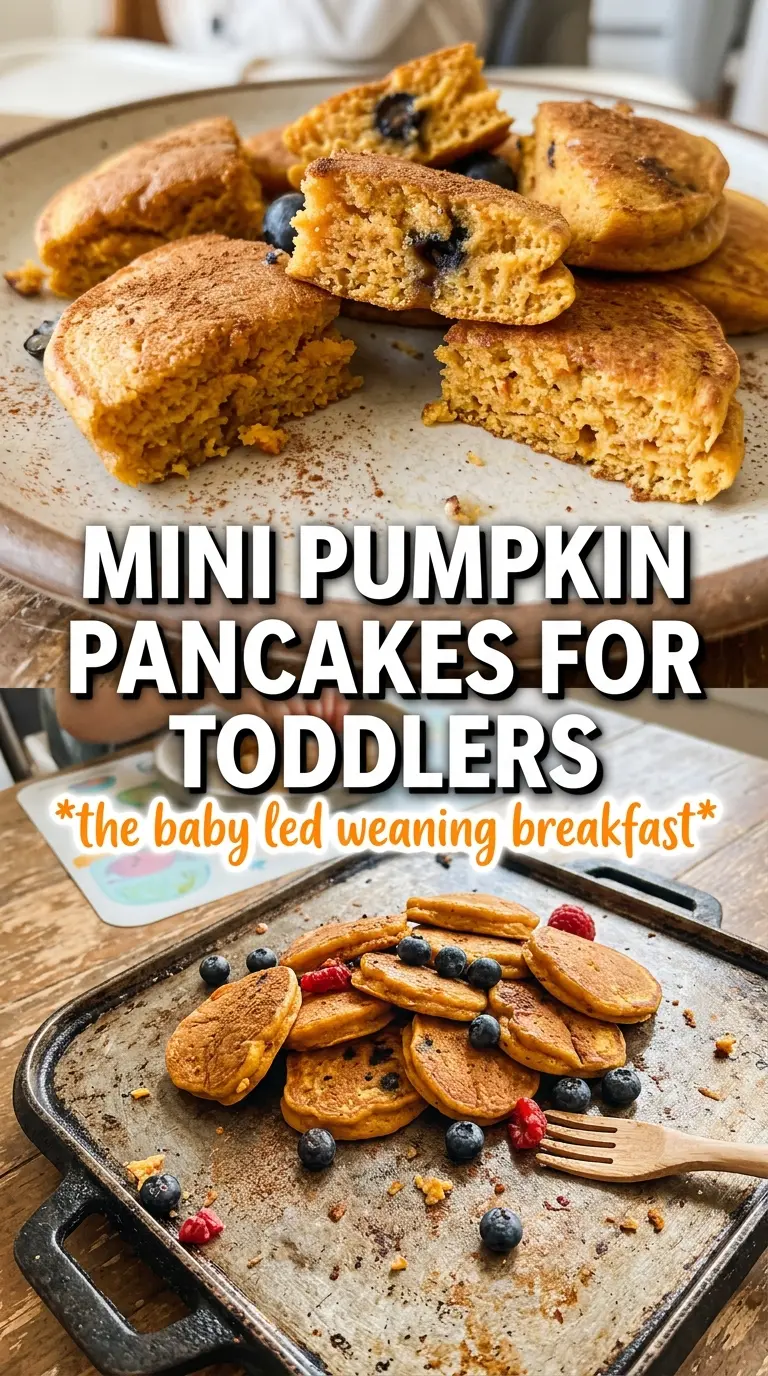
- Flour — This gives the pancakes enough structure to hold together when you flip small rounds. If you want a softer bite, use all-purpose flour; if you want a little more fiber, use whole wheat, but don't go beyond that without changing the liquid.
- Pumpkin puree — This is the ingredient that keeps the pancakes plush and moist. It also gives the batter enough body that you can make tiny pancakes without them spreading too thin.
- Milk and egg — These bind the batter and keep the pancakes tender. Whole milk gives a richer result, but any milk you already use at home will work well here.
- Maple syrup and vanilla — These are optional for babies under 1, but they add a gentle sweetness that works nicely for toddlers. Leave the maple syrup out for younger babies and serve with banana instead.
- Unsalted butter — Melted butter adds flavor and helps the pancakes cook with soft edges. If you use oil instead, the pancakes still work, but they lose a little of that classic breakfast taste.
Getting the Batter and Pan Ready for Tiny Pancakes
Mix the dry ingredients first
Whisk the flour, baking powder, baking soda, cinnamon, nutmeg, and ginger together before anything wet goes in. That keeps the leavening and spice evenly distributed, so you don't end up with one pancake that tastes like all the cinnamon and another that tastes plain. Leave out the salt if you're making these for baby, since the other ingredients already carry enough flavor.
Fold, don't beat, the batter
Stir the wet ingredients together, then fold them into the dry just until the flour disappears. A few small lumps are fine. If you whisk hard, the batter tightens up and the pancakes turn tougher than they should be, which is the last thing you want in a baby breakfast.
Cook low and slow enough to set the center
Use a lightly greased skillet over medium-low heat and drop the batter in 1- to 2-tablespoon rounds. Wait until the edges look set and small bubbles start to form before flipping, then cook the second side just until it turns golden. If the pancakes are browning too fast, lower the heat immediately; the inside should be soft, not gummy.
Cool before serving to little hands
Let the pancakes cool to room temperature before you offer them. For babies, cut them into age-appropriate pieces; for toddlers, small rounds are already easy to hold, especially with banana slices on the side. If you serve them too hot, the center can stay steamy longer than you expect, so give them a minute to settle.
How to Adapt These Pancakes for Different Ages and Pantry Setups
No Maple Syrup for Babies Under 1
Leave out the maple syrup entirely and lean on the pumpkin, vanilla, and cinnamon for flavor. The pancakes will be less sweet, but that's a good thing for babies, and the banana on top adds enough natural sweetness for toddlers and older kids.
Dairy-Free Version
Swap the milk for an unsweetened plain non-dairy milk and use melted coconut oil or a neutral oil instead of butter. The pancakes will still be tender, though they lose a little richness, so keep the heat low to prevent the edges from drying out.
Gluten-Free Swap
Use a cup-for-cup gluten-free flour blend that includes xanthan gum if possible. The pancakes will still cook up soft, but the batter may thicken as it sits, so let it rest only a few minutes before cooking and add a splash more milk if needed.
Storage and Reheating
- Refrigerator: Store in an airtight container for up to 3 days. They stay soft, though the pumpkin makes them slightly more delicate than plain pancakes.
- Freezer: Freeze in a single layer, then transfer to a freezer bag for up to 2 months. Separate layers with parchment so they don't stick together.
- Reheating: Warm in a skillet over low heat or in the toaster oven until heated through. The mistake to avoid is blasting them in the microwave for too long, which makes the edges rubbery before the center is warm.