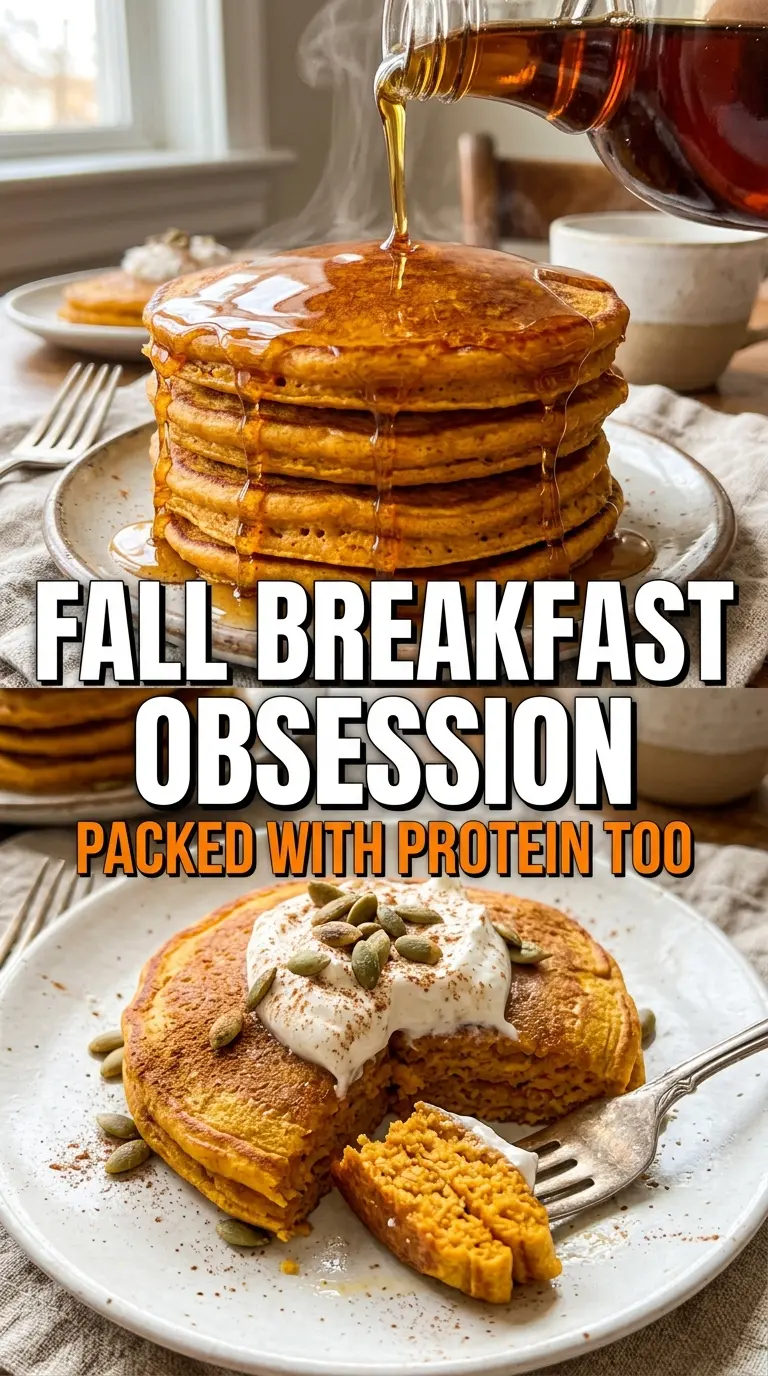
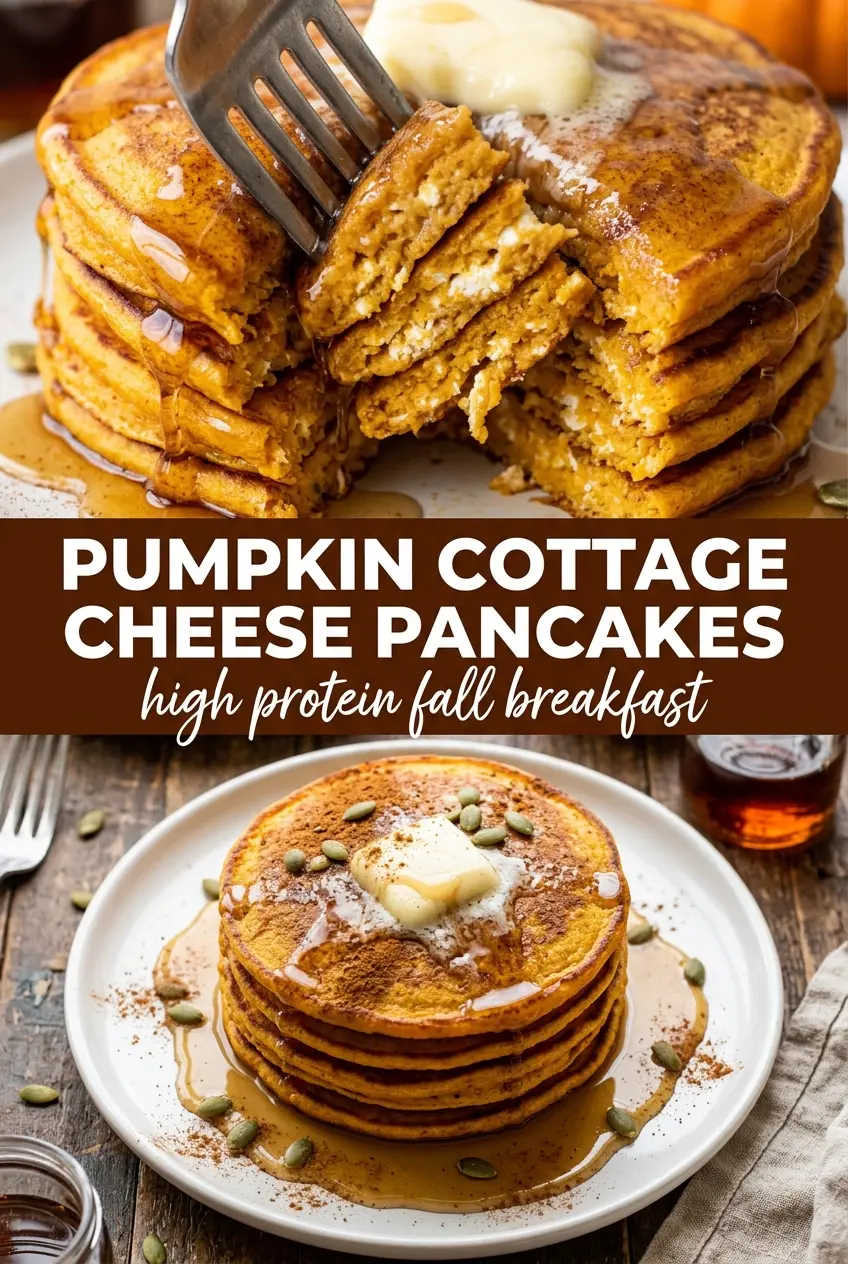
Thick pumpkin cottage cheese pancakes land on the plate with a tender middle, crisp edges, and enough protein to keep breakfast steady instead of slamming into a sugar crash an hour later. They taste like the best parts of pumpkin pancakes, but the cottage cheese gives them a richer, more substantial bite that holds up under maple syrup instead of disappearing into it.
The trick is blending the batter until the cottage cheese disappears and then letting it rest for a few minutes. That short rest gives the oats time to hydrate, which makes the pancakes cook up fluffier and less fragile. Medium-low heat matters here, too. Pumpkin batter browns fast on the outside, and if the pan runs too hot, you get a dark crust before the center has a chance to set.
Below, I’m walking through the small details that make these pancakes stack well, flip cleanly, and stay fluffy instead of dense. There’s also a few variation ideas and storage notes for the days when you want breakfast ready ahead of time.
The batter blended up perfectly smooth and the pancakes stayed fluffy instead of getting gummy. I loved that they held together for flipping and still had that pumpkin spice flavor without tasting heavy.
Pumpkin cottage cheese pancakes with that fluffy center are worth saving for your next slow breakfast.
The Reason These Pancakes Stay Fluffy Instead of Turning Heavy
Pumpkin puree brings moisture, but it also brings weight. That’s where most pumpkin pancakes go wrong: the batter gets stirred like a standard pancake mix, the gluten-free oats absorb too slowly, and the whole thing cooks up dense and soft in the middle. Blending the batter smooth changes that texture completely. It gives you a uniform base so the pancakes rise evenly instead of having little pockets of cottage cheese or streaks of pumpkin that cook at different speeds.
The other thing working in your favor is the cottage cheese. It adds body and protein without making the pancakes taste cheesy once it’s blended well. Use full-fat cottage cheese if you can; it gives the batter a richer mouthfeel and helps the pancakes stay tender. If your pancakes spread too much, the batter was probably too thin or the pan was too hot, and the outside set before the center could lift.
- Pumpkin puree — Use canned pumpkin puree, not pumpkin pie filling. Pie filling is already sweetened and spiced, which throws off both the flavor and the texture.
- Full-fat cottage cheese — This is what gives the pancakes their creamy body. Low-fat works in a pinch, but the pancakes won’t taste as rich and can come off a little drier.
- Rolled oats or oat flour — Rolled oats need a strong blender to break down fully; oat flour is the easier swap if you want a smoother batter and slightly more delicate crumb.
- Eggs — They hold the batter together and help the pancakes puff. There isn’t a great one-to-one substitute here, since removing them changes the structure completely.
What Each Ingredient Is Doing in the Batter
- Maple syrup — Just a tablespoon adds enough sweetness to round out the pumpkin and spice without making the batter taste like dessert.
- Pumpkin pie spice and cinnamon — Together, they create that classic warm spice flavor, but the cinnamon also deepens the color on the griddle. If you’re out of pumpkin pie spice, use extra cinnamon with a pinch of ginger and nutmeg.
- Baking powder — This gives the batter lift. Don’t skip it, because pumpkin and cottage cheese are both heavy enough to flatten the pancakes without a little help.
- Butter for cooking — Butter gives the pancakes those crisp, browned edges and the best flavor. If it starts smoking, the pan is too hot and the pancakes will brown before they cook through.
How to Blend, Rest, and Flip Them Without Breaking the Stack
Blend Until the Batter Looks Uniform
Add everything to the blender and run it until the cottage cheese is fully broken down and the batter looks smooth, with no oat flecks or curds left behind. If you can still see little white bits, keep blending. Those bits can create uneven pockets that steam instead of setting. The batter will be thick, but it should pour in a slow ribbon, not plop out like dough.
Let the Oats Hydrate Before They Hit the Pan
Five minutes of resting changes the texture more than people expect. The oats absorb some moisture, the batter thickens slightly, and the pancakes cook with cleaner edges. If you skip this step, the center can stay loose while the outside browns. Heat the griddle during the rest so you’re ready to go as soon as the batter is set up.
Cook Low and Slow for a Better Middle
Butter the pan, then drop the batter in 1/4-cup portions and let them spread on their own. Medium-low heat is the sweet spot here. If the heat is too high, the bottoms darken before the center firms up, and flipping becomes messy. Wait until bubbles appear and the edges look matte and set before you turn them. That’s the sign the pancake has enough structure to handle the flip.
Finish With a Light Hand on the Second Side
The second side usually needs less time than the first, about 2 to 3 minutes. Pressing down with the spatula squeezes out the air you just built, so leave them alone once they’re flipped. You’re looking for a golden crust and a springy center that pushes back lightly when touched. Stack them right away and top with butter so the heat melts it into every layer.
How to Adapt These Pancakes for Different Mornings
Gluten-Free With Oat Flour
Use oat flour instead of rolled oats for the smoothest batter and the most even pancakes. The texture stays tender, and you don’t need to worry about a blender handling whole oats as hard. If you’re sensitive to gluten, use certified gluten-free oats or oat flour.
Dairy-Free Version
Swap in a thick dairy-free yogurt-style cottage cheese alternative if you have one that blends smoothly. The flavor will be a little less rich, and the pancakes may brown a touch faster, but the structure still works as long as the substitute isn’t watery.
Extra Protein and a Heartier Crumb
Keep the recipe as written and add chopped pecans to the batter or on top. The nuts add crunch and make the stack feel more breakfast-worthy without changing the batter’s balance. I’d add them after blending so they stay in pieces instead of getting chopped into dust.
Storage and Reheating
- Refrigerator: Store in an airtight container for up to 4 days. They stay moist, but the edges soften after the first day.
- Freezer: These freeze well. Layer parchment between pancakes and freeze in a sealed bag for up to 2 months.
- Reheating: Toast them gently in a skillet or toaster oven until warmed through. The biggest mistake is microwaving too long, which makes the cottage cheese base turn rubbery instead of tender.
Answers to the Questions Worth Asking
Pumpkin Cottage Cheese Pancakes
Ingredients
Equipment
Method
- Blend canned pumpkin puree, full-fat cottage cheese, large eggs, vanilla extract, rolled oats or oat flour, pumpkin pie spice, cinnamon, baking powder, maple syrup, and salt until smooth.
- Let the batter rest for 5 minutes while the griddle heats over medium-low heat, so it thickens slightly and cooks up fluffy.
- Grease the griddle with butter, then pour 1/4 cup batter per pancake.
- Cook for 3–4 minutes until bubbles form on top and the edges look set.
- Flip the pancakes and cook 2–3 more minutes until golden on the second side.