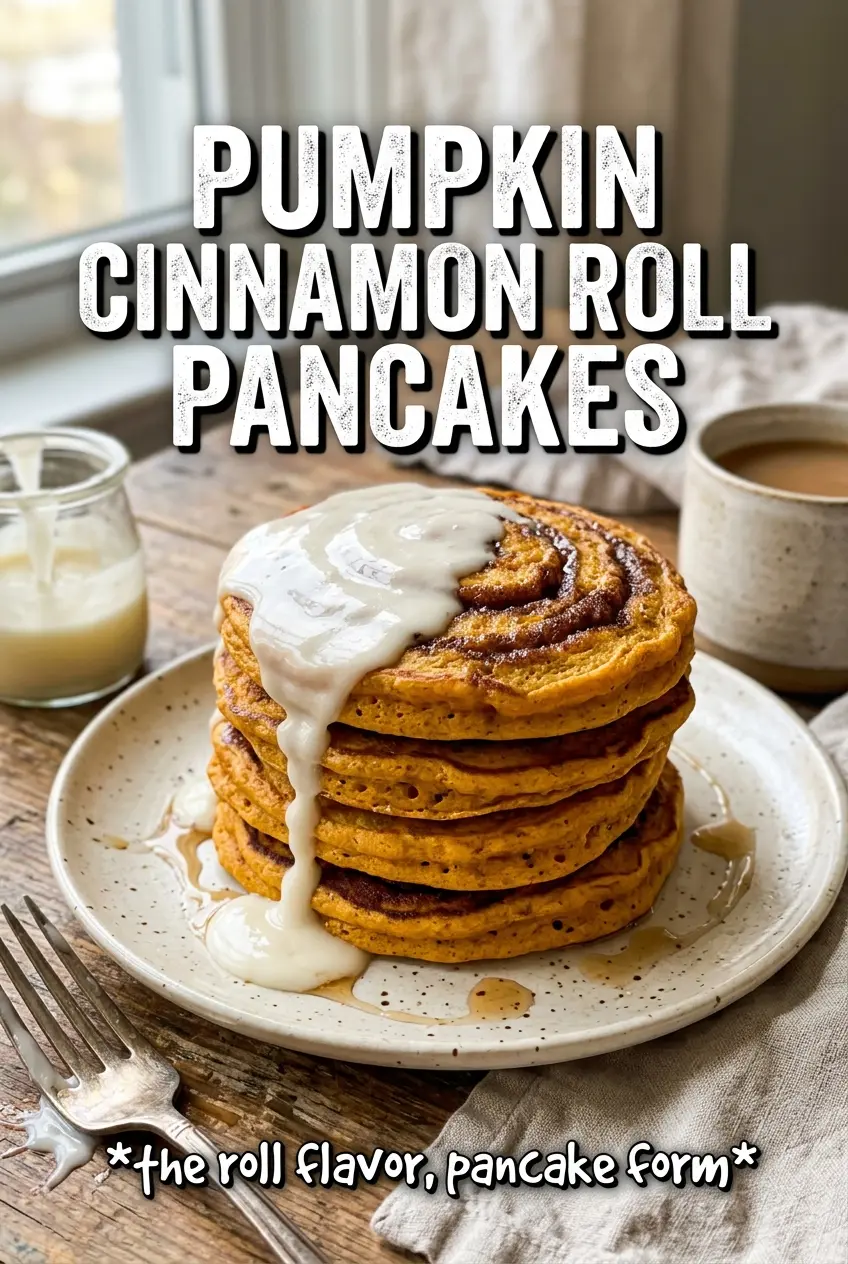
Pumpkin cinnamon roll pancakes hit that sweet spot between a weekend breakfast and a bakery-style treat. The pancakes stay tender and fluffy, the cinnamon swirl melts into the top as they cook, and the cream cheese glaze brings everything together in one sticky, warm stack. They look like you spent a lot more effort than you actually did, which is the kind of breakfast I’ll happily make on repeat.
The trick is keeping the pancake batter on the thicker side so the cinnamon spiral doesn’t sink and disappear. I also use pumpkin puree for moisture and flavor, but not so much that the batter turns heavy. The swirl mixture needs to be smooth enough to pipe cleanly, and the pan has to be at steady medium heat so the bottoms set before the sugar in the swirl starts scorching.
Below, I’ve laid out exactly how to keep the swirl defined, how to avoid gummy centers, and how to make the glaze pourable instead of thick and clumpy. If you’ve ever had pumpkin pancakes that baked up dense or a cinnamon topping that burned before the middle cooked, this version fixes both problems.
The cinnamon swirl stayed right on top instead of sinking, and the glaze melted into all the little ridges. My kids said they tasted like cinnamon rolls but were easier to eat.
Save these pumpkin cinnamon roll pancakes for a breakfast that stacks fluffy pumpkin pancakes with a clean cinnamon swirl and cream cheese glaze.
The Part That Stops the Swirl From Disappearing
The cinnamon filling is what makes these pancakes taste like cinnamon rolls instead of just pumpkin pancakes with a little extra sweetness on top. The biggest mistake is making the swirl too thin. If it’s runny, it spreads into the batter before the first side sets, and you lose that pretty spiral completely.
Keep the swirl mixture thick, smooth, and pipeable. It should move easily through a squeeze bottle or piping bag, but it shouldn’t pour like sauce. Medium heat matters here too. Too hot, and the sugar burns before the pancake cooks through. Too low, and the swirl melts into the batter instead of sitting on top long enough to define itself.
What Each Ingredient Is Actually Doing in This Stack
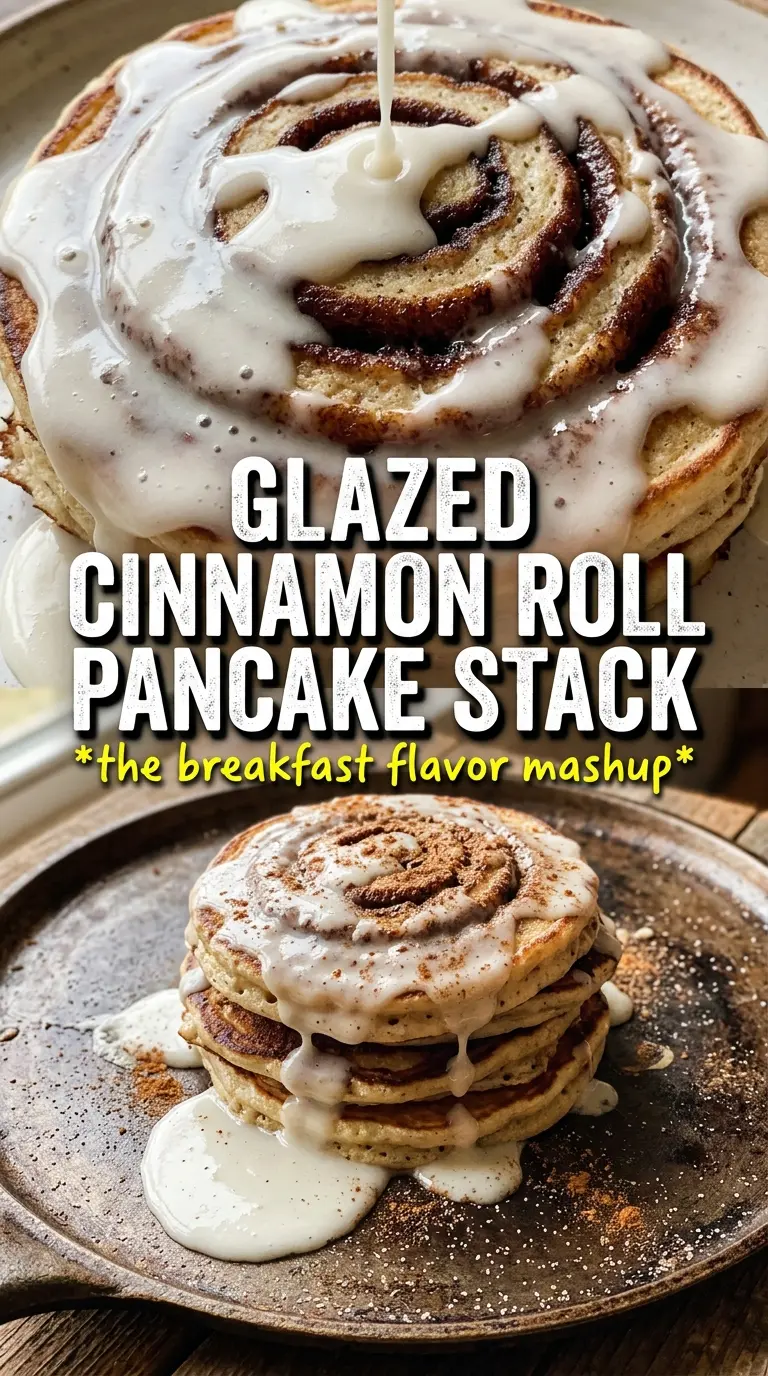
- Pumpkin puree — This gives the pancakes their flavor, color, and soft texture. Use plain pumpkin puree, not pumpkin pie filling, or you’ll throw off the spice and sugar balance.
- Buttermilk — The acidity helps the baking soda work and keeps the pancakes light. If you don’t have it, mix milk with a little lemon juice or vinegar and let it sit for 5 minutes, but the tang won’t be quite the same.
- Brown sugar in the swirl — This is what makes the filling taste like cinnamon roll centers. White sugar won’t give you the same caramel note or that sticky melt on the griddle.
- Cream cheese — The glaze needs cream cheese for that classic frosting flavor and a little body. Softened cream cheese blends smoothly; cold cream cheese leaves little lumps that never fully whisk out.
- Powdered sugar — This thickens the glaze without graininess. If it gets too thick, add milk a teaspoon at a time until it drizzles in ribbons.
Building the Batter, Swirl, and Glaze Without a Mess
Mix the swirl first
Stir the melted butter, brown sugar, and cinnamon until the mixture looks glossy and smooth, then move it into a squeeze bottle or piping bag. If you try to pipe a lumpy filling, it will clog and drag through the batter instead of drawing a clean spiral. Set it aside while you make the pancake batter so the sugar has a chance to stay suspended instead of separating.
Keep the batter just barely mixed
Whisk the dry ingredients together, then fold in the pumpkin mixture until the flour streaks disappear. Stop there. Overmixing builds gluten and turns the pancakes dense, and with pumpkin in the batter, that heaviness shows up fast. A few tiny lumps are fine; they’ll cook out on the griddle.
Pipe the swirl the moment the batter hits the pan
Pour about 1/4 cup batter onto a lightly greased griddle, then pipe the cinnamon spiral right away, starting in the center and working outward. The batter needs to be fluid enough to settle around the swirl, but thick enough to hold it near the surface. If the swirl sinks, the batter is too thin or the pan is too cool.
Flip when the edges set
Cook until bubbles form on top and the edges look dry and set, usually about 3 minutes, then flip carefully and cook the second side for about 2 minutes. Don’t press the pancake down with the spatula. That squeezes out the air that keeps them fluffy and can smear the swirl into the batter.
Make Them Dairy-Free
Use a rich plant-based milk with a splash of vinegar in place of the buttermilk, and swap in vegan butter for both the pancakes and the swirl. The pancakes stay tender, but the glaze will need a dairy-free cream cheese that whips smoothly, or it can turn loose and slightly gritty.
Make Them Gluten-Free
A 1:1 gluten-free flour blend works best here, especially one that already includes xanthan gum. The batter may look a little thicker, which is normal; let it rest for 5 to 10 minutes so the flour hydrates before cooking. That rest helps keep the pancakes from feeling sandy.
Skip the Glaze for a Less Sweet Plate
The pancakes and swirl already carry plenty of sweetness, so you can leave off the cream cheese glaze and serve them with warm maple syrup or a dusting of powdered sugar. Without the glaze, the cinnamon swirl reads a little more like coffee cake and a little less like dessert.
Storage and Reheating
- Refrigerator: Store leftover pancakes in an airtight container for up to 3 days. The swirl will firm up a bit in the fridge, but the flavor holds.
- Freezer: Freeze cooked pancakes in a single layer, then stack with parchment between them. They thaw and reheat well, though the glaze is best made fresh.
- Reheating: Warm them in a skillet over low heat or in the microwave in short bursts. High heat dries out the pancakes and can make the swirl taste burned before the center is hot.