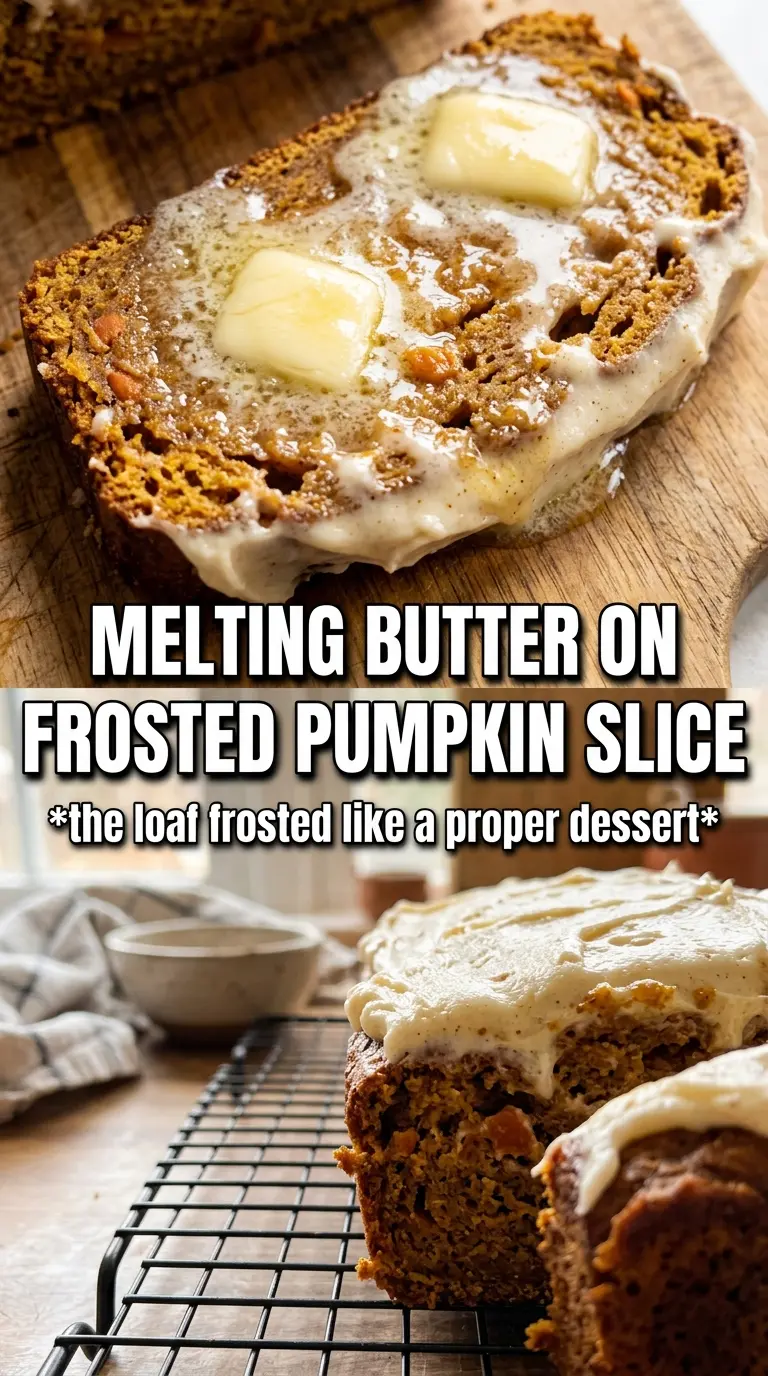
Soft, warmly spiced pumpkin bread gets even better when it’s topped with a thick layer of cream cheese frosting that melts just enough into the crumb without sliding off the sides. The loaf stays tender for days, the top bakes up with a gentle dome, and the frosting adds that tangy-sweet finish that makes each slice feel a little more special than the usual quick bread.
What makes this version work is the balance: pumpkin puree brings moisture, brown sugar adds a deeper caramel note, and just enough spice keeps the loaf from tasting flat. The batter is mixed only until the flour disappears, which keeps the crumb from turning dense or tough. Then the loaf cools completely before the frosting goes on, because warm bread will loosen the frosting and send it right down the sides.
Below, I’ve included the small details that matter most here — how to tell when the loaf is actually done, how thick the frosting should be, and a few swaps that keep the texture intact if you need to adjust the recipe.
The loaf stayed soft all the way through, and the frosting set up thick enough to slice cleanly. I had a piece with coffee the next morning and it was even better after the flavors settled.
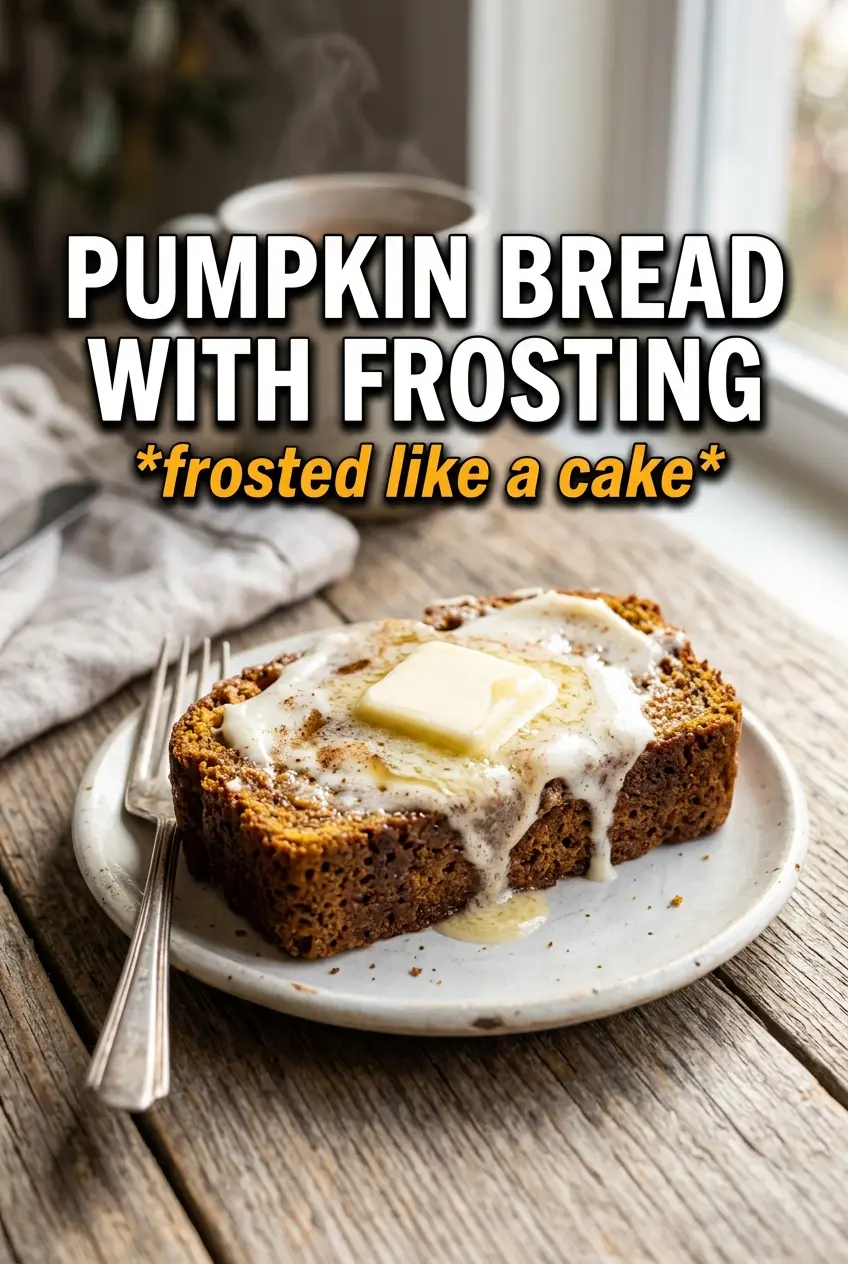
Pumpkin bread with cream cheese frosting is the kind of loaf that stays moist for days, so it’s worth keeping on hand for coffee breaks and quick breakfasts.
The Reason Pumpkin Bread Stays Tender Instead of Heavy
Pumpkin bread goes wrong when the batter is overmixed or the flour-to-pumpkin balance is off. Too much stirring builds gluten, and too much flour can turn a loaf that should be soft and plush into something dry and tight. Here, the pumpkin puree does more than add flavor; it brings the kind of moisture that keeps the crumb supple even after a day or two on the counter.
The other thing that matters is heat. Bake it at 350°F and let the loaf rise steadily instead of blasting it with high heat, which can set the outside before the center has time to cook through. If the top looks browned but the middle still gives when you press it lightly, it needs more time. A toothpick should come out clean or with just a few moist crumbs, not wet batter.
What Each Ingredient Is Actually Doing in This Loaf
- Pumpkin puree — This is the moisture engine in the recipe, and canned pumpkin gives the most reliable texture. Don’t swap in pumpkin pie filling, which is already sweetened and spiced; it throws off both flavor and structure.
- Brown sugar and granulated sugar — The mix gives you both deep flavor and a clean sweetness. Brown sugar adds a little chew and caramel note, while granulated sugar helps the crumb stay lighter.
- Oil — Oil keeps the loaf soft longer than butter does. If you use melted butter instead, the bread will taste richer but it won’t stay as moist over several days.
- Cream cheese frosting — Full-fat cream cheese gives the frosting that tangy, thick finish that offsets the sweet loaf. Low-fat cream cheese can work in a pinch, but it tends to make a softer, looser frosting.
- Cinnamon and pumpkin pie spice — These spices should smell warm and fresh, not dusty. If yours have been sitting in the cabinet for years, the loaf will taste flatter than it should.
Mixing the Batter, Baking the Loaf, and Frosting It Without a Mess
Whisk the Dry Ingredients First
Whisk the flour, baking soda, spice, cinnamon, and salt together before anything else. That gives the leavening and spices an even spread through the batter, which helps the loaf bake consistently instead of tasting spicy in one bite and plain in the next. If you see streaks of baking soda after mixing, keep whisking a little longer; uneven leavening can leave bitter pockets.
Build the Pumpkin Base Until It Looks Smooth
Stir the pumpkin puree, sugars, oil, eggs, and vanilla until the mixture looks glossy and uniform. The eggs should disappear completely, and the brown sugar should no longer look grainy. If the wet mixture looks curdled, keep going for another few seconds — that usually means the ingredients just need a little more mixing to come together.
Fold, Don’t Beat
Add the dry ingredients to the wet mixture and fold just until you stop seeing dry flour. The batter should look thick and slightly lumpy, not silky smooth. Overmixing is the easiest way to make pumpkin bread heavy, and once the flour is worked too hard, you can’t undo it. Scrape the bottom of the bowl so no flour hides there, then stop.
Cool Completely Before Frosting
Let the loaf cool all the way in the pan for a bit, then on a rack until it’s fully room temperature. Frosting warm bread is a recipe for sliding, soaking, and a messy top that never really sets. The cream cheese frosting should be thick enough to spread in swoops; if it feels loose, add a little more powdered sugar, a spoonful at a time.
Ways to Adjust It Without Losing the Texture
Dairy-Free Version for the Loaf
The bread itself is already dairy-free as written, so the main swap is the frosting. Use a dairy-free cream cheese and plant-based butter that holds its shape when softened. The texture will still be creamy, but expect a slightly softer set than classic cream cheese frosting.
Gluten-Free Flour Blend Swap
A 1:1 gluten-free baking blend can replace the flour if it includes xanthan gum. The loaf will be a little more delicate, so let it cool fully before slicing or it can crumble at the center.
Extra Cinnamon on Top
If you like a stronger spice finish, add a little more cinnamon to the frosting and dust the top lightly after spreading. That gives the loaf a more pronounced bakery-style finish without changing the batter.
Storage and Reheating
- Refrigerator: Store the frosted loaf covered for up to 5 days. The crumb stays moist, but the frosting firms up in the fridge.
- Freezer: Freeze the unfrosted loaf tightly wrapped for up to 2 months. Thaw at room temperature, then frost after it’s fully defrosted for the cleanest texture.
- Reheating: Warm individual slices for a few seconds in the microwave if you want the loaf a little softer, but don’t heat long enough to melt the frosting. If you’re serving it from the fridge, let it sit out for 15 to 20 minutes first so the frosting loosens slightly.
Questions I Get Asked About This Recipe
Pumpkin Bread With Cream Cheese Frosting
Ingredients
Equipment
Method
- Preheat oven to 350F, then grease a 9x5 loaf pan with a thin layer so the loaf releases cleanly.
- Whisk together the flour, baking soda, pumpkin pie spice, cinnamon, and salt until evenly combined and streak-free.
- Whisk the pumpkin puree, sugar, brown sugar, oil, eggs, and vanilla until smooth and glossy.
- Fold the wet mixture into the dry mixture until just combined, stopping as soon as no dry flour remains.
- Pour the batter into the greased loaf pan and smooth the top so it bakes evenly.
- Bake for 60-65 minutes at 350F until a toothpick inserted in the center comes out clean with only a few moist crumbs.
- Cool the loaf completely in the pan or on a rack so the frosting won’t melt or slide.
- Beat the softened cream cheese and softened unsalted butter until smooth and creamy.
- Add powdered sugar, vanilla, and cinnamon, then beat until fully incorporated and thick.
- Mix in 2-3 tablespoons milk as needed to reach a thick but spreadable frosting texture.
- Spread generously over the cooled loaf, then dust with cinnamon for a finished look and flavor.
- Serve after frosting sets slightly so each slice holds its shape.