Piña Colada Zucchini Bread bakes up with a tender crumb, a little tropical sweetness, and just enough coconut to make every slice feel special. The pineapple keeps it from tasting heavy, the zucchini keeps it soft for days, and the toasted coconut on top gives the loaf a bakery-style finish that makes it worth pulling out before breakfast or serving with coffee.
What makes this loaf work is balance. The crushed pineapple brings moisture and bright flavor, but it has to be drained well or the bread turns dense in the middle. The zucchini needs the same attention. Once it’s grated, squeeze it dry so it adds softness without watering down the batter. Coconut oil and coconut cream build that rich piña colada flavor, while a small amount of coconut extract pushes it just far enough without tasting artificial.
Below, I’ll walk through the parts that matter most: how to keep the loaf from sinking, why the glaze should wait until the bread has cooled a bit, and the easy swaps that still keep the tropical character intact.
The loaf stayed incredibly moist for three days, and squeezing the zucchini dry made a huge difference. The pineapple flavor came through without making the crumb soggy, and the coconut glaze set up just enough to slice cleanly.
Save this Piña Colada Zucchini Bread for the mornings when you want a tropical loaf with coconut glaze and a tender, pineapple-kissed crumb.
The Pineapple and Zucchini Need Different Treatment
The most common mistake with fruit-and-vegetable quick breads is treating every moist ingredient the same way. Pineapple and zucchini both carry a lot of water, but they behave differently in the batter. Pineapple brings sweetness and acidity along with extra liquid, while zucchini gives the loaf structure-softening moisture without much flavor of its own. If either one is left too wet, the middle turns gummy before the top has a chance to brown properly.
That’s why this loaf depends on two small prep steps that matter more than most people expect: drain the pineapple thoroughly and squeeze the zucchini dry. The batter should look thick and spoonable, not loose. Once the dry ingredients go in, mix only until the flour disappears. Overmixing develops too much gluten and turns a tender breakfast loaf into something chewy and tight.
What Each Tropical Ingredient Is Doing Here
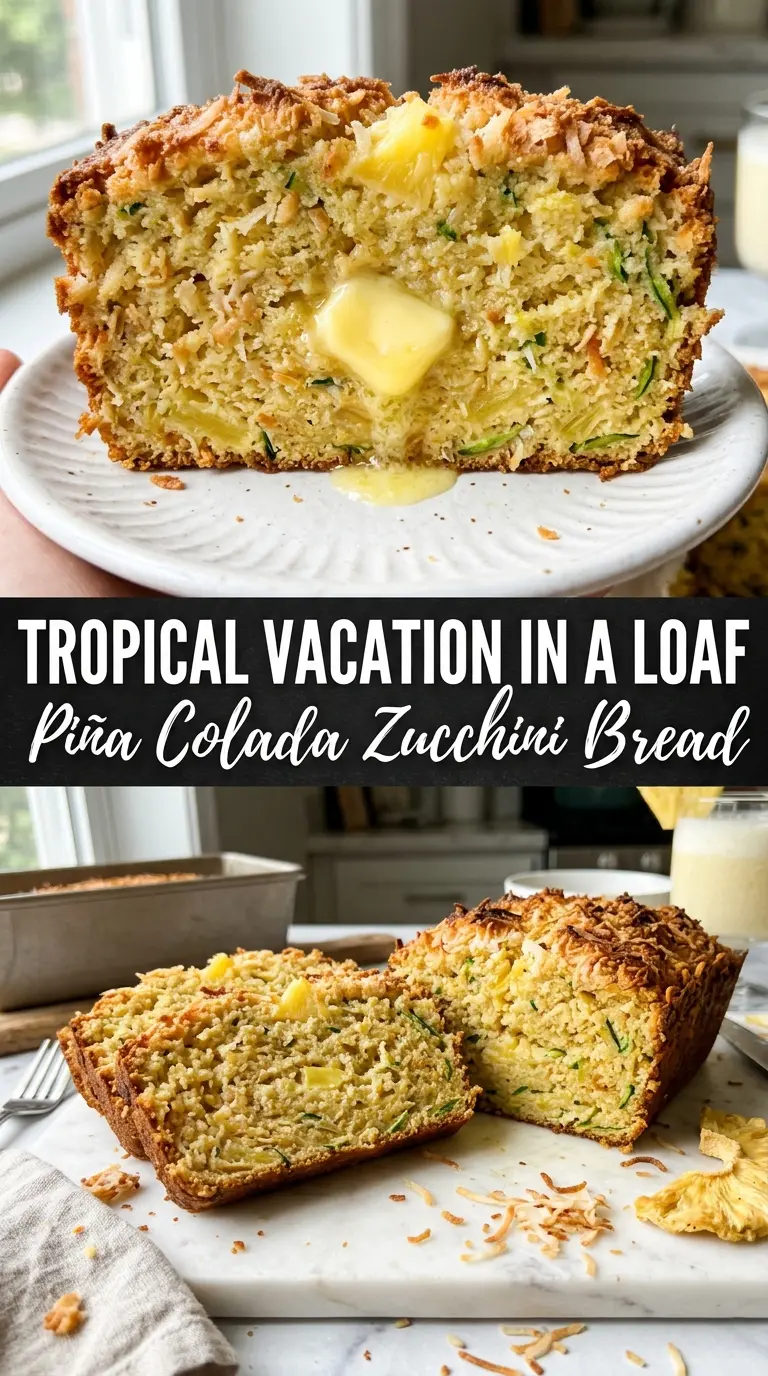
- Crushed pineapple — This is the bright, juicy part of the loaf. Use canned pineapple for consistency, but drain it well and press out extra liquid if needed. Chunks are fine, but crushed pineapple distributes flavor more evenly and keeps the crumb softer.
- Zucchini — It disappears into the loaf and keeps the texture plush. Grate it fine, then squeeze it in a clean kitchen towel or several paper towels until it no longer drips. There isn’t a substitute that behaves the same way, but finely grated peeled apple can mimic some of the moisture if you’re out of zucchini.
- Coconut oil and coconut cream — These build the coconut base and give the bread a richer mouthfeel than butter alone. Coconut oil brings the piña colada note, while coconut cream adds body. If you need a swap, melted butter works in a pinch, but you’ll lose some of the tropical flavor.
- Coconut extract — This is the ingredient that makes the coconut flavor read clearly in a baked loaf instead of disappearing behind flour and pineapple. Keep it measured; too much can taste candy-like. If you don’t have it, use extra vanilla, but expect a softer coconut presence.
- Sweetened shredded coconut — It gives little pockets of texture and extra sweetness. Unsweetened coconut works if that’s what you have, but the loaf will taste a little less festive and the topping won’t toast with the same caramelized finish.
Building the Batter Without Losing the Tender Crumb
Whisk the Dry Ingredients First
Start by whisking the flour, baking soda, baking powder, and salt together until the mixture looks even. That quick step keeps the leaveners from clumping in one spot, which matters in a loaf this moist. If the baking soda isn’t distributed well, you can get a bitter patch or a sunken streak in the center.
Mix the Wet Ingredients Until Smooth
Beat the sugar, eggs, coconut oil, coconut cream, vanilla, and coconut extract until the mixture looks glossy and uniform. The oil should be fully blended in, with no slick pools sitting on top. If the coconut oil has started to firm up, warm it just enough to melt it fully before mixing, or it can leave little specks in the batter.
Fold in the Fruit and Finish Gently
Stir in the drained pineapple and squeezed zucchini first, then add the dry ingredients and fold just until no flour streaks remain. The batter should still look a little rough at this point, and that’s fine. Fold in the shredded coconut last so it stays distributed instead of breaking down into the batter, then get the pan into the oven right away so the leaveners can do their job.
Bake Until the Center Is Set, Not Dry
Slide the loaf into a 350°F oven and bake until the top is deeply golden and a toothpick comes out clean or with a few moist crumbs. If the top browns too quickly before the center is done, lay a loose piece of foil over it for the last 15 minutes. The loaf should spring back lightly when touched and pull just slightly from the sides of the pan.
Make It Dairy-Free Without Changing the Texture
This loaf is already very close to dairy-free. Use coconut cream in the batter and the glaze, and you’re there. The coconut flavor gets stronger, which works in this recipe, but the bread may taste a little more pronouncedly tropical than the original version.
How to Make It Less Sweet
Cut the granulated sugar back slightly and use unsweetened shredded coconut instead of sweetened. The loaf will still be moist and fragrant, but the pineapple and glaze will stand out more. I wouldn’t skip the glaze entirely unless you want a much more breakfast-bread, less dessert-like result.
Turning It Into Muffins
Scoop the batter into lined muffin cups and start checking them much earlier, usually around 18 to 22 minutes. Muffins bake faster and dry out if you wait for the same visual cues as a loaf. They’re done when the tops spring back and a tester comes out with just a few crumbs.
Storage and Reheating
- Refrigerator: Store covered for up to 4 days. The glaze will soften, but the crumb stays moist.
- Freezer: Freeze slices or the whole cooled loaf tightly wrapped for up to 2 months. Thaw at room temperature before glazing, or freeze without glaze for the cleanest texture.
- Reheating: Warm individual slices in the microwave for 10 to 15 seconds or in a low oven. Don’t overheat them, or the pineapple makes the crumb feel rubbery instead of soft.
Answers to the Questions Worth Asking
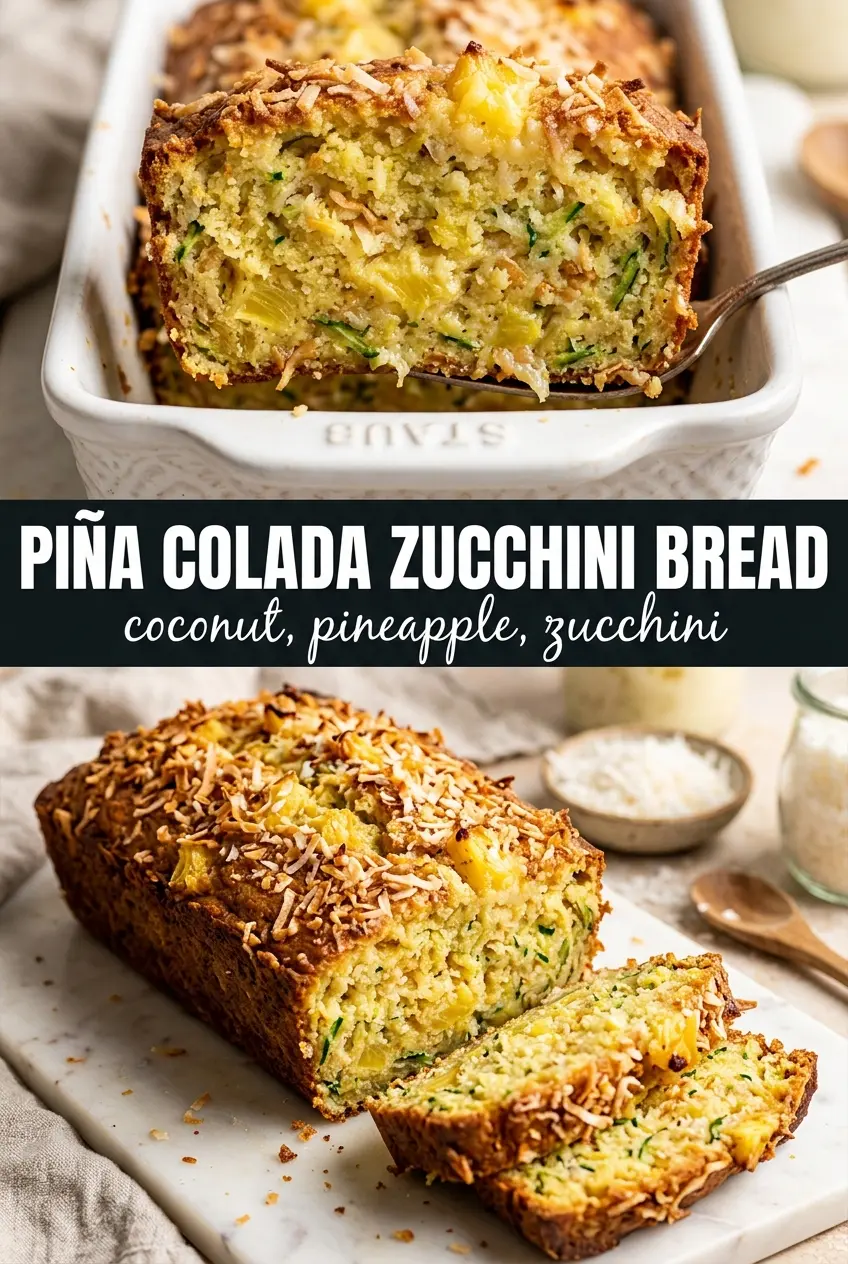
Piña Colada Zucchini Bread
Ingredients
Equipment
Method
- Preheat the oven to 350°F and grease a 9x5 loaf pan.
- Whisk all-purpose flour, baking soda, baking powder, and salt together.
- Beat granulated sugar, eggs, melted coconut oil, coconut cream, vanilla extract, and coconut extract until smooth.
- Stir in crushed pineapple that is well drained and grated zucchini that is squeezed dry.
- Fold the dry ingredients into the wet ingredients just until combined, then fold in sweetened shredded coconut.
- Pour the batter into the prepared pan and bake at 350°F for 55–65 minutes, until a toothpick comes out clean.
- Cool the loaf for 15 minutes.
- Mix the coconut glaze (powdered sugar, coconut cream, and coconut extract) and drizzle it over the warm bread.
- Scatter toasted coconut on top for a finishing texture cue.