Paula Deen banana bread bakes up with the kind of rich, buttery crumb that lands somewhere between classic banana bread and a soft little loaf cake. The crust turns deeply golden, the center stays moist, and each slice carries that old-fashioned Southern comfort people come back for when plain banana bread feels too light.
The difference here is the butter. It gets beaten with sugar until pale and fluffy, which gives the loaf a finer, denser crumb than the usual quick-mix version. Ripe bananas still bring the flavor and moisture, but the texture leans richer and more tender, almost like a butter loaf with banana running through it. That’s why this one tastes especially good warm, with a little extra butter melting into the cut surface.
Below, I’ll show you the one step that gives this loaf its signature texture, plus the best way to tell when it’s baked through without drying it out. There’s also a simple pecan variation and a few storage notes so the loaf stays just as good on day two.
The butter got whipped with the sugar into the lightest base, and the loaf baked up with a tight, moist crumb that sliced cleanly even while it was still warm.
Save this Paula Deen banana bread for the kind of loaf that bakes up buttery, golden, and sliceable enough for breakfast or an afternoon snack.
The Butter-Sugar Creaming Step That Gives This Loaf Its Fine Crumb
Most banana breads are mixed like muffins: wet ingredients in one bowl, dry in another, then stir and bake. That works, but it gives you a looser, more rustic crumb. This loaf starts by beating softened butter and sugar until the mixture turns noticeably lighter in color and fluffier in texture. That step traps air, and it’s what helps the finished bread slice with a soft, even crumb instead of turning dense in a heavy, under-aerated way.
The other thing that matters here is not overmixing after the flour goes in. Once the dry ingredients are added, stir just until you stop seeing dry streaks. If you keep going, the loaf gets tight and a little chewy instead of tender. And because this recipe uses a full stick-and-a-half style butter ratio, it bakes up richer than standard banana bread, so the line between “done” and “dry” is narrower than usual.
What the Bananas, Butter, and Pecans Are Each Doing Here
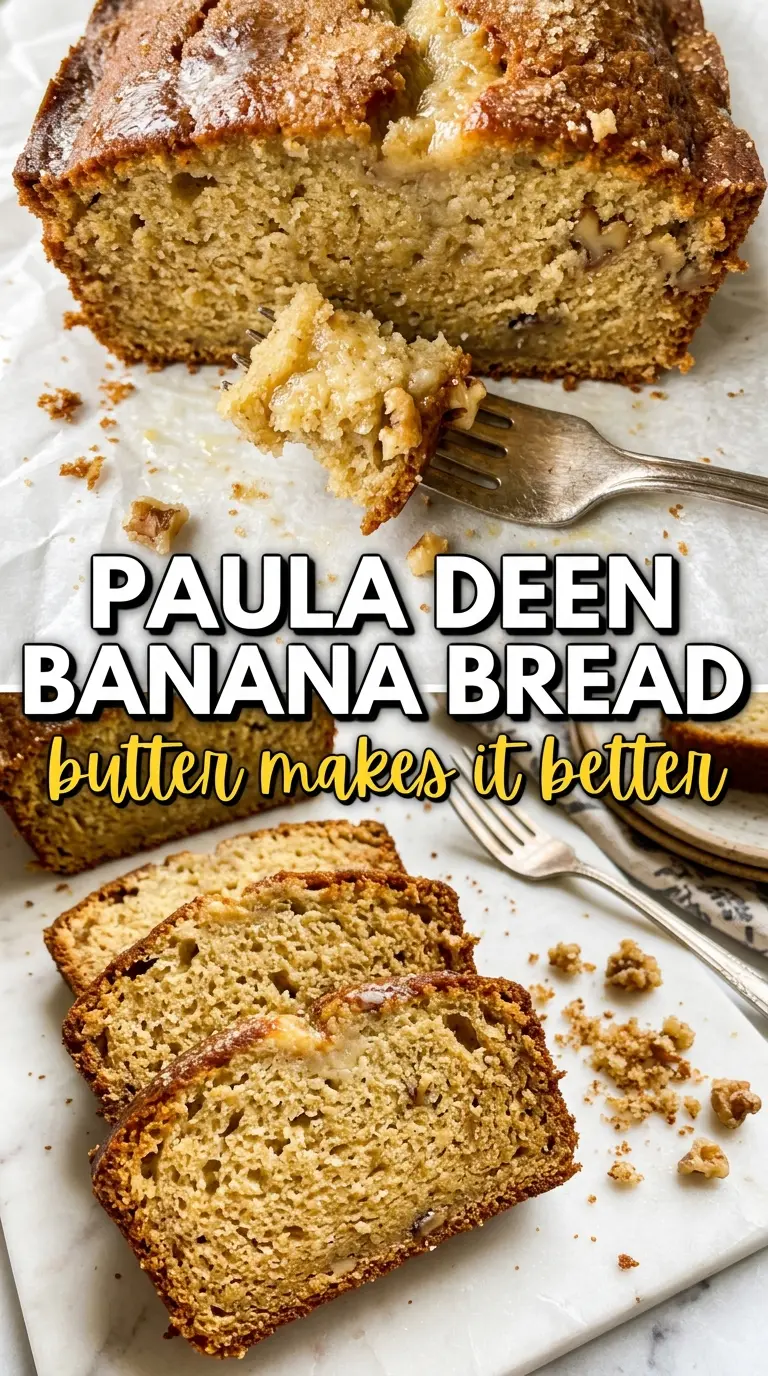
- Ripe bananas — Use bananas with plenty of brown spotting, or even mostly black peels. That’s where the strongest banana flavor lives, and the extra softness helps the loaf stay moist. If your bananas are only yellow, the bread will still work, but the flavor will be flatter.
- Butter — This is the ingredient that gives the loaf its Paula Deen-style richness. Softened butter creams with the sugar and bakes into a tender, almost pound-cake-like crumb. Don’t swap in oil if you want the same texture; oil keeps things moist, but it won’t give you that buttery, sliceable structure.
- Sugar — Regular granulated sugar is enough here. It sweetens, but it also helps whip air into the butter during creaming and encourages that deep golden crust. Brown sugar would make the loaf softer and a little more molasses-heavy, which changes the character of the recipe.
- Pecans — Optional, but they add a nice Southern-style crunch and a little bitterness that keeps the loaf from tasting one-note. Chop them fairly small so they distribute evenly and don’t tear through the crumb.
- All-purpose flour — This gives the loaf its structure without making it stiff. Measure it lightly; packed flour is one of the fastest ways to end up with a dry banana bread.
Building the Loaf So It Stays Moist Without Turning Heavy
Whipping the Butter Base
Beat the softened butter and sugar together until the mixture looks pale, fluffy, and a little increased in volume. Four minutes is about right with a stand mixer, a touch longer by hand. If the butter is too cold, it won’t cream properly; if it’s melted, you lose the air that gives this loaf its lighter crumb. The mixture should look almost satiny before the eggs go in.
Adding the Bananas Without Breaking the Batter
Beat in the eggs one at a time, then stir in the mashed bananas and vanilla. The batter may look slightly curdled at this stage, and that’s fine. Bananas are wet, and once the flour goes in everything comes back together. Use ripe bananas mashed with some texture left in them rather than a perfectly smooth puree; a little texture gives the loaf a better bite.
Finishing the Batter Gently
Fold in the flour, baking soda, and salt just until combined, then stop. Overmixing after the flour goes in builds too much gluten, and that’s the easiest way to lose the tender crumb this loaf is known for. If you’re using pecans, fold them in at the very end so they stay evenly distributed instead of sinking to the bottom. The batter will be thick, and that’s what you want.
Baking Until the Center Sets
Scrape the batter into a well-greased 9×5 loaf pan and bake at 350°F for 60 to 70 minutes. Look for a deeply golden top, a crack running through the center, and a toothpick that comes out clean or with a few moist crumbs. If the top darkens too quickly before the center sets, tent it loosely with foil for the last 15 minutes. Let it cool in the pan for 15 minutes before turning it out, or it can break while it’s still fragile.
How to Adapt This Banana Bread for Nuts, Dairy-Free Baking, or Smaller Batches
Leave Out the Pecans for a Classic Loaf
The pecans are completely optional. Skipping them gives you a smoother, more cake-like slice and keeps the banana flavor front and center. If you love a little crunch but not too much, use 1/4 cup instead of the full amount.
Dairy-Free Version With a Different Finish
Use a solid plant-based butter stick in place of the dairy butter. The loaf will still be tender, but you’ll lose a little of the rich, almost pound-cake depth that real butter brings. Choose a brand made for baking, not a soft tub spread, or the texture can turn greasy.
Make It Less Sweet Without Losing the Crust
You can reduce the sugar to 3/4 cup and still get a good loaf, especially if your bananas are very ripe. The crust will be a little less caramelized and the crumb will taste more banana-forward. Go lower than that and the bread starts to lose the balance that makes this version work.
Storage and Reheating
- Refrigerator: Store tightly wrapped for up to 5 days. The loaf firms up in the fridge, but the flavor stays good.
- Freezer: Freeze individual slices or the whole loaf, wrapped well and tucked into a freezer bag, for up to 3 months. Thaw at room temperature while still wrapped so the surface doesn’t dry out.
- Reheating: Warm slices in a toaster oven or low oven until just heated through. The common mistake is blasting it in the microwave too long, which makes the butter separate and the crumb turn rubbery.
Questions I Get Asked About This Recipe
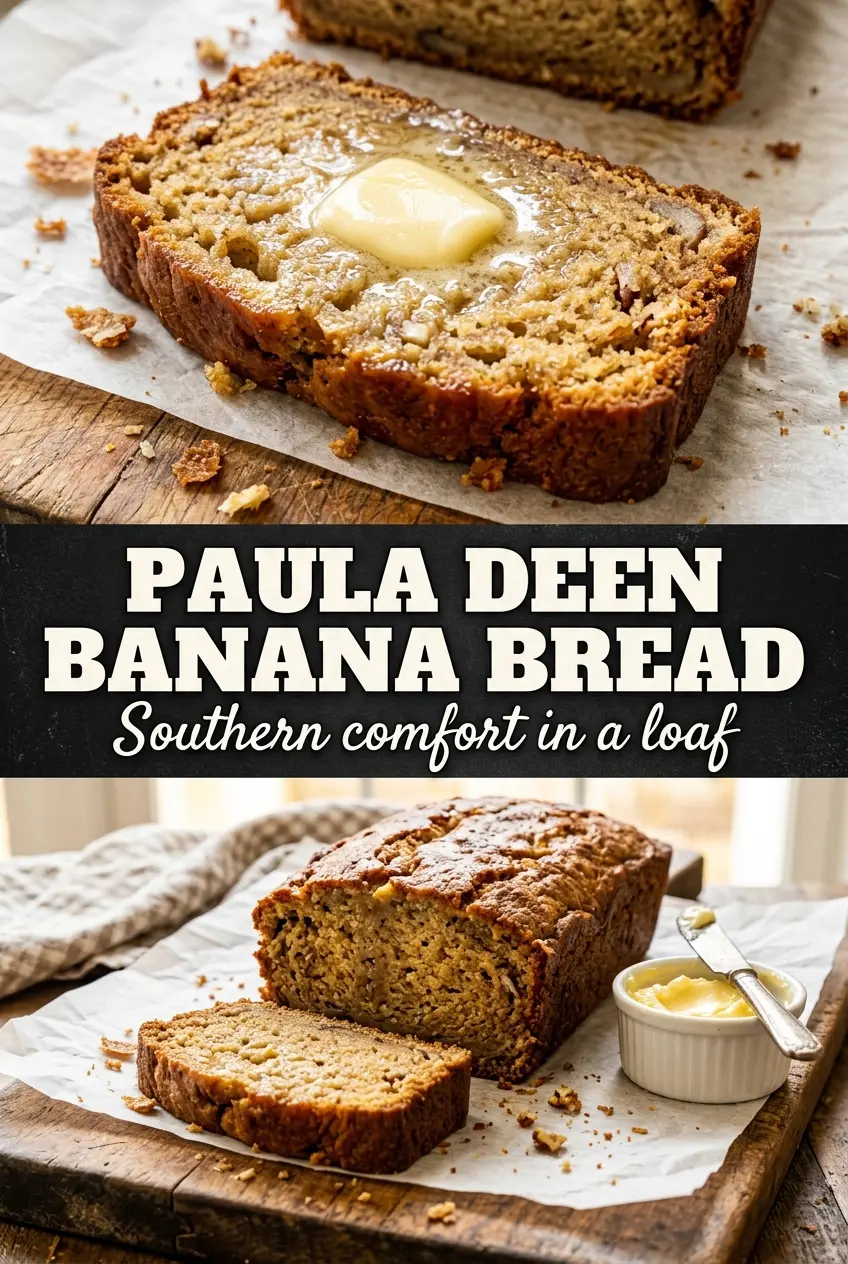
Paula Deen Banana Bread
Ingredients
Equipment
Method
- Preheat the oven to 350°F and generously grease a 9x5 loaf pan, ensuring the sides are well coated so the loaf releases cleanly.
- Beat the softened butter and sugar together until very light and fluffy, about 4 minutes, scraping the bowl as needed for even aeration.
- Beat in the eggs one at a time, mixing well after each addition until the batter looks smooth and cohesive.
- Stir in the mashed bananas and vanilla until evenly distributed, keeping the mixture thick and glossy.
- Fold in the all-purpose flour, baking soda, and salt until just combined, stopping as soon as no dry streaks remain.
- Fold in the pecans if using, distributing them without overmixing the batter.
- Pour the batter into the prepared pan and bake for 60–70 minutes at 350°F until deeply golden and a toothpick inserted in the center comes out clean.
- Cool in the pan for 15 minutes before unmolding, then serve warm with extra butter.