Orange zucchini bread bakes up with a tender crumb, a fresh citrus aroma, and just enough sweetness to feel like a treat without tipping into cake territory. The zucchini keeps the loaf moist for days, while the orange zest and juice lift the whole thing so it tastes bright instead of heavy. A thick orange glaze on top pulls everything together and gives each slice a shiny, bakery-style finish.
What makes this loaf work is balance. The zucchini needs to be squeezed dry so the batter doesn’t turn watery, but it still brings the soft texture that quick breads need. Sour cream adds body and keeps the crumb plush, while the orange zest does most of the flavor work. Juice alone won’t carry this loaf; the zest is what makes it smell and taste like orange from the first slice to the last.
Below you’ll find the small details that matter most, including how dry to squeeze the zucchini, when to glaze the loaf, and the easiest swaps if you need to adjust the dairy or make it a little lighter.
I was worried the zucchini would make it dense, but squeezing it dry made a huge difference. The loaf baked up soft with a really clean orange flavor, and the glaze set just enough to slice without making a mess.
Save this orange zucchini bread for the mornings when you want a moist citrus loaf with a glossy orange glaze and no fussy steps.
The Part That Stops Orange Zucchini Bread From Turning Gummy
The biggest mistake with zucchini quick bread is carrying too much water into the batter. Zucchini looks harmless, but it sheds moisture as it bakes, and if you skip the squeeze, the loaf can turn damp in the center even when the toothpick looks close to clean. Grate it fine, then press it in a clean towel until it feels dry and fluffy instead of wet and packed.
The other thing that keeps this loaf from going flat is how gently you mix once the dry ingredients go in. Overmixing develops the flour and gives you a tighter, tougher crumb. Stop as soon as the flour disappears and a few streaks remain, then fold once or twice more by hand if needed.
- Orange zest — This is the real orange flavor here. Juice adds brightness, but zest carries the fragrant oils that make the loaf taste fresh and aromatic instead of just sweet.
- Sour cream — It adds fat and acidity, which keeps the crumb soft and gives the baking soda something to react with. Plain Greek yogurt works in a pinch, but the loaf will be a little tangier and slightly less rich.
- Vegetable oil — Oil keeps quick bread tender for longer than butter does. If you swap in melted butter, you’ll get a firmer crumb and a more buttery flavor, but it won’t stay as soft on day two.
- Zucchini — Fresh is best, and it needs to be squeezed dry after grating. Frozen zucchini usually holds too much water for a loaf like this unless you drain it aggressively.
What Each Ingredient Is Actually Doing in This Recipe

- Primary ingredient (the star) — Quality matters most. Choose the best you can find.
- Cooking medium (oil, butter, or broth) — This carries flavors and prevents dryness.
- Seasonings (salt, pepper, spices, herbs) — Layer flavors so nothing overpowers. Build depth gradually.
- Aromatics (garlic, onion, herbs) — Cook with fat to bloom flavors. Become the foundation.
- Supporting ingredients — Complement the main ingredient without overpowering it.
- Sauce or liquid (if applicable) — Brings flavors together. Balance richness with acid.
- Acid (lemon, vinegar, wine, or other) — Brightens and prevents flat-tasting results.
- Final finish (garnish, glaze, or sauce) — Prevents one-dimensional taste and adds visual appeal.
Building the Batter So the Loaf Stays Tender
Mixing the Wet Base
Start by beating the sugar, eggs, oil, orange juice, orange zest, sour cream, and vanilla until the mixture looks smooth and a little glossy. You want the sugar mostly dissolved and the eggs fully broken up so the batter bakes evenly. If you see streaks of egg white, keep mixing before adding the zucchini.
Bringing in the Zucchini
Stir in the squeezed zucchini until it’s evenly distributed. It should look like the batter has tiny green flecks woven through it, not clumps of vegetable sitting in one spot. If the zucchini is still wet enough to pool at the bottom of the bowl, stop and squeeze it again before moving on.
Folding the Flour Without Toughening It
Add the dry ingredients and stir only until the flour disappears. The batter will look thick, and that’s what you want. If you keep mixing past that point, the loaf can bake up with tunnels and a rubbery edge instead of a soft, even crumb.
Baking Until the Center Sets
Pour the batter into a greased 9×5 loaf pan and bake until the top is golden and a toothpick comes out clean or with a few moist crumbs. The center should spring back lightly when pressed. If the top is browning too fast before the middle is done, tent it loosely with foil for the last 10 to 15 minutes.
Glazing While the Loaf Is Warm
Cool the loaf for 15 minutes before whisking together the glaze and drizzling it over the top. Warm bread grabs the glaze better, so it settles into the crust instead of sliding right off. If you glaze it too soon, the top can get slippery; if you wait until it’s fully cold, the glaze won’t sink in and the finish will look thinner.
How to Adjust This Orange Zucchini Loaf Without Losing the Good Texture
Make it dairy-free
Swap the sour cream for an equal amount of plain dairy-free yogurt. Look for one with some thickness so the batter still has body; thin alternatives can make the loaf bake up a little wet in the center.
Turn it into orange zucchini muffins
Divide the batter among lined muffin cups and bake until the tops spring back and a tester comes out with just a few crumbs. You’ll lose the dramatic glaze drip, but you’ll gain faster bake time and easy grab-and-go portions.
Make the orange flavor stronger
Add an extra teaspoon of zest to the batter, not more juice. Too much juice throws off the wet-to-dry balance, while extra zest pushes the citrus aroma without changing the structure of the loaf.
Storage and Reheating
- Refrigerator: Store tightly wrapped for up to 4 days. The glaze softens a little, but the loaf stays moist.
- Freezer: Freeze the loaf or individual slices without glaze for up to 2 months. Wrap well, then thaw at room temperature and glaze after thawing for the cleanest finish.
- Reheating: Warm slices briefly in the microwave or toaster oven. Don’t overheat them or the crumb will dry out and the glaze can melt into a sticky mess.
Answers to the Questions Worth Asking
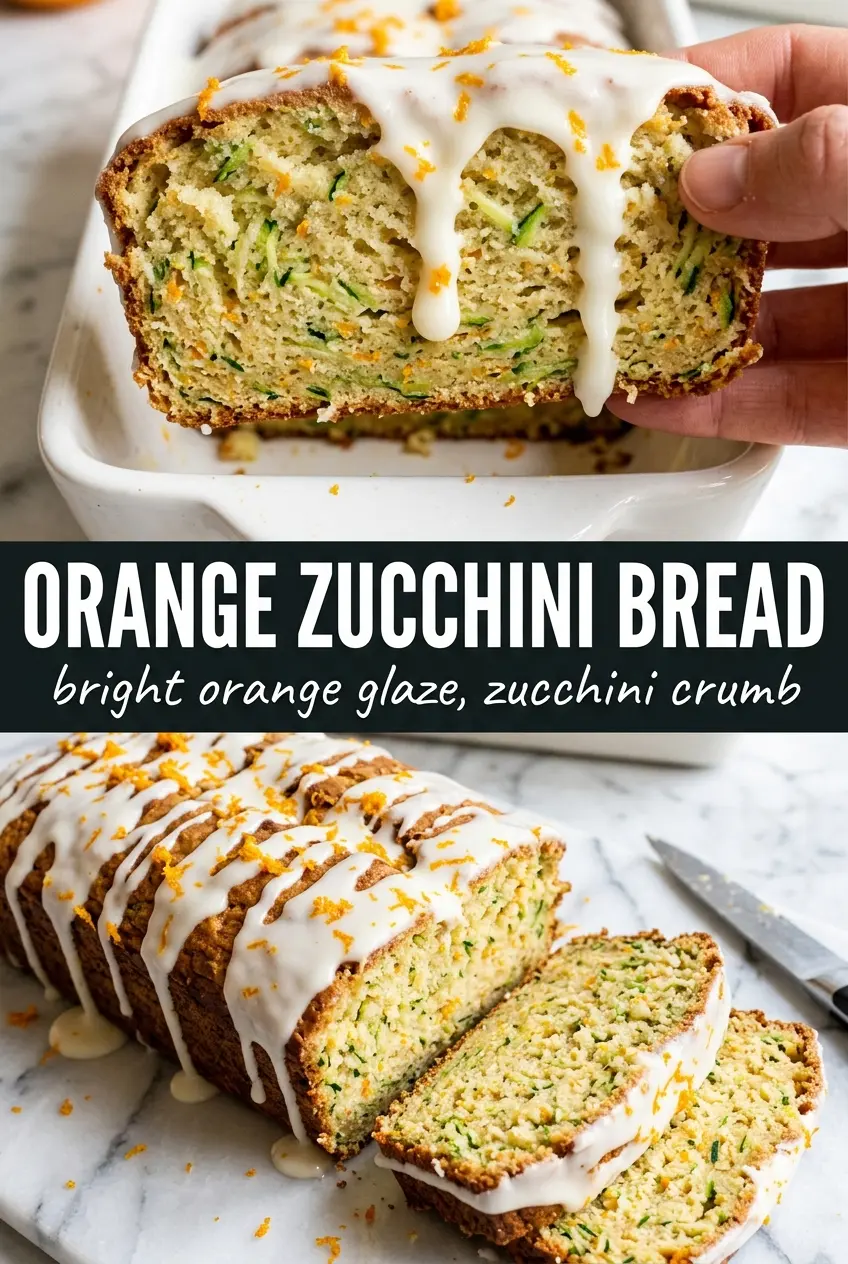
Orange Zucchini Bread
Ingredients
Equipment
Method
- Preheat oven to 350°F and grease a 9x5 loaf pan so the batter releases cleanly.
- Whisk all-purpose flour, baking soda, baking powder, and salt together until evenly blended.
- Beat granulated sugar, eggs, vegetable oil, fresh orange juice, orange zest, sour cream, and vanilla extract until smooth and glossy.
- Stir in grated zucchini that has been squeezed dry to prevent a gummy crumb.
- Fold the dry ingredients into the wet mixture just until no dry streaks remain.
- Pour batter into the prepared loaf pan and smooth the top.
- Bake 50–58 minutes at 350°F until a toothpick comes out clean and the top is golden.
- Cool the loaf in the pan for 15 minutes so the glaze sets without sliding.
- Whisk powdered sugar, fresh orange juice, and orange zest until thick and pourable.
- Drizzle the orange glaze generously over the warm loaf, letting it run slightly for an even sheen.