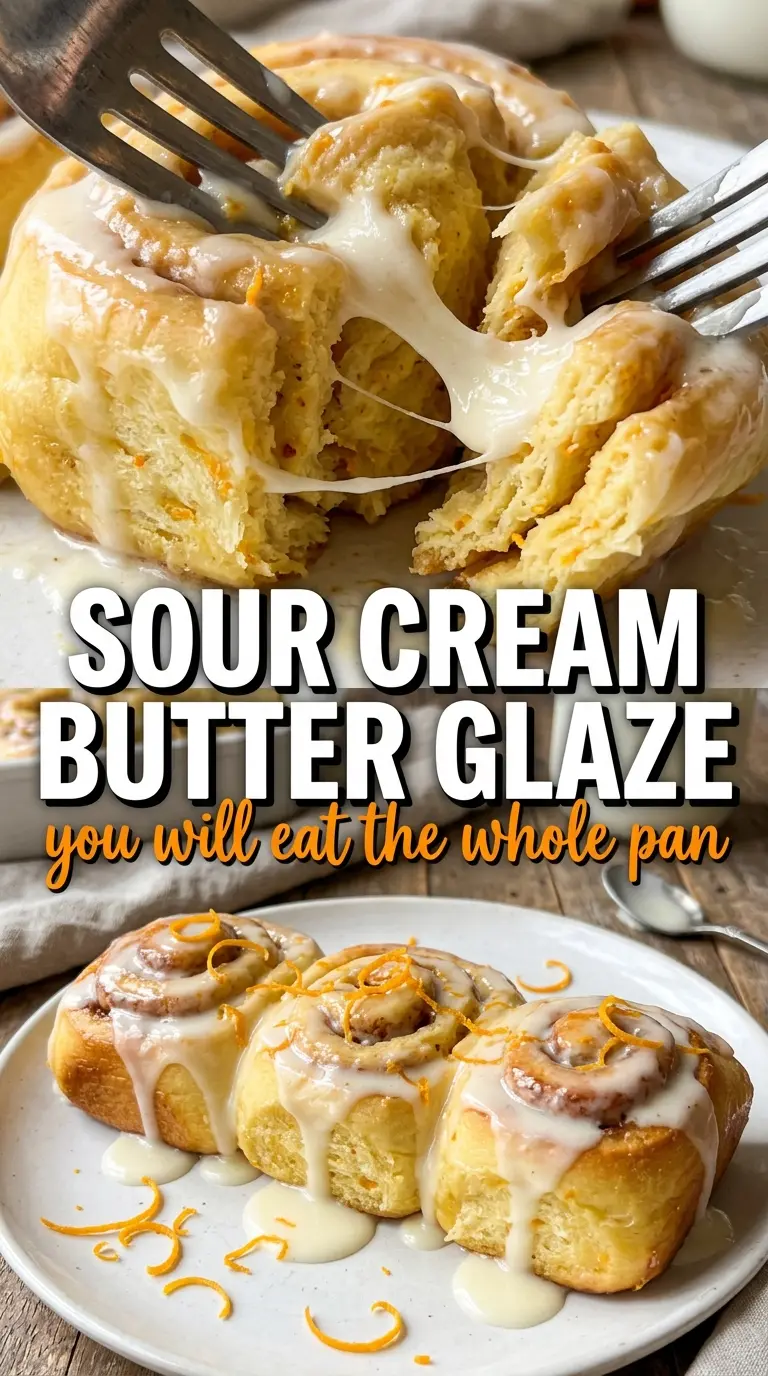
Soft orange rolls with a rich sour cream butter glaze land somewhere between breakfast pastry and dessert, and that’s exactly why they disappear fast. The dough bakes up tender and light, the orange sugar melts into the spirals, and the glaze sinks into every crevice instead of sitting on top like frosting. You get bright citrus on the first bite and warm buttery sweetness underneath.
What makes these worth making at home is the balance. The dough is simple and fast enough for a morning bake, but the filling uses fresh orange zest instead of extract, so the flavor stays vivid after baking. The sour cream in the glaze gives it a slight tang that keeps the sweetness in check and makes the whole pan taste fuller, not heavier.
Below, I’ve included the small details that matter most: how tightly to roll the dough so the swirls hold, why the rolls need a brief rest before baking, and what to do if your glaze looks too thick or too loose. Those little fixes are what turn good sweet rolls into the kind people ask for again.
The rolls baked up soft in the middle with those caramelized orange edges, and the sour cream glaze melted right into the spirals. I followed the rest time exactly and they puffed beautifully in the oven.
Save these orange rolls with sour cream butter glaze for the mornings when you want a soft, citrusy pan of sweet rolls with a glaze that melts into every swirl.
The Trick to Keeping the Swirls Soft Instead of Dry
The biggest mistake with sweet rolls is packing in too much flour or letting the dough get too stiff before it rises. A soft enriched dough needs to stay slightly tacky at first so it can bake up tender, not bready. If you knead until it feels firm and dry, the rolls will still rise, but they’ll lose that pillowy pull when you tear them open.
The other place people lose texture is in the filling. Orange zest should be rubbed into the sugar and butter until the mixture smells fragrant and looks almost damp. That step spreads the zest evenly through the spirals, which matters because the flavor needs to survive the oven, not just sit on the surface.
- Instant yeast — This keeps the rise moving without a long proofing schedule. If you only have active dry yeast, dissolve it in the warm milk and water first and add 5 to 10 extra minutes to the rise.
- Orange zest — Fresh zest is the backbone of the filling. Orange juice won’t replace it here; it gives brightness, but not the same fragrant oil that perfumes the rolls while they bake.
- Sour cream — This is what gives the glaze its body and a light tang. Plain milk makes it thinner and sweeter, which flattens the finish.
- Butter at room temperature — Soft butter spreads cleanly through the dough and filling. If it’s melted, the filling runs out before baking and the rolls can feel greasy.
What Each Ingredient Is Actually Doing in This Roll
- Flour (the structure base) — All-purpose creates the dough structure. Protein content matters for elasticity.
- Yeast (the rise) — This creates gas bubbles that make rolls light and airy. Proof it properly first.
- Warm liquid (milk or water) — This activates yeast and hydrates flour. Temperature matters—too hot kills yeast.
- Sugar (the yeast food) — Yeast eats sugar to ferment and create rise. A little goes a long way.
- Butter (the richness and flakiness) — This adds flavor and creates tender, flaky texture. Don’t skip it.
- Salt (the flavor and control) — Salt controls fermentation and enhances flavor. Too much slows yeast down.
- Filling (if applicable, cinnamon sugar or savory) — This adds flavor and prevents rolls from becoming one-dimensional.
- Proper proofing (rise time matters) — Underproofed rolls are dense. Overproofed rolls are gummy. Time is everything.
Building the Fill, the Roll, and the Bake
Mixing the Dough Without Overworking It
Stir the flour, yeast, sugar, and salt together first so the yeast and salt are evenly dispersed. Add the warm milk, water, egg, and softened butter, then knead until the dough looks smooth and elastic and only a little tacky. If it clings hard to your hands, add flour a tablespoon at a time; if you overload it now, the rolls bake up dense instead of fluffy. After the rise, the dough should look puffy and doubled, with a soft indentation when you press it gently.
Making the Orange Filling
Work the sugar, butter, and orange zest together until the zest is fully coated and the mixture smells intensely orange. That coating keeps the zest from clumping in one spot. Spread the filling all the way to the edges of the dough so every slice carries the same amount of flavor. If the butter is too soft and starts slipping, chill the filling for a few minutes before spreading it.
Rolling, Slicing, and Resting
Roll the dough into a neat rectangle and keep the log tight as you roll it up. A loose roll leaves gaps in the spiral and the centers can unfurl as they bake. Slice into 12 even pieces with a sharp knife or unflavored dental floss so the layers stay intact. Once they’re in the pan, let them rest for 20 minutes; that short pause helps the rolls puff again so they bake tall instead of spreading flat.
Baking to a Golden Top
Bake at 375°F until the tops are golden and the center rolls spring back when lightly touched. You want color at the edges and a soft set in the middle. If the tops brown too fast, cover the pan loosely with foil for the last few minutes. Pull them when they’re done; overbaking dries out the dough before the glaze has a chance to soften it.
Glazing While the Rolls Are Warm
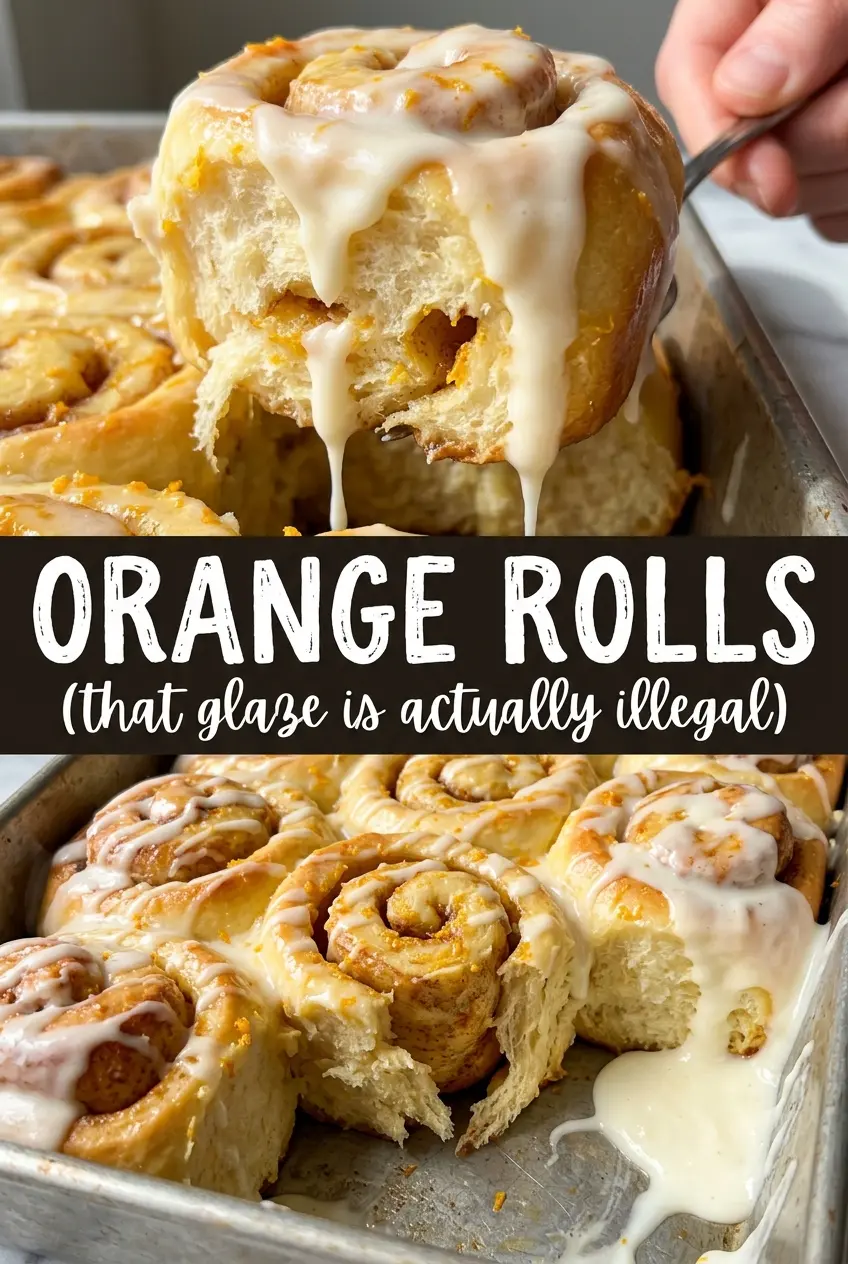
Beat the powdered sugar, sour cream, butter, orange juice, and vanilla until smooth, then pour it over the rolls while they’re still warm in the pan. Warm rolls drink up the glaze, which is what gives you that pooled, glossy finish in the swirls. If the glaze seems thick, add a few drops more orange juice; if it looks thin, a spoonful more powdered sugar brings it back. Don’t wait until the rolls are cold or the glaze will sit on top instead of melting in.
Three Ways to Adjust These Orange Rolls Without Losing the Good Part
Dairy-Free Version
Use plant-based butter in both the dough and filling, and swap the milk for an unsweetened non-dairy milk that heats up well. For the glaze, a thick dairy-free yogurt works better than plain plant milk because it keeps the same creamy body and slight tang.
Extra Bright Orange Flavor
Add a little orange zest to the glaze as well as the filling if you want a more citrus-forward finish. Keep it to a light hand, because too much zest in the glaze can turn bitter as it sits on the warm rolls.
Make Them Ahead for Brunch
Assemble the sliced rolls in the pan, cover tightly, and refrigerate overnight after shaping. In the morning, let them sit at room temperature until they look puffy again before baking. Cold dough goes into the oven sluggishly and won’t rise the same way as dough that’s had time to wake up.
Storage and Reheating
- Refrigerator: Store covered for up to 3 days. The glaze will sink in more as they sit, which is normal.
- Freezer: Freeze unglazed rolls tightly wrapped for up to 2 months. Thaw overnight in the refrigerator, then warm and glaze after reheating.
- Reheating: Warm individual rolls in the microwave for 15 to 20 seconds or cover the pan and reheat in a low oven. High heat dries the dough before the glaze can soften again.
Answers to the Questions Worth Asking
Orange Rolls with Sour Cream Butter Glaze
Ingredients
Equipment
Method
- Combine all-purpose flour, instant yeast, sugar, and salt in the bowl. Add warm milk, warm water, egg, and softened butter, then knead until smooth.
- Cover the dough and let it rise for 1 hour until doubled in size. The dough should look puffy and airy when ready.
- Mix softened butter, sugar, and orange zest together in a bowl until it forms a spreadable filling. Keep the mixture ready for rolling.
- Roll the dough into a rectangle and spread the orange filling evenly over the surface.
- Roll the dough up tightly into a log, then slice into 12 rolls.
- Place the rolls in a greased 9x13 dish, cover, and let rest 20 minutes. The rolls should rise slightly before baking.
- Bake at 375°F for 20–25 minutes until the tops are golden. Look for an evenly browned surface across the pan.
- Beat powdered sugar, sour cream, softened butter, fresh orange juice, and vanilla extract until smooth. The glaze should be thick but pourable.
- Pour the glaze over the warm rolls immediately. Watch it drip into crevices for a glossy finish.