Glossy cranberry sauce with orange and amaretto brings a brighter, rounder kind of tart-sweet balance to the table than the usual cranberry side. The berries soften just enough to stay a little rustic, while the orange juice lifts the fruit and the amaretto adds a warm almond note that makes the whole bowl taste more finished. It’s the kind of sauce that quietly steals attention from the turkey and then disappears fast once people start spooning it onto everything else on the plate.
This version works because the sugar, citrus, and water get boiled together before the cranberries go in, which helps the berries cook evenly instead of scorching on contact. The amaretto goes in off the heat so its flavor stays smooth and fragrant instead of cooking off, and the toasted almonds on top add the one thing cranberry sauce usually misses: a little crunch.
Below you’ll find the timing that gives you a thick but spoonable sauce, plus a few simple ways to adjust the sweetness or make it ahead without losing that fresh orange flavor.
The sauce thickened up beautifully and the amaretto didn’t taste boozy, just warm and almondy. I made it the night before and the orange flavor was even better after chilling.
Save this Orange Amaretto Cranberry Sauce for a glossy, make-ahead side with bright citrus, warm almond notes, and toasted almonds on top.
The Trick to Keeping Cranberry Sauce Glossy Instead of Gummy
Most cranberry sauces go wrong in one of two ways: they stay thin because the berries never fully burst, or they cook down too hard and turn into a stiff paste once chilled. The sweet spot is a lively simmer, not a hard boil after the cranberries go in. You want most of the berries to pop, a few to stay intact, and enough liquid left in the pan that the sauce still looks loose when it comes off the heat. It thickens as it cools, which is exactly what you want.
Amaretto also behaves best at the end. If it simmers with the fruit, the flavor turns flatter and the alcohol note gets harsher. Stir it in after the pan comes off the burner, then let the sauce cool without rushing it. That resting time is part of the texture, not an afterthought.
What the Orange, Amaretto, and Almonds Are Doing Here
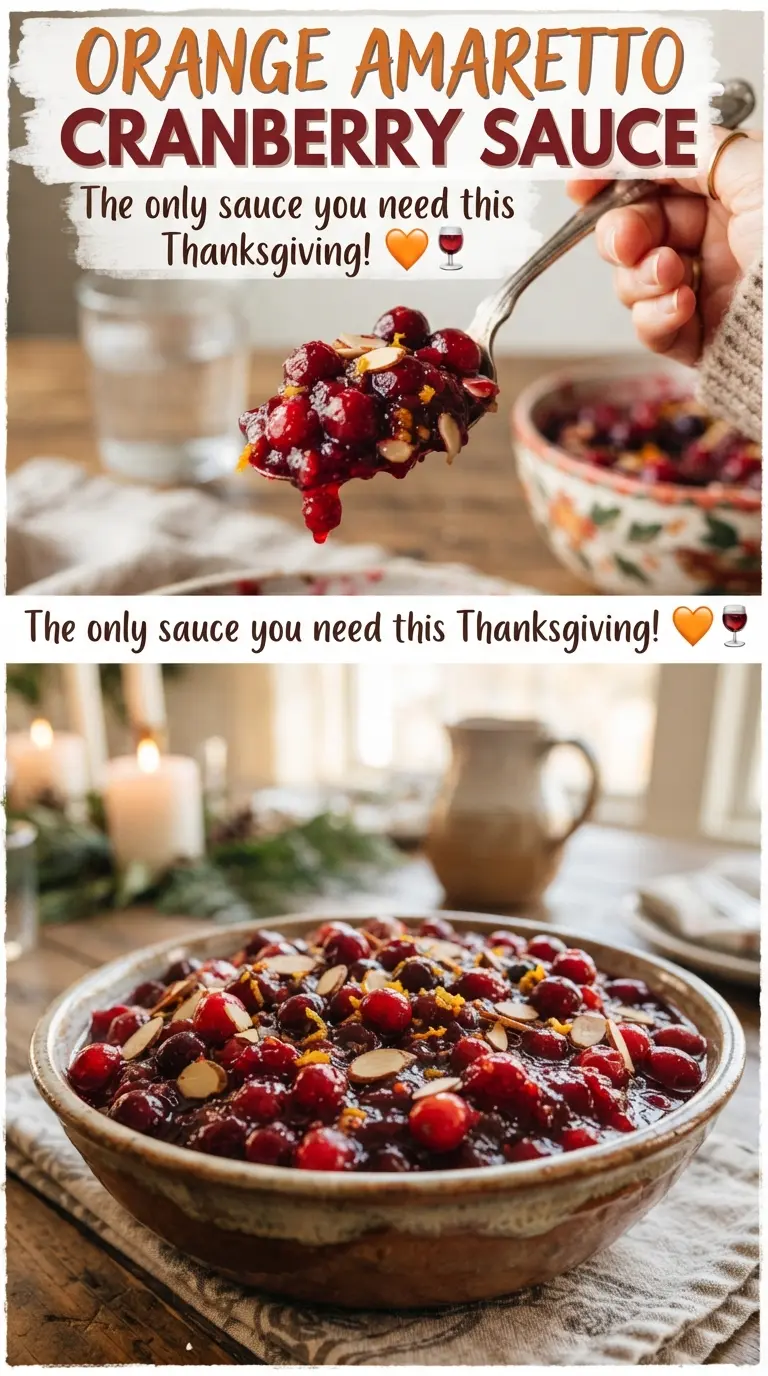
- Fresh cranberries — These are the backbone of the sauce. Frozen cranberries work too, and you don’t need to thaw them first, but fresh berries usually give you a slightly cleaner burst and a brighter finish.
- Orange juice — This is doing more than thinning the sugar. It softens the cranberries’ sharp edge and gives the sauce a rounder citrus sweetness that water alone can’t match.
- Amaretto — Add it off the heat so the almond flavor stays soft and aromatic. A little goes a long way here; more than the recipe calls for can push the sauce into syrupy territory instead of keeping it balanced.
- Orange zest — Zest is what makes the orange taste present instead of vague. Stir it in at the end so the oils stay bright.
- Sliced almonds — Toast them before topping the sauce. Untoasted almonds taste pale and papery compared with the nutty snap you get from a few minutes in a dry skillet.
How to Build the Sauce So the Berries Burst at the Right Time
Start With the Syrup Base
Bring the sugar, orange juice, water, and salt to a full boil before the cranberries go in. That first boil dissolves the sugar completely, which helps you avoid graininess later. If you add the berries too early, the sugar can sit on the bottom and the sauce cooks unevenly.
Let the Cranberries Pop, Then Stop
Once the cranberries are in, keep the simmer active enough to hear steady bubbling, but not so aggressive that it splatters everywhere. In about 10 to 12 minutes, most of the berries will burst and the liquid will turn shiny and slightly syrupy. Pull it off the heat while it still looks a little loose, because it will tighten a lot as it cools.
Finish Off the Heat
Stir in the amaretto and orange zest after the pan comes off the burner. That keeps the almond note fresh and stops the zest from tasting cooked or bitter. Cool the sauce before chilling it, then top with toasted almonds right before serving so they stay crisp.
Three Ways to Adjust It Without Losing the Balance
Less Sweet, Brighter Finish
Cut the sugar back by a couple of tablespoons if you like a sharper cranberry bite. The sauce will taste more tart and less jammy, which works well if you’re serving it alongside rich mains or buttery sides.
Alcohol-Free Version
Swap the amaretto for an equal amount of orange juice plus 1/4 teaspoon almond extract. Add the extract at the end, just like the liqueur, so the almond flavor stays clear instead of baking off.
Nut-Free Topping
Skip the sliced almonds and finish with extra orange zest instead. You lose the crunch, but the sauce still reads bright and festive, and the texture stays smooth for anyone avoiding nuts.
Storage and Reheating
- Refrigerator: Store covered for up to 1 week. It will set up more firmly after chilling, which is normal.
- Freezer: It freezes well for about 2 months in an airtight container, though the texture softens a little after thawing. Stir it well once it thaws to bring it back together.
- Reheating: Warm it gently on the stove over low heat or bring it to room temperature. Don’t boil it again, or the sauce can tighten too much and lose that glossy, spoonable texture.
Answers to the Questions Worth Asking
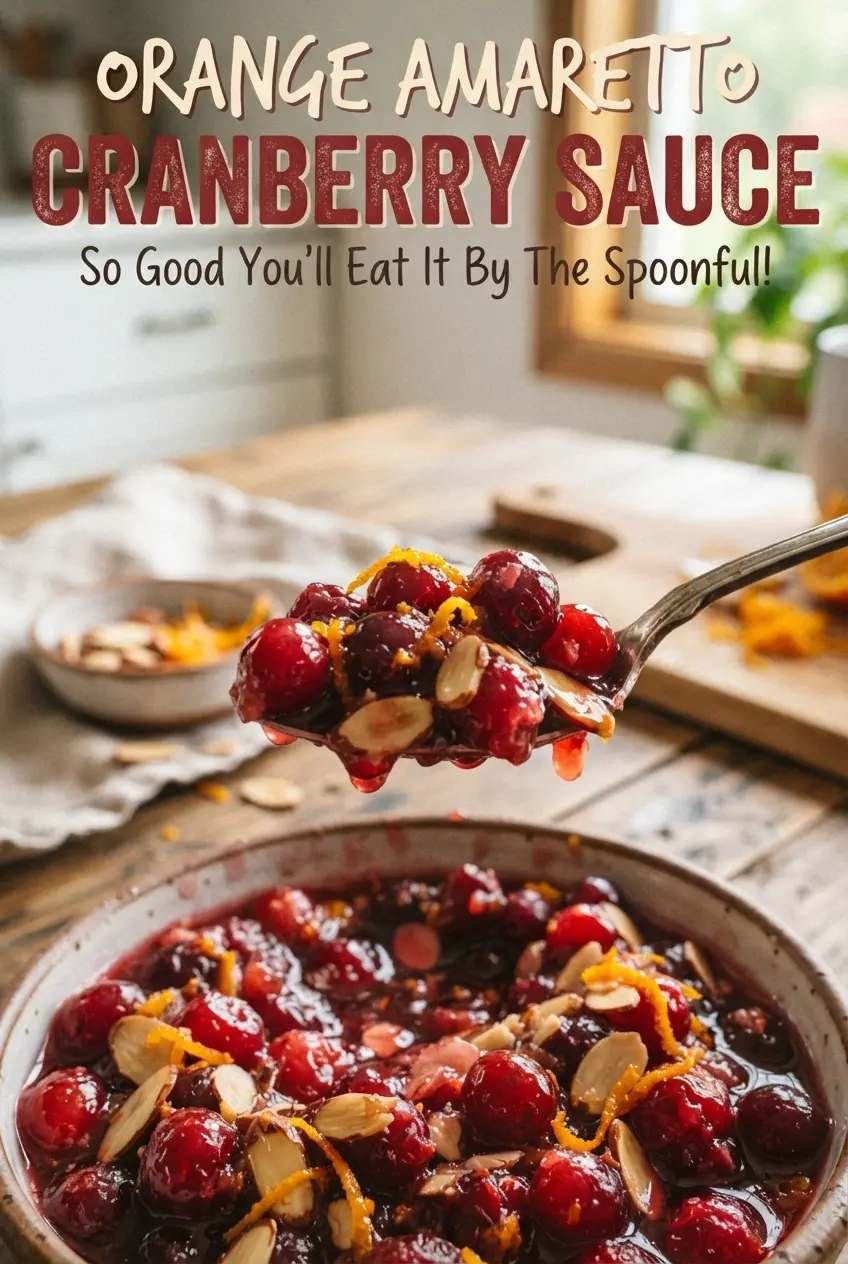
Orange Amaretto Cranberry Sauce
Ingredients
Equipment
Method
- Bring sugar, orange juice, water, and salt to a boil in a saucepan over medium-high heat, stirring until the sugar dissolves and the mixture looks clear and bubbling around the edges (about 3-5 minutes).
- Add cranberries and simmer 10-12 minutes until the berries burst and the sauce thickens enough to coat a spoon (look for slow bubbling and a glossy, jam-like consistency).
- Remove from heat and stir in amaretto and orange zest until the sauce turns evenly fragrant and glossy (about 30-60 seconds).
- Cool the sauce to room temperature, then chill until set before serving (about 1 hour in the fridge; transfer to a covered container).
- Top with toasted almonds just before serving for crunch and visual contrast.