Silky scrambled eggs get a lot more interesting when they’re folded around golden mushrooms, wilted spinach, and little pockets of tangy goat cheese. The eggs stay soft and custardy, the mushrooms bring that deep savory bite, and the sourdough underneath catches every bit of the creamy finish. It’s the kind of breakfast that feels calm and intentional, even though it comes together fast.
The trick is cooking the mushrooms first until they’ve dropped their moisture and actually started to brown. If they go in pale and wet, they steam the eggs instead of adding flavor. I also keep the eggs moving slowly over medium-low heat and pull them off the burner before they look fully set. That last bit of carryover heat is what gives you soft curds instead of dry, rubbery ones.
Below, I’ve broken down the little details that matter here: when to season, why the goat cheese goes in at the end, and how to adapt the eggs if you want to skip the dairy or change up the herbs.
The eggs stayed soft and creamy, and the mushrooms actually browned instead of turning watery. I added the goat cheese at the end like you suggested, and it melted into little tangy pockets that made the whole thing taste restaurant-quality.
Save these mushroom spinach scrambled eggs for a soft, creamy breakfast with golden mushrooms and tangy goat cheese.
The Small Mistake That Turns Soft Scrambled Eggs Watery
The biggest mistake in a skillet like this is crowding in ingredients that still hold water. Mushrooms release a lot of moisture before they brown, and spinach does the same if you rush it. Let the mushrooms cook until the pan looks dry again and the edges start to color, then add the spinach just long enough to wilt. That way the vegetables stay savory instead of leaking into the eggs and thinning everything out.
The eggs need the opposite kind of patience. Low heat feels slower, but it gives the curds time to form gently. If the pan is hot enough to make the eggs hiss hard, they’ll tighten up fast and lose that soft, glossy texture. Pull them off the heat while they still look a touch loose; they’ll finish setting as you fold in the vegetables and goat cheese.
What Each Ingredient Is Actually Doing Here

- Cremini mushrooms — These give the dish its savory backbone. They need enough heat and space to brown; a crowded pan will steam them, and you’ll lose that deep, earthy flavor.
- Spinach — Baby spinach wilts fast and folds neatly into the eggs without turning stringy. If you use a sturdier green, chop it small and cook it longer so it doesn’t taste raw.
- Butter — Butter is doing two jobs here: browning the mushrooms and keeping the eggs tender. You can use olive oil in a pinch, but the flavor won’t be as round and the eggs won’t taste as rich.
- Whole milk or cream — A small splash helps loosen the eggs and keeps the curds soft. Cream makes them a little richer; milk is lighter and still works well.
- Goat cheese — Add it at the end so it softens into creamy pockets instead of disappearing into the pan. Feta works too, but it stays firmer and saltier, so the finished eggs taste sharper.
- Sourdough — The toast matters more than it sounds. It gives you structure under the soft eggs and soaks up the buttery bits without turning soggy right away.
Cooking the Eggs Low Enough to Stay Custardy
Brown the mushrooms first
Melt one tablespoon of butter over medium-high heat and spread the mushrooms in a single layer. Leave them alone long enough to release their moisture and start turning golden at the edges, then stir and keep cooking until the pan looks mostly dry again. When the garlic goes in, it only needs about 30 seconds; longer than that and it can burn before the spinach has a chance to wilt.
Move the vegetables out before the eggs go in
Transfer the mushroom and spinach mixture to a plate before you start the eggs. If you leave it in the skillet, the vegetables keep steaming and cool the pan in a way that makes the eggs cook unevenly. A clean pan gives you a better read on the eggs themselves, which is the whole game here.
Stir gently and stop early
Whisk the eggs with the milk, salt, and pepper until the mixture looks even and a little frothy. Melt the remaining butter over medium-low heat, add the eggs, and push them slowly with a spatula every 30 seconds, scraping the bottom of the pan so the soft curds fold over themselves. When the eggs still look slightly underdone and glossy, take the pan off the heat and fold in the vegetables. The carryover heat finishes the job without drying them out.
Finish with goat cheese and herbs
Break the goat cheese over the top while the eggs are still warm so it softens into the folds without fully melting away. Chives bring a fresh onion note, and thyme gives the dish a more savory, brunchy edge. Serve it right away on toasted sourdough, while the eggs are still silky and the toast is sturdy enough to catch them.
How to Change the Finish Without Losing the Creamy Texture
Dairy-Free Version with Olive Oil
Use olive oil instead of butter and skip the goat cheese. The eggs will still be soft if you keep the heat low, but they’ll taste cleaner and less rich. Add a pinch of extra salt at the end to replace the savoriness the cheese would have brought.
Extra-Greens Breakfast
Swap half the spinach for chopped arugula or baby kale if you want a pepperier, more robust green note. Arugula melts in fast and tastes bright; kale needs a little more time in the pan before it softens. Keep the total amount of greens about the same so the eggs don’t get crowded.
No Sourdough, Still Good
Serve the eggs over toast, an English muffin, or even warm potatoes if that’s what you have. The point is to give the soft eggs something sturdy and absorbent underneath. Skip the plate of plain eggs unless you want to lose all that buttery sauce from the pan.
Storage and Reheating
- Refrigerator: Store leftovers in an airtight container for up to 2 days. The eggs won’t stay as silky, but they’ll still taste good.
- Freezer: Don’t freeze this one. Scrambled eggs and spinach both go watery and grainy after thawing.
- Reheating: Warm gently in a skillet over low heat with a small splash of water or milk, stirring just until heated through. The mistake people make is blasting them in the microwave, which tightens the eggs and turns the mushrooms rubbery.
Questions I Get Asked About This Recipe
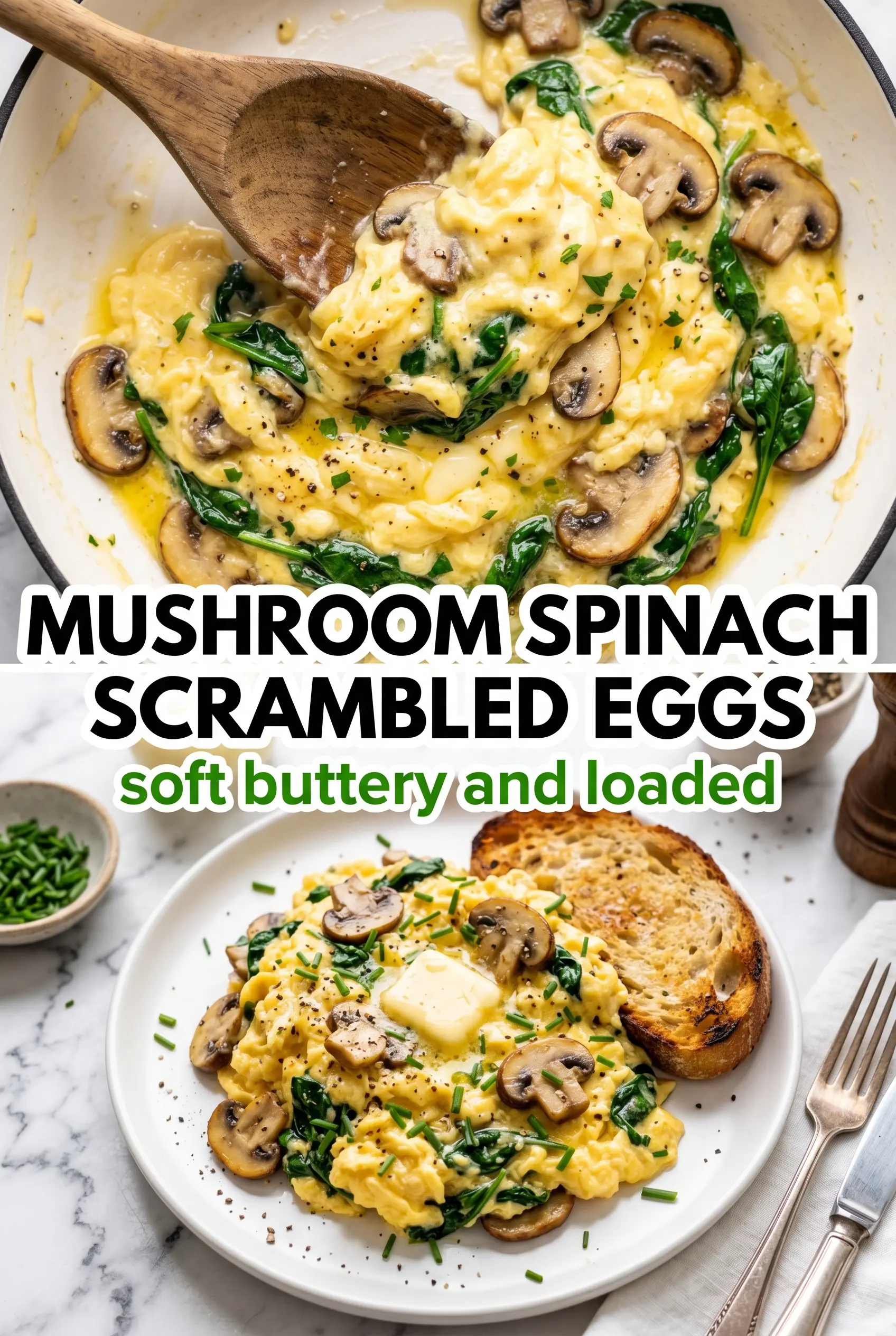
Mushroom Spinach Scrambled Eggs
Ingredients
Equipment
Method
- Melt 1 tablespoon butter in a skillet over medium-high heat, then add sliced cremini mushrooms and cook for 4–5 minutes until golden.
- Add minced garlic and baby spinach and cook until the spinach is wilted.
- Season the mushroom-spinach mixture with salt and black pepper to taste, then transfer it to a plate.
- Whisk eggs with whole milk or cream, salt, and black pepper until the yolks and whites are fully combined.
- Melt the remaining butter in the same pan over medium-low heat, add the eggs, and cook slowly, pushing the eggs gently with a spatula every 30 seconds for very soft, silky curds.
- Remove the eggs from heat while still slightly underdone and fold in the mushroom-spinach mixture.
- Top with goat cheese crumbles, fresh chives or thyme, and serve immediately on toasted sourdough.