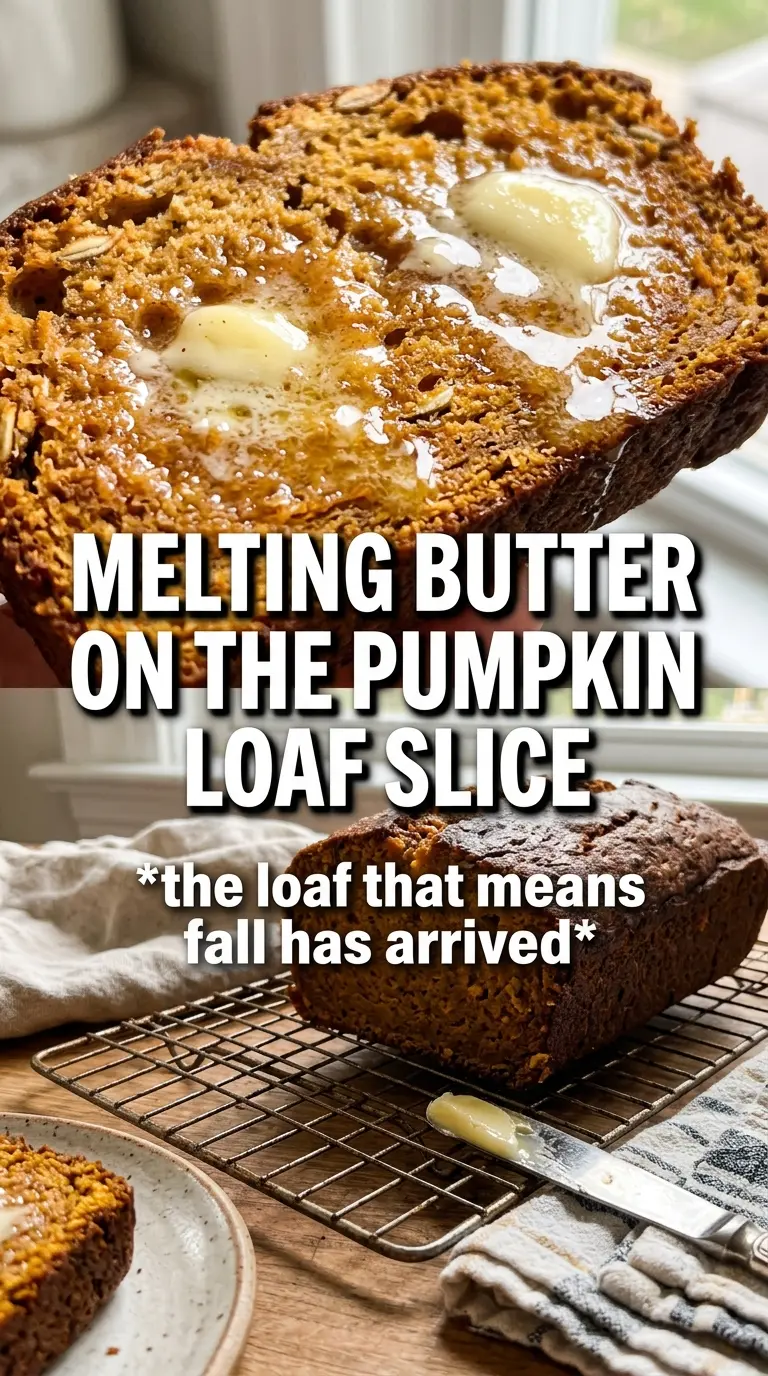
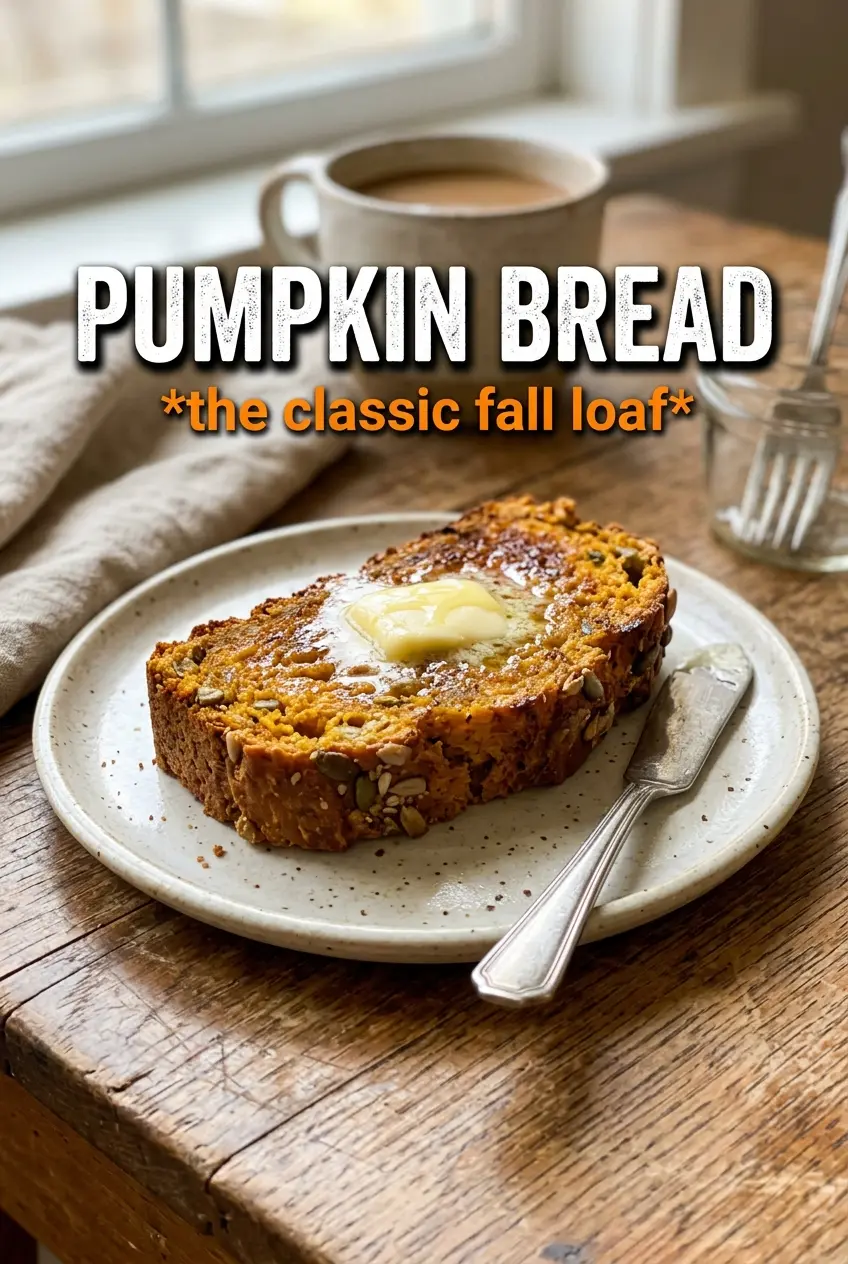
Pumpkin bread earns its place in the breakfast rotation when it slices cleanly, stays tender for days, and carries that warm spice smell all the way through the kitchen. The best loaf has a soft, moist crumb with just enough structure to hold together under a thick swipe of butter, and a crackly, golden top that gives way to a deep orange center.
This version keeps the method straightforward, but the balance matters. Pumpkin puree brings moisture and body, brown sugar adds a little molasses depth, and the combination of oil plus eggs keeps the loaf plush instead of cakey. The spices are measured to taste like pumpkin bread, not just sweet quick bread with a vague hint of cinnamon. If you’ve ever had a loaf that baked up dense in the middle or dry around the edges, the fix is usually in the mixing and the timing, both of which are covered below.
Keep reading for the one mixing habit that makes the crumb stay tender, plus a few swaps that work without throwing off the texture.
The loaf came out with that perfect crack on top and the crumb stayed moist for three days. I swapped in buttermilk and it sliced beautifully without crumbling.
Save this pumpkin bread for the loaf with the soft orange crumb and that classic crackly top.
The Reason Most Pumpkin Breads Turn Heavy in the Middle
Pumpkin bread usually goes wrong in one of two ways: the batter gets overworked, or the loaf gets pulled too early because the top looks done before the center is set. Pumpkin puree adds a lot of moisture, which is exactly why this bread stays soft, but that same moisture can make the crumb gummy if the flour is stirred too long or the pan is packed too full.
The goal is a batter that looks a little rough, not polished. Once the wet and dry ingredients meet, stop as soon as the flour disappears. A few streaks are fine. They finish hydrating in the oven, and that small restraint keeps the loaf tender instead of tight and rubbery.
What Each Ingredient Is Actually Doing in This Loaf
- Pumpkin puree — This is the moisture and body of the loaf. Use pure pumpkin, not pumpkin pie filling, or the sugar and spice balance will be off.
- Brown sugar — It adds a deeper sweetness and helps the crumb stay soft. Packed brown sugar matters here because that extra molasses richness reads clearly in a simple loaf.
- Vegetable oil — Oil keeps pumpkin bread plush even after it cools. Butter can work, but the loaf won’t stay quite as soft on day two.
- Eggs — They give the bread structure so it slices cleanly. If you replace them, expect a softer, more fragile crumb.
- Milk or buttermilk — Milk keeps the batter loose enough to rise evenly, while buttermilk adds a subtle tang and a slightly finer texture. Both work, but buttermilk gives the most balanced flavor.
- Spices — Pumpkin pie spice, cinnamon, and nutmeg are what make the loaf taste like pumpkin bread instead of plain quick bread. Fresh spices matter more here than in a highly flavored dessert because there aren’t many other ingredients to hide behind.
Building the Batter So the Crumb Stays Tender
Mix the dry ingredients first
Whisk the flour, baking soda, spice, cinnamon, nutmeg, and salt until the mixture looks even from edge to edge. That step keeps the leavening and spices from clumping in one bite, and it helps the loaf rise in a more even dome. If you skip this and dump everything together loosely, you’ll get pockets of spice and uneven texture.
Whisk the wet ingredients until completely smooth
The pumpkin, sugars, oil, eggs, vanilla, and milk should look glossy and uniform before you add the flour. The sugar needs that time to dissolve a bit so the finished loaf doesn’t bake up gritty. If the mixture still looks streaky, keep whisking until the pumpkin turns silky and the eggs disappear into the batter.
Fold, don’t beat
Once the wet and dry ingredients come together, switch to a spatula and fold just until the flour is nearly gone. The batter can still look a little shaggy. That’s fine. Overmixing develops too much gluten, and that’s the fastest way to get a tough loaf with tunnels through the middle.
Bake until the center sets, not just the top
At 60 minutes, check the loaf with a toothpick in the center. You want a clean or nearly clean pick, with maybe a few moist crumbs attached. If it comes out wet, give it more time in 5-minute bursts. The top may already be dark golden, but the center is what decides whether the bread slices cleanly or sinks slightly as it cools.
Pumpkin Bread Muffins
Scoop the batter into a lined muffin tin and bake at the same temperature, checking much earlier. The smaller portion bakes faster and gives you more of the browned edge, but you lose the tall loaf shape and the dramatic crack down the center.
Dairy-Free Version
Use unsweetened non-dairy milk instead of milk or buttermilk. The bread still bakes up tender because the oil and pumpkin are doing most of the work; you’ll just lose the slight tang that buttermilk brings.
Less Sweet Breakfast Loaf
Reduce the granulated sugar to 1/2 cup if you want a less dessert-like slice. The loaf will still be moist, but the crust will brown a little less and the spice will taste a touch more pronounced.
Storage and Reheating
- Refrigerator: Store tightly wrapped for up to 5 days. The crumb firms up a bit in the fridge, but it stays moist.
- Freezer: Pumpkin bread freezes well. Wrap the cooled loaf or individual slices tightly, then freeze for up to 3 months.
- Reheating: Warm slices in the microwave for 10 to 15 seconds or toast them lightly. Don’t overheat it or the edges dry out before the center warms through.
Questions I Get Asked About This Recipe
Pumpkin Bread
Ingredients
Equipment
Method
- Preheat the oven to 350F and grease a 9x5 loaf pan so the loaf releases cleanly after baking.
- Whisk all-purpose flour, baking soda, pumpkin pie spice, cinnamon, nutmeg, and salt in a large bowl until evenly combined with no spice streaks.
- Whisk pumpkin puree, granulated sugar, brown sugar, vegetable oil, eggs, vanilla extract, and milk or buttermilk in a separate bowl until completely smooth.
- Pour the wet mixture into the dry mixture and fold until just combined, leaving a few streaks of flour (do not overmix).
- Pour the batter into the prepared loaf pan and smooth the top so it rises evenly.
- Bake for 60-65 minutes at 350F until a toothpick inserted in the center comes out clean, with a deep golden crust and a crack along the top.
- Cool the loaf in the pan for 15 minutes, then remove it and cool completely before slicing to set the moist crumb.