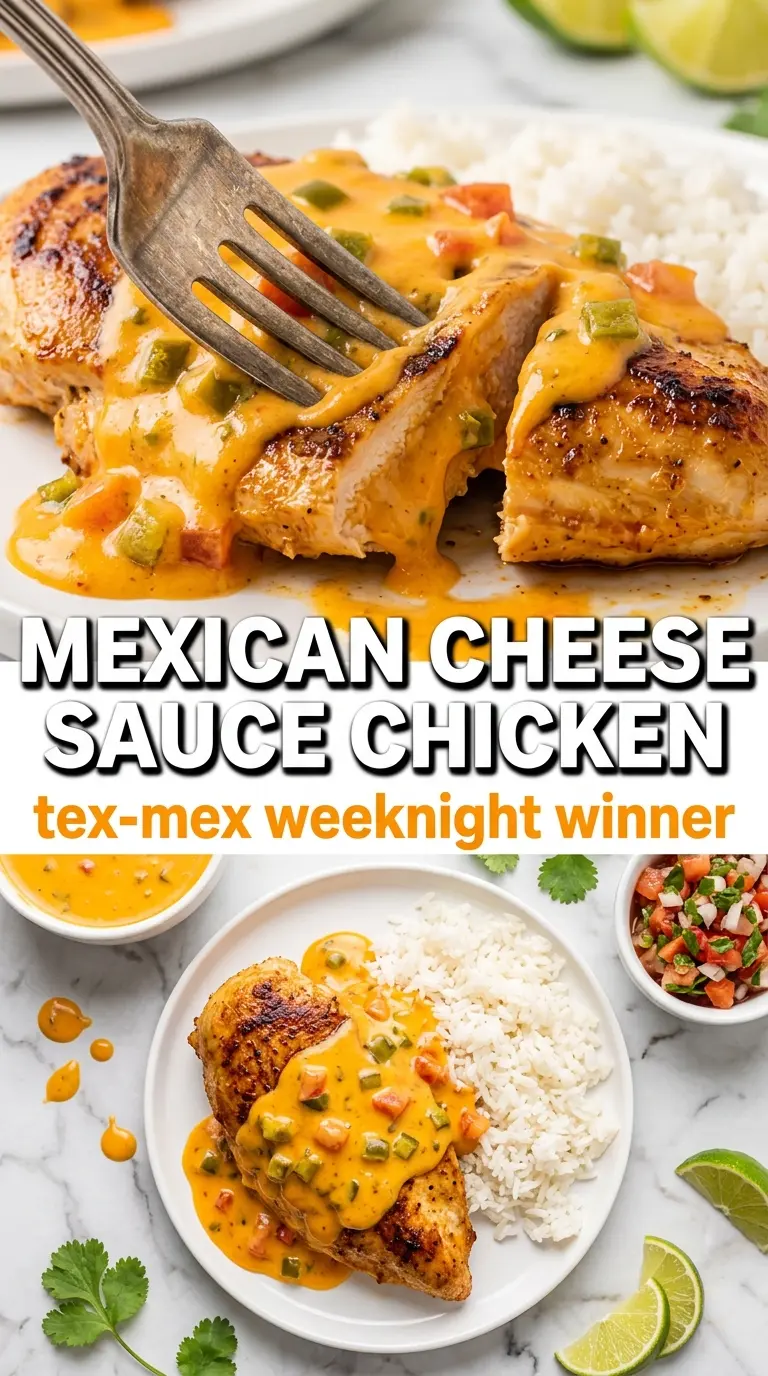
Juicy chicken with a glossy queso blanket is the kind of dinner that disappears fast because every bite hits the same notes: smoky seasoning on the outside, tender chicken underneath, and a sauce that clings instead of running off the plate. The cheese sauce here is thick enough to coat the spoon, with little pops of jalapeño and tomato that keep it from tasting flat or heavy.
What makes this version work is the order. The chicken gets a proper sear first, which gives you color and keeps the surface from going soft once the sauce hits it. The queso starts with a flour-butter base, then milk goes in gradually so the sauce stays smooth before the cheeses melt down. Velveeta helps the sauce stay glossy and stable, while the shredded Mexican blend adds the sharper cheese flavor people expect.
Below, I’ve included the one place people usually go wrong with cheese sauce, plus a few practical swaps if you want to stretch it over rice, tuck it into tortillas, or turn it into a nacho topping.
The sauce turned out silky and stayed creamy even after I poured it over the chicken. The jalapeño gave it a nice kick without taking over, and my husband asked if there was enough left for lunch the next day.
Creamy Mexican chicken with cheese sauce for the nights when you want bold queso, juicy seared chicken, and a dinner that comes together fast.
The Part That Keeps the Cheese Sauce Smooth Instead of Grainy
The biggest mistake with queso-style sauce is rushing the heat once the cheese goes in. If the pan is too hot, the proteins tighten and the sauce can turn grainy or oily instead of silky. The fix is simple: build the milk base first, then add the cheese off the fiercest heat and stir until it melts slowly into the sauce.
Velveeta earns its place here because it melts cleanly and helps the sauce hold together after it sits on the chicken for a few minutes. The shredded Mexican blend brings flavor, but it can clump if it’s thrown into a bubbling pot. Keep the sauce at a gentle simmer, not a hard boil, and it stays glossy.
- Chicken breasts — Boneless, skinless breasts are easy here because they sear quickly and slice neatly under the sauce. If yours are thick, pound them to an even thickness so the outside doesn’t overcook before the center is done.
- Taco seasoning — This gives the chicken its backbone fast. A store-bought blend works fine, but if yours is very salty, use a lighter hand because the cheese sauce brings plenty of seasoning too.
- Whole milk — Whole milk makes the sauce richer and more stable than lower-fat milk. You can use 2%, but the finished sauce will be a little less lush and may need a touch more whisking to smooth out.
- Mexican cheese blend and Velveeta — The combination matters. The blend gives flavor, while Velveeta keeps the sauce from breaking into a greasy mess once it’s hot and sitting over the chicken.
- Rotel and jalapeño — These keep the sauce from tasting one-note. Drain the tomatoes well so the sauce doesn’t thin out, and seed the jalapeño if you want heat without a sharp bite.
What Each Ingredient Is Actually Doing in This Recipe
- Primary ingredient (the star) — Quality matters most. Choose the best you can find.
- Cooking medium (oil, butter, or broth) — This carries flavors and prevents dryness.
- Seasonings (salt, pepper, spices, herbs) — Layer flavors so nothing overpowers. Build depth gradually.
- Aromatics (garlic, onion, herbs) — Cook with fat to bloom flavors. Become the foundation.
- Supporting ingredients — Complement the main ingredient without overpowering it.
- Sauce or liquid (if applicable) — Brings flavors together. Balance richness with acid.
- Acid (lemon, vinegar, wine, or other) — Brightens and prevents flat-tasting results.
- Final finish (garnish, glaze, or sauce) — Prevents one-dimensional taste and adds visual appeal.
Building the Chicken and Queso in the Right Order
Seasoning and Searing the Chicken
Rub the chicken evenly with taco seasoning so every bite has flavor, then sear it in a hot skillet with olive oil. You want deep browned spots on both sides and an internal temperature of 165°F. If the pan is crowded or the heat is too low, the chicken steams and loses that seasoned crust, so cook in batches if you need to.
Making the Roux
Melt the butter, whisk in the flour, and let it cook for about a minute until it smells a little nutty. That brief cooking time takes the raw flour taste out without darkening the base. If the flour stays pale and pasty for too long, the sauce can taste chalky later.
Whisking in the Milk
Add the milk gradually while whisking so the base stays smooth from the start. A thin stream works better than dumping it in all at once because it gives the flour time to disperse. If you see lumps, keep whisking over medium heat; most of them will melt out before the sauce thickens.
Finishing the Queso
Stir in the cheeses slowly, then add the Rotel, jalapeño, and cumin. The sauce should turn thick and glossy, with a spoon-coating texture that still pours easily. If it gets too thick, loosen it with a splash of milk; if it looks broken, the heat was too high, so pull it off the burner and whisk until it comes back together.
How to Adjust the Heat, the Richness, and the Serving Style
Make It Milder for Kids
Leave out the jalapeño and use mild diced tomatoes with green chiles if you want the same queso texture without the bite. The sauce still tastes full and savory, just softer and more kid-friendly.
Make It Lighter Without Losing the Sauce
Use 2% milk and reduce the Velveeta slightly if you want a lighter finish, but don’t skip the roux. The sauce will be a touch less rich, but the flour base still gives you body instead of a thin cheese soup.
Make It Gluten-Free
Swap the all-purpose flour for a gluten-free 1:1 flour blend and keep the rest of the method the same. The sauce still thickens well as long as you whisk the flour into the butter long enough to cook off the raw taste.
Turn It Into Nachos or Burrito Filling
Slice the chicken a little thinner and spoon extra queso over rice, tortillas, or tortilla chips. The sauce is thick enough for serving as-is, but if you want it to cling to chips, let it cool for a minute before spooning it on.
Storage and Reheating
- Refrigerator: Store the chicken and sauce separately for up to 3 days. The sauce will thicken as it chills.
- Freezer: The chicken freezes well, but the cheese sauce is better made fresh because dairy sauces can turn grainy after thawing.
- Reheating: Warm the chicken gently in a skillet or microwave, and reheat the sauce over low heat with a splash of milk, whisking often. High heat is what makes a cheese sauce split, so keep it gentle.
Answers to the Questions Worth Asking

Mexican Chicken with Cheese Sauce
Ingredients
Equipment
Method
- Rub the chicken breasts with taco seasoning until evenly coated. Heat olive oil in a cast iron skillet over medium-high heat and sear for 5-6 minutes per side until cooked through to 165°F, then rest and slice.
- Melt butter in a saucepan over medium heat, then whisk in the flour for 1 minute. Gradually add the whole milk while whisking until smooth.
- Stir in the shredded Mexican cheese blend and cubed Velveeta until fully melted. Add the drained Rotel, diced jalapeño, and cumin, then simmer for 3-4 minutes until the sauce is smooth and thick.
- Plate sliced chicken and pour the queso cheese sauce generously over the top. Garnish with fresh cilantro and serve with lime wedges.
- Serve alongside rice, tortillas, or over nachos.