Flaky white fish, sweet roasted tomatoes, briny olives, and capers make this Mediterranean baked fish feel bright and balanced without needing a fussy sauce. The fish stays tender while the vegetables soften into a glossy pan mixture that tastes like it cooked for much longer than it did. It’s the kind of dinner that looks elegant in the dish but asks for almost no effort at the stove.
The trick is giving the tomatoes and aromatics a head start so they collapse and concentrate before the fish goes in. That first 10-minute roast coaxes out juices from the tomatoes and lets the garlic mellow instead of turning sharp or raw. By the time the fillets are nestled into the pan, the sauce is already halfway built.
Below, you’ll find the small details that matter most: which fish works best, how to keep the fillets from overcooking, and what to change if you need a dairy-free, gluten-free, or alcohol-free version.
The tomatoes and olives made their own sauce, and the fish stayed flaky instead of drying out. I loved that I could bring the dish to the table straight from the oven.
Save this Mediterranean baked fish for a no-fuss dinner with flaky fillets, juicy tomatoes, and a briny olive-caper pan sauce.
The Step That Keeps the Fish Tender Instead of Dry
The biggest mistake with baked fish is treating it like it needs a long bake to develop flavor. It doesn’t. The vegetables need the head start, not the fillets. If the fish goes in too early, it overcooks before the tomatoes have time to soften and the sauce never gets that silky, spoonable texture.
Roasting the tomato mixture first does two things at once: it concentrates the juices and keeps the fish from sitting in a shallow puddle of raw vegetables. That matters here because cod, halibut, and sea bass all cook quickly and can turn chalky if they stay in the oven a minute too long. Pull the dish when the fish flakes but still looks moist in the center.
What Each Ingredient Is Actually Doing in This Dish
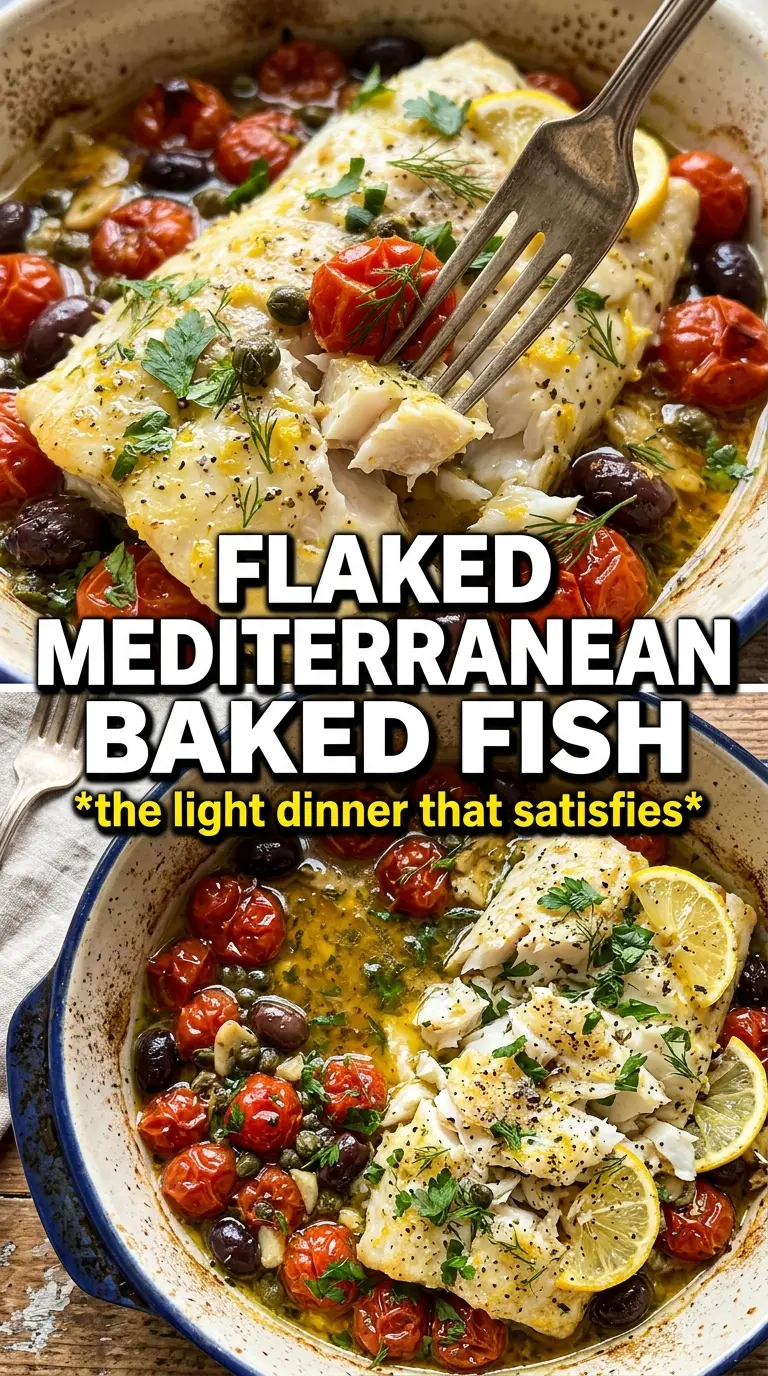
- White fish fillets — Cod gives you the most forgiving, mild result. Halibut is meatier and holds together well, while sea bass is richer. Use the best fillets you can find; this dish depends on the fish staying intact as it bakes.
- Cherry tomatoes — These are the backbone of the sauce. Halving them matters because the cut sides release juice fast and help the pan turn saucy instead of watery.
- Kalamata olives and capers — They bring the briny hit that makes this taste Mediterranean instead of just fish and vegetables. If capers are very salty, rinse them first so the dish doesn’t tip too far in that direction.
- Jarred roasted red peppers — They add sweetness and a soft, silky texture without any extra cooking. Fresh peppers won’t give the same concentrated flavor in this short bake.
- Dry white wine or broth — The liquid loosens the pan juices and helps the vegetables steam before they collapse into sauce. Broth works well if you don’t cook with wine; use a light one so it doesn’t overpower the fish.
- Olive oil, oregano, and red pepper flakes — This is the seasoning layer that carries the whole dish. The oil keeps the fish moist and helps the tomatoes roast instead of dry out, while oregano and pepper flakes give the pan its backbone.
Building the Pan Sauce Before the Fish Goes In
Roast the vegetable base until it starts to slump
Mix the tomatoes, olives, capers, roasted red peppers, garlic, wine or broth, olive oil, oregano, and red pepper flakes right in the baking dish. You want everything coated and spread in an even layer so the tomatoes can blister instead of steam. After 10 minutes in the oven, the tomatoes should look softened and glossy, and the garlic should smell sweet, not sharp.
Nestle the fillets into the hot vegetables
Season the fish with salt and pepper, then tuck each piece into the vegetable mixture so it sits in contact with the juices. Don’t bury the fish completely; the top should still be exposed so it bakes through evenly. If the fillets are very thin, check them a few minutes early because they can go from flaky to dry fast.
Finish only until the fish flakes
Return the dish to the oven for 12 to 15 minutes, watching for opaque flesh that separates easily with a fork. The center should still look moist when you take it out, because the fish will keep cooking for a minute from the heat of the pan. Finish with parsley and lemon wedges, then serve it straight from the baking dish while the sauce is still lively.
How to Adapt This for the Fish You Have on Hand
Make it dairy-free without changing anything
This recipe is naturally dairy-free as written, which is part of why it works so well on a weeknight. The olive oil and pan juices create enough richness on their own, so you don’t need butter or cream to round it out.
Use broth instead of wine for an alcohol-free version
Broth keeps the pan from drying out and still gives you enough liquid for the tomatoes to release their juices. Use a light chicken or vegetable broth, not something heavily seasoned, or it will compete with the olives and capers.
Swap in whatever mild white fish looks best
Cod is the safest choice if you want flaky and forgiving, but halibut or sea bass hold up nicely too. If you use a thinner fillet, shorten the second bake and start checking at the 10-minute mark so the fish doesn’t dry out.
Add a handful of chickpeas for a heartier meal
A drained can of chickpeas turns this into a more filling main without changing the flavor balance. Stir them into the vegetable base before the first roast so they pick up the oregano and tomato juices.
Storage and Reheating
- Refrigerator: Store leftovers for up to 2 days. The fish will lose some of its just-baked texture, but the tomato-olive mixture holds up well.
- Freezer: I don’t recommend freezing the baked fish. The vegetables freeze okay, but the fillets tend to turn dry and a little grainy when thawed.
- Reheating: Reheat gently in a 300F oven, covered loosely with foil, just until warmed through. High heat is the fastest way to overcook the fish a second time.
Answers to the Questions Worth Asking
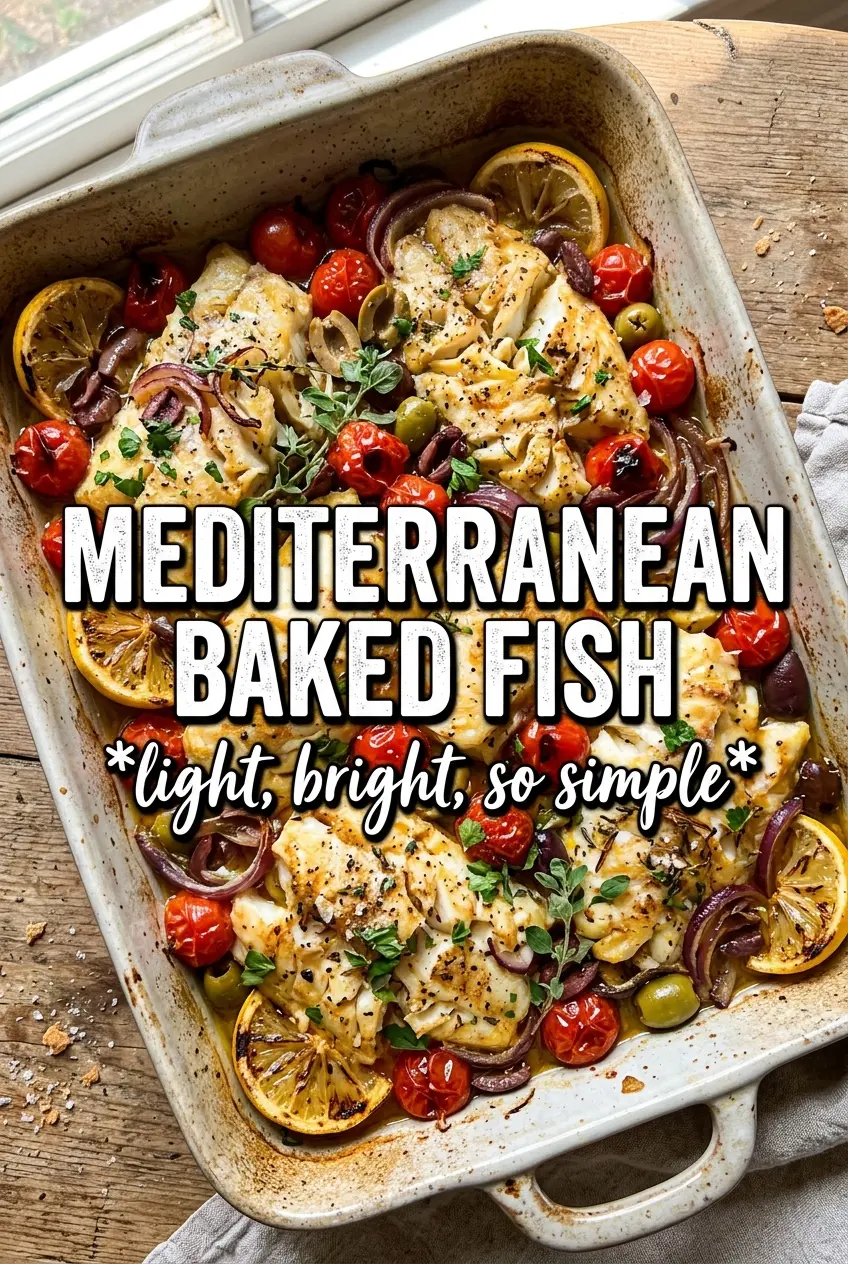
Mediterranean Baked Fish
Ingredients
Equipment
Method
- Preheat oven to 400F and grease a 9x13 baking dish.
- Combine cherry tomatoes, olives, capers, roasted red peppers, garlic, wine, olive oil, oregano, and red pepper flakes in the baking dish.
- Roast the vegetable mixture at 400F for 10 minutes until the tomatoes look slightly softened.
- Season the fish fillets with salt and pepper, then nestle them into the hot vegetable mixture.
- Bake at 400F for 12-15 minutes until the fish flakes easily with a fork.
- Garnish with fresh parsley and serve with lemon wedges.